
Drama
Comedy
Action & Adventure
Animation
Documentary
Family
Kids
Mystery
News
Reality
Sci-Fi & Fantasy
Soap
Talk
War & Politics
Western
Found 32 movies, 26 TV shows, and 0 people
Can't find what you're looking for?

Supported by stunning 3D graphics, Dr. Darius Arya explains the purpose and architectural significance of ancient Roman buildings.
Turning points in ancient Roman history and some of the Empire's greatest stories are brought to life in this drama documentary series.
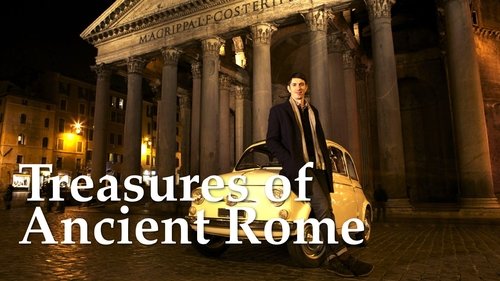
Treasures of Ancient Rome is a 2012 three-part documentary written and presented by Alastair Sooke. The series was produced by the BBC, and originally aired in September 2012 on BBC Four. In the documentary Sooke sets out to "debunk the myth that Romans didn't do art and were unoriginal". This is based on the view that Romans heavily incorporated Greek style in their art, and hence produced nothing new or original. Sooke has received some criticism from the media owing to the fact that there is no consensus among academics on this topic, and hence no 'myth' exists in the first place.
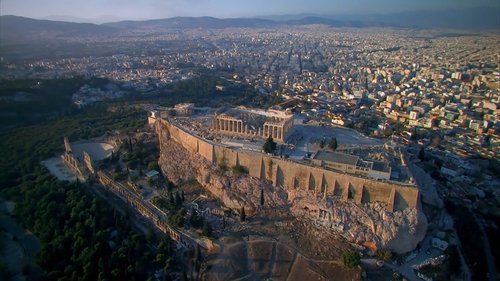
The first city of a million was built two thousand years ago. But how did they make Ancient Athens and Rome work without petrol, gas or electricity? Professor Wallace-Hadrill finds out.

From Ben-Hur to Spartacus to Gladiator, get a front-row look at the great movies that have shaped ancient Rome’s role in popular culture and memory. These 12 episodes cover over 50 years of cinematic history and talent, and immerse you in the glory and grandeur (and even the folly) of classic and contemporary films set in Roman antiquity.
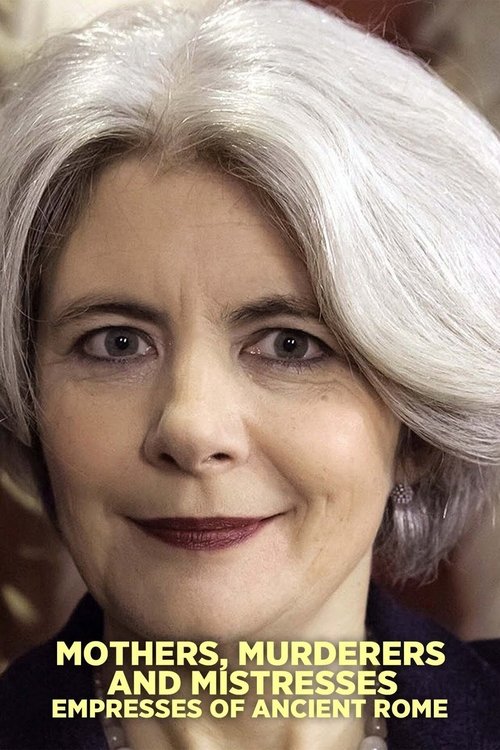
Professor Catharine Edwards explores the dramatic story of the women who tasted power in the Roman Empire.
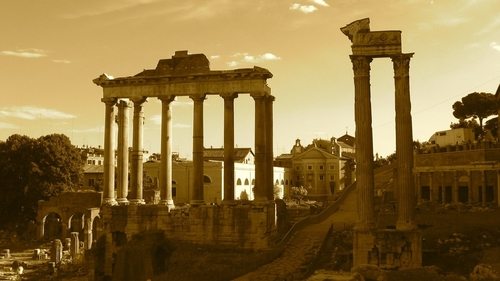
Travel back in time to one of the most glorious empires in history. For over 1,000 years, Rome was the center of the known world, bringing to her subjects a common language, shared culture and wealth beyond imagination. But war, barbarian attacks and moral decay eventually took their toll, and the empire slowly began to crumble. Experience ancient history come to life, from Rome's primitive beginnings to the height of its glory – and its eventual downfall. Filmed in 10 countries, this documentary combines location footage of ancient monuments, detailed reenactments, period art and writings, and fascinating insights from scholars and public figures. Witness the ancient world come to life – and see history in all its drama.

Torn from his homeland and the woman he loves, Spartacus is condemned to the brutal world of the arena where blood and death are primetime entertainment.
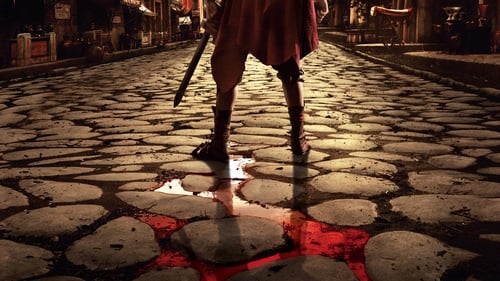
A down-to-earth account of the lives of both illustrious and ordinary Romans set in the last days of the Roman Republic.
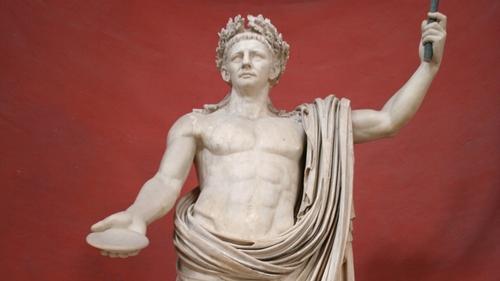
Acclaimed blackly comic historical drama series. Set amidst a web of power, corruption and lies, it chronicles the reigns of the Roman emperors - Augustus, Tiberius, Caligula and finally Claudius.
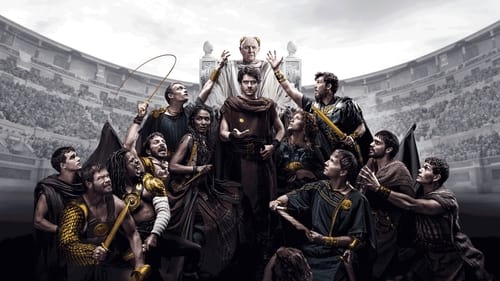
Within the spectacular, complex and corrupt world of gladiatorial sports in Ancient Rome, follow an ensemble of diverse characters across the many layers of Roman society where sports, politics and business intersect and collide.
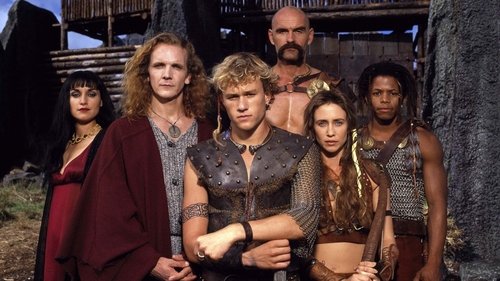
Roar is an American television show that originally aired on the Fox network in July 1997. In the year AD 400, a young Irish man, Conor, sets out to rid his land of the invading Romans, but in order to accomplish this, he must unite the Celtic clans.
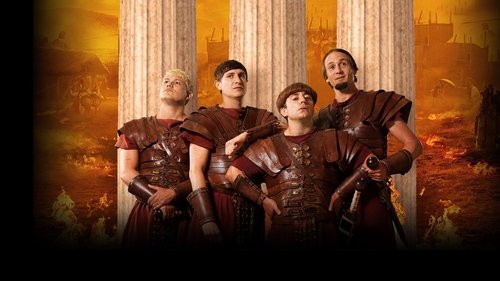
Sitcom about three desperate young men from the suburbs who try to get laid, hold down jobs and climb the social ladder in the big city - which just happens to be ancient Rome.
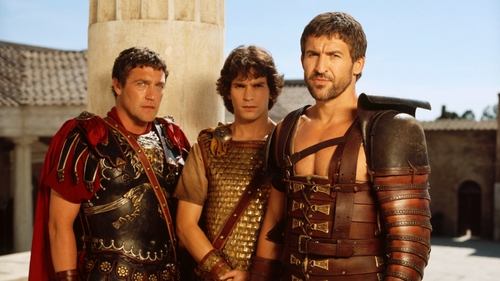
As Conqueror Julius Caesar is drawing his last breath, he swears Tyrannus—Rome's finest warrior—to an oath to protect his successor, Octavius, his 18-year-old nephew. Tyrannus and Octavius are forced into exile to protect the young man from those who want to sever Caesar's bloodline once and for all.
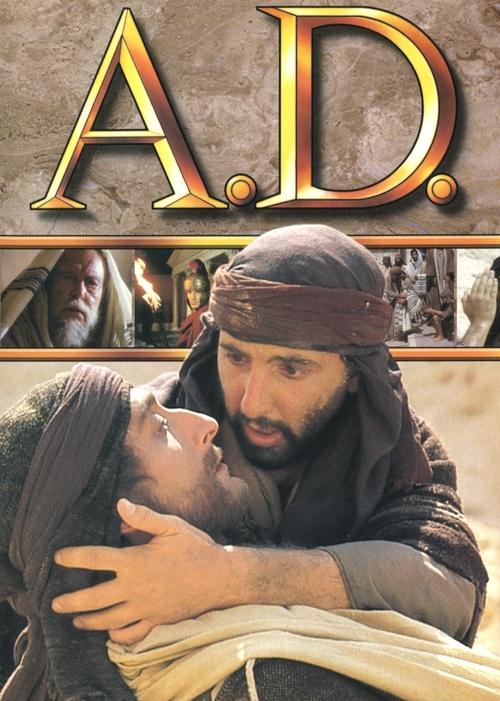
A.D. is a 1985 television drama miniseries created and written by Vincenzo Labella and Anthony Burgess, based on Burgess' historical novel The Kingdom of the Wicked. The five-part serial is considered the third and final part of a trilogy, preceded by Moses the Lawgiver (1974) and Jesus of Nazareth (1977). Set just after Jesus' Crucifixion, the lives and adventures of His disciples are explored, and events in Rome during the reigns of Emperors Tiberius, Caligula, Claudius and Nero.
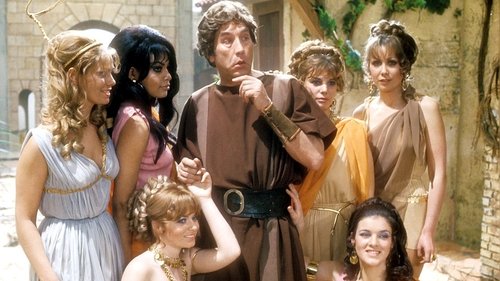
Up Pompeii! is a British television comedy series broadcast between 1969 and 1970, starring Frankie Howerd. The first series was written by Talbot Rothwell, a scriptwriter for the Carry On films, and the second series by Rothwell and Sid Colin. Two further specials were transmitted in 1975 and 1991. In ancient Pompeii, much-put-upon slave Lurcio navigates the chaotic lives of his owner's family
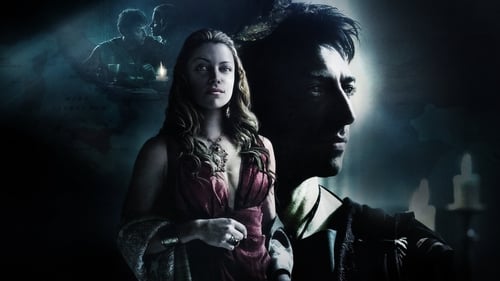
This stylish mix of documentary and historical epic chronicles the reign of Commodus, the emperor whose rule marked the beginning of Rome's fall.
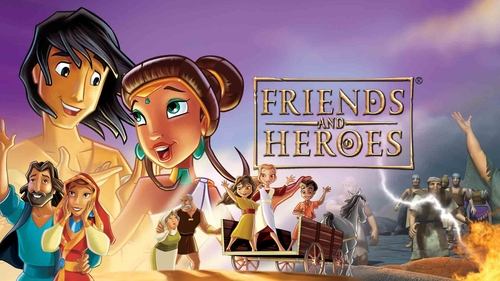
Friends and Heroes is a Christian children's program that airs on TBN, Smile of a Child TV, and was also shown on BBC TV. The show is both traditionally animated and computer animated. It takes place from 69 - 71 AD. There are three series each of 13 Episodes: Series 1 is set in Alexandria, Egypt; Series 2 in Jerusalem and Series 3 in Rome. The series was created by Brian D. Brown and Eric J. Danenberg, who also worked on The Storykeepers.
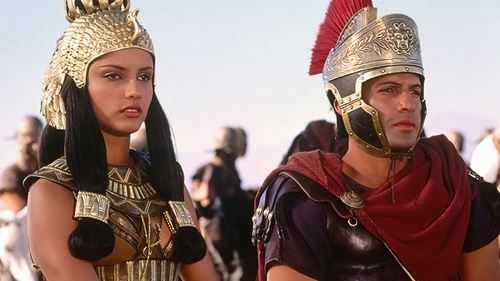
Cleopatra, the famed Egyptian Queen born in 69 B.C., is shown to have been brought by Roman ruler Julius Caesar at age 18. Caesar becomes sexually obsessed by the 18 year old queen, beds her, and eventually has a son by her. However, his Roman followers and his wife are not pleased by the union. In fact, as Caesar has only a daughter by his wife, he had picked Octavian as his successor.
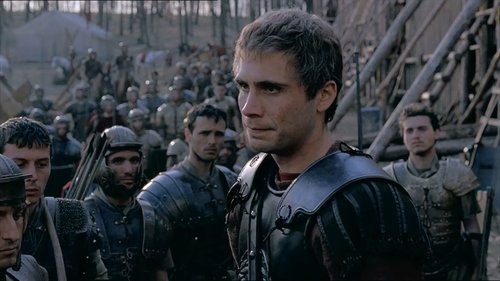
Twenty year-old Julius Caesar flees Rome for his life during the reign of Sulla but through skill and ambition rises four decades later to become Rome's supreme dictator.
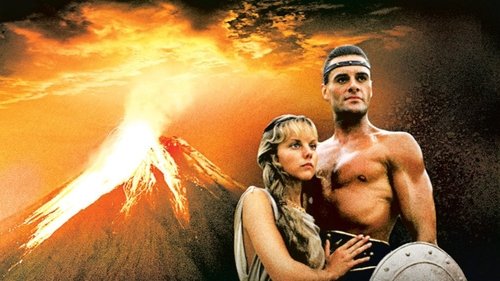
The different aspects of life in Pompeii, a coastal luxury resort near Naples catering for the very rich of imperial Rome, mainly before but culminating in the eruption of the Vesuvian volcano, which wipes it from the face of the Earth. The residents of Pompeii include Diomed, a common upstart merchant whose self-made riches from trade allow him to consider running for political office against sitting city magistrate Quintus and an impoverished aristocratic marriage for his daughter Julia; the cultivated Greek Glaucus; the gladiator Lydon; the noble-born Antonius and his sister Ione, the evil Isis-priest Arbaces who is after (their) money and power; the persecution-fearing Christian slaves Petrus, his true love Chloe, and their secret leader Olinthus.
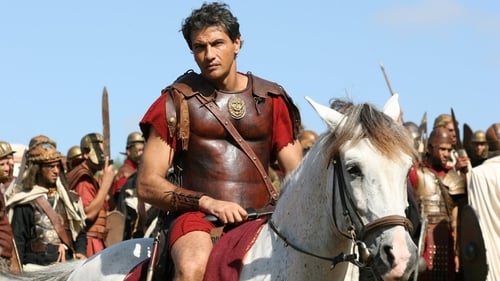
Forbidden love blossoms in the city of Pompeii, which until the eruption of volcano Vesuvius in 79 AD, is one of the empire's most powerful cities.
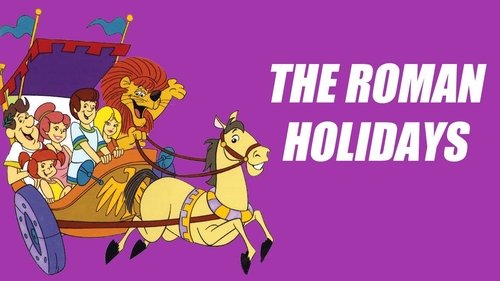
The Roman Holidays is a Hanna-Barbera animated television series that was broadcast in 1972 on NBC. It ran for 13 episodes before being cancelled. Very similar in theme to both The Flintstones and The Jetsons, The Roman Holidays brought a look at "modern-day" life in Ancient Rome, around 63 AD, as seen through the eyes of Augustus "Gus" Holiday and his family. The opening showed a chariot traffic jam and a TV showing football on Channel "IV" An Ancient Roman setting was actually one of the ideas that Hanna-Barbera considered as they were working to create The Flintstones.
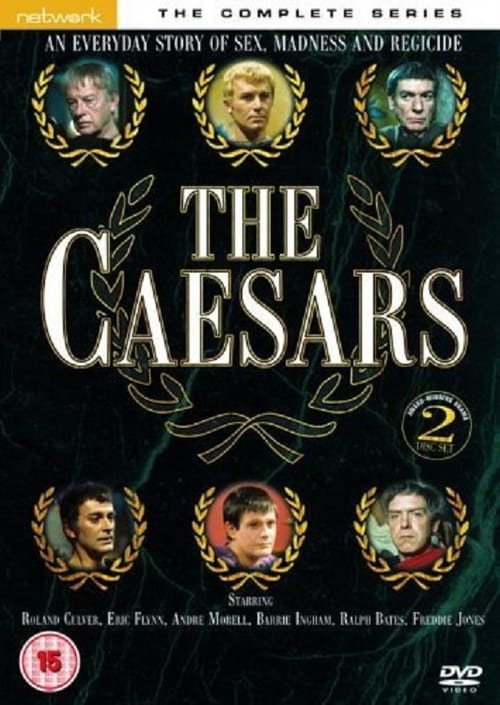
The Caesars is a British television series produced by Granada Television for the ITV network in 1968. Made in black-and-white and written and produced by Philip Mackie, it covered similar dramatic territory to the later BBC adaptation of I, Claudius, dealing with the lives of the early emperors of Ancient Rome, but differed in its less sensationalist depictions of historical characters and their motives.

Old and ill, Augustus, the man who changed the fortunes and destiny of an empire by completing Julius Caesar's project, recounts the two most important phases of his life: his rise to power and his fight against the pressure of his family.
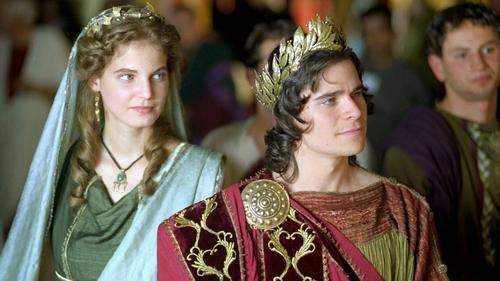
As a young boy, future emperor Nero witnesses the mad Emperor Caligula kill his father and exile his mother. While in exile in the pontine islands, Agrippina, his mother, sees a vision telling her that her son can become emperor, but she will have to die first. She accepts the proposal. Back in Rome, Nero, now being raised by emperor Claudius after Caligula's death, Agrippina returns. She poisons Claudius' food and Nero becomes emperor. At first, Nero cuts taxes and introduces successful programs and invades Brittania. Soon he meets a beautiful slave named Claudia Acte, and marries her, throwing off his engagement with Claudius' daughter, Claudia Octavia, telling her she can marry someone she will be happy with. Heartbroken, she arrives at an island and kills herself. Nero enjoys being married to Claudia Acte, but soon he gradually goes mad with power and sets fire to Rome.