
Drama
Comedy
Action & Adventure
Animation
Documentary
Family
Kids
Mystery
News
Reality
Sci-Fi & Fantasy
Soap
Talk
War & Politics
Western
Found 50 movies, 44 TV shows, and 10 people
Can't find what you're looking for?

A satirical film magazine produced by various film studios in the USSR from 1962 to 1991 and in the CIS from 1992 to 2003. The magazine's issues consisted of various stories: feature films, documentaries (with dubbed characters), and cartoons.

Uncover the heart-wrenching true stories behind crimes that transcended headlines and became part of popular culture. Exclusive first hand interviews reveal shocking twists, new evidence, and unexpected resolutions.

A home-searching romance story about a man who buys houses and a woman who lives in one. It follows the diverse stories of the editors of a home magazine.

In the town of Most City, a publishing house resides in the second story of an old building. The staff prints a monthly science magazine about the most shocking phenomena that even scientists find impossible. The handsome editor-in-chief, Taro, is assisted by grade-schooler Jiro and his dog, Saburo. But when scientist Goro Sato seeks their help, it sparks the beginning of a bizarre new tale...

No description available for this show.

No description available for this show.

Saturday morning magazine show with music, celebrities and competitions.

Explore mind-bending developments in basic science and math research. Quanta Magazine is an award-winning, editorially independent magazine published by the Simons Foundation.

All the drama inside a men's magazine in Mexico City. A magazine whose contents show masculintiy in all its manifestations, and where the protagonists find themselves in conflict between what they promote at work and what they face in their private lives.
No description available for this show.
Discover Magazine is a 1992-2000 documentary television series that aired on the Disney Channel from 1992-1994 and then on The Science Channel from 1996-2000. The series is named after the magazine of the same name, Discover Magazine. The Disney Channel series was narrated by actor Joseph Campanella. The Science Channel series was hosted by Peter DeMeo from 1996-1998. The series was nominated for an Emmy Award for "Outstanding Informational Series" in 1996, 1997 for "Outstanding Non-Fiction Series", and 1 other time The series was created by producer-director Les Guthman at the Walt Disney Company in 1991, after Mr. Guthman licensed the television rights to Discover Magazine from Family Media in 1990. Mr. Guthman produced the series for two seasons on The Disney Channel, 1992-1994, and then working with Disney President and CEO Frank Wells sold the series to Discovery Communications in late 1994, after The Disney Channel abandoned its family-adult prime time schedule.

The battle between Nene King, editor of Woman's Day, and Dulcie Boling, editor of New Idea, from the rival Packer and Murdoch empires, to make their publication the number one seller in Australia.

No description available for this show.
No description available for this show.
Weekly highlights, features, interviews and news on the NBA team.
Science Magazine was a half-hour television show produced by CBC Television from 1975 to 1979. The show was hosted by geneticist David Suzuki, who previously hosted the daytime youth programme Suzuki On Science. Science Magazine moved beyond the youth audience and was mostly broadcast during prime time, except for occasional sessions where the show was repeated at afternoon times. The program featured news and features on scientific research and developments. Regular items within the show included "How Things Work" and "Science Update". Jan Tennant and Cy Strange of the CBC were the program's film feature narrators. Science Magazine, as such, ended production when the CBC joined it with The Nature of Things, keeping the latter as title and Suzuki as host.
Junior Magazine was a TV programme for teenagers, which ran for 7 years on CBC Television's coast to coast network, seen Sundays from 2-3 p.m. Fred Rainsberry was largely responsible for running the Children's Television Department for the Canadian Broadcasting Corporation, out of their Toronto, Jarvis Street studios during the 1950s and '60s. The host was a recent arrival from England, John Clark, leaving behind his Just William image. The series began in 1955, with Clark introducing short documentary films, and the format was expanded when co-hosts were brought in, Hank Hedges presenting nature subjects, and Doug Maxwell covering sports. Producer Bruce Attridge introduced a little culture to the program with music and dance sequences, and young Roberta Maxwell joined the team in 1957 for 2 years, before exiting to pursue an acting career. Disney selected the show to be their Canadian outlet for their children's films, and the program's objectives were expanded in 1958, when Clark would take off on weekly jaunts with a camera crew to explore the surrounding countryside and uncover points of historic interest. However, Clark never lost the acting bug, and left for New York in 1960. The program continued for two more years, under several new hosts, among them Toby Tarnow, Patrick Watson, Garrick Hagon, and Norman Welch. In 1963, Rainsberry persuaded Fred Rogers to take to the airwaves.

Dive around the world with John and Ritchie
Money Magazine is a business news and financial programme that is broadcast on Sundays at 7:00pm in Hong Kong by television channel TVB Pearl.
Movie Magazine is a now defunct Saturday afternoon showbiz-oriented talk show produced by LOCA-LOBO Productions and aired over GMA Network. It was originally hosted by Cristy Fermin and Nap Gutierrez and later Jun Nardo, Eugene Asis and Dolly Anne Carvajal with Mario Hernando as a Film Reviewer.

The sparkling notes of a trumpet fanfare and the familiar logo of the sun alert viewers that it's time for CBS's Sunday morning staple. Journalist Jane Pauley helms the show, taking over hosting duties from Charles Osgood, who spent 22 years on the job. A morning talk show, this program airs at a different pace and focuses much of its attention on the performing arts. After a quick update of the day's news and national weather, correspondents offer longer-length segments on a variety of topics, from architecture to ballet to music to pop culture to politics.
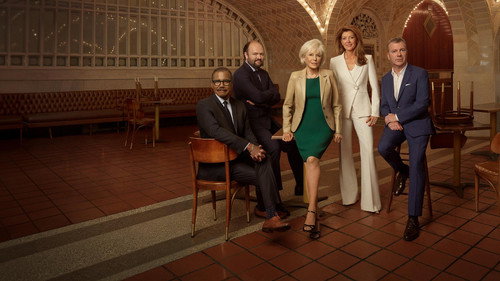
America's popular television News magazine in which an ever changing team of CBS News correspondents contribute segments ranging from hard news coverage to politics to lifestyle and pop culture.

This fast-paced and stunt-filled motor show tests whether cars, both mundane and extraordinary, live up to their manufacturers' claims. The long-running show travels to locations around the world, performing extreme stunts and challenges to see what the featured cars are capable of doing. The current hosts are Paddy McGuinness, Chris Harris and Andrew "Freddie" Flintoff.

A fun-packed and informative magazine show for younger viewers with information and reports from around the world.

60 Minutes, an Australian version of the U.S. television newsmagazine 60 Minutes, airs on Sunday nights on the Nine Network and is presented in much the same way as the American program on which it is based. The New Zealand version of the show has also featured segments of the Australian version. Gerald Stone, the founding executive producer, was given the job by Kerry Packer and was told: "I don't give a f... what it takes. Just do it and get it right." After the first episode was broadcast on 11 February 1979, Packer was less than impressed, telling Stone: "You've blown it, son. You better fix it fast." Over the years, Stone's award winning 60 Minutes revolutionised Australian current affairs reporting and enhanced the careers of Ray Martin, Ian Leslie, George Negus, and later Jana Wendt. Since it was first broadcast, 60 Minutes has won five Silver Logies, one Special Achievement Logie, and received nominations for a further six Logie awards.

No description available for this show.

This newsmagazine series investigates intriguing crime and justice cases that touch on all aspects of the human experience. Over its long run, the show has helped exonerate wrongly convicted people, driven the reopening — and resolution — of cold cases, and changed numerous lives. CBS News correspondents offer an in-depth look into each story, with the emphasis on solving the mystery at its heart.

See the inner workings of a high-style magazine owned by Jack Gallo, who has hired his quick-tempered but talented daughter, Maya, to write for the publication. Challenging her at every turn is Nina, a vain and superficial former model. Then there's photographer Elliot, a man who is very popular with his portrait subjects as well as other women. completing the core staff is her father's assistant, Dennis, a glorified secretary who is generally disrespectful to one and all.

No description available for this show.

The Name of the Game is an American television series starring Tony Franciosa, Gene Barry, and Robert Stack that ran from 1968 to 1971 on NBC, totaling 76 episodes of 90 minutes. It was a pioneering wheel series, setting the stage for The Bold Ones and the NBC Mystery Movie in the 1970s. The show had an extremely large budget for a television series.

In this off-the-wall lifestyle magazine, host André Robitaille and his band of contributors report on the latest and greatest the scene has to offer.

Getting viewers up to speed on all the latest automotive information, with new car reviews, second hand bargains and industry tidbits being the focus of this magazine show.

Daily tabloid television news show on entertainment and celebrity news with unprecedented access to Hollywood's biggest stars, exclusive behind-the-scenes looks at upcoming film and television projects, as well as the real story behind Hollywood's latest news.

A glimpse into the outrageous lives of Jane, Kat and Sutton, who are working at the nation's top women's magazine, Scarlet, while navigating their careers, identities and individual voices.

Follows the rise of Tooru Muranishi, one of Japan's most notorious directors of adult video. Adapted from a biography of the man, this series depicts the character, his art, vision and his interactions with the approving and disapproving folk around him.

No description available for this show.

No description available for this show.

No description available for this show.

A monthly sports newsmagazine which was "spawned by the fact that sports have changed dramatically, that it's no longer just fun and games, and that what happens off the field, beyond the scores, is worthy of some serious reporting," according to Bryant Gumbel, the host.

Live & Kicking was a BBC Saturday morning children's magazine programme, running from 1993 to 2001. The fourth in a succession of Saturday morning shows, it was the replacement for Going Live!, and took many of its features from it, such as phone-ins, games, comedy, competitions and the showing of cartoons. Once Live & Kicking had become established in series two, it reached its height in popularity during series four, when it was presented by Zoë Ball and Jamie Theakston; their final episode won a BAFTA award. After this the series ratings dropped with the launch of SMTV Live on ITV and was eventually cancelled in 2001.

Converse China work with Thrasher Magazine to bring King of the Road to China in 2011

Oh. Shit. Here we go. Chocolate vs. Real vs. Birdhouse vs. Enjoi.

Oh. Shit. Here we go. Element vs. Flip vs. Birdhouse.

Burke's Law, a revival of the 1960s cop television series of the same name, aired on CBS from 1994 to 1995. The series centers on Amos Burke, a senior Los Angeles police officer and millionaire, and his son, Peter, who is a detective under his command.