Drama
Comedy
Action & Adventure
Animation
Documentary
Family
Kids
Mystery
News
Reality
Sci-Fi & Fantasy
Soap
Talk
War & Politics
Western
Explore all TV shows appearances

Muchacha italiana viene a casarse is a 1971 Mexican telenovela by Televisa produced by Ernesto Alonso and directed by Alfredo Saldaña, starring Angélica María and Ricardo Blume. Writing credits belong to Delia González Marquez, Fernanda Villeli, Marissa Garrido, Miguel Sabido and Carlos Lozano Dana The series featured two theme songs: "A dónde va nuestro amor" and "Lo que sabemos del amor". Both songs were written by Eduardo Magallanes and performed by Angélica María.
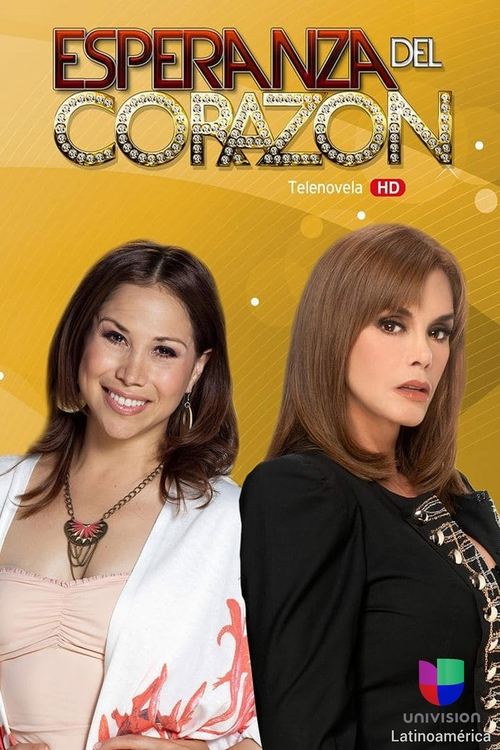
Esperanza del Corazón is a Mexican telenovela produced by Luis de Llano Macedo for Televisa. It is a merger of Aguetas de Color de Rosa and Confidente de Secundaria, produced by Luis de Llano Macedo in 1994 and 1996, respectively. Bianca Marroquin and Patricio Borghetti star as the main protagonists, while Lucía Méndez and Lisardo Guarinos star as the main antagonists. Esperanza del Corazón won 1 award in Premios TVyNovelas: Best co-star actress. Canal de las Estrellas aired Esperanza del Corazón from July 18, 2011 to February 3, 2012, with Un Refugio para el Amor replacing it. Univision aired Esperanza del Corazón at 2pm central from September 6 to October 14, 2011, replacing one hour of Zacatillo, un lugar en tu corazón. It was later seen at 1pm central from October 17, 2011 to March 9, 2012, replacing Rafaela. From March 12 to March 23, 2012, Univision moved "Esperanza del Corazón" to 12pm central, due to El Talismán airing at 1pm central.

Sortilegio is a Mexican telenovela produced by Carla Estrada for Televisa and stars Jacqueline Bracamontes and William Levy. It is a remake of Tú o nadie. From October 6, 2009 to February 17, 2010, Univision broadcast Sortilegio weeknights at 9pm/8c. From July 30 to September 7, 2012, Univision broadcast 2 hour reruns of Sortilegio weekdays at 1pm/12c, replacing Corazón Apasionado. From September 10 to October 19, 2012, reruns of Sortilegio were broadcast at 2pm/1c.

No plot available for this tvshow.

A Colombian miniseries that takes place in a rural environment, and the plot takes place in a dairy farm, hence its name. In this setting, a love story unfolds that will move the hearts of Colombians.
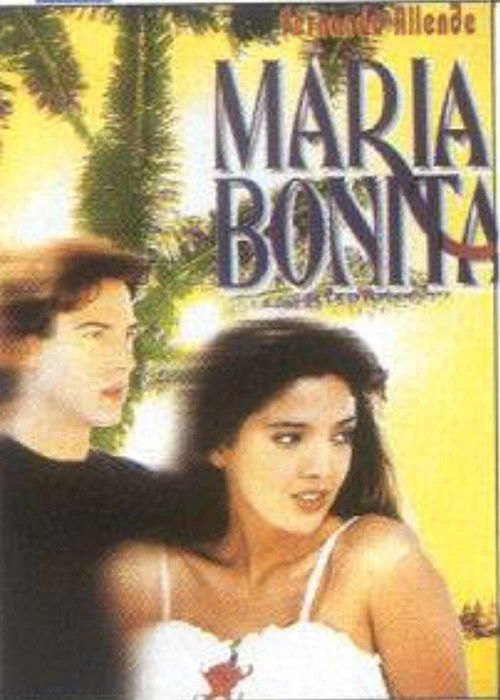
On Isla Fuerte, singer María "Bonita" arrives for a party and finds herself caught in a web of passion, betrayal, and dark family secrets. Her love for José Santos, the president's unrecognized son, unleashes tragedy, revenge, and a crime that will change their lives.
No plot available for this tvshow.
No plot available for this tvshow.

Hunter is an American police drama television series created by Frank Lupo, and starring Fred Dryer as Sgt. Rick Hunter and Stepfanie Kramer as Sgt. Dee Dee McCall, which ran on NBC from 1984 to 1991. However, Kramer left after the sixth season to pursue other acting and musical opportunities. In the seventh season, Hunter partnered with two different women officers. The titular character, Sgt. Rick Hunter, was a wily, physically imposing, and often rule-breaking homicide detective with the Los Angeles Police Department. The show's main characters, Hunter and McCall, resolve many of their cases by shooting dead the perpetrators. The show's executive producer during the first season was Stephen J. Cannell, whose company produced the series.
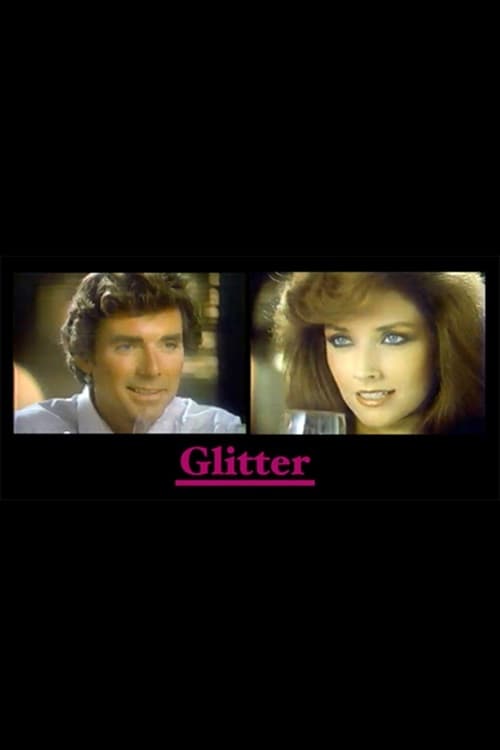
Glitter is an American television drama series broadcast by the ABC network during the 1984-1985 season. The series was produced by Aaron Spelling and was set behind the scenes of a top entertainment magazine titled "Glitter" and attempted to combine the urgency of journalism and business politics with the glamorous lifestyles of the rich and famous featured in the pages of the magazine. The leading cast members were David Birney, Morgan Brittany and Arthur Hill. The format of the series was similar to two other popular ABC shows which were also produced by Aaron Spelling; The Love Boat and Hotel, in that each week it heavily featured high profile guest appearances from famous celebrities, such as Ginger Rogers and Cyd Charisse. Unlike the other series, Glitter was not a ratings success. The first three episodes aired in September 1984, and then the show was taken off the air until December 1984 when three more episodes were shown. Ratings did not improve and the series was cancelled. The remaining eight episodes were shown during December 1985 as part of ABCs late-night lineup. Despite its lack of success in the US, Glitter was sold abroad. It was shown in the UK on BBC1 in the summer of 1985.
Subscribe for exclusive insights on movies, TV shows, and games! Get top picks, fascinating facts, in-depth analysis, and more delivered straight to your inbox.