
Action
Adventure
Animation
Comedy
Crime
Documentary
Drama
Family
Fantasy
History
Horror
Music
Mystery
Romance
Science Fiction
Thriller
War
Western
Found 32 movies, 1 TV show, and 0 people
Can't find what you're looking for?
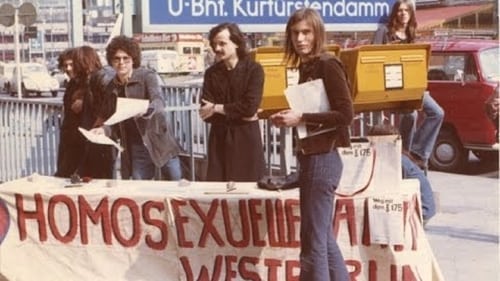
MY WONDERFUL WEST BERLIN recounts the lives and struggles of gay men in West-Berlin. Through present-day scenes and never before seen archival footage, a fascinating picture emerges of a city, that today characterizes itself as a dream destination and place of refuge for gays.
A military unit freed a soldier from captivity. It turned out that his fiancee serves as a nurse in this unit. But the soldier, whose face was disfigured by the Nazis, didn't dare to meet her.
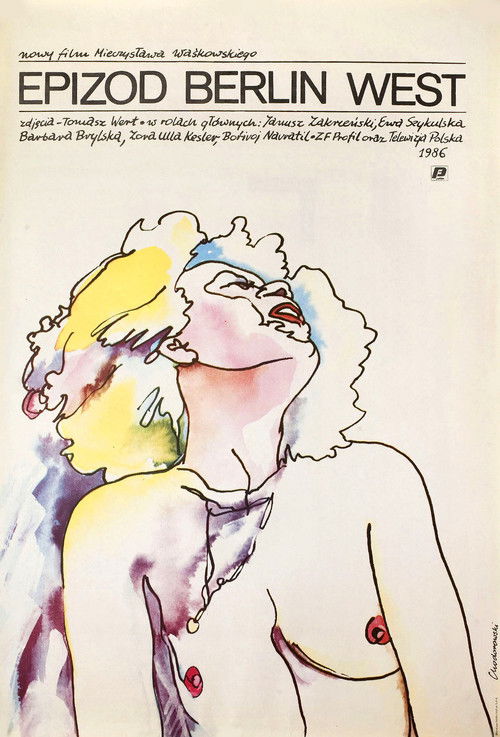
The 1980s. Jan Bard, Polish intellectual and writer, leaves for West Berlin. He is working on another novel here. In Germany, he meets his old love Iza. He revives the feeling that once connected them. The woman is the ex-wife of the publisher of Bard's novels. The situation gets complicated soon.
One year before the Berlin Wall fell, this silent black&white documentary from 1988 is a profile of West-Berlin: places and people, moods and locations; you eventually see "Checkpoint Charlie" still in function.

No description available for this movie.
Dragan Wende has lived in Berlin since the '70s and has seen the city change through the years. His nephew comes to live with him as Dragan remembers the better days he lived as a Yugoslavian immigrant in a divided city.
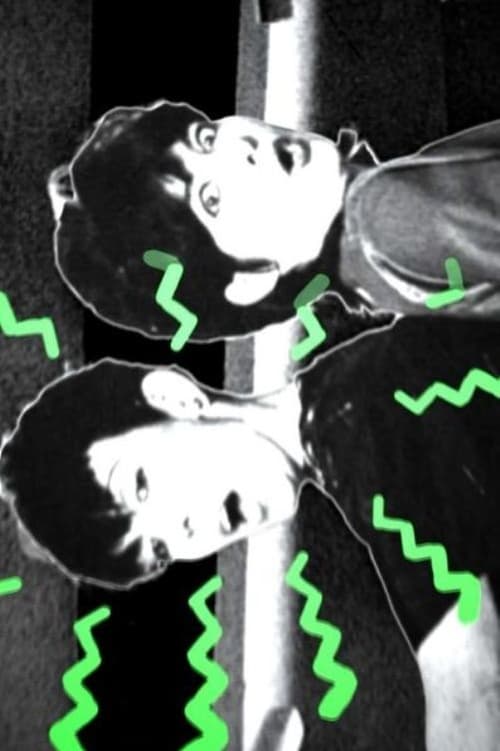
Tv documentary by Margarete Kreuzer about the sub-culture of West-Berlin in the 1980s. The unique political and geographical status of West-Berlin in the cold war lead to a unique scene of artists reflecting the Zeitgeist and creating profound work that is now a part of history. A lot of historical footage is used and interesting anecdotes are shared. For example the story of creating the famous Die Dominas project involving Kraftwerk.
A documentary on the development and evolving situation in Berlin from 1945 until the early 1960s from both a political and human perspective,
Scotty and Stuart
No description available for this movie.
This video captures innovative jazz composer, bandleader and pianist/synthesizer player Sun Ra's two live concert performances in East Berlin in 1986. Claiming that he was of the "Angel Race" and not from Earth but rather Saturn, the eccentric Sun Ra developed a complicated persona embracing cosmic philosophies and composing lyrical poetry that preached peace and condemned racism (which he experienced firsthand while touring with the Arkestra).

The wild West Berlin of the 1980s became the creative melting pot of pop subcultures: music, art and chaos. Before the Iron Curtain fell, anything and everything seemed possible.
This short snippet of silent 8 mm film was filmed by Ingrid Oppermann in West-Berlin, possibly close to her apartment in Kurfürstenstraße, where Harun Farocki’s The Words of the Chairman (1967) was shot. The snow that is reflected in the shop window indicates that it must have been the Winter of 1969/70.
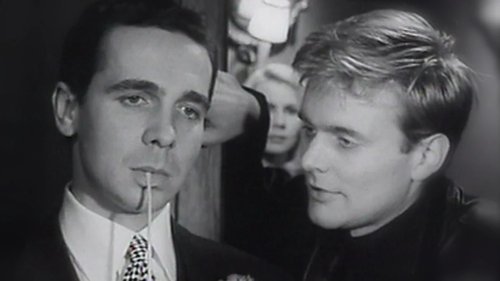
Defeated Germany has just been divided into two zones ( Soviet and Allied ) when Hans, a young inhabitant of Berlin, decides to cross the demarcation line to join his family.
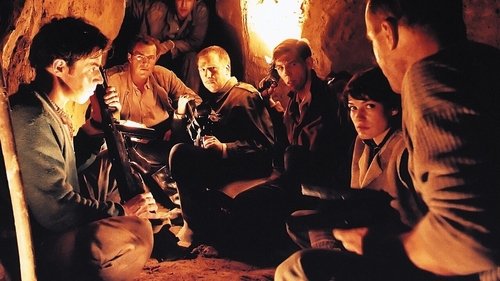
Inspired by true events, Olympic swimmer Harry Melchior defects from East Germany in the 1960s and hatches a daring plot to help his sister and others flee East Berlin through a 145-yard underground tunnel.
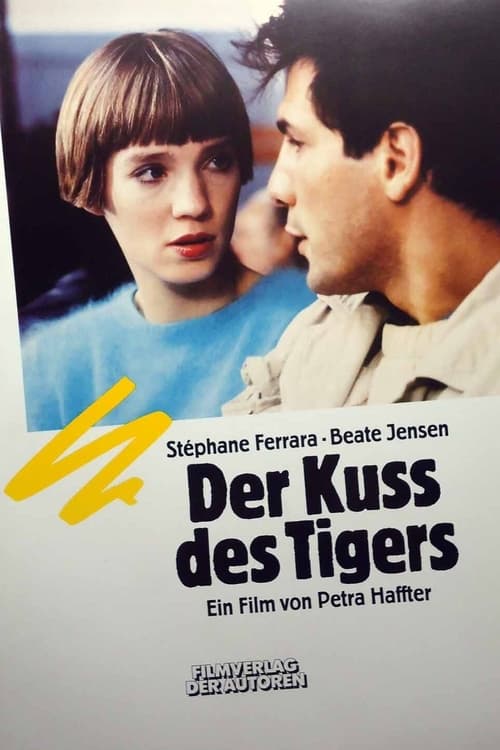
With the dangerous smoothness of a tiger stalking his prey, Peter has circled the au pair Michèle. She quickly succumbs to his fascinating charisma and experiences for the first time a hitherto unknown, tender security. "I'll kill you," says Peter, as gently as cold-bloodedly. A macabre joke or a serious warning?
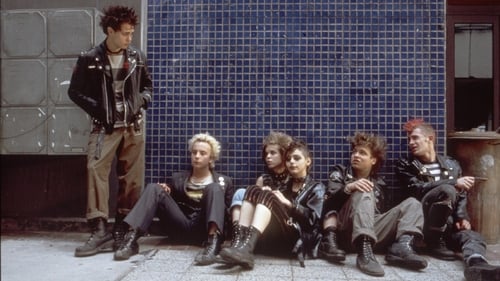
Germany 1982: The country is divided into two parts. Nele, coming from West-Germany, travels to East-Germany where she meets Captain, singer of a band. They fall in love with each other, but the regime "takes care" of their relationship, meaning: They can not see each other again. Germany 1990: The country is reunited. Nele starts searching their lost love...

C.R. MacNamara is a managing director for Coca-Cola in West Berlin during the Cold War, just before the Wall is put up. When Scarlett, the rebellious daughter of his boss, comes to West Berlin, MacNamara has to look after her, but this turns out to be a difficult task when she reveals to be married to a communist.

From the 1950s onwards, Erika and Ulrich Gregor brought countless film historical milestones to Berlin and shaped cinema discourse in post-war Germany. A look at the life and work of the couple without whom Arsenal and the Forum wouldn’t exist.
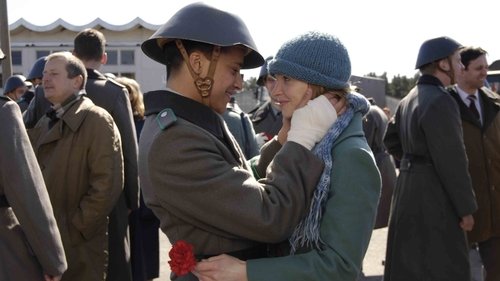
East Germany, 1988: working as a state security service agent, Jürgen Kaiser is loyal to the party line, but worried about his son Marco, a punk. As he is arrested after a concert, Marco is forced to join the army, where he surprisingly identifies with socialism and believes he has to defend his country against the capitalist enemy. While Jürgen is astonished, his wife Hanna and Marco's girlfriend Anja, supporting the civil rights movement, don't like his new attitude...
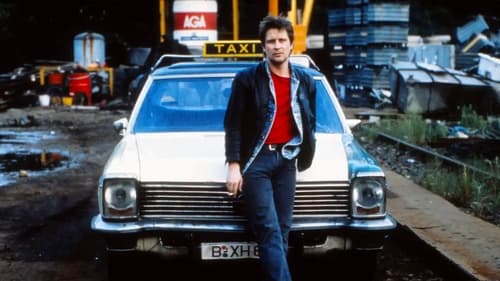
Alex is a Finnish taxi driver in Berlin. One evening pits two men feel comfortable in his taxi with a briefcase full of money, but unfortunately for Alex's money stolen and a group of gangsters are at the nape of the two. Soon it comes to shooting, and when the two men being killed, is good advice costly for the beleaguered driver.
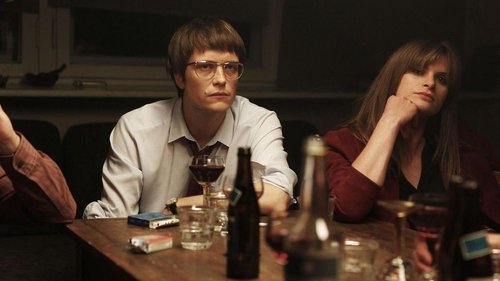
In the early 60s, Bernward Vesper and fellow university student Gudrun Ensslin begin a passionate love in the stifling atmosphere of provincial West Germany. Dedicated to the power of the written word, Bernward and Gudrun found a publishing house whose first publication is, paradoxically to many, a controversial past work of Bernward's ostracized father, an infamous Nazi author. Bernward defends his father's writing ability, even if he is haunted by his father's suspicious past.
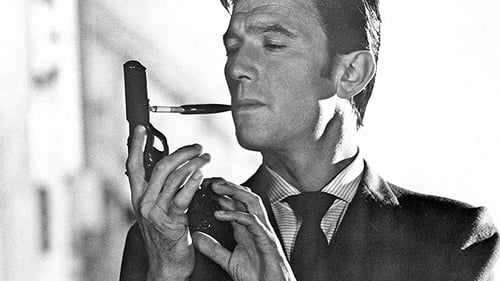
Double-agent Alexander Eberlin is assigned by the British to hunt out a Russian spy, known to them as Krasnevin. Only Eberlin knows that Krasnevin is none other than himself! Accompanying him on his mission is a ruthless partner, who gradually discovers his secret as Eberlin tries to maneuver himself out of a desperate situation.
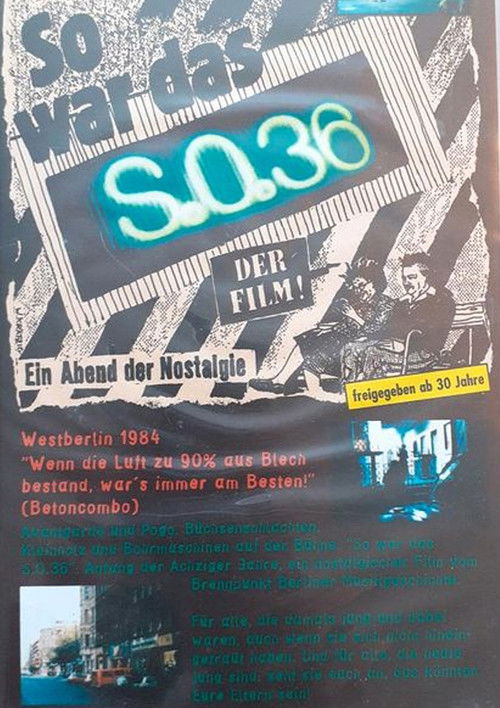
A documentary about the now abandoned and very influential punk club S.O.36. A punk music club on Oranienstrasse near Heinrichplatz in the area of Kreuzberg in Berlin, Germany.
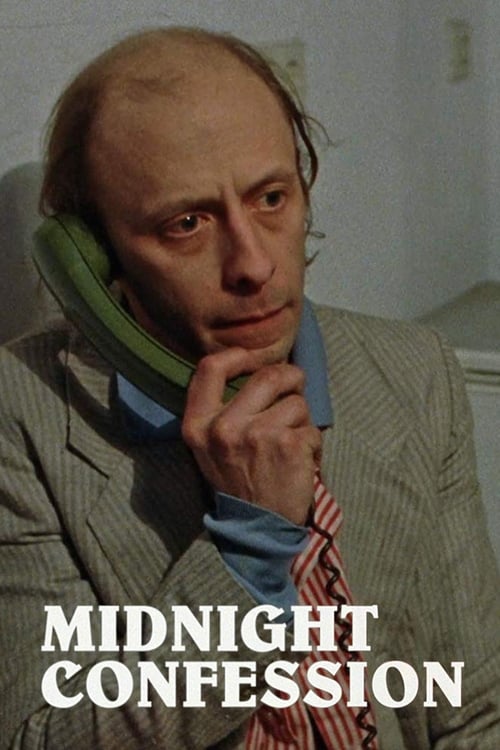
West Berlin, 1989. Manny Jumpcannon prowls his dingy apartment, phoning various degenerates from his past. He's hoping for some uncertain vindication but the ensuing conversations only reveal his own sordid history of deceit.
In 1986, Ross McElwee (Sherman's March) and Marilyn Levine were making a film about the 25th anniversary of the Berlin Wall, when the imposing structure was still very much intact as the world’s most visible symbol of hardline Communism and Cold War lore. They thought they were making a documentary on the community of tourists, soldiers, and West Berliners who lived in the seemingly eternal presence of the graffiti emblazoned eyesore. But in 1989, as the original film neared completion, the Wall came down, and McElwee and Levine returned to Berlin, this time to capture the radically different atmosphere of the reunified city.
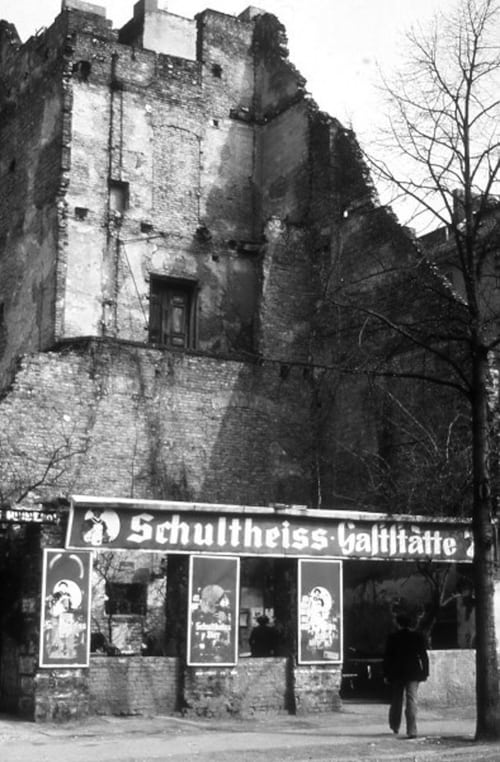
The last day in the tanzclub "Dschungel" at Winterfeldplatz, Berlin-Schöneberg. Located at the bar Slumberland, GoltzStraße. 24. It documents with single frame automatic one night from evening to dawn. Sounds from The Doors and Iggy Pop. "Dschungel" moved in 1978 to Nürnberger Straße 35 and became more glamorous and hip.
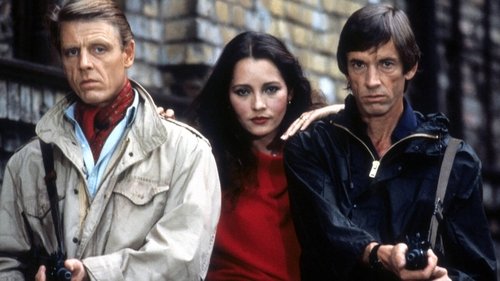
A group of mercenaries is hired to spring Rudolf Hess from Spandau Prison in Berlin.
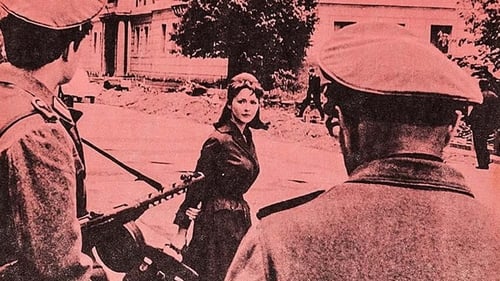
East Berlin, shortly after the construction of the Berlin Wall. Kurt Schröder and his family dig a tunnel to escape to West Berlin as they struggle to overcome the obstacles blocking their underground path to freedom.
Follows the writer Günter Kunert on his return to West Berlin after his emigration from the GDR.
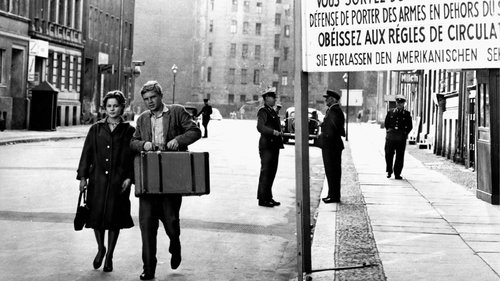
Just before the Berlin Wall is built, a young East German worker tries his personal and professional luck as a barkeep in West Berlin. A realistic love story set during Germany’s post-war economic miracle, which here does not fulfil its bright promises.
By the end of the seventies Tanzclub Dschungel moved from Winterfeldplatz, Berlin-Schöneberg to Nürnberger Straße, Berlin Schöneberg/Charlottenburg. A more glamorous venue.Tanzclub Dschungel at Nürnberger Straße, Berlin Schöneberg/ Charlottenburg was the place in Berlin. A relative of Studio 54 in NYC. But much more. Ask Nick Cave, Frank Zappa, David Bowie, Zazie de Paris, Mick Jagger, Prince, Grace Jones, Blixa Bargeld, Depeche Mode, Liza Minnelli, Iggy Pop, Bette Midler, Boy George, Sylvester Stallone, Hildegard Knef, David Hemmings, Michel Foucault, Claude Brasseur, Robert Mapplethorpe or Barbra Streisand.