
Action
Adventure
Animation
Comedy
Crime
Documentary
Drama
Family
Fantasy
History
Horror
Music
Mystery
Romance
Science Fiction
Thriller
War
Western
Found 28 movies, 15 TV shows, and 0 people
Can't find what you're looking for?

There is a visitor for local herb gatherer Doggie who has no particular need or greed for anything. His friend Chang-guk who is wanted to failure in his business and his captivating wife Seon-hwa come to see Doggie who has no choice but to give them a place to hide. The three of them end up living umcomfortably together. Will Doggie be able to suppress his desires for his friend's wife? And what is her secret that Doggie must never know?

Naomi Tazawa (Hiroko Kawasaki), who works at Isetan Department Store, was told by an executive at a film company (Ken Uehara), that he was going to make a film about her. She was scouted to become an actress, but she held strong. Around that time, her adoptive father dies, and at the time of his death, she learns that her real father was a man of high rank.
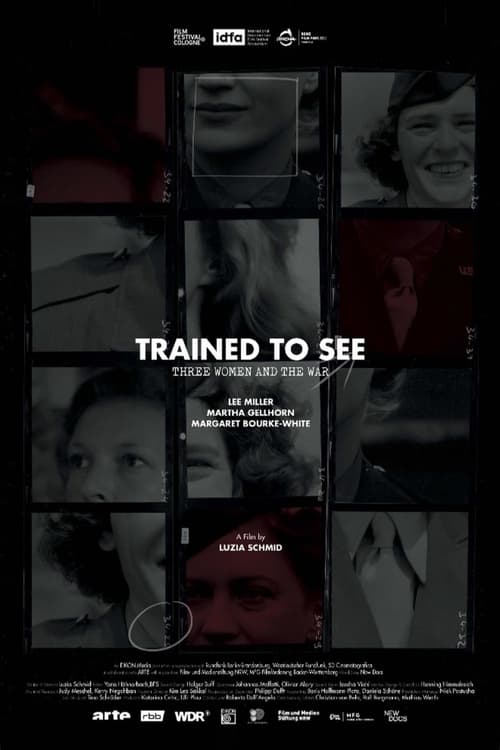
During the Second World War, women were for the first time allowed to work as war correspondents. Based on reports, letters and diary excerpts, filmmaker Luzia Schmid sketches a personal portrait of three fearless women and their unique attempts to report on the war.

Shining a light on the trailblazing role of women war artists, on the front lines round the world, championing the female perspective on conflict through art and asking: when it's life or death, what do women see that men don't?

In America women can go to jail for their husbands’ crimes, men are allowed to marry ten-year-olds, and abortions in some states are illegal, even in cases of rape. Documentary filmmaker Brice Lambert journeys through the American South and meets women who are at the receiving end of the attack on women’s rights since Donald Trump’s return to power.

'Narir Kotha' (Women and War) is a tribute to the sacrifice and contribution of women during the Bangladesh Liberation War. The film explores issues of rape, genocide, and militant resistance through several stories of women from different backgrounds. Their wartime stories, whether as victims of rape and violence, as freedom fighters, as refugees, or as religious and ethnic minorities, are a testament to dignity and courage and a call for justice.—tarequemasud.org
A provoking film on the place of women.
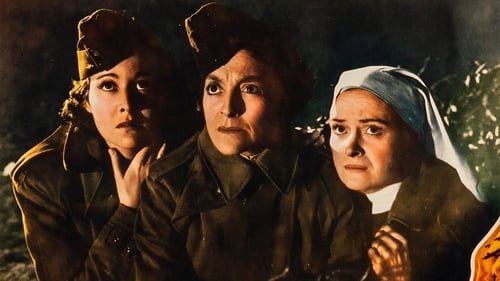
A "good-time girl", raised by her somewhat lax divorced father, finds herself involved in an accidental death, and the only way she's able to get out of it is to volunteer--albeit reluctantly--to be a nurse in the war effort. She travels to England and is assigned to a hospital under a very strict matron. What the girl doesn't know is that the matron is the mother she has never seen.

In 1944, in a small village in Calvados, just as the Allies landed, a British plane was shot down. The wounded pilot seeks help. All the villagers, who speak only of resistance, refuse to help, for fear of reprisals. Only the mayor, Dr. Leproux, takes him in and nurses him back to health, then entrusts him to the Resistance. But the Germans get wind of the story and arrest Leproux. He is saved by Major Frantz. But the budding friendship between these two men "doesn't stop the drums", and the war is on.
Sexual violence against women is a very effective weapon in modern warfare: instills fear and spreads the seed of the victorious side, an outrageous method that is useful to exterminate the defeated side by other means. This use of women, both their bodies and their minds, as a battleground, was crucial for international criminal tribunals to begin to judge rape as a crime against humanity.
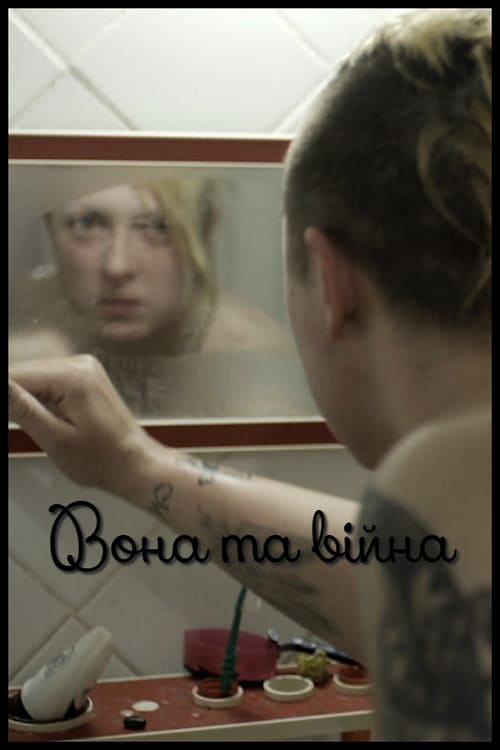
When war came to their home, thousands of Ukrainian women took it upon themselves to become soldiers and lay their lives on the line for peace and freedom in their country. This feature documentary follows three of those women and the lives they never expected to lead.

Mothers, nurses, soldiers and deportees - these women fought against persecution for freedom and survival amid the turbulence of World war II.
Why is it that stories of sexual violence against women have never been part of the Irish War of Independence and the subsequent Civil War? Why, when those stories have been such an integral part of every other war – World War One, World War Two and even the later Bosnian War, are these stories missing from the Irish Revolution? For years, Ireland has been seen as being exceptional in that these acts didn’t occur here. But was Ireland really so special? Was the nature of war here so very different from war everywhere else? And did our men really behave so well? This documentary argues that the answer is no.
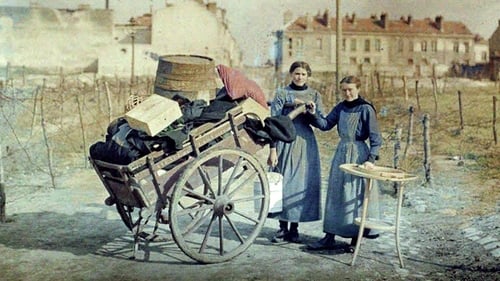
Trace the overlapping journeys of exceptional women swept up in World War I and hear their tales of bravery on history's front lines
A spy story on woman island.
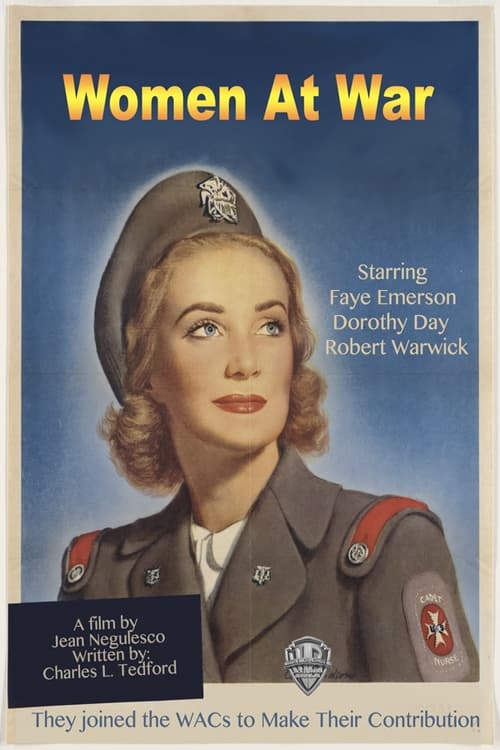
Three young women arrive at the Women's Army Corps facility in Fort Des Moines for varied reasons and with different goals. Mary Savage is a war widow who wants to become an officer, farm girl Stormy Hart wants to become involved in motor transport, and Lorna Travis seeks to win the approval of her father, a major general, who has very chauvinist views on the role of women in the military. Intensive training and guidance prepares the three to make a contribution to the success of the upcoming war games conducted by General Travis and validate the value of the WACS to the war effort.

After Col. Steve Austin fails to retrieve the contents of a safe owned by arms dealer Arlen Findletter, he accepts an offer of a holiday in the Bahamas. There he runs into Soviet Agent Alexi Kaslov and his lovely assistant Katrina Volana, who also happen to be out to find Findletter. Is it a coincidence, or was Steve's trip all part of one of Oscar Goldman's missions?

Ip-sae (Kim Se-in) is a caregiver with a body so full and voluptuous her clothes might burst off of her any time. All the men in her hospital ward wish dearly to be touched and cared by her. But all she has eyes for is her husband Cheon-dong (Jo Min-joon). However, her husband becomes sexually handicapped due to an accident even before they get to spend their first night together. Ip-sae tells her husband, "My love for you is eternal although we may not have physical bonding" but Cheon-dong doesn't believe in love that can't be proven physically and decides to kill her... "I won't let you go on your own. Life without you is meaningless to me." Se-ip decides to die with Cheon-dong and they leave on a suicide trip together. As if they were destined, Ip-sae meets Ha-kyoon (Ahn Sang-hoi) and becomes curious about the body of a man. She spends a night with Ha-kyoon and realizes there is another meaning to love. She breaks up with Cheon-dong and he feels betrayed.
A sarcastic near-sighted cartoonist, averse to commitment, falls for a single mother of three — the only woman who can stand his strong anti-feminist opinions.
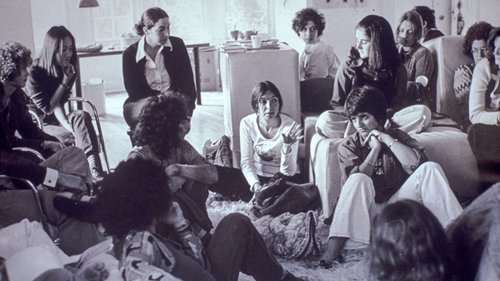
Through intimate interviews, provocative art, and rare, historical film and video footage, this feature documentary reveals how art addressing political consequences of discrimination and violence, the Feminist Art Revolution radically transformed the art and culture of our times.
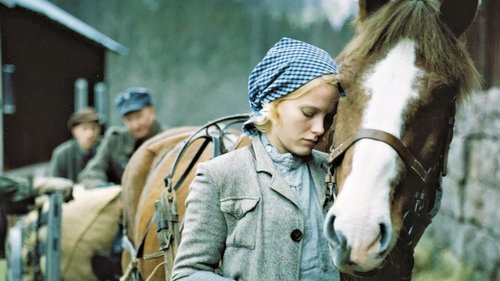
The film tells about members of Finnish women's Lotta Service during the Second World War through the eyes of three young women.
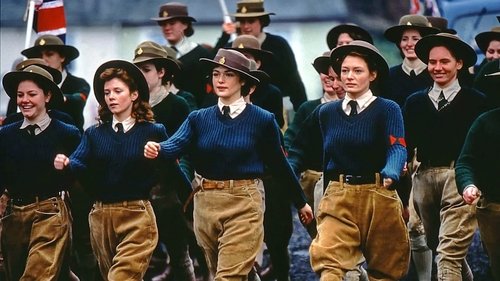
During World War II, the organisation "The Women's Land Army" recruited women to work on British farms while the men were off to war. Three such "land girls" of different social backgrounds - quiet Stella, young hairdresser Prue, and Cambridge graduate Ag - become best friends in spite of their different backgrounds.
Coming from all social strata, a priory model citizens of the Third Reich, one thing unites these women: hatred against the Hitler regime and the desire to end the Führer.
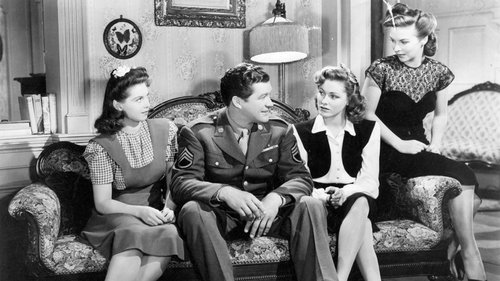
Army sergeants Dave and "Fixit" spend a three-day pass in Pasadena, where they meet Janet and Cora, two young women who work in a parachute factory.
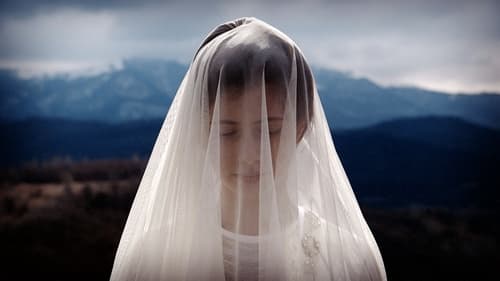
«Grozny Blues» follows a few people around Grozny, the capital of war-torn Chechnya where daily life is defined by political repression, constricting customs, forced Islamification and the failure to come to terms with recent history. The film revolves around four women who have been fighting for human rights under worsening conditions for many years but get more and more disillusioned with the situation in Putin’s Russia. The building where they work is also home to a Blues Club that is frequented by a group of young people. Having only vague memories of the Chechen wars in the 90s, they try to make sense of the strange things that are happening in their country. In linking the personal and intimate to the political, Nicola Bellucci shows in a dramatic and yet very poetic way what it means to live in a divided society that navigates a no-man’s land between war and peace, repression and freedom, archaic traditions and modern life.

During the Malvinas war, more than a thousand Argentine soldiers were wounded. Many were cared for by 14 nurses in a mobile hospital located in Comodoro Rivadavia. After 37 years of silence, three of them return to the place to tell their stories.
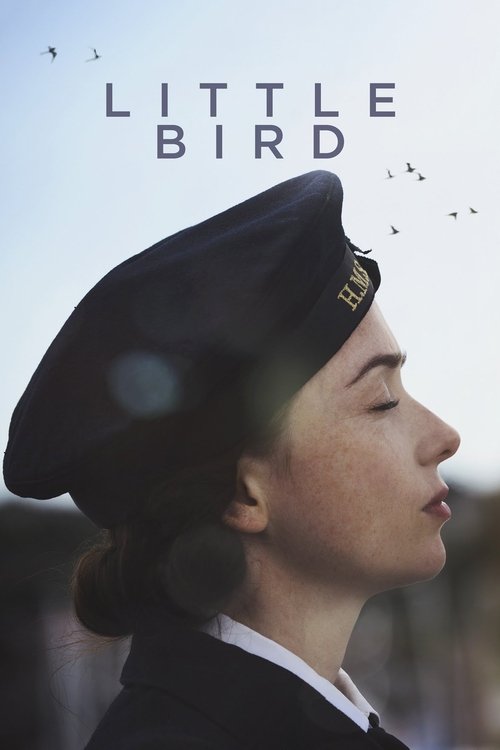
A young woman seeks to expand her limited horizons, set against a backdrop of wartime London.
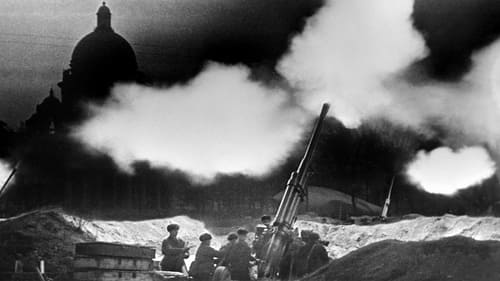
It was one of the great crimes of the Second World War: from 1941 to 1944, a total of 872 days, the siege and starvation of Leningrad by the German Wehrmacht on Hitler's orders lasted. Over a million people fell victim to the blockade, most of them dying of hunger. Countless of these starving people wrote diaries with the last of their strength, and cameramen filmed in the paralyzed city. Evidence from the hell of the siege, many of the film recordings, but above all the written memories on which this documentary on the occasion of the 80th anniversary of the liberation is based, remained under lock and key after the war. The voices of those who had suffered through this terrible time should not be heard by anyone, because they did not fit the pathos of the Leningrad heroic song that was officially sung. Most of the recordings come from women. The writers feared neither the enemy nor the Communist Party or Stalin, who often proved incompetent in providing for the population.