
Action
Adventure
Animation
Comedy
Crime
Documentary
Drama
Family
Fantasy
History
Horror
Music
Mystery
Romance
Science Fiction
Thriller
War
Western
Found 24 movies, 6 TV shows, and 0 people
Can't find what you're looking for?

It was a war that unleashed terrible brutality. On one side was a ruthless leader-Serbian President Slobodan Milosevic-who claimed history was on his side. On the other, an alliance whose politicians believed that this was a crusade for moral values. It was a war where the politicians, rather than the military commanders, dictated the battlefield strategy and tactics. At its end, the war had produced one million refugees, thousands of civilian deaths, and a broken land still without peace. FRONTLINE correspondent Peter Boyer undertakes the first in-depth examination of a European war rife with diplomatic infighting and military stumbling.

Offering a vivid depiction of America's World War II campaign in Europe, the series employs war footage taken from the U.S. Army, Navy and Coast Guard, the British War Office, the National Film Board of Canada and captured Nazi materials. The program highlights strategic sessions with Allied and Axis power leaders and generals. Narrated by Westbrook Van Hoorhis and Hugh James.
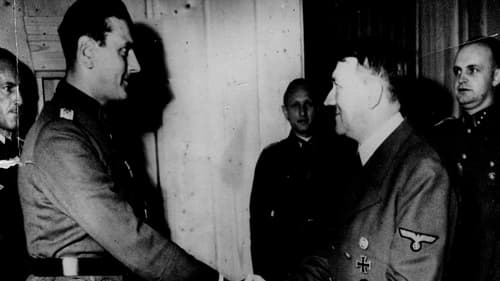
Waffen-SS officer Otto Skorzeny (1908-75) became famous for his participation in daring military actions during World War II. In 1947 he was judged and imprisoned, but he escaped less than a year later and found a safe haven in Spain, ruled with an iron hand by General Francisco Franco. What did he do during the many years he spent there?
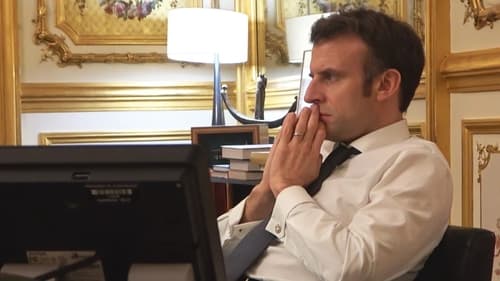
They call each other Emmanuel and Vladimir - but despite the informal tone, a fateful negotiation is taking place. During France's presidency of the EU, President Macron takes on the task of negotiating with President Putin in an attempt to prevent an invasion of Ukraine. For the first time, we get to follow the diplomatic game behind the scenes and hear parts of their phone conversations.
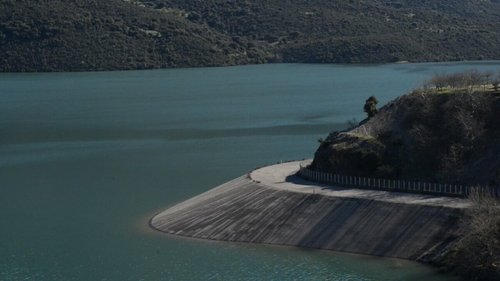
As Europe is going through a crisis that is not solely economical but also a crisis of moral values, millions of European citizens demand a response to a crucial question: is water for the European Union a commercial product or a human right? Until today, the European Institutions have not given a clear answer. The EU has still to recognize water as a human right, as the UN did in 2010. Up To The Last Drop follows the money and the corporate interests during a period of four years in thirteen cities of six EU countries. It’s a documentary film about water that reflects contemporary European values and the quality of the current European democracy.
1943 US Army Air Forces film documentary

This is the first documentary film that tells the forgotten story of the annihilation of the Gypsies by the Nazis and their allies from one end to the other of Europe. With interviews of the survivors and archival footage never seen before the film points out the architects of this terrifying genocide and goes through all the territories where the extermination took place.

War, economic sanctions, inflation... Everything stopped in 1995 - something a day earlier, something a day later, for many - everything happened on 2nd of July. That day, the basketball players became European champions! And finally light in the darkness of Yugoslavia. It was the first post-war gold, the first sports medal after the sanctions, and it was the first spontaneous championship balcony.
Animated portrayal of territorial transitions of European countries in World War II using caricatures.
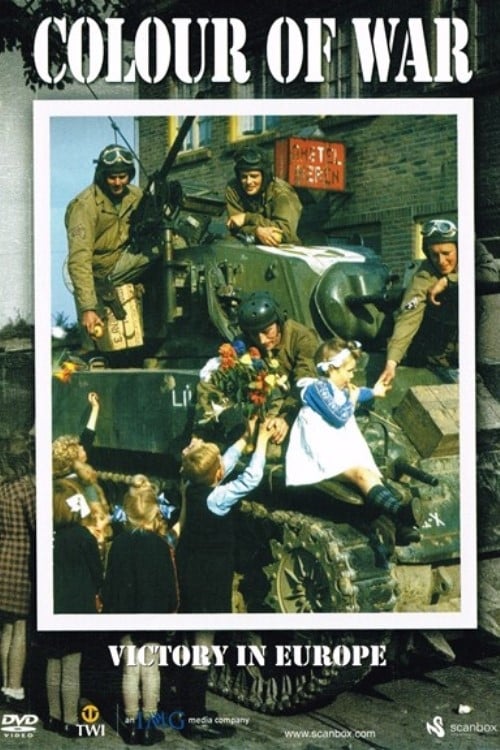
Documentary using rare colour footage about the Victory in Europe celebrations following the defeat of Nazi Gemany. Having officially surrendered on the 7th of May 1945, the following day was declared VE Day, and saw wild celebrations in Britain and across war-ravaged Europe.
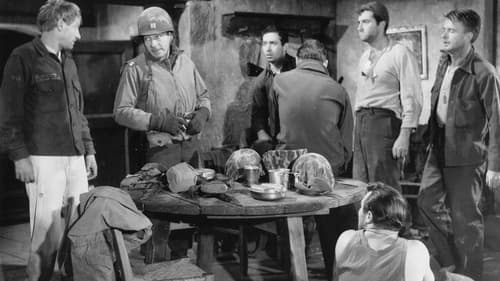
An American Army tank unit is trapped in a small French town in the Ardennes unaware that a spy amongst them is providing the German counterattack with vital battle information.

Katia, a volunteer from Kyiv fighting against the invasion of Ukraine, uses a laptop donated to the resistance and comes into contact with the young son of the computer’s original owner, who is desperately in search of his missing parents. Her attempts to help the child will see her risk all she holds dear.
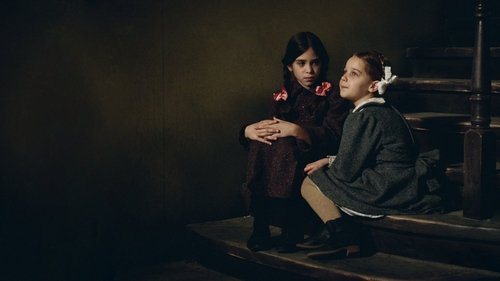
Immortalised as one of the most scintillating and uplifting Christmas songs, 'Carol of the Bells' adapted from a popular and loved Ukrainian folk melody, came to represent the spirit of brotherhood and unity all over the world. The peaceful and neighbourly existence of three families, Polish, Ukrainian and Jewish, sharing a large house, musical evenings and merriment in the city of Stanislaviv in the years preceding and post war, is shattered. First in the Soviet occupation and the persecution of the Polish family, then, by the Nazi occupation of Ukraine, and the decimation of the Jewish family. Sacrificing their lives the Ukrainian family manage to save their neighbours' children and their own daughter. Death and loss come to these families, but the healing power and joy , and a promise that the Future Will Not be Cancelled which "Carol of the Bells' evokes will be everlasting.

A biopic of Napoleon Bonaparte, tracing the Corsican's career from his schooldays (where a snowball fight is staged like a military campaign) to his flight from Corsica, through the French Revolution (where a real storm is intercut with a political storm) and the Terror, culminating in his triumphant invasion of Italy in 1797.
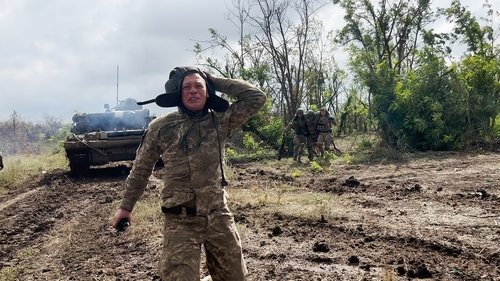
On February 24, 2022, Yevhen, together with his friends, volunteered to join the first aid squad on the front line. They provided life-saving support and evacuation of the wounded. This film reveals the experiences of these young men for six months full of drama, despair, fear, hatred, bitterness, love, and, most importantly, faith in victory.
Dmytro Komarov's documentary project The Year. Kharkiv Region. Dmytro Komarov will show Kharkiv in the first months of the full-scale invasion of Ukraine by Russian troops. Viewers will hear the stories of people who found themselves in the epicentre of the brutal attacks: at the air defence base destroyed by a Russian missile, in the residential area of the city - Northern Saltivka - which was ravaged by shelling. The journalist will talk to those who played a key role in the liberation of the Kharkiv region. One of these people is Roman Hryshchuk, the commander of the 127th separate territorial defence brigade of Ukraine. He told us how the military practice of the past - using decoys in the form of dummies - helped to identify and destroy the occupiers. How did the full-scale war begin for Kharkiv? What plans did the enemy have for Kharkiv? What united people and gave them hope in the most difficult times? Find out in the documentary project "Year. Kharkiv Region".
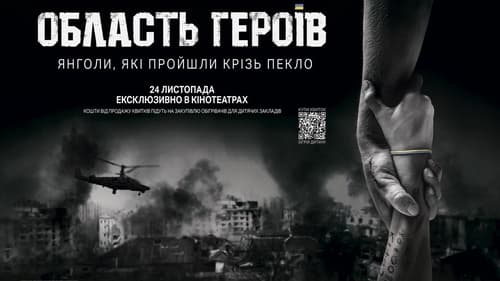
Film reconstruction of five real stories about the heroic deeds of the residents of Kyiv region during the Russian occupation. A story about those who heroically and selflessly saved tens of thousands of Ukrainian lives.
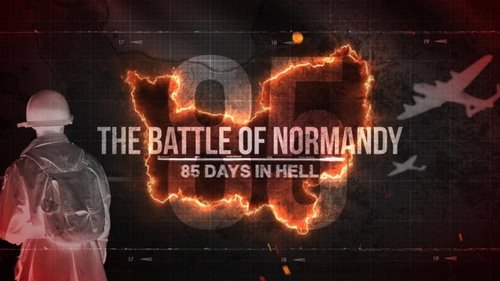
On the morning of June 6, 1944, thousands of ships reached the French coast of Normandy as part of an Allied operation to take back France from the Germans. For the next 85 days, U.S., British, and Canadian soldiers engaged in conflicts of unimaginable violence, conquering and liberating the region's cities, but at the cost of hundreds of thousands of lives. From the D-Day invasion to the final Nazi surrender in Argentan, this is the definitive story of the three-month Battle of Normandy as it's never been seen before.
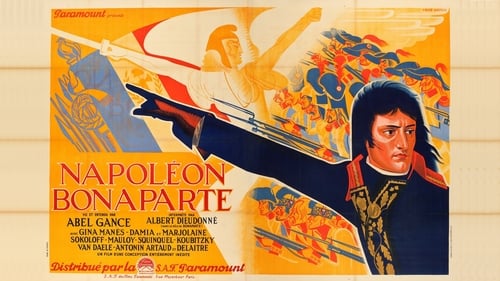
A second version of Gance's Napoléon, with sound.
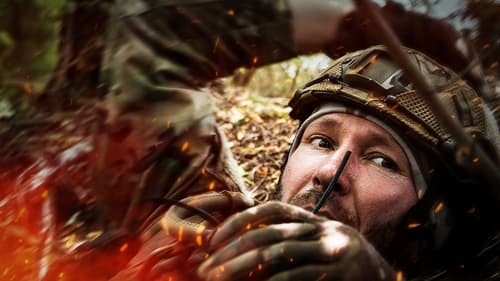
Filmmaker Olly Lambert spends two months on Ukraine’s southern frontline with volunteer special forces as they begin the push to capture Kherson. The film follows “Hummer”, an experienced military commander who now finds himself a chaperone to completely inexperienced forces on the frontline.
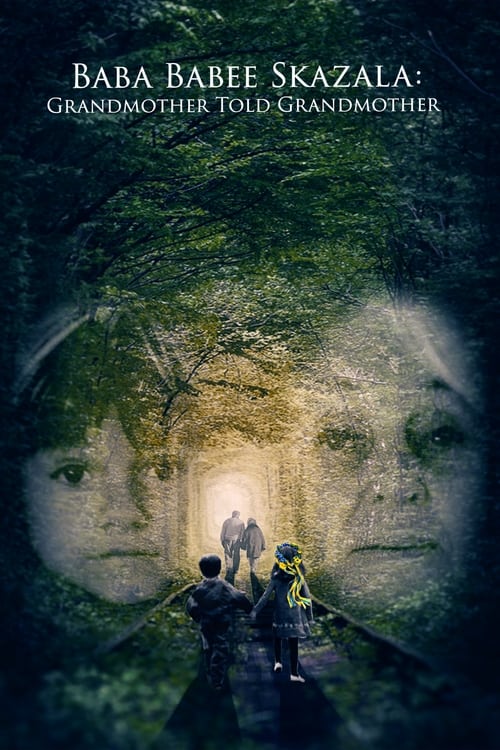
The little-known story of Ukrainian children torn from their homes in the crush between the Nazi and Soviet fronts in World War II. Spending their childhood as refugees in Europe, these inspiring individuals later immigrated to the United States, creating new homes and communities through their grit, faith and deep belief in the importance of preserving culture.
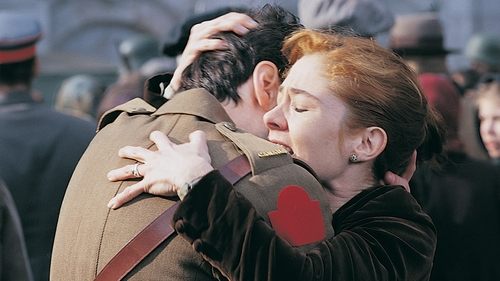
Anne is persuaded to join her fiance, Gilbert, in New York City as he begins his tenure at a major hospital. However, any chance of lasting happiness is dashed when Gilbert enlists to serve in The Great War in Europe. Anne stays behind and takes up writing, but learns that contact has been lost with Gilbert. Seeing no other option, Anne decides to venture to Europe herself to find him. In doing so, she begins an adventure that will challenge her wits and imagination to the limit.

Sixty years after the signing of the Élysée Treaty, which opened an unprecedented era of cooperation between the two countries, how is the Franco-German tandem doing? An enlightening assessment, at a time when the war in Ukraine is shaking the world order.
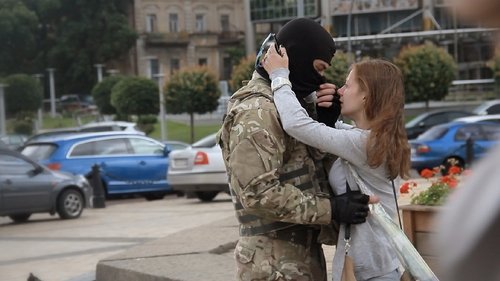
The story of war, love and death that was documented by the immediate participants of events. Off screen and later on it are the two - a boy and a girl. He volunteered for the front; she went to the place just after the battle. He got into Ilovaysk cauldron, lost his closest brother-soldiers. She, while travelling along the ruined towns, strives to understand the essence of war and love. Both tell openly one another about their feelings during the war, escaping the cauldron, a try to live together after, and a common trip to the frontline.