
Action
Adventure
Animation
Comedy
Crime
Documentary
Drama
Family
Fantasy
History
Horror
Music
Mystery
Romance
Science Fiction
Thriller
War
Western
Found 15 movies, 1 TV show, and 3 people
Can't find what you're looking for?
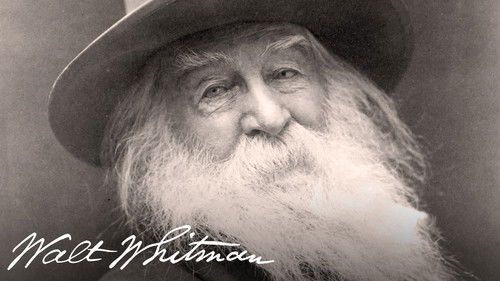
This American Experience tells Whitman's life story, from his working-class childhood in Long Island, to his years as a newspaper reporter in Brooklyn when he struggled to support his impoverished family, then to his reckless pursuit of the attention and affection he craved for his work, to his death in 1892.

An introduction to Walt Whitman, American poet, essayist, and journalist. A world poet-a latter-day successor to Homer, Virgil, Dante, and Shakespeare.
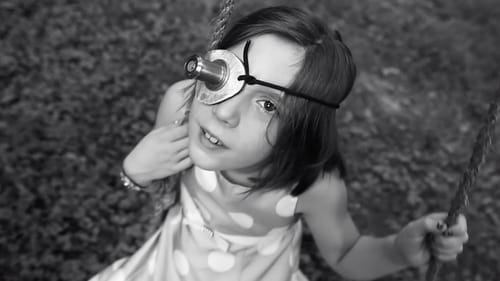
As the title suggests, this is a speculative biography of the artistic side of Walt Whitman. Starting out as an ordinary nine year old girl, young Walt is soon catapulted into the world with all her senses ablaze. Combining drama, dance, puppetry, and potato cannons, the film is a sometimes funny, sometimes sad rumination on growing up as a 'sensitive kid.'

The confirmation of Supreme Court nominee Brett Kavanaugh was politically divisive, but Walt Whitman's 19th century wisdom remains timeless. In 1892, the poet wrote in prose: "I have sometimes thought, indeed, that the sole avenue and means of a reconstructed sociology depended, primarily, on a new birth, elevation, expansion, invigoration of woman." Towards the end of his life in 1888, he added "America" to his collection "Leaves of Grass," and then recited four lines from the poem, onto a wax cylinder recording, before he died (it is the only record of his voice in existence): "Centre of equal daughters, equal sons, All, all alike endear’d, grown, ungrown, young or old, Strong, ample, fair, enduring, capable, rich, Perennial with the Earth, with Freedom, Law and Love" And the written poem proceeds to say: "A grand, sane, towering, seated Mother, Chair’d in the adamant of Time."

Walt Whitman was the first major poet to create a truly American vision and style. His extraordinary example gave American verse much of its subsequent character and diction. Rejecting traditional constraints of form and subject matter, Whitman considered democracy itself appropriate grist for his own poetic mill, inventing a radically different sort of free verse to express what he had to say.
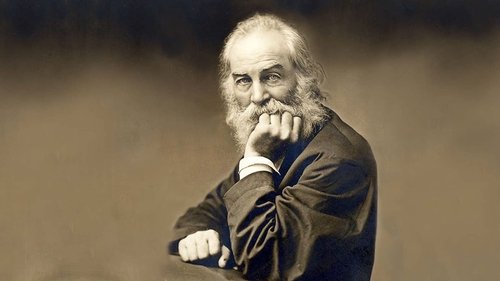
Walt Whitman rises from a hardscrabble boyhood in Long Island and Brooklyn to write the masterpiece Leaves of Grass in 1855 that revolutionizes literature. Many of his most famous poems are profiled.
The poet moves to Washington to care for injured Civil War soldiers but is disillusioned by the Gilded Age after the war. He recovers from a debilitating stroke to live out his days in Camden NJ, where he continues to write poetry.
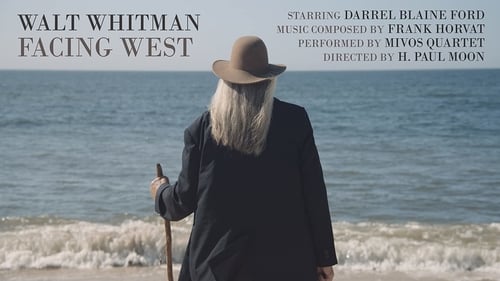
A cinematic setting of poems by Walt Whitman that span his whole life's work, commemorating his bicentennial year. Features the poet's Long Island native "personator" Darrel Blaine Ford, manifesting and reciting "Song of Myself," "There Was a Child Went Forth," "Give Me the Splendid Silent Sun" and "Facing West From California's Shores." Filmed at the poet's birthplace, the Long Island shore, Manhattan, and where West meets East.
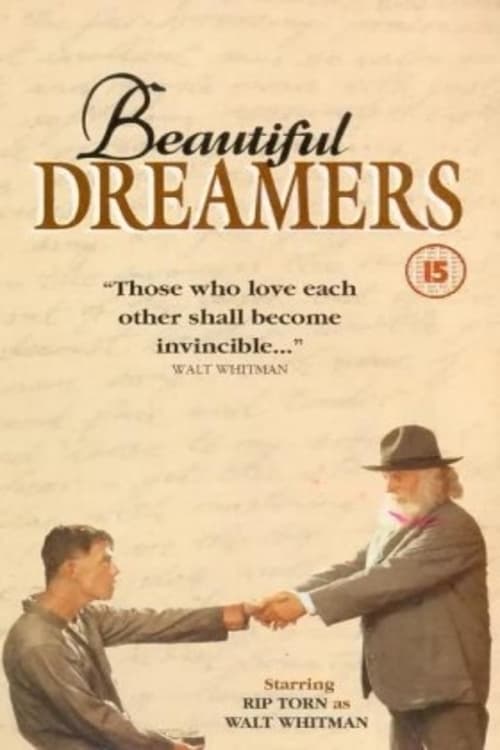
When the superintendent of the Canadian insane asylum, Dr. Maurice Bucke, meets poet Walt Whitman, his life and that of his wife and patients is radically changed. Like Dr. Bucke, Whitman has avant-garde ideas on the subject of mental illness. "Dreamers" is based on true events. Dr. Bucke became an important biographer of Walt Whitman.

Humanity existing within nature then reshaping and destroying it
An exploration of love and lust in nature.
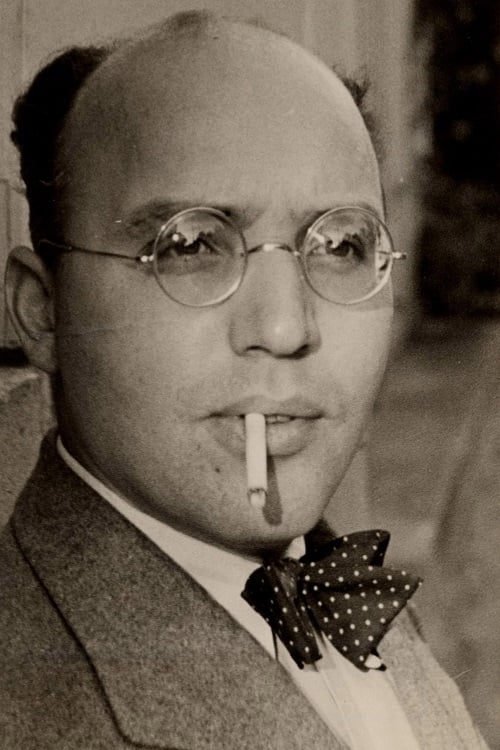
The story of Kurt Weill 's relationship with the American popular theatre. During his years in exile on Broadway, the composer of Mack the Knife and The Alabama Song, who personified decadent Berlin, found a new life in New York, creating such standards as September Song and Speak Low. Director Barrie Gavin describes the film as "the history of an artist ... struggling to write music which could have real meaning for the society he had just joined." Weill is remembered by the conductor Maurice Abravanel and the actor Burgess Meredith and there are extracts from several of his works.
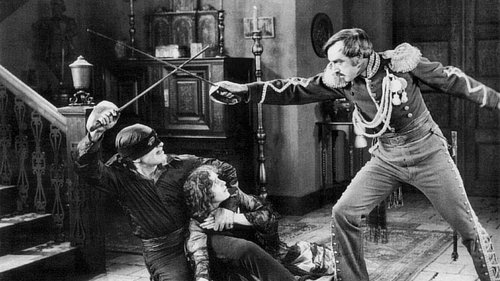
Don Diego Vega pretends to be an indolent fop as a cover for his true identity, the masked avenger Zorro. Preserved by the Academy Film Archive in 2012.
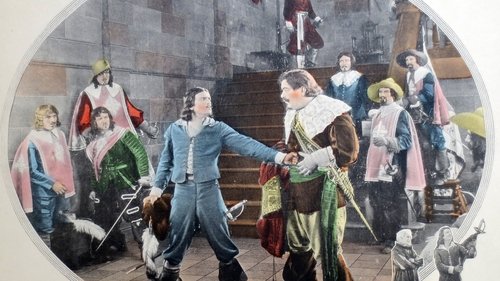
In 17th century France, young D'Artagnan wants to join the King's Musketeers, but instead befriends three legendary musketeers—Athos, Porthos, and Aramis—and together, they become embroiled in the political intrigue surrounding King Louis XIII and his adversaries, particularly the powerful Cardinal Richelieu.

The story centers around Nanette, an American girl living in a small Canadian village, who is in love with John Patricia, the eldest of five brothers. The war interrupts their romantic idyll, as everyone goes overseas to Belgium and France. Nanette becomes a Red Cross nurse and is terrorized by the evil Prussian Lt. von Eberhard.