
Action
Adventure
Animation
Comedy
Crime
Documentary
Drama
Family
Fantasy
History
Horror
Music
Mystery
Romance
Science Fiction
Thriller
War
Western
Found 40 movies, 9 TV shows, and 0 people
Can't find what you're looking for?
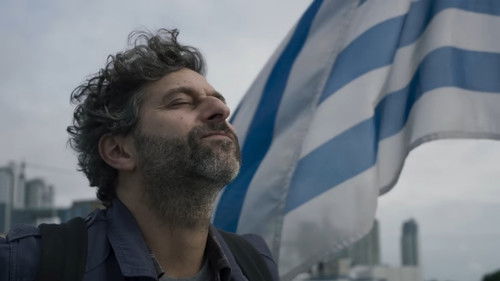
A writer who pins hopes on a free-spirited 25-year-old he meets in Montevideo to get through his midlife crisis. But his day turns out to be the most unexpected and transformative day of his life.
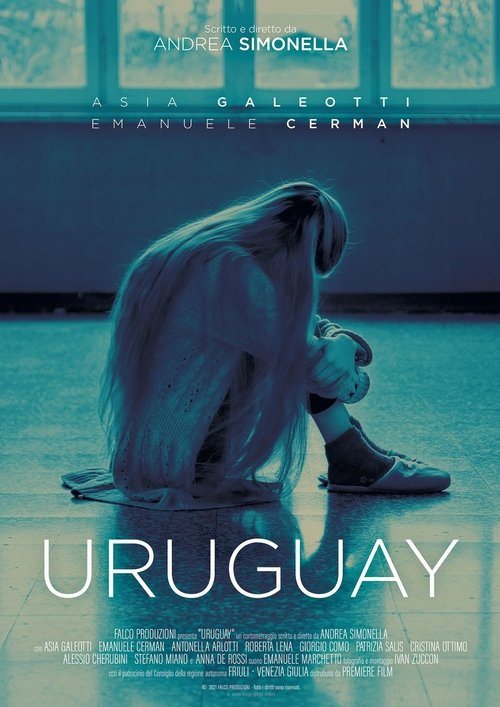
Adele is hospitalized in a psychiatric ward. A nurse attracted by Adele's body,will give vent to a violent raptus: it'll not be the only episode of abuse. With the help of a psychiatrist, Adele will be able to tell the truth.
![Dieste [Uruguay]](https://image.tmdb.org/t/p/w500/iXdwycGTb426h8wf5Ogr8PD0UDh.jpg)
The final part of Heinz Emigholz’s "Streetscapes" series is again a triptych. A prologue examines three buildings from the 1930s designed by Julio Vilamajó in Montevideo which could have inspired the work of Eladio Dieste, the subject of the main part of the film. The industrial and functional buildings presented span the period from 1955 to 1994; their organic brick construction is astonishing and inspiring.

Today we know that Uruguay is not only a gently undulating peneplain, in this country different ecosystems are found; species from the Pampas, the Atlantic Forest and the Chaco Forest come face to face, giving rise to unexpected scenes.
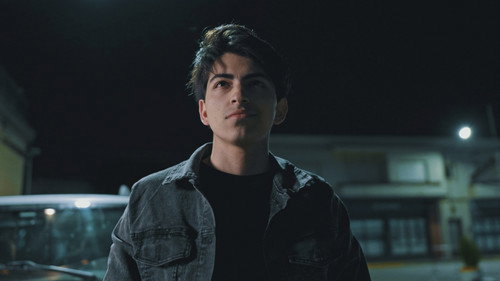
Year 2002. In the midst of a crisis that suffocates him, a young man tries to convince himself to take a step he never imagined to enter and rob a gas station. As he hesitates, the night becomes increasingly disturbing. The radio that accompanies him seems to know too much, the voices are confused with his thoughts and reality begins to twist subtly. Nothing is entirely clear, and something or someone seems to be watching him.
No description available for this movie.
Ana, a debutante actress, flees minutes before the premiere of her play due to an anxiety attack. Inside a café, she meets David, who, in an attempt to cheer her up, captivates her with the story of the 1950 World Cup final, Brazil versus Uruguay.

The documentary illustrates which were the political, social, and cultural circumstances that led Uruguay to become the first country in the world to comprehensively regulate the market of marijuana, a decision which marked a milestone in the history of drug policy and placed Uruguay in the focus of international attention.

The global 'war on drugs' has seen countless human rights abuses and claimed many lives. In 2013, Uruguay [made history when it] became the first country to comprehensively regulate the cannabis market. Cannabis in Uruguay documents the progress and outcome of this ruling, charting our cultural understanding of marijuana, and investigating why drug policy and production has historically caused violent conflicts.

The Uruguay of restored democracy alter years of military dictatorship remains divided about what to do with de military accused of violations of human rights during their government. This documentary records that division and the opinion of different people previous to the referendum on April 16, wich finally granted amnesty for the military.

Presents the activities of a young woman on a holiday.

No description available for this movie.
From found footage and using the natural deterioration, scratches, fungus and noises of the original material, the different layers of sound, music, text and their interaction with the image raise questions about the idea of nation, identity and the passage of time.
In 2004, after 174 years in which political power was always held by one or other of the parties on the right, a historic change at last became possible in Uruguay. This documentary was filmed in the days coming up to the election, and it shows how the common people saw their country. The main protagonist is the man in the street. With humour, with intense emotions, with a lot of dignity and a passion for politics, these Uruguayans show how proud they are to be playing a role in their country's history.
Early on, Ugo Ulive, with his short film Como el Uruguay no hay (1960), seeks to raise awareness and involve the viewer in political action and its radical transformation. Through a collage of animations, archival footage and a counterpoint sound montage, Ulive attacks traditional left-wing and right-wing politics and exposes the contradictions of a pillar of national identity: Uruguay's famous democracy. Note that we are in 1960 and while the voice over presents Montevideo as "a small agitated city", the images show a tense scenario with social protests and a politicized urban space with the presence of mounted police.

Documentary made from the record of five manifestations of Uruguayan children's folklore: «El rango», «La rayuela», «Andelito de oro», «La farolera» and «San Severín del monte» / «Los oficios».
No description available for this movie.
Vincent Nguini - Guitar Steve Gadd - Drums Tony Cedras - Accordeon, Keyboard, Guitars The Waters - Background Vocals Piano: ? Mingo Araújo - Percussion Sidinho Moreira - Percussion Dom Chacal - Percussion Cyro Baptista - Percussion Ray Phiri - Guitars Chris Botti - Trumpet Armand Sabal-Lecco - Bass Michael Brecker - Saxophone, EWI John Selolwane - Guitars Barney Rachabane - Saxophone, Pennywhistle Reginald 'Briz' Brisbon - Background Vocals
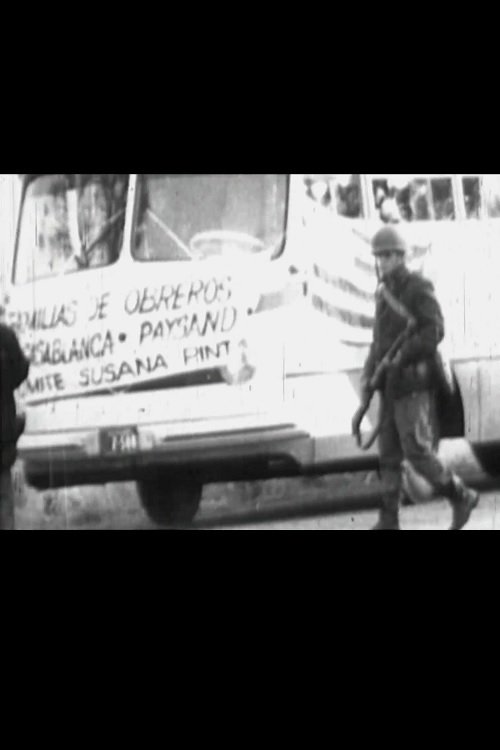
After the meat industry workers stop receiving 2 kilograms of meat a day as a part of their salary, they organize the biggest strike in Uruguayan history. Images of farms. Meeting at the workers' society. Relations between the Uruguayan economic and political leaders and the United States. Scenes of decay and misery. Workers' demonstrations. Clashes between police and demonstrators.
No description available for this movie.
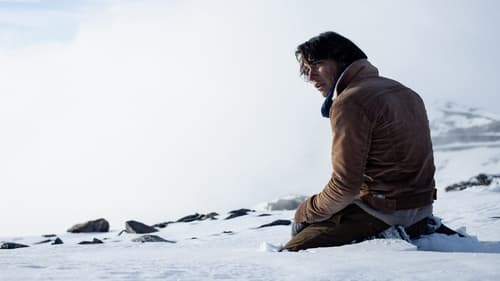
On October 13, 1972, Uruguayan Air Force Flight 571, chartered to take a rugby team to Chile, crashes into a glacier in the heart of the Andes.
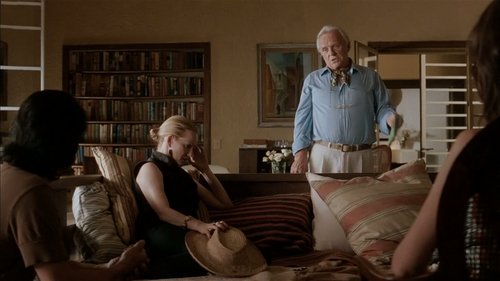
28-year-old Kansas University doctoral student Omar Razaghi wins a grant to write a biography of Latin American writer Jules Gund. Omar must get through to three people who were close to Gund – his brother, widow, and younger mistress – so he can get authorization to write the biography.

In the early years of the World War II, the Royal Navy is fighting a desperate battle to keep the Atlantic convoy routes open to supply the British Isles, facing the great danger posed by the many German warships, such as the Admiral Graf Spee, which are scouring the ocean for cargo ships to sink.

Fresh out of prison, an ex-con and his girlfriend hit the road in pursuit of a multi-million-dollar stash promised by his former cellmate. However, with the police hot on their heels, getting their hands on the cash turns into a deadly trap.
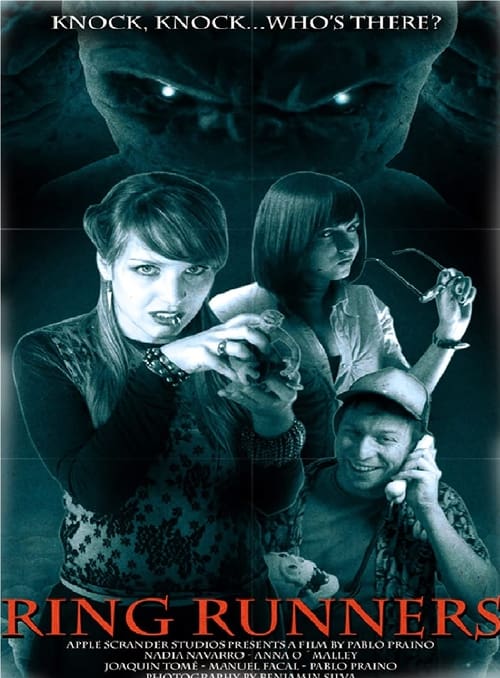
Tiana, a teenage occult fanatic, finds a ring that lets her summon tiny demons she will use to enact her revenge against anyone who mocked her. The only one standing in her way is her shy sister, Micaela.
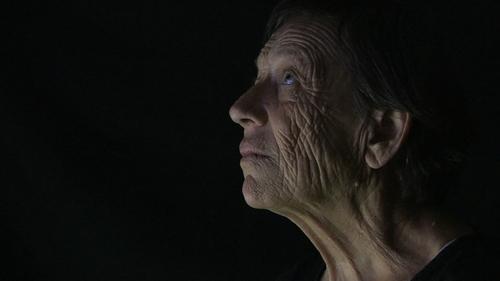
Six elderly retired women, two from Buenos Aires, Argentina; two from Montevideo, Uruguay; and two from Madrid, Spain, have something in common, despite their different interests and lives: they go to the movies almost every day.

In the near future where civil war is the order of the day and strange diseases are devastating, a boy lives alone in the house that his parents left him. Away from the surrounding chaos, he survives day by day from what the countryside gives him, until one day a strange girl interrupts her nighttime sleep, altering her daily life.
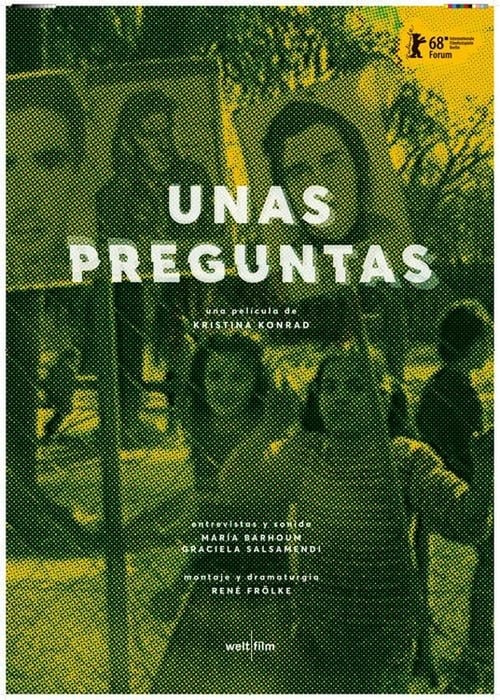
In 1986, the Uruguayan Parliament passed a law granting amnesty for all crimes and human rights violations committed by the military and police during the dictatorship (1973-85). This law of impunity prevented the clarification demanded by the relatives of those who had disappeared and been murdered by the former regime. A public initiative arose calling for a referendum in which the law be subject to the vote of the people. Unas preguntas uses U-matic footage, mostly of interviews recorded on the streets of Uruguay between 1987 and 1989, to present a time capsule of the period.
After the news of the sale of the house where we lived for the last 15 years and its imminent demolition, I felt the need to revisit my story, marked by a violent childhood. Digging into the personal archives that I started filming at the age of 19, I discover that my life was very similar to my mothers and I decide to start a dialogue with her, in the hope of healing a shared wound.
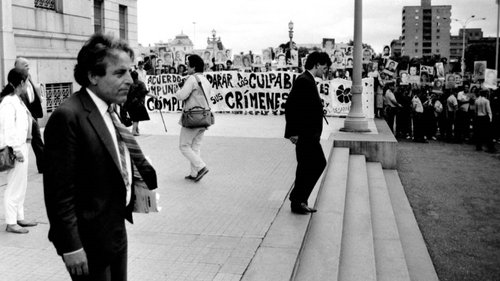
In Germán Araujo, director Aldo Novick revives the memory of a journalist who defied censorship during one of Uruguay's darkest periods. Through previously unseen archival footage, testimonies, and music, the film honors the courage of those who reported the truth when it was risky. This powerful documentary is shaping up to be one of the most important Uruguayan film releases of the year.
No description available for this movie.
No description available for this movie.

Following the death of a hotelier in Punta del Este, Uruguay, an unexpected inheritance dispute begins. Stallone, an actor with Down syndrome, believes he is the rightful heir to the hotel. On the other side is Magrelo, a young autistic man who was raised as an adopted son by the deceased. Without waiting for the reading of the will, Stallone decides to reunite his old friends with Down syndrome from the institute where they lived in Brazil to spend a week's vacation at the hotel.
No description available for this movie.

In 1998, a small South American village is in a flurry over the Pope's upcoming visit for the business opportunities that it will provide. While most of the residents plan to sell food at the parade, a smuggler family man decides to build a pay toilet.
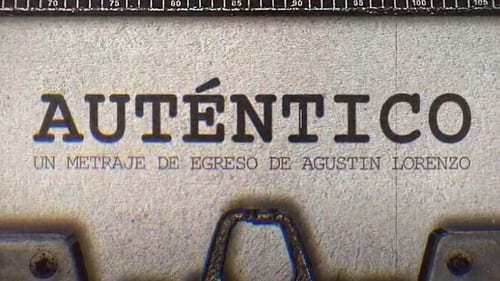
Joaquín is a film student who is frustrated by his insecurities as an artist. In the process of writing his debut, a series of eccentric characters from the world of independent cinema are revealed to him, challenging his principles, his relationships and his own identity.
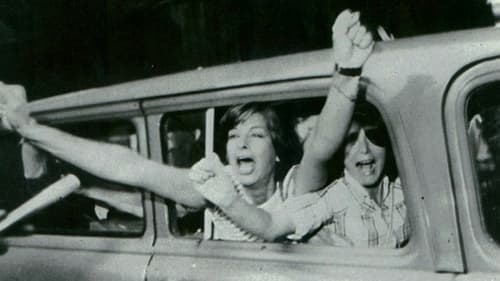
The Punta de Rieles prison was where most female political prisoners were incarcerated during the dictatorship in Uruguay. The way up to the building led through “the meadow” where there were animals grazing, and the prison itself was surrounded with flowers. The place seemed eminently liveable, almost comfortable, and at first sight there was no sign of the silent struggle going on behind those walls. This documentary is an attempt to reconstruct life at the prison through the testimony of some of the hundreds of women who were there and who resisted the military regime's attempts to grind them down and destroy them.
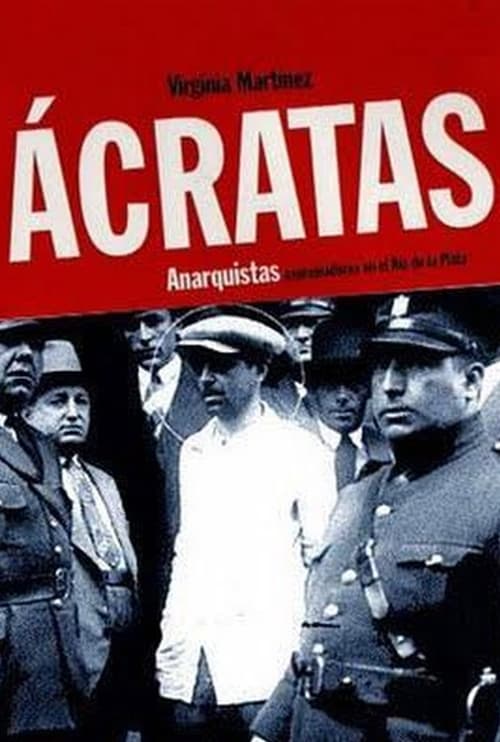
Armed based on photography, period films, archival materials and testimonies of survivors, family members and historians, the documentary accurately and exquisitely reconstructs the course of the “expropriating anarchists” in the Río de la Plata and specifically in Montevideo del First third of the 20th century.
No description available for this movie.
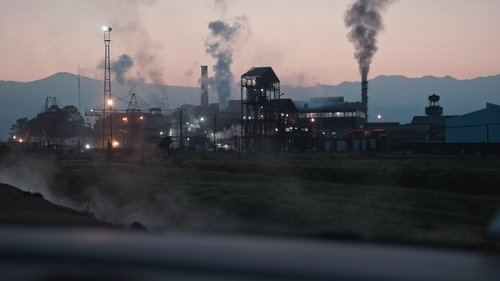
Images of Argentinian companies and factories in the first light of day, seen from the inside of a car, while the director reads out documents in voiceover that reveals the collusion of the same concerns in the military dictatorship’s terror.