
Action
Adventure
Animation
Comedy
Crime
Documentary
Drama
Family
Fantasy
History
Horror
Music
Mystery
Romance
Science Fiction
Thriller
War
Western
Found 20 movies, 3 TV shows, and 0 people
Can't find what you're looking for?
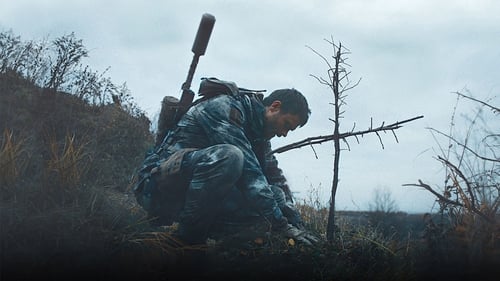
Mykola is an eccentric pacifist who wants to be useful to humanity. When the war begins in Donbas, Mykola’s naive world is collapsing as the militants kill his pregnant wife and burn his home to the ground. Recovered, he makes a cardinal decision and gets enlisted in a sniper company. Having met his wife’s killers, he emotionally breaks down and arranges “sniper terror” for the enemy.
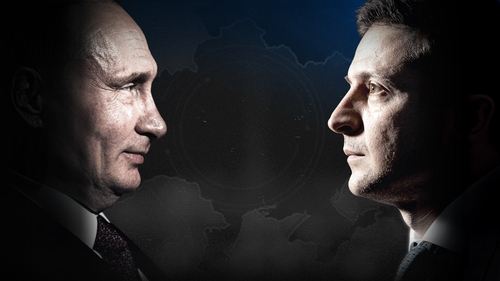
As the war between Russia and Ukraine rages, this George Stephanopoulos documentary pulls back the curtain on the rise of the two men at the center of the conflict – Russian President Vladimir Putin and Ukrainian President Volodymyr Zelenskyy.
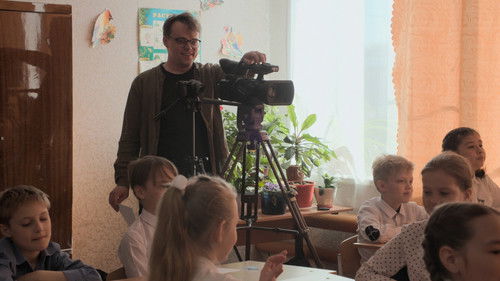
As Russia launches its full-scale invasion of Ukraine, primary schools across Russia’s hinterlands are transformed into recruitment stages for the war. Facing the ethical dilemma of working in a system defined by propaganda and violence, a brave teacher goes undercover to film what’s really happening in his own school.
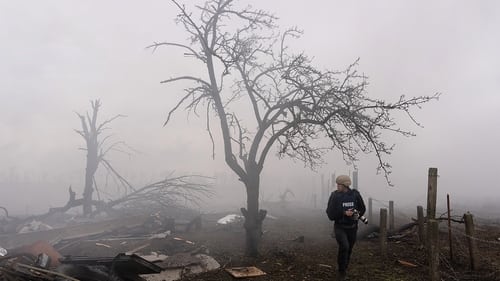
As the Russian invasion begins, a team of Ukrainian journalists trapped in the besieged city of Mariupol struggle to continue their work documenting the war's atrocities.
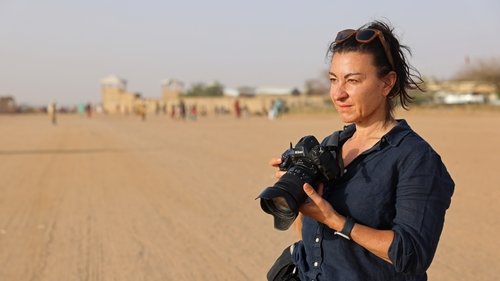
Pulitzer Prize-winning conflict photojournalist Lynsey Addario reflects on a career working in some of the world's most dangerous war zones, including the Russian invasion of Ukraine.
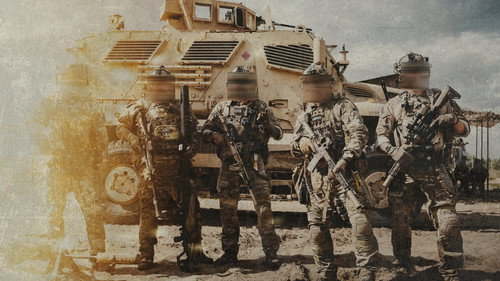
A couple races to rescue their kidnapped daughter from occupied territory. When a deal fails, commander SOVA and engineer SID launch a daring operation livestreamed worldwide by a journalist who must choose between escape and truth.
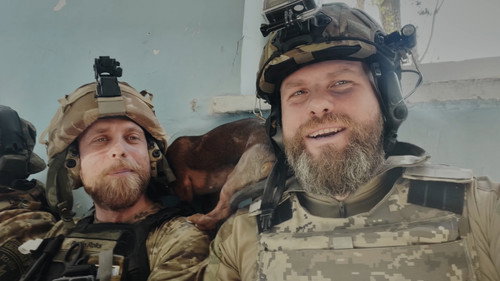
A documentary about Ukrainian actors who, when the war began, left the stage and joined the Armed Forces of Ukraine. The camera explores how creative professionals adapt to an environment where every decision carries irreversible consequences.
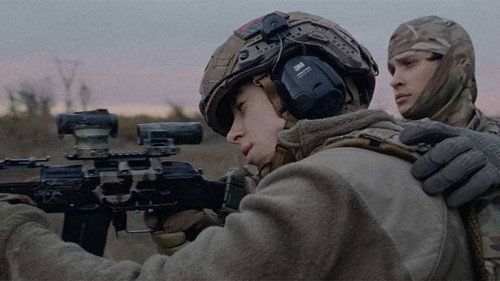
Black Sunflowers is a mosaic of Ukrainian youth, shuttling between the frontlines and civilian life, captured by the gifted American filmmaker James Marcus Haney (No Cameras Allowed) collaborating with an esteemed Ukrainian crew.
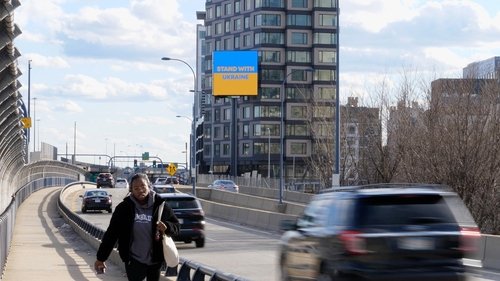
A man hikes through late-winter woods. Russia invades Ukraine. It’s difficult to reconcile the scales of action described by those sentences, but this difficulty is what John Gianvito dwells on in his new video. It may simply be that this is a diary, movingly plain and provisional in construction, which recounts what its author did for a few months last year: he watched a war on the internet and went outside. Even if that’s true, such a description makes Gianvito’s images seem less strange than they are
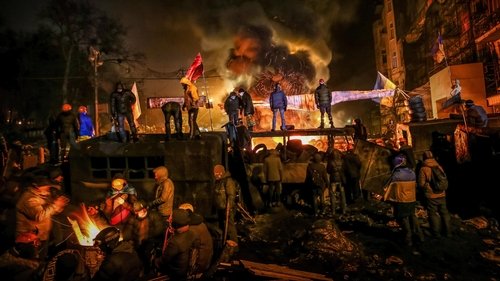
Over 93 days in Ukraine, what started as peaceful student demonstrations became a violent revolution and full-fledged civil rights movement.

Tatiana is forty-two years old and she is a stylist for one of Kyiv’s women’s magazines. She is ironic, self-confident, Tatiana lives in a large house on the suburbs of the Ukrainian capital and she enjoys the freedom that her recent divorce gave her. Her quite successful life is interrupted by the outbreak of the war. Friends and acquaintances come to her house, including her ex-husband and colleague who has a crush on her. Together, they watch how Russia destroys their city. After a few days, almost everyone tries to get out of Kyiv and persuades Tatiana to follow. But she can’t make up her mind.

In 2025, satellites recorded wildfires sweeping through the hills of Hollywood, shifting battle lines in Ukraine, and nearly 600 million people assembling for a sacred pilgrimage along the River Ganges. From orbit, imagery exposed the vast displacement of civilians in Gaza, while reconnaissance satellites traced covert weapons transfers from North Korea to Russia. Scientists also relied on satellite data to count migrating wildebeest and walrus, monitoring the planet’s health. Combined with news archives, eyewitness accounts, user-generated content, and expert analysis, these views from above reveal the hidden story of 2025.
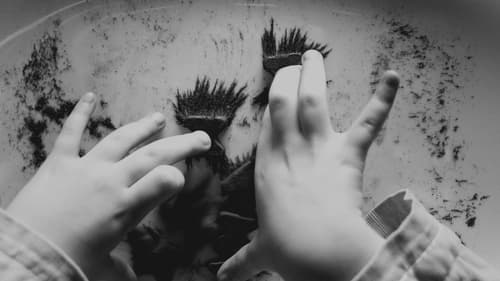
This lesson in political revelation focuses on the shooting down of the Malaysian passenger jet MH17 over eastern Ukraine in 2014. A meticulous, investigative exposé that lays bare the mechanisms of Russian warfare.

Between February and April 2025, filmmakers Bernard-Henri Lévy and Marc Roussel filmed the Pokrovsk and Soumy fronts in eastern Ukraine, following the fighters of the Anne de Kyiv Brigade, armed by France. They filmed the daily lives of the inhabitants, bombarded by Russian forces terrorizing civilians on the eve of possible negotiations. They interview President Zelenskyy, who is reluctant to travel to Washington, and then watch the rebroadcast of the meeting with Ukrainian soldiers in a bunker. For the real heroes are the anonymous fighters and civilians who hold their heads high in the face of adversity and suffering, and who are filmed on a daily basis. The final part of Lévy’s “Ukrainian Quartet”, Our War is a diary, peppered with flashbacks in which the author recalls the high points of this war that began in 2014.
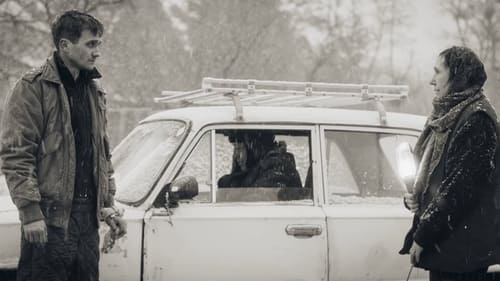
After the downing of the Ukrainian plane, the crew members find themselves in the occupied territory of Donbas and are forced to get out of there alone, for which they will have to turn the "double Immelmann" with their lives. The mother of one of the crew members, who is trying to help her son escape from captivity.
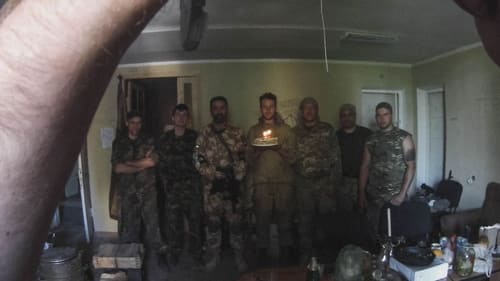
Personal videos from the phones, camcorders, cameras and GoPros of Ukrainian soldiers are woven into a surreal journey to the frontline of the war with Russia. The film shows a bizarre world whose laws are quite different from what we are used to. The behaviour is different, the relationships unfold differently and the humour takes on different notes. The heroes wake up and fall asleep, rejoice and cry, always feeling that the recording may end at any moment.
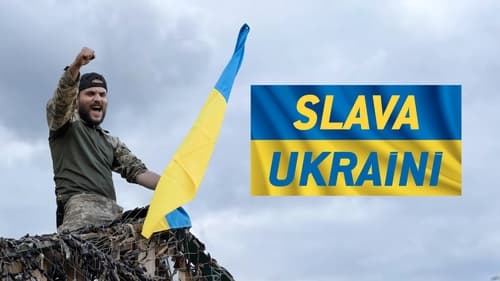
One year after the beginning of the full-scale Russian invasion of Ukraine, philosopher Bernard-Henri Lévy takes us to the heart of the combat through this war diary made during the second half of 2022. From Kharkiv and Bakhmut to Kherson, in the aftermath of the city’s liberation, this documentary bears witness to the ravages of war through the testimonies of soldiers, chronicles of the front and portraits of civilians, and shares with us the struggle of the Ukrainian people.
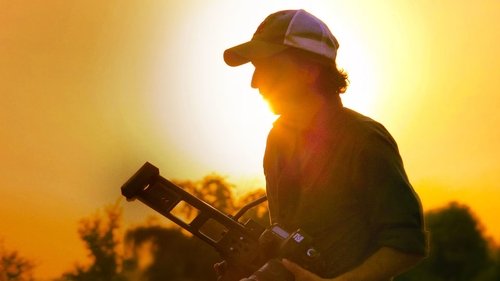
On March 13, 2022, filmmaker Brent Renaud was killed by Russian soldiers, the first American journalist to die while reporting on the war in Ukraine. His younger brother and collaborator, Craig Renaud, recovered Brent’s body and his final recordings from Ukraine and brought them back to their childhood home in Arkansas. As Brent’s journey to his final resting place unfolds, the film chronicles the years he and his brother spent covering some of the world’s most dangerous conflicts.
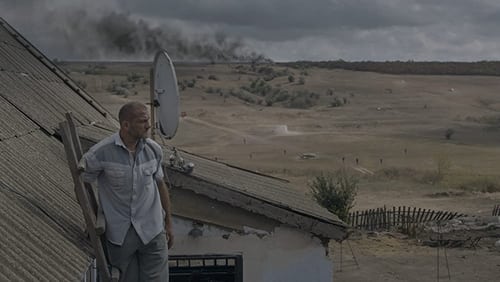
The story of a Ukrainian family living on the border of Russia and Ukraine during the start of the war. Irka refuses to leave her house even as the village gets captured by armed forces. Shortly after they find themselves at the center of an international air crash catastrophe on July 17, 2014.
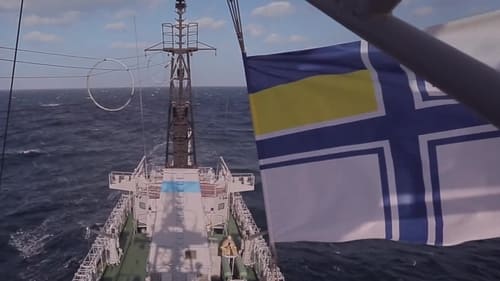
The film is a story about the officers, soldiers and seamen who did not betray their oath of loyalty to the people of Ukraine and their first hand accounts about Russia's invasion and annexation of Ukraine's Crimean Peninsula. They continue to fulfill their military obligations on land, on sea and in the air today.