
Action
Adventure
Animation
Comedy
Crime
Documentary
Drama
Family
Fantasy
History
Horror
Music
Mystery
Romance
Science Fiction
Thriller
War
Western
Found 26 movies, 24 TV shows, and 0 people
Can't find what you're looking for?
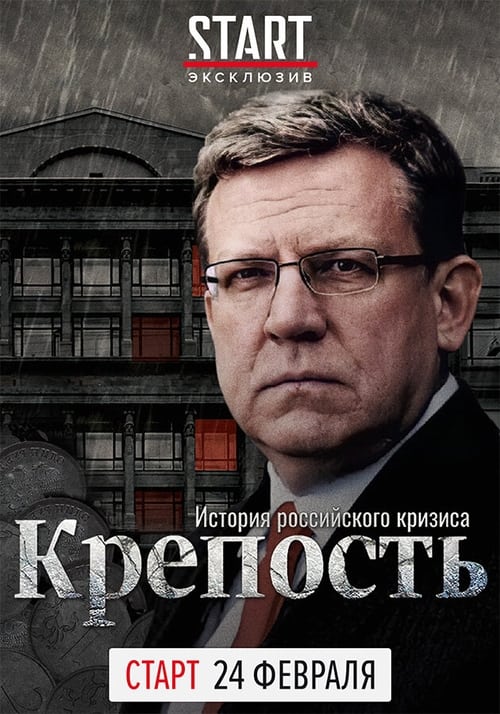
The film tells about the most difficult period in the modern history of Russia - from the late 1980s and the "era of change" to the crisis end of the noughties - through the prism of people who made the most important economic decisions. But this is not a dry enumeration of facts, but an accurate and even unexpected portrait of economists who managed to keep an entire country from financial collapse, and in the center of this group portrait is Alexey Kudrin.

The history of Rus' since inviting of the Varangians, led by Rurik, to converting of Princess Olga to Christianity.
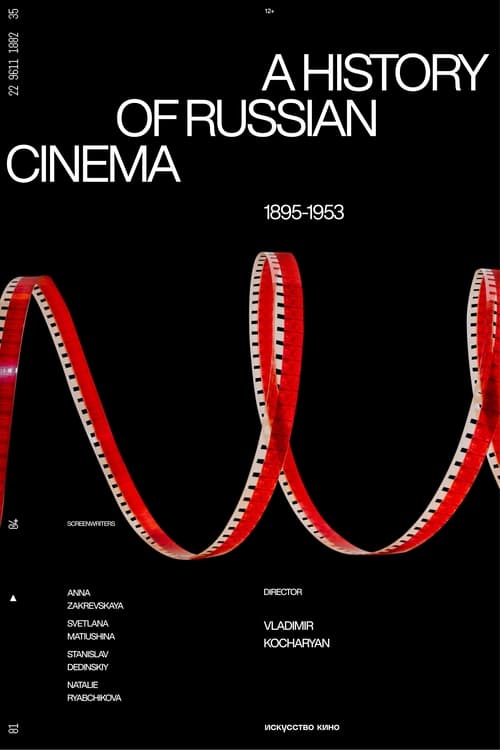
A two part documentary about the first five decades of Russian cinema: from its birth to 1953 - the death of Stalin and the first seedlings of the thaw. The film covers the most important milestones of cinema. Its introduction as a lowbrow entertainment, the impact of WWI and revolutions on the film process. The principal masters - Kuleshov, Vertov, Eisenstein - and their discoveries in film language at the turn of the 1920-30s. The arrival of sound. The evacuation of the Soviet film industry during WWII and the heroic work of the wartime documentary crews. Restricted film production and early signs of the thaw in the late 1940s - early 1950s. Film historians and art critics, directors and screenwriters put the history of cinema in a broader context, considering the path that the country took from Tsarist Russia to the totalitarian state under the rule of Stalin.

The history of aircraft construction began in Russia at the end of the 19th century. Thanks to several great engineers, airplanes began to appear that had no analogues in the world. The industry has experienced falls, but from time to time designers have done the impossible. In the sixth series, we will tell you how the aircraft industry developed in Russia and what incredible machines were created.
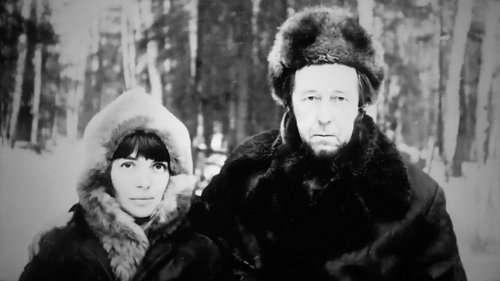
The story of Russian writer and Soviet dissident Aleksandr Solzhenitsyn (1918-2008) and his masterpiece, The Gulag Archipelago, published in Paris in 1973, which forever shook the very foundations of communist ideology.
The series is based on the memories of children, participants and witnesses of various events in Russia in the 20th century. How children who grew up in Russia in different years of the 20th century perceived the world around them, and with it the everyday life of Russian history. Life, the behavior of parents, the behavior of friends and enemies of the family, the external environment, social upheavals, political events, all this is noticed by children, all this adds up to that picture of history that we will not find either in official reports or in historical research.
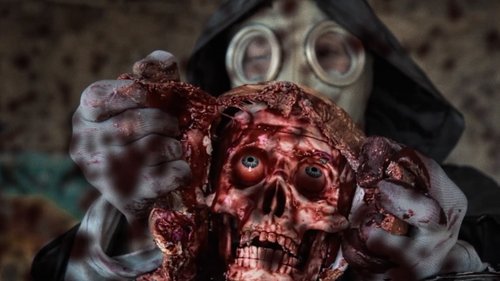
They have no experience, no resources, no knowledge, but when has this stopped sincere enthusiasts? A portrait of Russian pioneers of low-budget thrash horror — a genre that rarely comes into the focus of the general public's attention, which director Maxim Poltavchenko lovingly shows in all their grotesque and inventive variety.
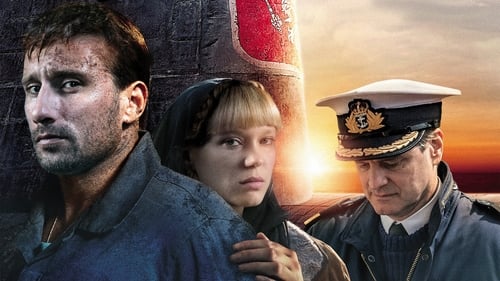
Barents Sea, August 12th, 2000. During a Russian naval exercise, and after suffering a serious accident, the K-141 Kursk submarine sinks with 118 crew members on board. While the few sailors who are still alive barely manage to survive, their families push for accurate information and a British officer struggles to obtain from the Russian government a permit to attempt a rescue before it is late. But general incompetence are against all their efforts.
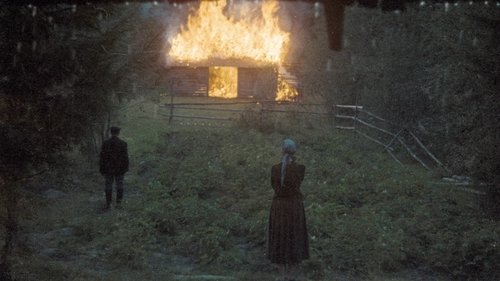
A dying man in his forties recalls his childhood, his mother, the war and personal moments that tell of and juxtapose pivotal moments in Soviet history with daily life.
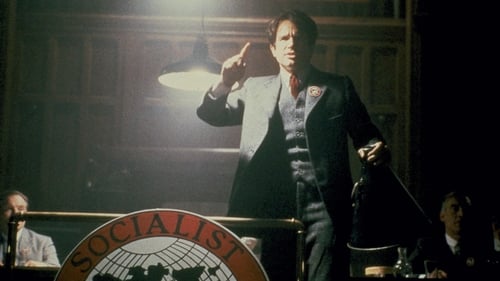
An account of the revolutionary years of the legendary American journalist John Reed, who shared his adventurous professional life with his radical commitment to the socialist revolution in Russia, his dream of spreading its principles among the members of the American working class, and his troubled romantic relationship with the writer Louise Bryant.
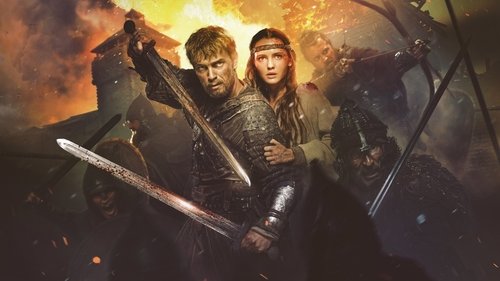
A story of a legendary battle, where seventeen fearless warriors defend their land against an army of thousands well-trained soldiers. In 13th-century Mongol warrior hordes and their leader, Batu Khan, control most of the known world. As the Mongols move towards Europe they invade the last Russian principality standing in their way. Little do they know, their plans are about to be ruined by a small detachment of heroic strong men led by a mysterious brave warrior. This is a story about courage, endurance and self-sacrifice for the sake of one's country. This is the story of Evpaty the Furious.
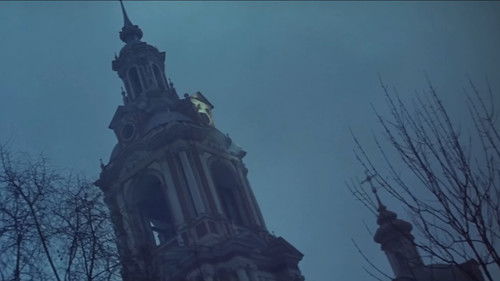
In 1805 St. Petersburg, Pierre Bezukhov, illegitimate son of a rich nobleman, is introduced to high society. His friend, Prince Andrei Bolkonsky, joins the Imperial Russian Army as aide-de-camp of General Mikhail Kutuzov in the War of the Third Coalition against General Napoleon Bonaparte. Part one of the four-part adaptation of Leo Tolstoy's 1869 novel.
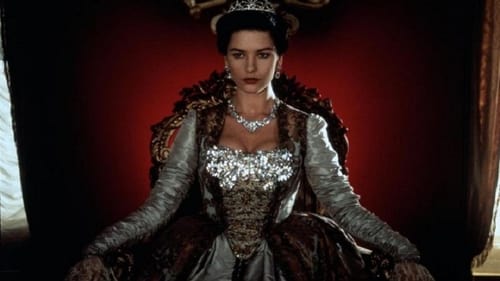
Trapped in a loveless arranged marriage to the immature future Czar, a young German Princess proves a skillful political infighter and rises to become Catherine the Great.

As 1809 nears its end, Natasha attends her first ball, where Andrei falls in love with her with the intent of marriage. However, as her father demands they wait, the prince travels abroad, leaving Natasha in desperate longing. But she meets Anatol Kuragin and forgets Andrei. Part two of the four-part adaptation of Leo Tolstoy's 1869 novel.
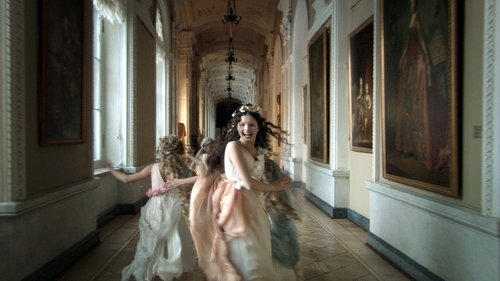
A ghost and a French marquis wander through the Winter Palace in St Petersburg, encountering scenes from many different periods of its history.
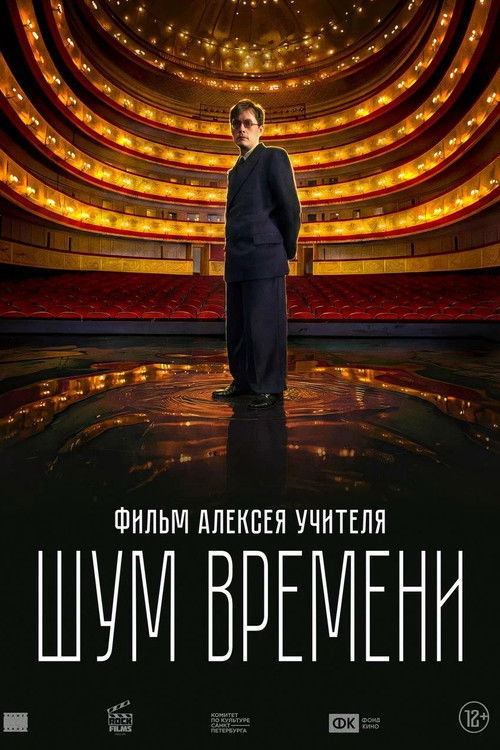
About one of the most famous composers of the 20th century, Dmitriy Dmitrievich Shostakovich.
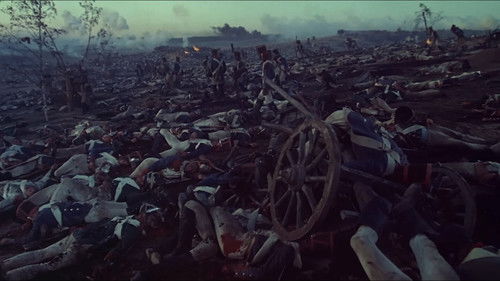
In 1812, as Napoleon's army invades Russia, Kutuzov asks Bolkonsky to join him as a staff officer, yet the prince requests a command in the field. Pierre sets out to watch the armies' impending confrontation. As the Battle of Borodino rages, he volunteers to assist in an artillery battery. Part three of the four-part adaptation of Leo Tolstoy's 1869 novel.

As Moscow is set ablaze by the retreating Russians, the Rostovs flee their estate, taking wounded soldiers with them, and unbeknownst to them, also Andrei. Pierre, dressed as a peasant, tries to assassinate Napoleon but is taken prisoner. As the French are forced to retreat, he's marched for months with the Grande Armée, until being freed by a raiding party. Part four of the four-part adaptation of Leo Tolstoy's 1869 novel.
Japan and Russia clash in what comes to be known as the Russo-Japanese War. An attempt by the Japanese fleet and army to take Port Arthur fails, and a Russian fleet bears down on the Sea of Japan. Admiral Heihachiro Togo sends his fleet to confront the Russians, with results which stun both nations. Meanwhile, Major Genjiro Akashi makes secret negotiations with the Bolshevik revolutionaries in Russia, negotiations that have repercussions far beyond the conflict at hand.
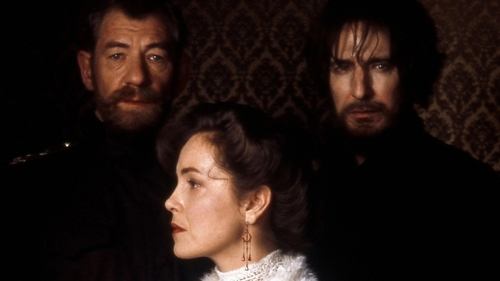
Into an era seething with war and revolution, a man comes with an incredible power to heal a nation...or destroy it. Based on the true story of one of the most powerful and mysterious figures in Russian history.
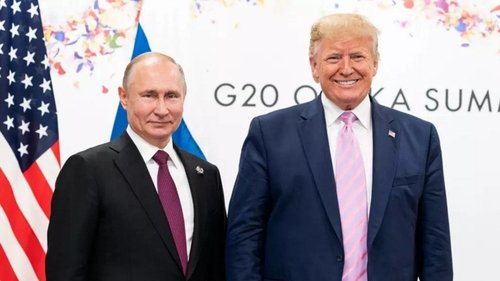
Russian President Vladimir Putin was one of the first politicians to congratulate Donald Trump on his election as president of the United States in 2016, but over time the relationship between the two heads of state has had its ups and downs. Are they friends or enemies? Has their mutual admiration turned into mutual distrust?
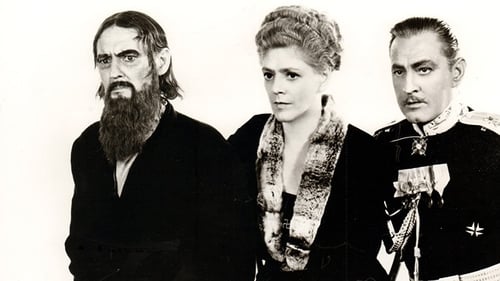
The story of corrupt, power-hungry, manipulative Grigori Rasputin's influence on members of the Russian Imperial family and others, and what resulted.
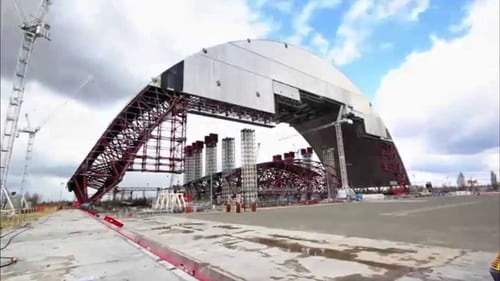
Thirty years after the Chernobyl disaster, which occurred on the night of April 26, 1986, its causes and consequences are examined. In addition, a report on efforts to strengthen the structures covering the core of the nuclear plant in order to better protect the population and the environment is offered.
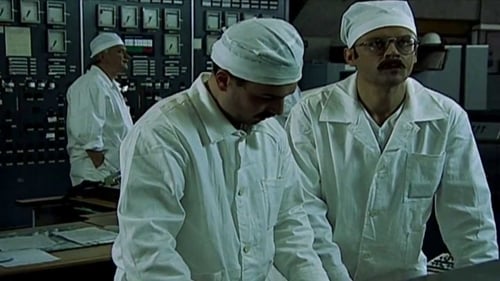
The explosion at Chernobyl was ten times worse than the Hiroshima bomb and was due to a combination of human error and imperfect technology. An account of the sixty critical minutes prior to the explosion of the nuclear power plant on the night of April 26, 1986.
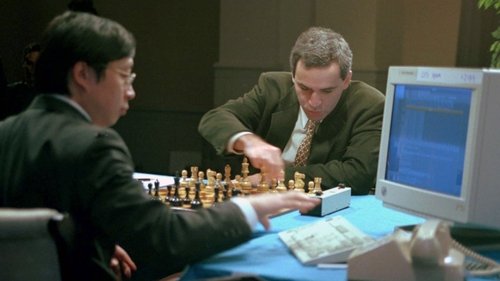
The extraordinary life and career of the Russian chess grandmaster Garry Kasparov, a brilliant and charismatic, but also rebellious, favorite son of the Soviet Union.
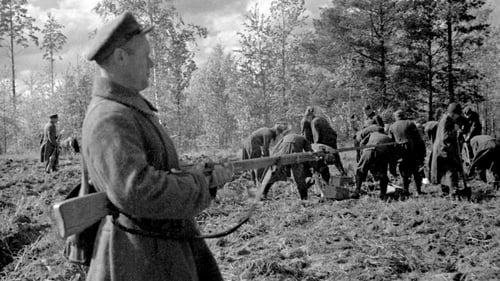
The Katyn massacre, carried out by the Soviet NKVD in 1940, was only one of many unspeakable crimes committed by Stalin's ruthless executioners over three decades. The mass murder of thousands of Polish officers was part of a relentless purge, the secrets and details of which have only recently been partially revealed.