
Action
Adventure
Animation
Comedy
Crime
Documentary
Drama
Family
Fantasy
History
Horror
Music
Mystery
Romance
Science Fiction
Thriller
War
Western
Found 38 movies, 10 TV shows, and 0 people
Can't find what you're looking for?

Northern Irishwoman Helen Cuffe (Julie Christie) is overwhelmed with sadness when her husband is killed by the Irish Republican Army. She and her teen son, Jack (Frank MacCusker), then move to a tiny town and start life anew. There, Helen meets a mysterious American man named Roger Hawthorne (Donald Sutherland), who is in the area to refurbish an old train station. A romance slowly blossoms between Roger and Helen, but Jack then gets involved with a violent political group, and tragedy looms.
Warsaw's Central Railway Station. 'Someone has fallen asleep, someone's waiting for somebody else. Maybe they'll come, maybe they won't. The film is about people looking for something.

The 1970s. On May 9, a war veteran is going to a meeting with fellow soldiers. Before leaving, he has a difficult conversation with his son, a writer, who came with a little daughter to inform about the upcoming divorce. The father reproaches his son that he is going to get a divorce, remembers what an unfortunate name he gave his daughter, and also criticizes his story about the front-line soldiers "Station", in which the son, according to his father, instead of glorifying their feat, exposed them as losers.
Polish Jews, who were forced to leave their country in 1968, meet every year in Ashkelon. After nearly 40 years, they share their memories of exile, loss and regret, and still consider themselves Polish.

A string of murders terrorise the people of Odela village, and every newly wed girl in the village is the murder’s target. A bright young police officer is determined to find the culprit and stop the next murder from happening while anxious villagers await closure. But, unfortunately, everyone’s a suspect, and the clock is ticking.
It's just a paranoid fantasy, but the dog was as accurate as a clock. By five she was already sitting and watching the money pouring out of the cash register like fleas.
A beautiful shot of a locomotive billowing smoke begins this very evocative film. As the train pulls in to the terminus the camera is positioned behind the ticket barrier to record smartly-dressed passengers disembarking along the length of the platform. A carriage seen at the end carries advertising for the White's Hotel, where Belgian-born cameraman Louis de Clercq stayed during his visit.

No description available for this movie.
A poignant image of the environment of the homeless. The film is a documentary record of the everyday life of Russian children, small refugees from orphanages who chose a street or a railway station for their home.

Reda, a young salesperson meets Malak in the railway station who asks him to play the role of her husband before her rich parents who live in Upper Egypt.
No description available for this movie.
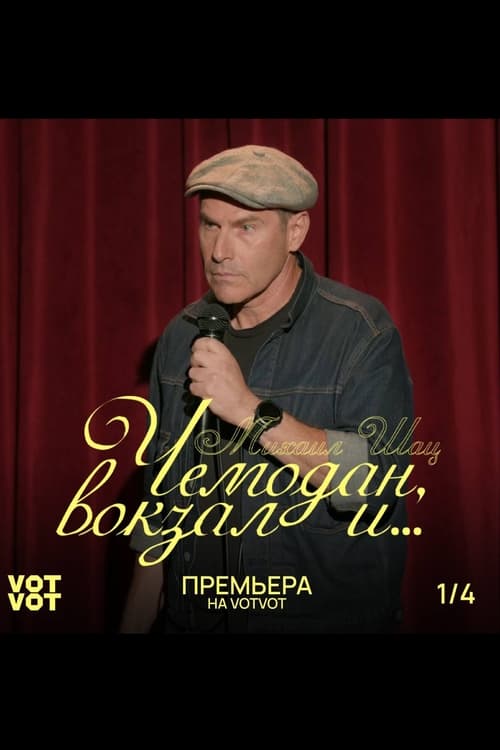
The second stand-up special by Mikhail Schatz. He talks about the difficulties of emigration, jokes about his status as a "foreign agent" and talks about the unexpected challenges of age.
No description available for this movie.
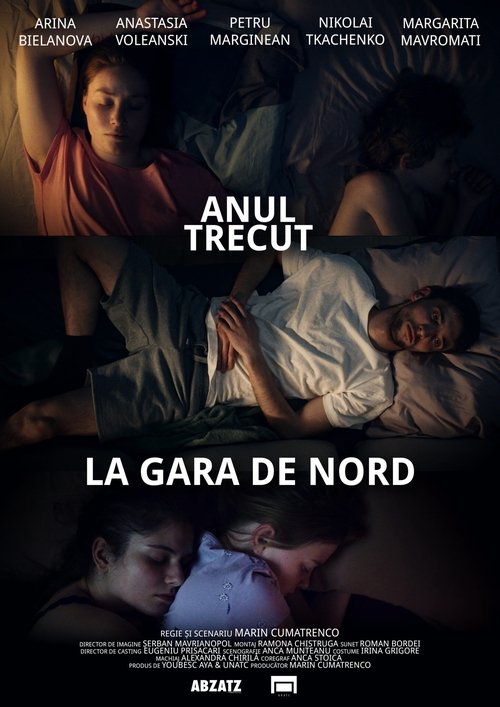
The beginning of the war in Ukraine, Bucharest North Station. A young translator shelters two young Ukrainian mothers with two children for a few days.
A lost newsreel with a self-evident title. One of the first films made on the territory of modern Belarus.

The train stations of Bordeaux, Strasbourg, and Lyon are among the most spectacular in France, designed by the most daring architects and engineers. Three colossal monuments, three multimodal hubs, built in France's largest cities to handle millions of passengers. These stations were equipped with state-of-the-art facilities and technological innovations unique for their time. In Lyon, the Saint-Exupéry station takes the form of a bird spreading its wings, its distinctive feature being the 300 tunnel for TGVs passing at full speed. In Strasbourg, a monumental glass roof completely covers the historic façade of the station, built in 1883 by the Germans. In Bordeaux, a giant 17,400 m² hall defies the laws of gravity with spans of 57 meters, five times the width of the nave of Notre-Dame Cathedral.
Manfred Durniok (1934-2003), German film director and producer, shot his first short documentary films in the 1950s and 1960s. At the end of the 50s he got to know Oskar Sala (1910-2002) and took advantage of the composers electro-acoustic and musical skills in many of his subsequent black and white motion pictures.

At the "Pupky" station, an opportunity occurs: two illegal passengers - guinea pigs - have to be disembarked from one of the trains, since animals cannot be transported in a general carriage. The head of the station Pryvychkin tries to help the animals, but the situation is beyond his control. The audit committee sets out to investigate the unpleasant incident... This witty satirical comedy, in which bureaucracy, bourgeoisie and provincialism are mocked, continued the development of the domestic comedy genre in Ukrainian Soviet cinema.
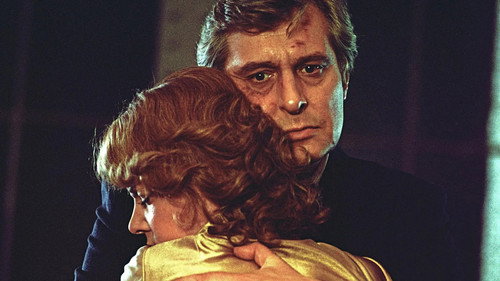
Platon is travelling by train to visit his father. He gets off to have lunch where he meets Vera, a waitress. He refuses to pay for the food after which a series of unfortunate events unfold for the pair.
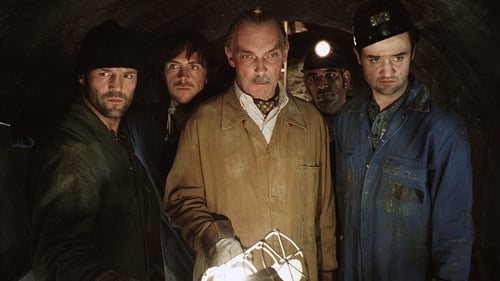
Terry is a small-time car dealer trying to leave his shady past behind and start a family. Martine is a beautiful model from Terry's old neighbourhood who knows that Terry is no angel. When Martine proposes a foolproof plan to rob a bank, Terry recognises the danger but realises this may be the opportunity of a lifetime.

Orphaned and alone except for an uncle, Hugo Cabret lives in the walls of a train station in 1930s Paris. Hugo's job is to oil and maintain the station's clocks, but to him, his more important task is to protect a broken automaton and notebook left to him by his late father. Accompanied by the goddaughter of an embittered toy merchant, Hugo embarks on a quest to solve the mystery of the automaton and find a place he can call home.

Katie, a 17-year-old, has been sheltered since childhood and confined to her house during the day by a rare disease that makes even the smallest amount of sunlight deadly. Fate intervenes when she meets Charlie and they embark on a summer romance.

Four-year-old Kun struggles with jealousy after his newborn sister, Mirai, begins receiving most of his family’s attention. Retreating to the garden, he encounters Mirai as a teenager from the future and embarks on extraordinary journeys across his family’s past, gradually discovering new perspectives on love, belonging and what it means to become an older brother.
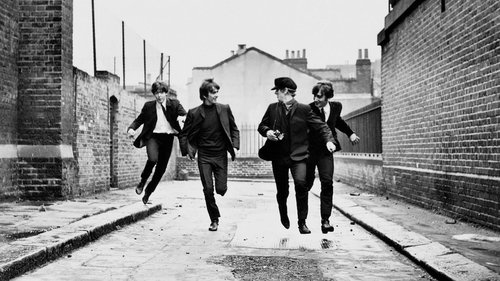
Capturing John Lennon, Paul McCartney, George Harrison and Ringo Starr in their electrifying element, 'A Hard Day's Night' is a wildly irreverent journey through this pastiche of a day in the life of The Beatles during 1964. The band have to use all their guile and wit to avoid the pursuing fans and press to reach their scheduled television performance, in spite of Paul's troublemaking grandfather and Ringo's arrest.

Rome, 1957. A woman, Cabiria, is robbed and left to drown by her boyfriend, Giorgio. Rescued, she resumes her life and tries her best to find happiness in a cynical world. Even when she thinks her struggles are over and she has found happiness and contentment, things may not be what they seem.
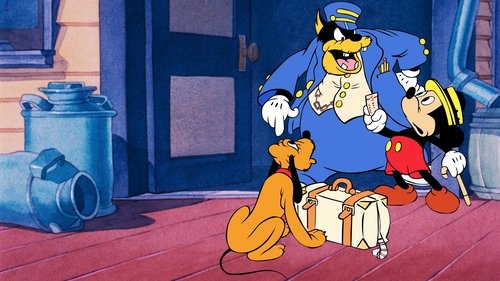
Mickey is heading out on vacation from Burbank to Pomona, taking the train. The conductor, Pete, won't let him on with Pluto, so he hides Pluto in his suitcase, and tries to hide him all throughout the trip without much luck. But Pete wins when Pluto is hooked by a mail hook. Or does he?
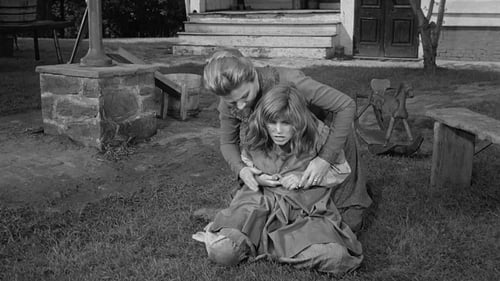
The true story of the frightening, lonely world of silence and darkness of 7-year-old Helen Keller who, since infancy, has never seen the sky, heard her mother's voice or expressed her innermost feelings. Then Annie Sullivan, a 20-year-old teacher from Boston, arrives. Having just recently regained her own sight, the no-nonsense Annie reaches out to Helen through the power of touch, the only tool they have in common, and leads her bold pupil on a miraculous journey from fear and isolation to happiness and light.
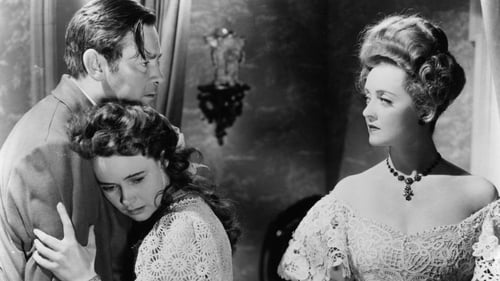
In 1900, a clan attempts to strike a deal with a Chicago industrialist to get him to build cotton mills in their Deep South town.
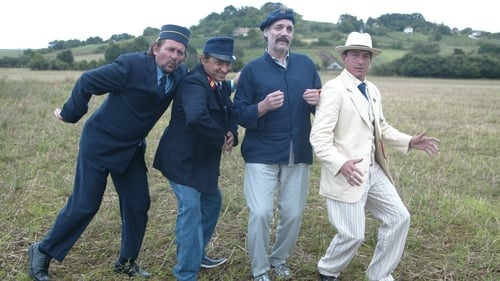
Four good old friends - all railwaymen until the change of regime - will be the victims of the cutbacks. Many years later, when the old station has been removed by thieves, the former stationmaster of Honos village, Lajos Zsuzsa, receives a notice from the town to go to the station office. Lajos Zsuzsa, in order to get the four friends occasionally back to work, lies that the station still exists and that they are able to carry out their duties.
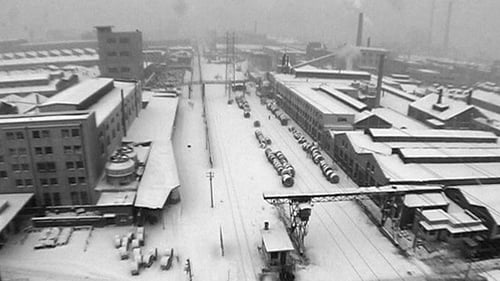
A detailed look at the gradual decline of Shenyang’s industrial Tiexi district, an area that was once a vibrant example of China’s socialist economy. But industry is changing, and the factories of Tiexi are closing. Director Wang Bing introduces us to some of the workers affected by the closures, and to their families.
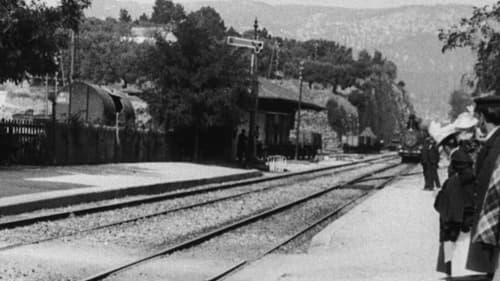
A group of people are standing along the platform of a railway station in La Ciotat, waiting for a train. One is seen coming, at some distance, and eventually stops at the platform. Doors of the railway-cars open and attendants help passengers off and on. Popular legend has it that, when this film was shown, the first-night audience fled the café in terror, fearing being run over by the "approaching" train. This legend has since been identified as promotional embellishment, though there is evidence to suggest that people were astounded at the capabilities of the Lumières' cinématographe.
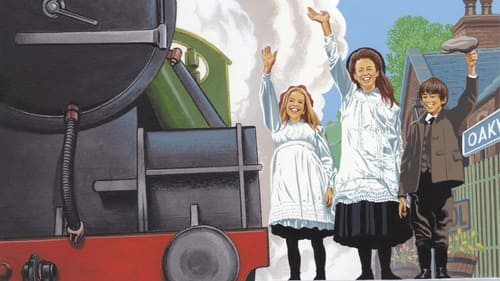
At the dawn of the 20th century, following their father's arrest on suspicion of betraying state secrets, the three Waterbury children—Bobbie, Phyllis and Peter—move with their mother to Yorkshire, where they find themselves involved in unexpected dramas along the railway by their new home.

Haruna Tsunematsu is studying folklore at university and she decides the subject of her graduation thesis will be the "Kisaragi Station" urban legend which has been a hot topic on the Internet since 2004.
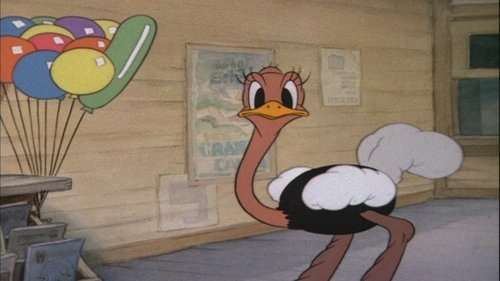
Donald is the baggagemaster at a remote railway station. Part of the latest cargo shipment is Hortense the Ostrich, who is a bit too friendly with Donald, and who eats everything in sight, whether it's food or not (mostly not): a concertina, an alarm clock, some balloons, all of which start reacting when Hortense gets the hiccups.

A young married couple's relationship becomes strained when he is assigned overseas as a foreign correspondent and she becomes a major stage star.
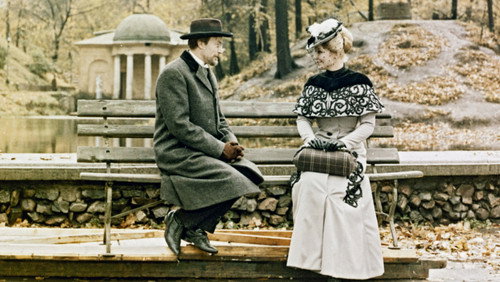
The film tells about Anton Pavlovich Chekhov. October 17, 1896. On the facade of the Alexandrinsky Theater — a poster about the premiere of "The Seagull". A few hours are left before the performance. Chekhov and his sister Masha are expecting Lika Mizinova from Moscow station to arrive from Moscow. Chekhov is alarmed by the upcoming premiere, excited by the meeting with love, which never took place. Memories of acquaintance with Lika, of the experiences caused by the rude scolding of newspaper men who predicted the young writer the inglorious "death under the fence", about the unexpected decision for everyone to go to Sakhalin...
A UK based NRI visit india, while returning goes to a remote station run by psychopath station master.
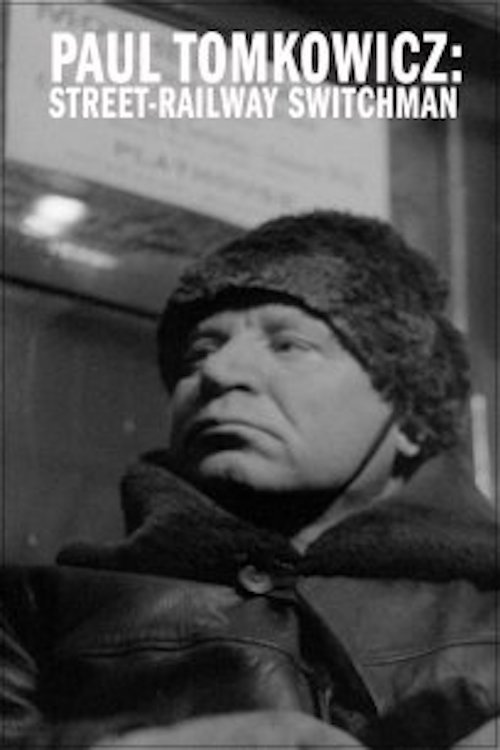
A self-narrated portrait of a Polish immigrant in Winnipeg whose unglamorous job keeping streetcar switches working reveals dignity, resilience, and pride in everyday labor.