
Action
Adventure
Animation
Comedy
Crime
Documentary
Drama
Family
Fantasy
History
Horror
Music
Mystery
Romance
Science Fiction
Thriller
War
Western
Found 8 movies, 0 TV shows, and 0 people
Can't find what you're looking for?
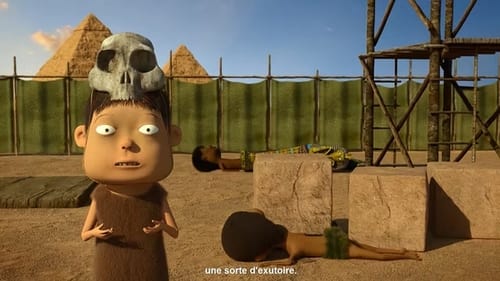
After the Industrial Revolution, the division of labour became clearer. Many people have to work in one position for a long time. Unfortunately, not everyone is satisfied with their work. Did primitive people have similar problems as workers in modern society? We interviewed five of them, let’s see what they said.
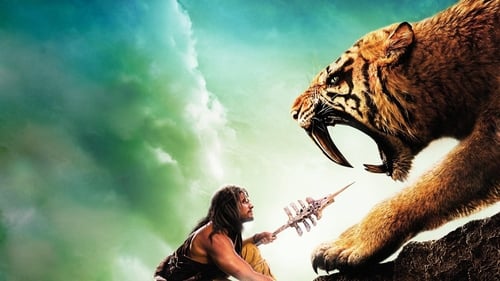
A prehistoric epic that follows a young mammoth hunter's journey through uncharted territory to secure the future of his tribe.
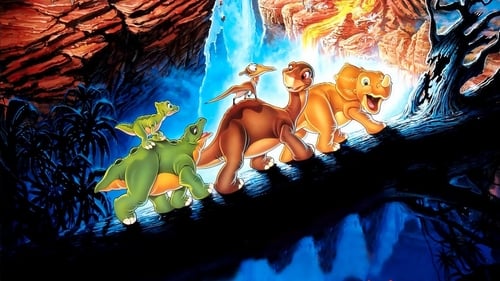
An orphaned brontosaurus named Littlefoot sets off in search of the legendary Great Valley. A land of lush vegetation where the dinosaurs can thrive and live in peace. Along the way he meets four other young dinosaurs, each one a different species, and they encounter several obstacles as they learn to work together in order to survive.
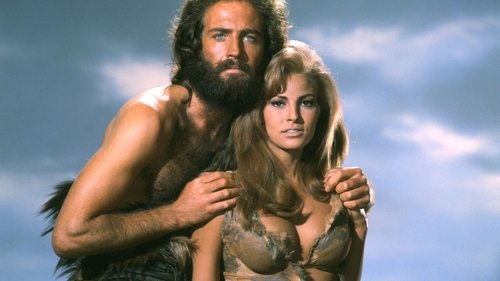
As the Earth wrestles with its agonizing birth, the peoples of this barren and desolate world struggle to survive. Driven by animal instinct they compete against the harsh conditions, their giant predators, and warring tribes. When two people from opposing clans fall in love, existing conventions are shattered forever as each tribe struggles for supremacy and Man embarks on his tortuous voyage of civilization.
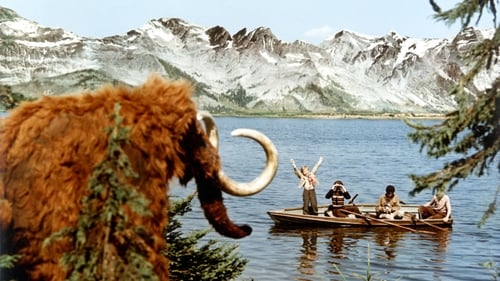
Four schoolboys go on an awe-inspiring expedition back through time, where they behold landscapes and creatures that have long since vanished from the earth.
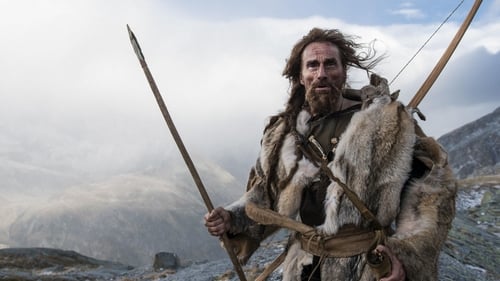
The Ötztal Alps, more than 5300 years ago. A Neolithic clan leader must avenge the massacre of his people and theft of his holy shrine.

From prehistoric times to our technologically accelerated present, this exciting and entertaining journey through time explores the thousands of ways in which mankind has perceived, measured and passed time over the course of its history.

Animations (only parts in nuclei in the film) and images, many of them archival and foreign, illustrate that the notion of time is associated with movement and its measurement is performed by the rotation of the Earth around its axis and the Sun. The angle of inclination of the Earth in this last movement also marks the climatic seasons. From the need for greater accuracy in measuring time, gnomons and solar quadrants arose, for whose reading the duodecimal numbering is used. Based on this numbering, time zones and mechanical measuring devices were established, illustrated by the clock mechanism with a church bell. The evolution of astronomy determines the creation of more accurate electronic devices for the evaluation of time, such as the meridian telescope, the Markowitz chamber, the electronic oscillators and the telescope, with which astronomers work at the National Observatory.