
Action
Adventure
Animation
Comedy
Crime
Documentary
Drama
Family
Fantasy
History
Horror
Music
Mystery
Romance
Science Fiction
Thriller
War
Western
Found 15 movies, 1 TV show, and 0 people
Can't find what you're looking for?
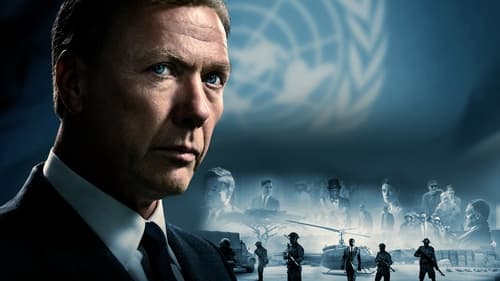
Set in Cold War in 1961, follows the story of diplomat and economist Dag Hammarskjöld, who boards a plane in a desperate attempt to negotiate a ceasefire from his enemies after he leads UN troops into their first wartime operation.
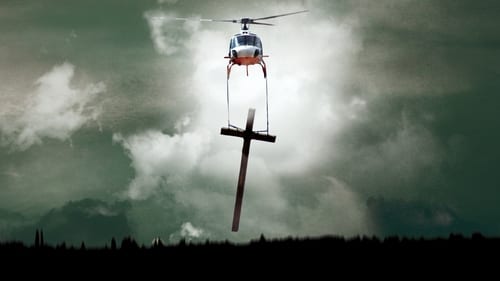
As a director and his crew shoot a controversial film about Christopher Columbus in Cochabamba, Bolivia, local people rise up against plans to privatize the water supply.
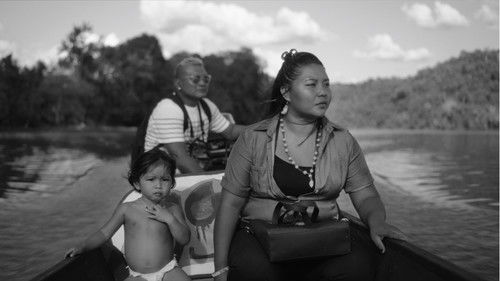
On the border of Surinam and French Guyana, indigenous Wayana territory is overrun by intruders. Illegal gold miners poison the river, missionaries repress indigenous identity, and even doctors with the best intentions leave marks that are often silently violent. The Wayana call these intruders Parasisi.

Photographer and visual artist Sammy Baloji’s fascinating film essay explores the Democratic Republic of Congo’s colonial history and its ecological significance. Drawing on research from the 1930s, the film highlights the Congo Basin’s vital role in consuming carbon dioxide and shaping global environmental balance over a century.

After 15 years of living abroad, Amanda returns home with her French boyfriend, Martin. They arrive at her family's large-scale farm, located in a secluded village on the endless plains of southern Brazil. There, Amanda finds her father in a coma in the midst of increasing tension among the workers. The sole doctor in the nearby village is Helô, a young woman who resigns herself to caring for the local townspeople. The imminent death of the farm owner will put Amanda, Martin, and Helô at the heart of a disturbing settlement between the village and the farm owners.

Founded three hundred years ago as a refuge from slave traders, Ganvié, in Benin, has become the largest stilt village in Africa and now attracts thousands of tourists. But the people of the water, who once resisted colonization, are today colonized by a new invader: the water hyacinth. Said to have been introduced to decorate hotels and luxury homes, this plant now spreads at a staggering and uncontrollable rate, suffocating the lake. A small Beninese company has managed to turn this scourge into a resource—but at the cost of exhausting labor. Raw realism and imaginary visions blend together, as if one could only be understood—or endured—through the lens of the other.

How African artists have spread African culture all over the world, especially music, since the harsh years of decolonization, trying to offer a nicer portrait of this amazing continent, historically known for tragic subjects, such as slavery, famine, war and political chaos.

Marianne Lehmann, born in Switzerland in 1936, married a Haitian and moved to Port-au-Prince in 1957. Fascinated by voodoo cult objects, she began with buying them to avoid their scattering abroad. Over the years it became the largest collection in the world to be donated to Haiti. The film shows the beauty of these objects, their significance and importance to the world's cultural heritage and highlights the link between voodoo (Haitian vodou), the slave insurgency and the creation of the first black nation.
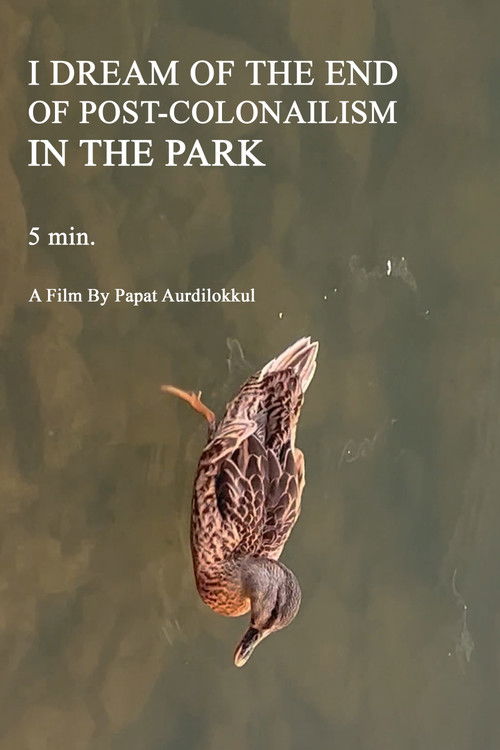
Relaxing in the park, haunted by the tower, city, and modern world, hallucinated by the internet.

Germans colonized the land of Namibia, in southern Africa, during a brief period of time, from 1840 to the end of the World War I. The story of the so-called German South West Africa (1884-1915) is hideous; a hidden and silenced account of looting and genocide.
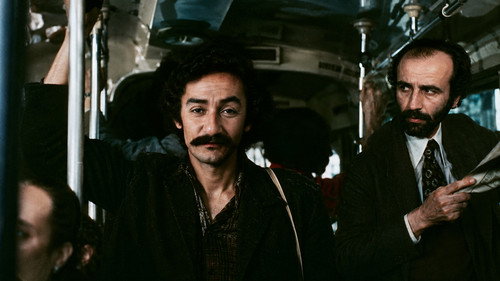
A construction worker on a construction site in the Paris suburbs, Mehdi takes the bus to return home after work. Wishing to get off while the vehicle is stationary in a traffic jam, the driver refuses: while restarting, the bus hits the car in front of it. The bus driver attacks Mehdi whom he holds responsible for the incident, claiming that it is forbidden to “talk to the stagehand”. Mehdi is implicated in court and his lawyer tries to draw attention to the living conditions of immigrant workers.
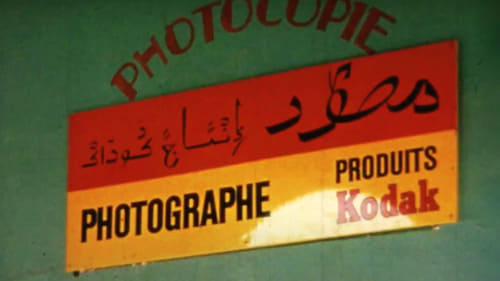
"Film shot on the 'bench' from hundreds of photos, buildings, streets, towns unusually colorful for a North Mediterranean eye. The editing was composed on a score because the shots are generally very short, up to two images, and they do not follow each other "cut" or crossed but in "racket". The progression of shots varies from faintly colored recognizable to strongly colored unrecognizable. The soundtrack is composed of Arabic music that gradually turns into free-jazz. » Mannheim Festival, 1973
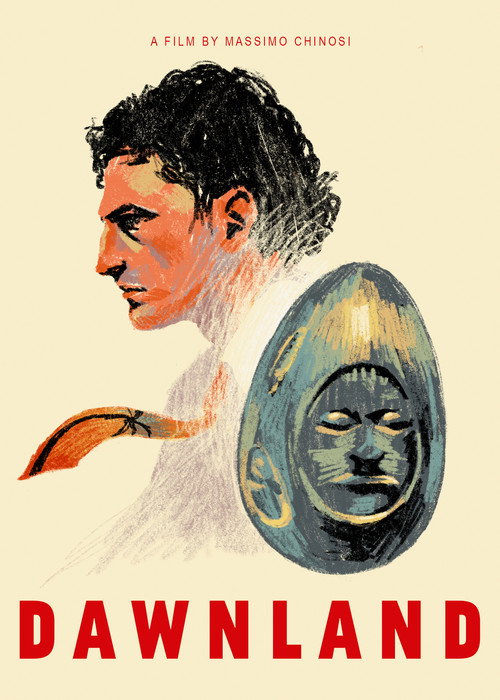
An apathetic museum archivist is tasked with returning a mythical artifact back to its resting place, deep in the forest.
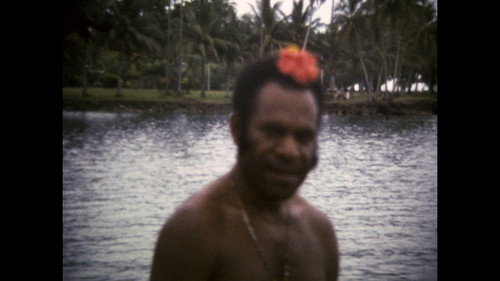
As so often, also here it's rather about allusion than description. This also applies to the persons represented. Flat silhouettes of people. Their heads depicted in profile. Faces with no expression, formal gestures. In the background, a little bit of everyday life: The hard, square, stone architecture arises from ocher-colored, brownish, blackish mush of color or mud. A demonstration of the function of the central perspective. An idealized representation of a tropical paradise. Strangely, there's no absurdity in this.

In this documentary, Marie-Claire Rubinstein reveals to us, through the testimonies of the inhabitants who live there, the architectural achievements of the French urban planner Fernand Pouillon in Algiers. In particular the vast complexes of hundreds of social housing units, including the most famous Diar E Saâd (1953), Diar El Mahçoul (1954) and Climat de France (1957). The historical context, during the war of independence is related by the historian Benjamin Stora and Nadir Boumaza. This documentary also evokes the personality of Fernand Pouillon in a post-colonial context.