
Action
Adventure
Animation
Comedy
Crime
Documentary
Drama
Family
Fantasy
History
Horror
Music
Mystery
Romance
Science Fiction
Thriller
War
Western
Found 7 movies, 0 TV shows, and 0 people
Can't find what you're looking for?

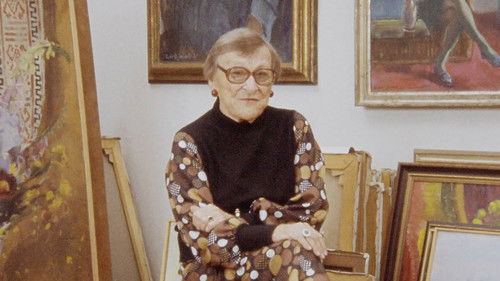
The film is the cinematic encounter of two looks (that of the painter Arié Mandelbaum and that of the filmmaker Boris Lehman) with one voice: that of the singer Esther Lamandier (who goes by the same name as Arié: Mandelbaum means «I'amandier»).
Katja Raganelli was not solely interested in female filmmakers, but women artists in general. This early work offers a portrait of painter-educator-pacifist Anna Ottonie Krigar-Menzel, also known as Annot. Suppressed by the Nazis and forced into exile, it’s tempting to consider Annot a key inspiration for Raganelli, as one of her main works is a late 1920s cycle of paintings called Faces of Working Women, depicting female surgeons, physiotherapists, all manner of women’s labour.
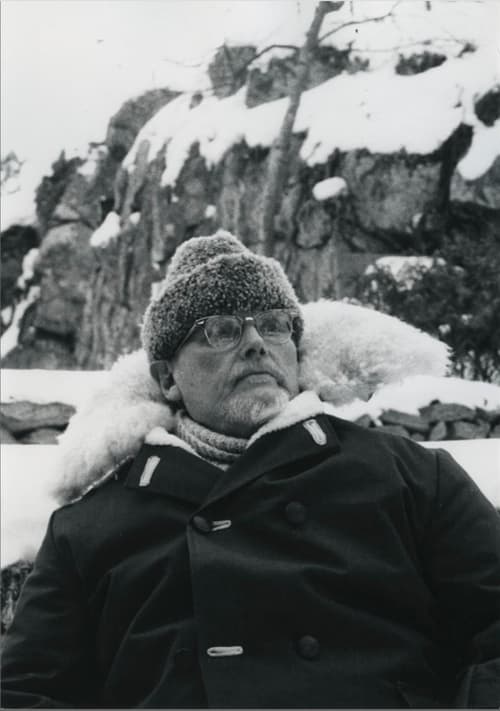
The Danish painter Oluf Høst (1884-1966) talks about his work, about Bornholm, and about himself.
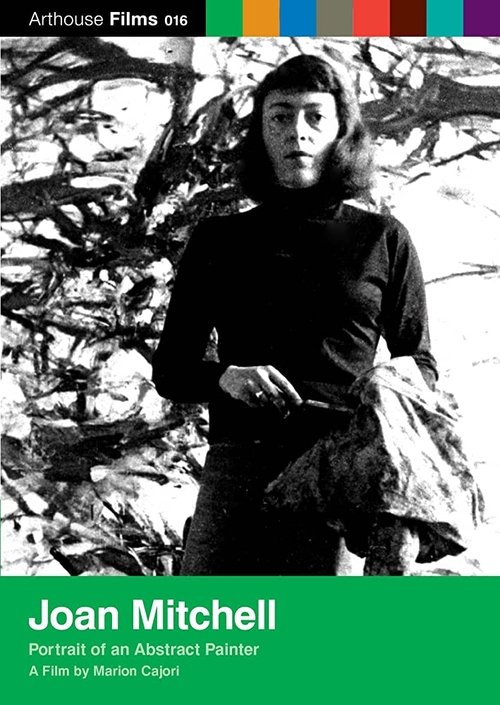
A powerful and intimate portrait, Joan Mitchell: Portrait of an Abstract Painter captures Mitchell's independent spirit and testifies eloquently to Mitchell's art. Joan Mitchell was born in Chicago in 1926 and died in Paris in 1992. After graduating from the School of the Art Institute of Chicago, Joan settled in New York City in 1950. She was an active participant of New York's dynamic Abstract Expressionist scene and hung out with fellow painters Franz Kline, Willem de Kooning and Philip Guston and, soon, poets Frank O'Hara, James Schuyler and John Ashbery. In the mid-fifties, she moved to Paris, France. There she was part of a circle of friends that included Pierre Matisse, Samuel Beckett and Alberto Giacometti. Mitchell is one of the great abstract painters of the 20th century. This elegantly edited documentary weaves interviews with the acerbic Mitchell and other leading painters and critics while letting her stunning pictures dominate the film.
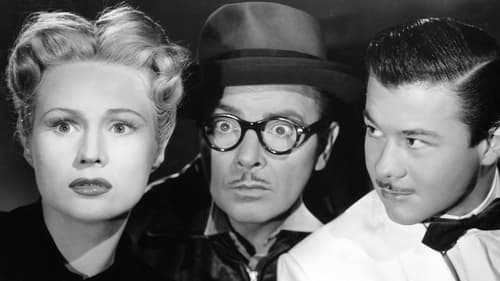
Set in an apartment building whose occupants include Arthur Earthleigh, a meek and mild type married to the beautiful-but-domineering Mae; a Bohemian artist, David Galleo and his always-there model, Deborah Tyler; and Olive Jensen, a Greenwich Village type who is always slightly-but-continuously inebriated, and whose motto is "love and let love." She calls on George while his wife is out, and when she passes out during his attempts to get her out before his wife returns, he thinks she is dead and deposits her on Galleo's terrace. Galleo takes advantage of the situation by using it in a blackmail scheme against Arthur, which is shaky, at best, as Olive refuses to stay dead.
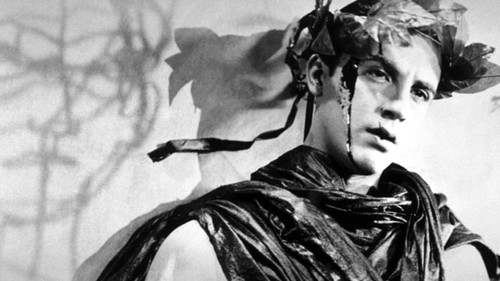
In a poet’s room, an armless statue abruptly comes to life. It invites the poet to step through a mirror and to discover another world. Strange places and characters present themselves to him. The poet tears himself away from these twisted fascinations and returns, with some difficulty, to his room.
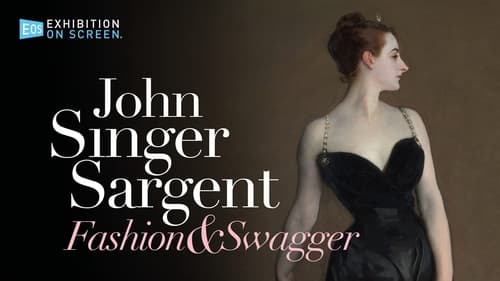
Filmed at the Museum of Fine Arts, Boston and the Tate Britain, London, the exhibition reveals Sargent’s power to express distinctive personalities, power dynamics and gender identities during this fascinating period of cultural reinvention. Alongside 50 paintings by Sargent sit stunning items of clothing and accessories worn by his subjects, drawing the audience into the artist’s studio. Sargent’s sitters were often wealthy, their clothes costly, but what happens when you turn yourself over to the hands of a great artist? The manufacture of public identity is as controversial and contested today as it was at the turn of the 20th century, but somehow Sargent’s work transcends the social noise and captures an alluring truth with each brush stroke.