
Action
Adventure
Animation
Comedy
Crime
Documentary
Drama
Family
Fantasy
History
Horror
Music
Mystery
Romance
Science Fiction
Thriller
War
Western
Found 20 movies, 7 TV shows, and 0 people
Can't find what you're looking for?
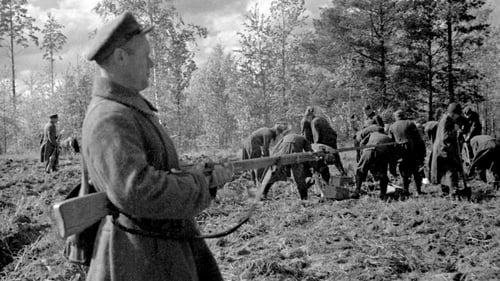
The Katyn massacre, carried out by the Soviet NKVD in 1940, was only one of many unspeakable crimes committed by Stalin's ruthless executioners over three decades. The mass murder of thousands of Polish officers was part of a relentless purge, the secrets and details of which have only recently been partially revealed.

Poland, 1970. Firmly determined to fight against Soviet tyranny and prevent the destruction of the world, the high-ranking officer of the Polish army Ryszard Kukliński makes a serious decision that will put his life, his family and the fate of an entire nation at risk.
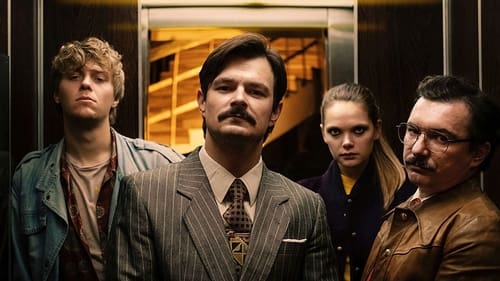
Comedy about Zdzisław Najmrodzki, most famous polish criminal in the times of Polish People Republic, named "the getaway king", known for stealing cars and escaping prison many times, but never hurting anybody.
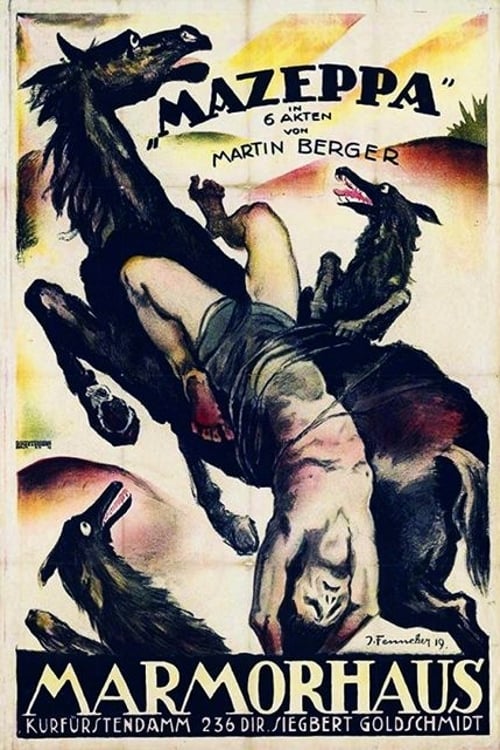
The film tells the story of Ivan Mazeppa, a Ukrainian page at the Polish court who has an affair with the young wife of a much older count. Outraged when he learns of the incident, the nobleman has Mazeppa tied naked to a wild horse which is then released into the wilderness. The bulk of the poem describes the long hazardous journey during which Mazeppa almost dies twice but ultimately survives and returns to his native Ukraine.

Based on the true story of Jan Nowak-Jezioranski, who served as a courier between the commanders of the Polish Home Army and the Polish Government in Exile in London. He must return quickly to Warsaw to transmit orders from the Polish PM to the Home Army's commander-in-chief before the start of the Warsaw uprising.

A follow up to the 2009 sketch comedy referencing urban legends from the Ceausescu regime, the film is expected to expand to accommodate stories from different ex-communist Eastern European countries, including Poland.
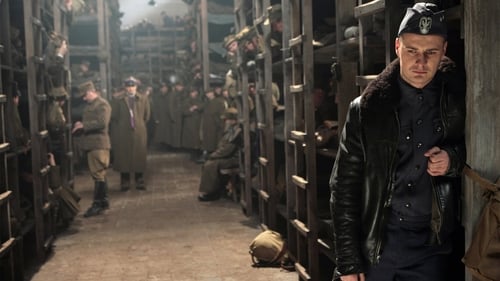
On September 1st, 1939, Nazi Germany invades Poland, unleashing World War II. On September 17th, the Soviet Red Army crosses the border. The Polish army, unable to fight on two fronts, is defeated. Thousands of Polish men, both military and government officials, are captured by the invaders. Their fate will only be known several years later.
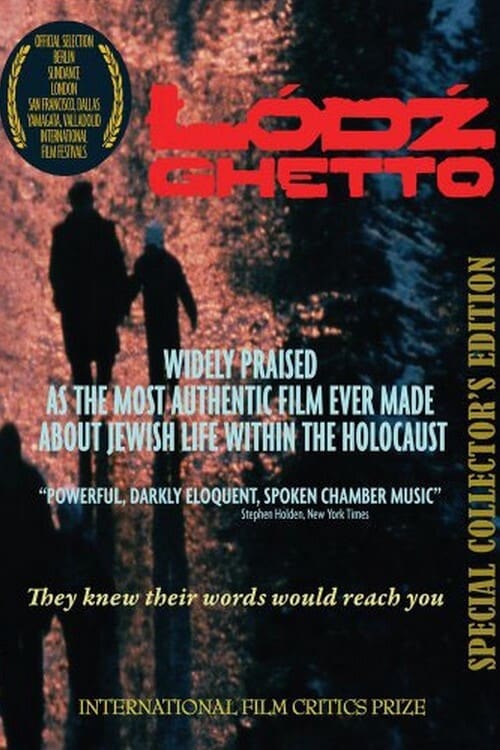
The Polish city of Łódź was under Nazi occupation for nearly the entirety of WWII. The segregation of the Jewish population into the ghetto, and the subsequent horrors are vividly chronicled via newsreels and photographs. The narration is taken almost entirely from journals and diaries of those who lived–and died–through the course of the occupation, with the number of different narrators diminishing as the film progresses, symbolic of the death of each narrator.
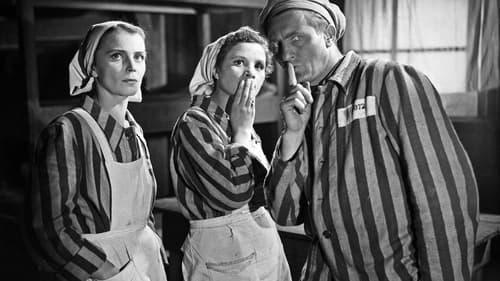
Poland, during World War II. Martha Weiss, a Jewish woman, arrives at the Auschwitz extermination camp with her family. She is assigned the role of interpreter, but her loved ones are much less fortunate.
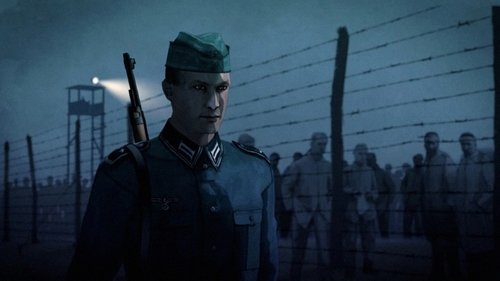
September 1st, 1939. Nazi Germany invades Poland. The campaign is fast, cruel and ruthless. In these circumstances, how is it that ordinary German soldiers suddenly became vicious killers, terrorizing the local population? Did everyone turn into something worse than wild animals? The true story of the first World War II offensive that marks in the history of infamy the beginning of a carnage and a historical tragedy.
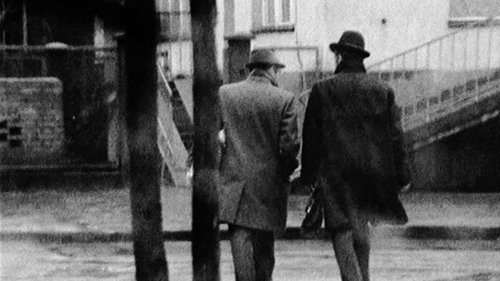
The story of what daily life was like in Poland under communism: private conversations, cruel interrogations, recruitment attempts, recorded and filmed with hidden devices; of how the secret services spied on every activity of ordinary citizens: nothing escaped the brutal system of control developed by the Soviets in the name of freedom.
June 1941, during World War II. Reichsführer-SS Heinrich Himmler orders the mass abduction of particularly well-bred young children from Poland and the occupied territories of the Soviet Union in order to be educated in German culture, by both state schools and German families…
Poland, 1970. When popular protests erupt in the streets due to rising prices, the communist government organizes a crisis team. Soon after, the police use their truncheons and then their firearms. The story of a rebellion from the point of view of the oppressors.
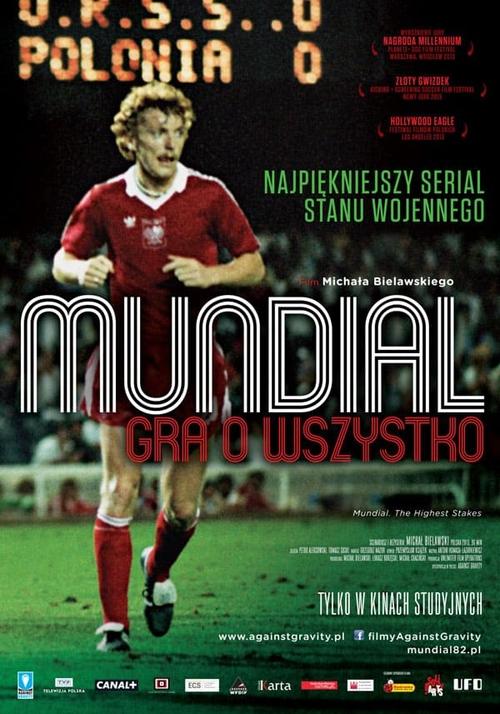
A documentary tale about sport and politics under martial law. All of Poland saw the great goals of Boniek and Smolarek during the Espana '82 championships. For a moment, it was forgotten that the background of the sporting performance was martial law, censorship, an army on the streets, prisons filled with oppositionists. The performance of the players was so successful that it was called "the most beautiful series of martial law". The game is watched by interned activists of "Solidarity", sports journalists and censors, cutting out all manifestations of the opposition from television broadcasts. We also get to know the performance in Spain from the perspective of the players, trying to meet not only their ambitions but also to bear the burden of fans' expectations and regime propaganda.
Stanislaw Ignacy Witkiewicz, better known as Witkacy, enivsages the future horrors of the Polish nation, as embodied by Stalin and Hitler, and the world collapsing into chaos.
A woman whose passport was denied under the previous Communist regime by a vindictive party secretary is given a chance to confront the woman and take revenge.
A well-known publisher - Melchior Wańkowicz asks famous writer Tadeusz Dołęga-Mostowicz to create a reportage about "success a la Polonaise". Tadeusz goes with his assistant Diana on a journey to do a series of interviews and meet historical, distinguished personalities. The initial antipathy between Tadeusz and Diana turns into friendship first, and then into... Who will the pair of our heroes meet? How will their relationship develop? What successes and achievements of the young Polish state will they learn about? We invite you to watch Niepospolita (The Unique)!
An account of the life and work of the Polish writer Stanisław Lem (1921-2006), a key figure in science fiction literature involved in mysteries and paradoxes that need to be enlightened.
In 1776 Vienna, imperial counselor Henryk Klein investigates allegations that the charismatic Jewish nobleman Jakub Frank is a fraud whose sect has ruined Galician Jew Jakub Goliński’s family and fortunes. As Klein’s inquiry uncovers Frank’s secret militia, escalating influence, and suspected treason against Empress Maria Theresa’s court, he must decide how far to expose the messianic impostor without igniting sectarian unrest.
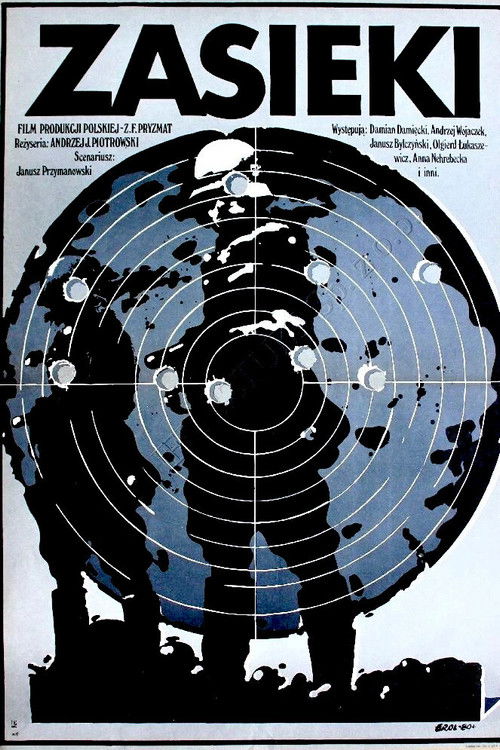
Three Kościuszko Division soldiers, each of a different background, volunteer to take up the task of cutting German barbed wire before an offensive.