
Action
Adventure
Animation
Comedy
Crime
Documentary
Drama
Family
Fantasy
History
Horror
Music
Mystery
Romance
Science Fiction
Thriller
War
Western
Found 20 movies, 0 TV shows, and 0 people
Can't find what you're looking for?
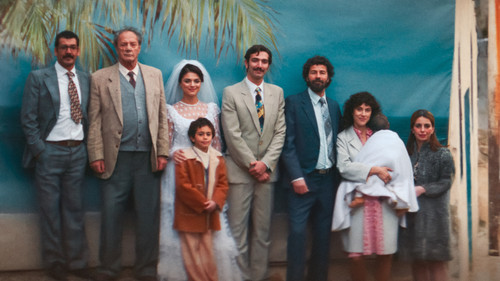
After a Palestinian teen gets swept up into a West Bank protest, his mother recounts the family story of hope, courage and relentless struggle that led to this fateful moment.

Year 1936. As villages across Palestine rise against British colonial rule, Yusuf drifts between his rural home and the restless energy of Jerusalem, longing for a future beyond the growing unrest. But history is relentless. With rising numbers of Jewish immigrants escaping antisemitism in Europe and some arriving with nefarious Zionist-colonial ambitions, and the Palestinian population uniting in the largest and longest uprising against Britain’s 30-year dominion, all sides spiral towards inevitable collision in a decisive moment for the British Empire and the future of the entire region.

This film made by a Palestinian-Israeli collective shows the destruction of the occupied West Bank's Masafer Yatta by Israeli soldiers and the alliance which develops between the Palestinian activist Basel and Israeli journalist Yuval.
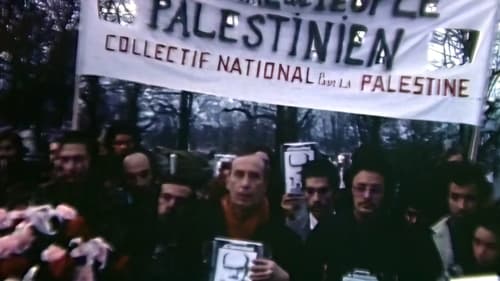
Filmed between 1973 and 1975, L’Olivier was produced by the Vincennes Cinema Group. This activist collective of teachers and filmmakers, formed on the occasion of this film, attempts to explain the Palestinian problem through interviews. The Olivier was one of the first films to attempt to give substance to what was still largely ignored in the West: the existence of the Palestinian people and their fight to recover their rights. L'Olivier responds to a concern: the already weak support of French public opinion for the Palestinian cause diminished following the Munich operation of 1972. Structured in such a way as to tell the Palestinian story and explain the state of the struggle at the time, the film appeals to global militant solidarity and, in particular, to European political commitments.

Letter to My Tribe started with a question: Why don’t more Jews and Israelis speak out about Palestine? Over many years my mother, who represents a more messianic perspective, and I have had numerous arguments, some recorded, some not. These form the backbone of this video essay in which Israelis and Jews, journalists, activists and a rabbi are interviewed, and in which documentation of actions on the ground, in the West Bank, are woven with more personal family histories and journeys to Iraq and to Poland.

What drives a young, well-educated Westerner to volunteer as a “peace activist” in the Middle East? Caiomhe Butterly is one of a growing number of volunteers who risk their own safety to intervene in the long-running and bloody conflict between Israel and Palestine. Several internationals, including her, have now been injured. Some have died. In this film, she describes witnessing the aftermath of the attack on Jenin in April 2002. The film follows her work, the main emphasis being “the accompaniment of communities at risk”. Despite being threatened, shot in the leg and deported later that year, she is determined to go back.
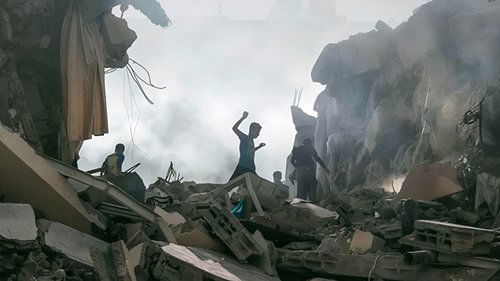
Montage film by Aymeric Caron, broadcast at the French National Assembly on May 29, 2024. “Is it a dream or a reality? » demands a little girl stunned by her injuries. It is a nightmare, without a doubt, and nothing can justify it, neither the crimes of October 7 nor the detention of Israeli hostages by Hamas. Condemning all the crimes of October 7, before and after, condemning anti-Semitism and all forms of racism is common sense. However, it seems that this needs to be clarified. Everyone present normally wishes that the surviving hostages can one day be reunited with their families and that the massacre in Gaza stops immediately. But to follow through with the process is to see things face to face, to see what has been happening in Gaza since October 7, what the Israeli army is doing, what the television channels are not showing.
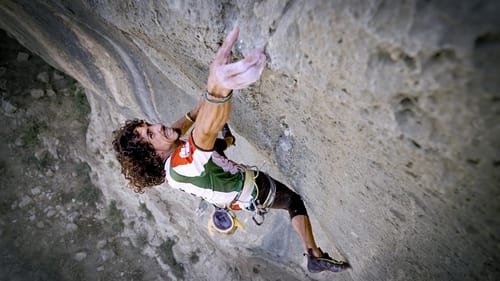
In 2014, during a trip, American Tim Bruns discovered cliffs in a small village five minutes north of Ramallah in Palestine and got to work equipping all the easy routes, then setting up climbing routes so that we can start teaching people how to climb. Bruns and Harris also opened Wadi Climbing, the first indoor climbing gym in Palestine. Today, gathered in the conflict-torn hills of Palestine, a diverse team of Bedouins, activists and urban professionals have embraced climbing as a much-needed respite from the burden of Israeli occupation. American writer and climber Andrew Bisharat visits the West Bank to explore his own roots and the power of climbing to transform lives. This documentary is part of the Reel Rock 17 series released in 2023.
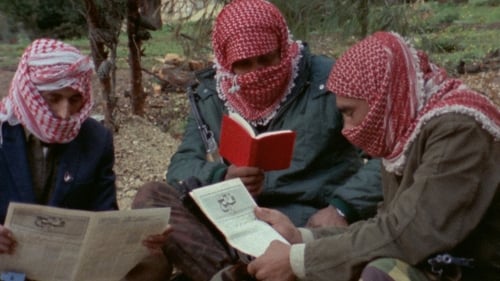
Here and Elsewhere takes its name from the contrasting footage it shows of the fedayeen and of a French family watching television at home. Originally shot by the Dziga Vertov Group as a film on Palestinian freedom fighters, Godard later reworked the material alongside Anne-Marie Miéville.
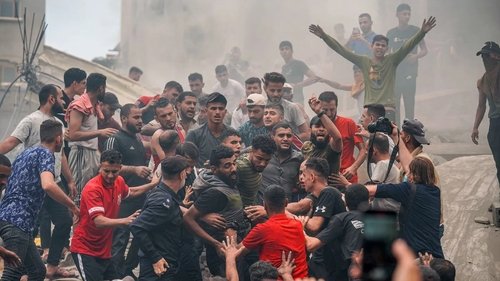
This deeply affecting documentary follows a small number of Israelis and Gazans through the most dramatic and tragic year of their lives. Using personal and previously unseen footage, it tells the story of the war in Gaza and the October 7 attacks through deeply emotional stories from both sides of the conflict. In Gaza, the film follows three individuals from reaction to the October 7th attacks to the start of the bombing by the Israeli military and to the loss of family members that all three suffer. In Israel, we witness footage of the Israeli characters, as they and their family members are attacked by Hamas on October 7th and then follow their stories through the year.

We gain rare access inside the Jenin Battalion, a new Palestinian armed group that’s formed to fight back against Israeli military raids in the occupied West Bank. Fighter Abu Aseel, not his real name, takes us through Jenin and shows us how the brigade is training and preparing to defend the city for the next time the Israeli army enters. Like many young men in the impoverished refugee camp, Abu Aseel feels he was compelled to take up arms, driven by witnessing decades of violence and oppression against his community. Israel’s new far-right government has accompanied a surge in violence with near-daily military raids across the occupied West Bank.
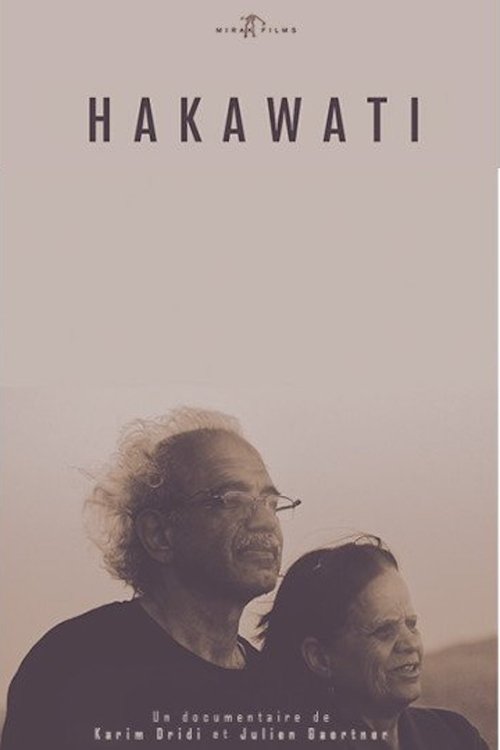
Despite their children's reluctance, Radi and Mounira, a 65-year-old puppeteer couple, set off on tour between Israel and Palestine in their outdated van. They are exhausted from having to set up and take down the stage, from performing three shows in a row in front of hundreds of wild children under a burning sky. Lost in Jericho, frightened by the bombs falling near Majd Al Shams, destabilized by the Bedouin children of the Negev unable to determine their own identity, they no longer know if their mission is still relevant. Safeguarding the identity of their people through their shows, but at what cost? A quest for Palestinian identity.
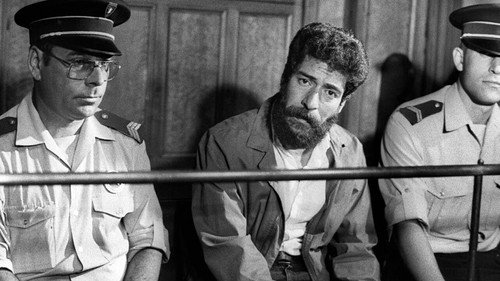
A leading figure in the Palestinian cause and the fight against imperialism, the Lebanese communist activist Georges Ibrahim Abdallah had been languishing in French prisons for thirty-eight years—a unique case in France. Arrested in Lyon in 1984 with false papers, he was sentenced two years later to four years in prison for possession of weapons and explosives, then in 1987 received a life sentence for complicity in the assassinations in Paris five years earlier of an Israeli Mossad agent and an American military attaché—charges he has always denied. Although he has been eligible for release since 1999, French political authorities, under pressure from the United States and Israel, opposed his release. Interventions by Palestinian figures, his relatives, his lawyer and ex-prisoners from the extreme left, retrace the journey of the village schoolteacher who became an anti-colonial activist.
No description available for this movie.

Where Olive Trees Weep offers a searing window into the struggles and resilience of the Palestinian people under Israeli occupation. It explores themes of loss, trauma, and the quest for justice.
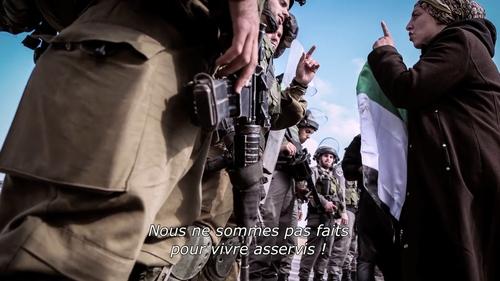
No description available for this movie.

No description available for this movie.
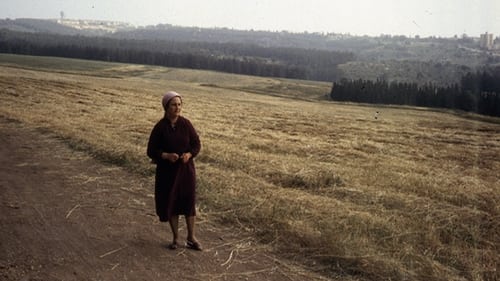
A portrait of two Palestinian women whose individual struggles both define and transcend the politics that have torn apart their homes and their lives. Farah Hatoum, a widow living with her children and grandchildren, and Sahar Khalifeh, a novelist from the West Bank.
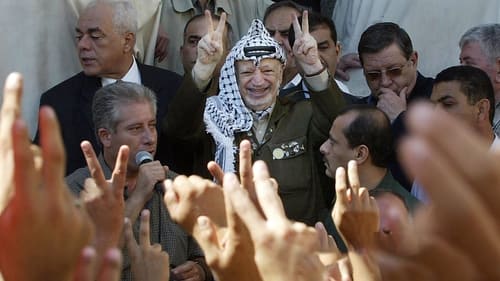
2003 documentary film produced by Oliver Stone for the HBO series America Undercover about the conflict in occupied Palestine. He speaks with Ehud Barak and Benjamin Netanyahu, former prime ministers of Israel, Yasser Arafat, late president of the Palestinian National Authority, and various Palestinian activists resisting the oppression of the zionist regime.

Cinepoem about the current Palestinian tragedy, with Brazilian films from 1922 and 1932 (the indigenous catastrophe), documentaries from 2023/2024, essays by Jean-Luc Godard, Hani Jawharieh and Mustafa Abu Ali, statements by Edgar Morin and Noam Chomsky, and a poem by Mahmud Darwich.