
Action
Adventure
Animation
Comedy
Crime
Documentary
Drama
Family
Fantasy
History
Horror
Music
Mystery
Romance
Science Fiction
Thriller
War
Western
Found 17 movies, 7 TV shows, and 1 person
Can't find what you're looking for?

The Living Sea celebrates the beauty and power of the ocean as it explores our relationship with this complex and fragile environment. Using beautiful images of unspoiled healthy waters, The Living Sea offers hope for recovery engendered by productive scientific efforts. Oceanographers studying humpback whales, jellyfish, and deep-sea life show us that the more we understand the ocean and its inhabitants, the more we will know how to protect them. The film also highlights the Central Pacific islands of Palau, one of the most spectacular underwater habitats in the world, to show the beauty and potential of a healthy ocean.

Actor Errol Flynn takes a group of scientists from the California Institute of Oceanography on an expedition to the South Seas aboard his schooner, The Zaca.
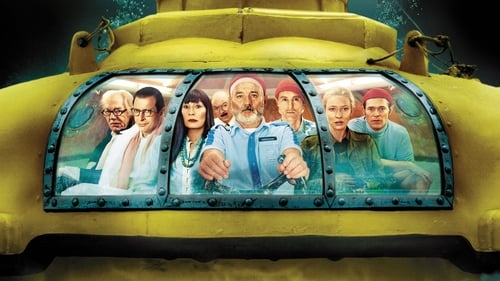
Renowned oceanographer Steve Zissou has sworn vengeance upon the rare shark that devoured a member of his crew. In addition to his regular team, he is joined on his boat by Ned, a man who believes Zissou to be his father, and Jane, a journalist pregnant by a married man. They travel the sea, all too often running into pirates and, perhaps more traumatically, various figures from Zissou's past, including his estranged wife, Eleanor.
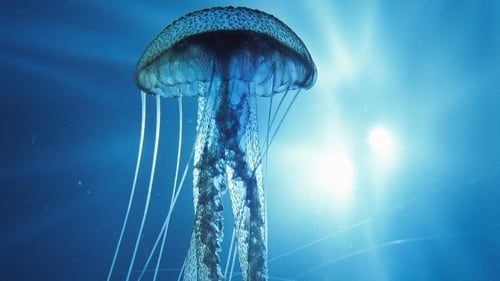
An underwater exploration beneath kelp forests in the Pacific Ocean off the coast of Southern California. The film captures the birth of a shark, squids mating, a lobster molting, a fish protecting its nest from an octopus and a sea urchin, and the sea bed covered with brittle stars.
No description available for this movie.
This documentary follows oceanographer Sylvia Earle's campaign to save the world's oceans from threats such as overfishing and toxic waste.
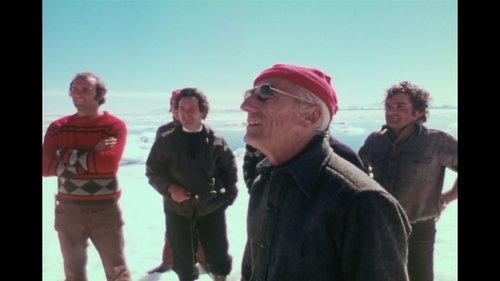
On his ship "Calypso," as well as in a submarine, Jacques Cousteau and his crew sail from South America and travel to Antarctica. They explore islands, reefs, icebergs, fossils, active volcanic craters, and creatures of the ocean never before seen. This voyage took place in 1975, and Captain Cousteau became one of the first explorers ever to dive beneath the waters of the frozen South Pole.
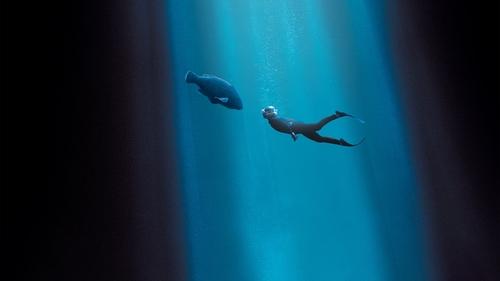
Based on the best-selling novel by Tim Winton, Blueback is a timely tale about the ocean, a beautiful marine creature, and a young girl’s power to change the world.
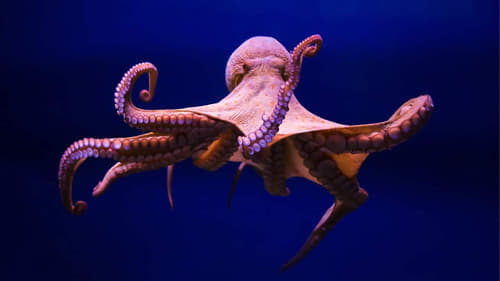
No description available for this movie.
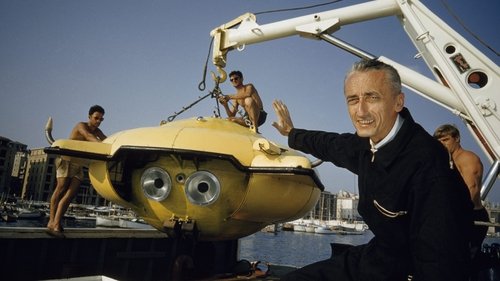
Adventurer, filmmaker, inventor, author, unlikely celebrity and conservationist: For over four decades, Jacques-Yves Cousteau and his explorations under the ocean became synonymous with a love of science and the natural world. As he learned to protect the environment, he brought the whole world with him, sounding alarms more than 50 years ago about the warming seas and our planet’s vulnerability. In BECOMING COUSTEAU, from National Geographic Documentary Films, two-time Academy Award®-nominated filmmaker Liz Garbus takes an inside look at Cousteau and his life, his iconic films and inventions, and the experiences that made him the 20th century’s most unique and renowned environmental voice — and the man who inspired generations to protect the Earth.

This unusual film, narrated by Orson Welles, records the day-by-day events in the lives of six oceanauts who, in an unique experiment, spent 27 days 328 feet below the surface of the Mediterranean. The experiment originated with the French scientist and explorer, Jacques-Yves Cousteau, on whose work the idea of oceanic exploration is based. The film shows the preparation and training needed for the expedition and the working conditions both inside and outside Conshelf Three, a specially made steel bubble which served as home and laboratory.
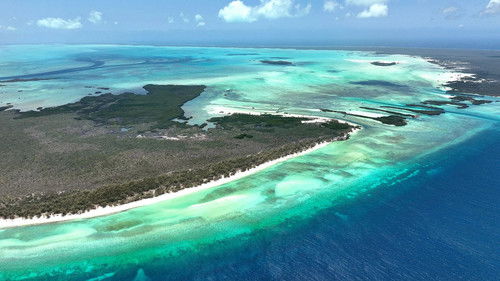
The endless expanses of the Indian Ocean are home to the last natural paradises: Remote atolls surrounded by coral reefs in crystal clear water. Whole regions of this ocean are still unexplored, many reefs are not marked on any map. The departure of the research vessel Agulhas II from the island of La Réunion marks the beginning of one of the greatest scientific adventures of our time. The expedition, initiated by Monaco Explorations with the support of the Prince Albert II of Monaco Foundation, lasted six weeks and led into the Western Indian Ocean along the Mascarene Plateau.
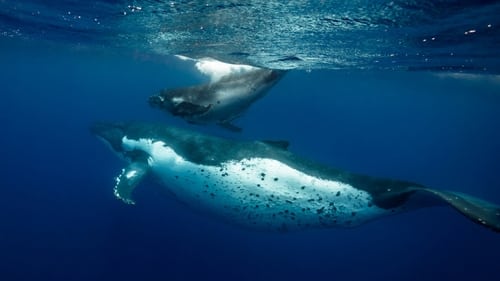
Ocean Souls Films and Wildlife Media unite 100+ filmmakers, scientists, and leading experts to shine a bright, new spotlight on humanity’s closest living relatives - cetaceans (whales, dolphins, and porpoises). New footage and scientific discoveries reveal the extraordinary world beneath the ocean’s surface, where these majestic beings exhibit characteristics not unlike ours in terms of emotions, language, family, intelligence, and human interaction. Directed by Philip Hamilton, this multi-award-winning film inspires people to care and want to protect the oceans.
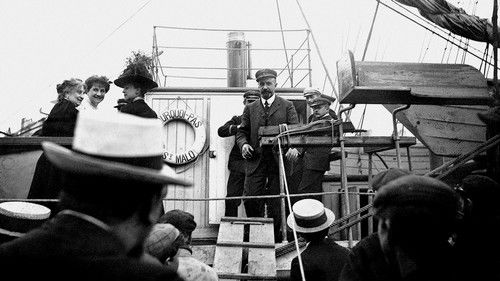
The adventures and exploits of Jean-Baptiste Charcot (1867-1936), an intrepid scientist and explorer who laid the foundations of modern oceanography.
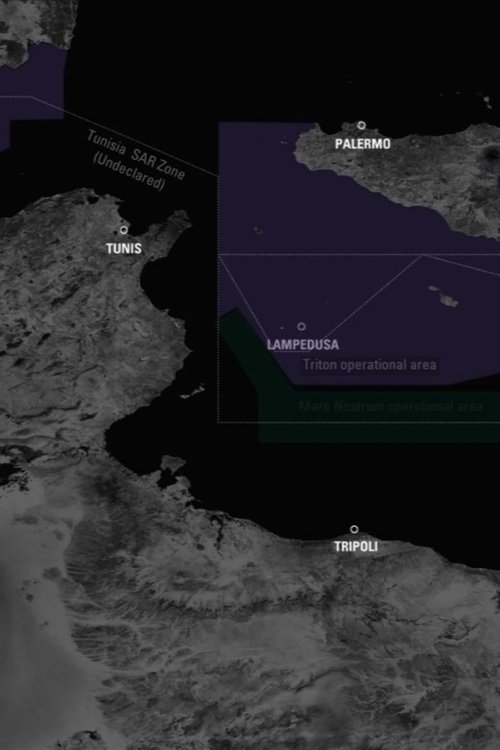
In April 2015, two shipwrecks in the central Mediterranean resulted in over a thousand deaths. The first, on 12 April, occurred when an overcrowded boat was approached by a large commercial vessel. Less than a week later, on 18 April 2015, a similar incident led to over eight hundred deaths after an overcrowded vessel collided with a cargo ship that had approached to rescue its passengers. Both incidents are in part the result of changing EU policies toward at-sea rescue, particularly the retreat of state rescue operations and a resulting onus on commercial vessels to fill the ‘rescue gap’.
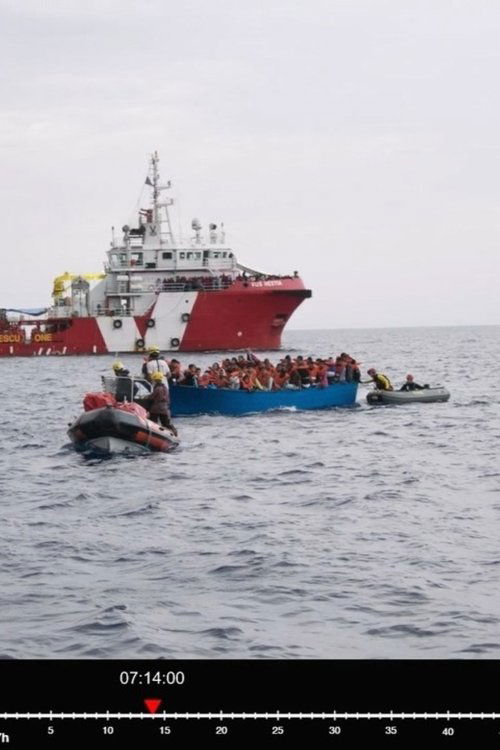
The Iuventa has rescued over ten thousand people from the Mediterranean since it began operating in 2016. When the vessel was impounded by Italian authorities under suspicion of collusion with people smugglers, we used video evidence and meteorological data to refute the allegations.
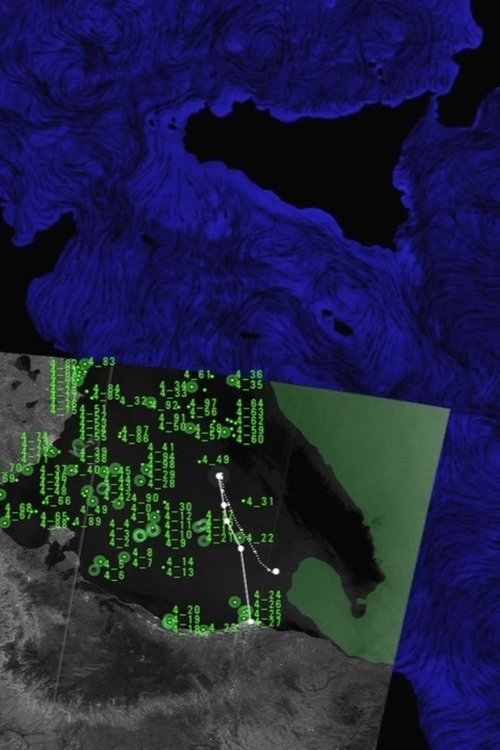
In March 2011, 72 passengers left the Libyan coast heading in the direction of Italy on board a small rubber boat at the time of NATO’s military intervention in Libya. Despite several distress signals relaying their location, as well as repeated interactions with at least one military helicopter and a military ship, they were left to drift for 14 days. As a result of the inaction of all state actors involved, only nine of the passengers survived. By combining their testimonies with wind and sea-current data as well as satellite imagery, Forensic Oceanography reconstructed the liquid traces of this event, producing a report that served as the basis of several legal complaints. -FA