
Action
Adventure
Animation
Comedy
Crime
Documentary
Drama
Family
Fantasy
History
Horror
Music
Mystery
Romance
Science Fiction
Thriller
War
Western
Found 32 movies, 14 TV shows, and 0 people
Can't find what you're looking for?

A group of friends strive to do the dumbest things possible.

Explores a ticking-clock scenario about what would happen in the event of a nuclear war, based on dozens of exclusive new interviews with military and civilian experts who built the weapons and have been privy to the response plans and have been responsible for those decisions should they need to be made.
Follows Pentagon Papers leaker Daniel Ellsberg’s efforts to raise an alarm about the threat of a devastating nuclear war and his concerns about the United States and Russia planning for a globally destructive nuclear attack that could be launched by accident, or intentionally. Ellsberg explains the “institutional madness” of American nuclear war plans and how the Russian invasion of Ukraine has made the world far more dangerous. The documentary will trace Ellsberg’s journey from being a Cold War hawk to becoming an anti-nuclear weapons activist, a stance he held right up to his death. Ellsberg warns that the nuclear weapons arsenals of the U.S. and Russia are still very much a threat to global peace and that an all-out nuclear war remains capable of being launched from missile silos or submarines on a few minutes’ notice.
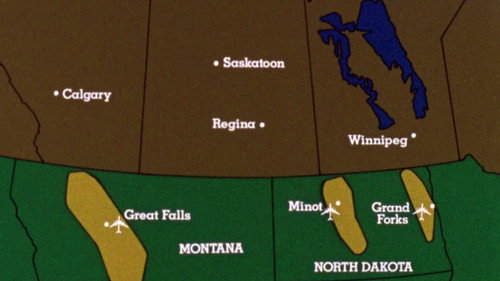
This film deals straightforwardly with the consequences of a nuclear attack for the Canadian Prairies due to their proximity to intercontinental ballistic missile sites in North Dakota. Scenes include a visit to a missile base and to an emergency government bunker in Manitoba. A doctor, a farmer and a civil defence coordinator provide different perspectives on nuclear war. Although focused on one region, the film provides a model for people everywhere who would like to know more about their own situation but don't know what questions to ask.
A documentary exploring the historical concept of the narrative of Stanley Kubrick's 1964 film "Dr. Strangelove Or: How I Learned to Stop Worrying and Love The Bomb." This short documentary compares the film with the actual events concerning the Cold War and the Cuban Missle Crisis.
![PBS Network - Nova - "In the Event of Catastrophe" [Nuclear War & Civil Defense]](https://image.tmdb.org/t/p/w500/bY10LrNEnKbXxyV6FBImN1d6YXJ.jpg)
Here's a complete edition of the Nova "In the Event of Catastrophe" as aired over the PBS Network - and in Chicago, would have been transmitted over WTTW Channel 11. This deals with civil defense preparedness in the event of nuclear war, whether anyone could survive one, and the contrasting steps taken by both the United States and the Soviet Union.

Adamantios studied nuclear physics and has been waiting for 18 years to be appointed. His now permanent fiancée is waiting with him to get married. All these years, he has gone through a lot of adventures, doing various jobs, which have led him to mental turmoil, and he thinks he is the Prophet who will save humanity...
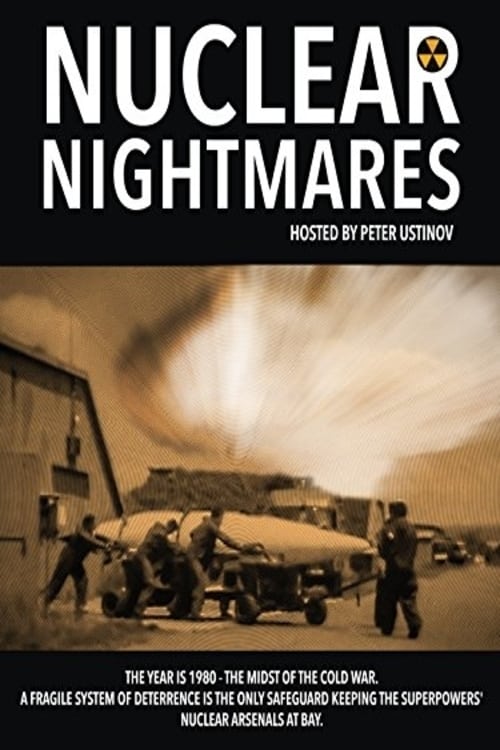
Peter Ustinov hosts this haunting 1980 documentary exploring the world's nuclear weaponry and the fragile system that deters either side from initiating the first nuclear strike. Although the world's political climate has mellowed since the Cold War era, Nuclear Nightmares takes the viewer back in time to gain a perspective of what it was like to live under a very real nuclear threat.

A close-up of the dizzying escalation of nuclear risk since the largest power station on the European continent fell into the hands of Russia at the start of the war.

Alex Gibney explores the phenomenon of Stuxnet, a self-replicating computer virus discovered in 2010 by international IT experts. Evidently commissioned by the US and Israeli governments, this malware was designed to specifically sabotage Iran’s nuclear programme. However, the complex computer worm ended up not only infecting its intended target but also spreading uncontrollably.
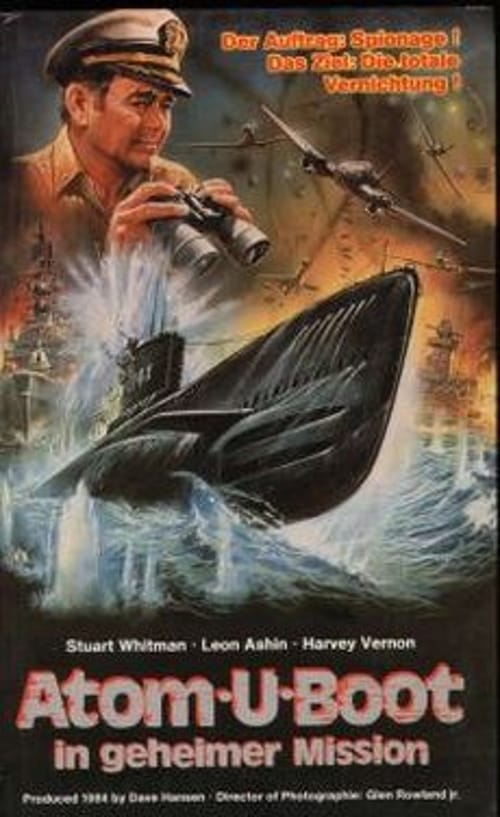
A U.S. Navy submarine captain tries to prevent the Soviets from trying to launch World War III.
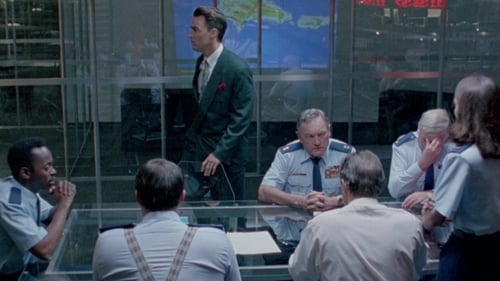
Terrorists seize an American nuclear missile site and threaten to launch the missiles at Washington unless the President resigns immediately and $1 billion is placed in a Swiss account in 8 hours.

After a nuclear war with civilization's death as a result leads an adventurer, a group of hikers on their search for the Mountain of Life. On their way they meet pygmy tribes, brutal gangs and amazon women.
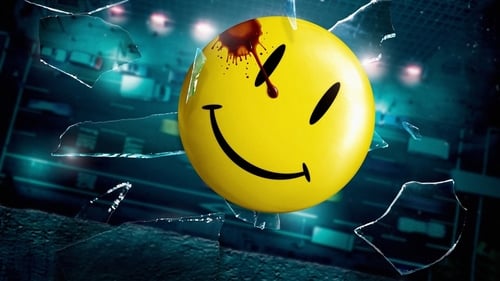
In a gritty and alternate 1985, the glory days of costumed vigilantes have been brought to a close by a government crackdown. But after one of the masked veterans is brutally murdered, an investigation into the killer is initiated. The reunited heroes set out to prevent their own destruction, but in doing so they uncover a sinister plot that puts all of humanity in grave danger.
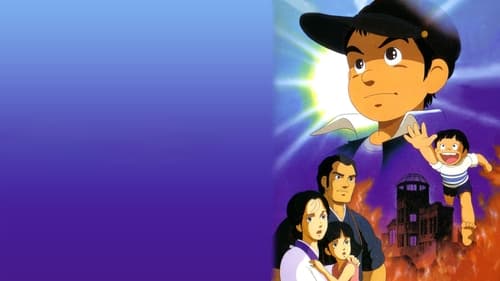
A story about the effect of the atomic bombing of Hiroshima on a boy's life and the lives of the Japanese people.
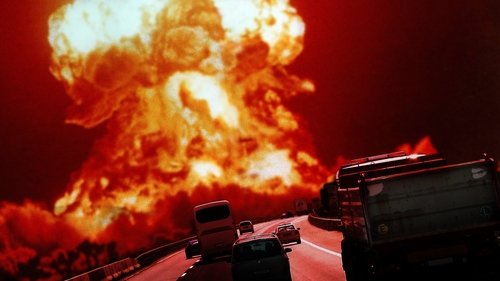
In the mid-1980s, the U.S. is poised on the brink of nuclear war. This shadow looms over the residents of a small town in Kansas as they continue their daily lives. Dr. Russell Oakes maintains his busy schedule at the hospital, Denise Dahlberg prepares for her upcoming wedding, and Stephen Klein is deep in his graduate studies. When the unthinkable happens and the bombs come down, the town's residents are thrust into the horrors of nuclear winter.

Suspicious of the events ensnaring their former colleagues, Nite Owl and Silk Spectre are spurred out of retirement to investigate. As they grapple with personal ethics, inner demons and a society turned against them, they race the clock to uncover a deepening plot that might trigger global nuclear war.
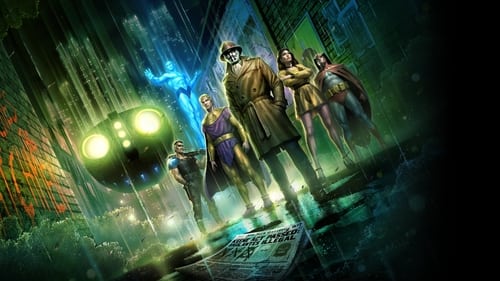
In 1985, the murder of a government-sponsored superhero draws his outlawed colleagues out of retirement and into a mystery that threatens to upend their personal lives and the world itself.
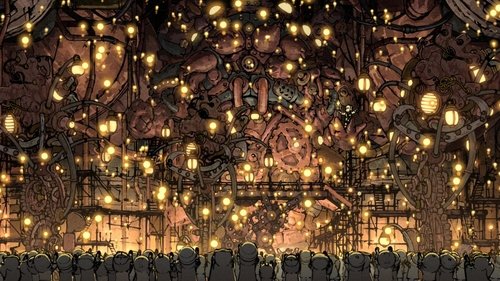
Aki isn’t a brave little boy, but he’s dedicated nonetheless to safeguarding his sickly, mute friend Fuyu. They and their little gang live deep underground, in the concrete warrens to which survivors have fled following the eruption of Mt. Fuji. The community is in decline, however, as illness and despair take their toll. Fuyu dreams of the outside world, which he is too frail to ever reach. But what colour is the sky out there?
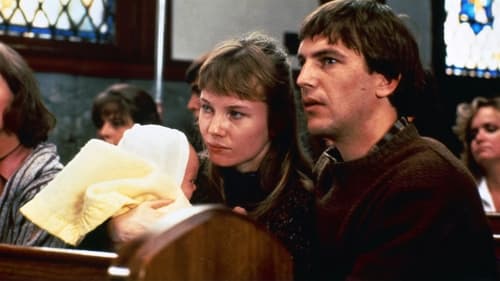
It's just another day in the small town of Hamlin until something disastrous happens. Suddenly, news breaks that a series of nuclear warheads has been dropped along the Eastern Seaboard and, more locally, in California. As people begin coping with the devastating aftermath of the attacks — many suffer radiation poisoning — the Wetherly family tries to survive.
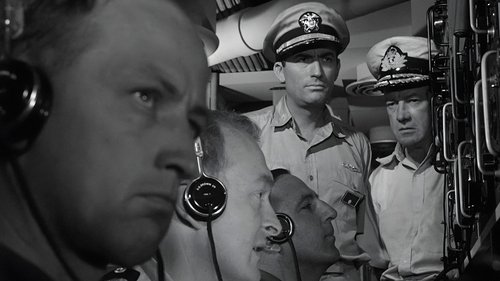
In 1964, atomic war wipes out humanity in the northern hemisphere; one American submarine finds temporary safe haven in Australia, where life-as-usual covers growing despair. In denial about the loss of his wife and children in the holocaust, American Captain Towers meets careworn but gorgeous Moira Davidson, who begins to fall for him. The sub returns after reconnaissance a month (or less) before the end; will Towers and Moira find comfort with each other?
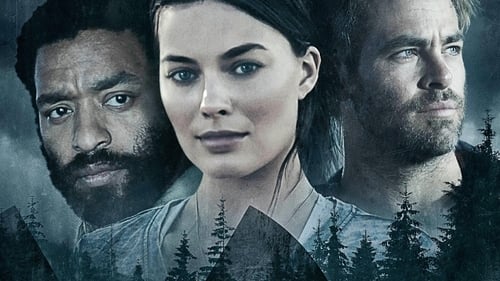
In the wake of a nuclear war, a young woman survives on her own, fearing she may actually be the proverbial last woman on earth, until she discovers the most astonishing sight of her life: another human being. A distraught scientist, he’s nearly been driven mad by radiation exposure and his desperate search for others. A fragile, imperative strand of trust connects them. But when a stranger enters the valley, their precarious bond begins to unravel.

With the help of government-issued pamphlets, an elderly British couple build a shelter and prepare for an impending nuclear attack, unaware that times and the nature of war have changed from their romantic memories of World War II.
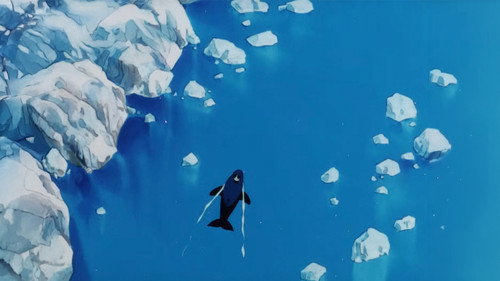
An orphaned cat adrift at sea is raised by an otter to live in the ocean. They live together in peace until one day they encounter a submarine.
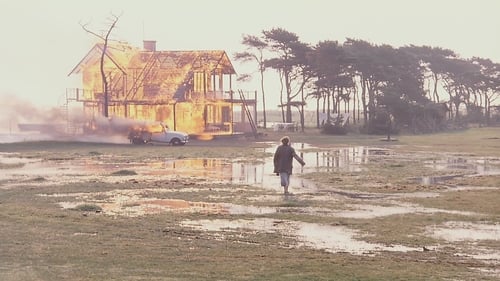
Alexander, a journalist, philosopher and retired actor, celebrates a birthday with friends and family when it is announced that nuclear war has begun.
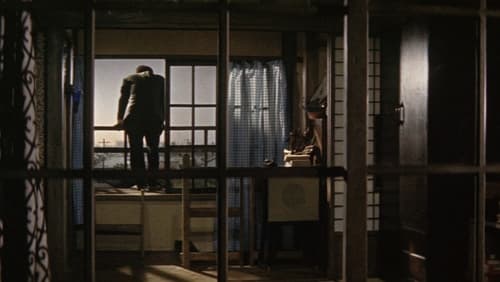
A Japanese family is torn apart by the tensions of an avoidable nuclear world war between the superpowers.

A man confronts his past during an experiment that attempts to find a solution to the problems of a post-apocalyptic world caused by a world war.
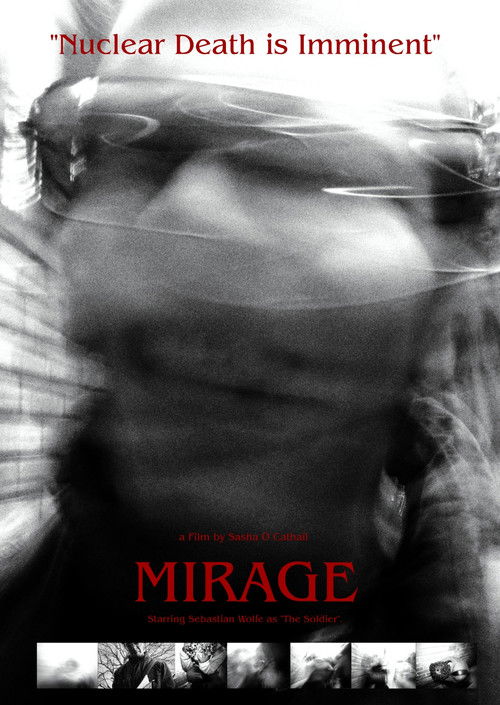
a soldier returns from a war in Europe, only to grow more bitter as he realises a more sinister truth.

Our planet was contaminated by many nuclear explosions that left the soil and the air filled with radiation, and now the few survivors of those catastrophic events live under the ground on a shelter controlled by scientists. After an incident inside the shelter, a group of rebellious scientists defy their leadership when they find a good possibility of returning to the surface.
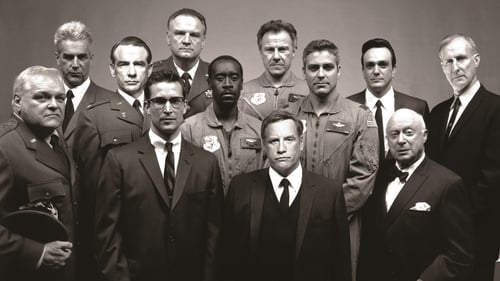
Cold War tensions climb to a fever pitch when a U.S. bomber is accidentally ordered to drop a nuclear warhead on Moscow.
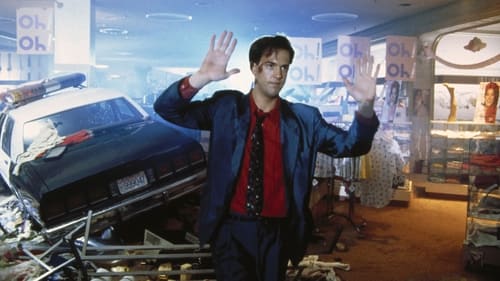
After 30 years of searching, Harry has finally met the girl of his dreams. Unfortunately, before they even have a chance to go on their first date, Harry intercepts some chilling news: WWIII has begun and nuclear missiles will destroy Los Angeles in less than an hour!
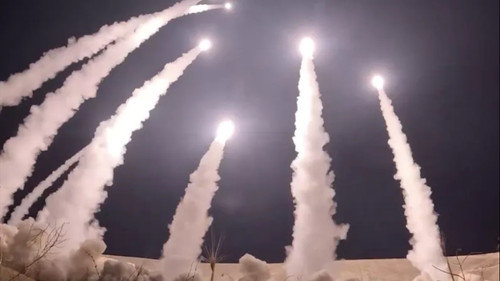
On February 28, 2026, the US and Israel launched massive strikes on Iran, claiming an imminent nuclear threat. This film traces how the world reached this point after more than three decades of shadow war over “the bomb”. Israel has tried to block Tehran’s nuclear drive with sabotage, assassinations and cyberwar – from the Stuxnet virus wrecking Natanz centrifuges to the AI-assisted killing of nuclear programme “father” Mohsen Fakhrizadeh, and a commando raid stealing 1.5 tonnes of secret nuclear archive files. Iran insists uranium enrichment is its sovereign right and key to national identity and regional power. As Israel pounded Iran’s nuclear facilities in June 2025 and systematically weakened its allies in Gaza, Lebanon, Syria and Yemen, nuclear talks continued in Geneva. Iran was edging towards diluting weapons-grade uranium – but Israel wasn’t prepared to wait, and pulled Washington into open war whose global consequences are only now beginning to unfold.