
Action
Adventure
Animation
Comedy
Crime
Documentary
Drama
Family
Fantasy
History
Horror
Music
Mystery
Romance
Science Fiction
Thriller
War
Western
Found 40 movies, 13 TV shows, and 0 people
Can't find what you're looking for?

Two brothers and their mother arrive in Germany after the grandma convinces them that they should leave Kazakhastan and head for the land of their ancestors.
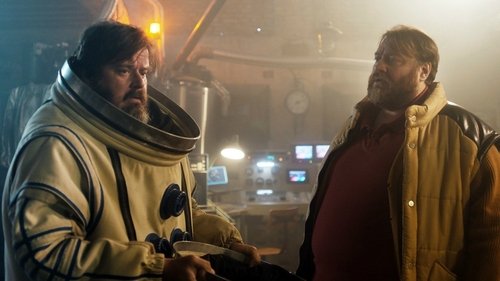
At six, Dario watched the first Moon landing on TV, sparking a lifelong dream to reach the stars. For the rest of his life, the ingenious curmudgeon built a homemade space rocket on his farm using scraps from the local hardware store. But, after a disastrous first launch burns down the neighbors' cornfields, Dario lands in jail. Enter Mario, his estranged brother who left the dying countryside for the big city: despite the confusion, he agrees to help Italy's 'secret space program' finally take off.

Fluxfilm No. 35 by Geoffrey Hendricks
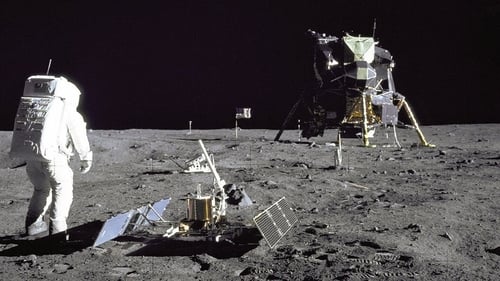
July 1969. America made history and sent the first humans to the moon. High-quality NASA footage and extensive news broadcasts bring this sensational moment in history bursting back into life. Live news footage from every corner of the globe recreates the excitement and elation that surrounded the event, as 600 million people tuned in to watch Neil Armstrong's remarkable first steps.

Nel is a 10-year-old astronaut-to-be who has lots of moles and wants to go to the moon. He undertakes an odyssey in a fair to reach the closest point to the stars, but this is not an easy task for a being that moves at a quarter of the speed of the others.

The day humankind set foot on the Moon should be considered nothing short of a triumph, and many think it to be precisely that. However, some people see things a lot differently.Join us as we dive down the fascinating rabbit hole of Moon Landing Conspiracy.
A short documentary about the moon landing sequence in "First Man".
This documentary, featuring archives, reconstructions, and interviews with experts and conspiracy theorists, investigates the Apollo 11 debate.

On July 16, 1969, the world watches as the three Apollo 11 astronauts attempt the impossible: to ride a controlled explosion off Planet Earth, land on another celestial body and return home. As the nine-day mission proceeds, audio from mission control captures the drama as it unfolds—each moment revealing new dangers, new decisions and new wonders. For the first time on television, this documentary utilizes “lost tapes” of the astronauts, recorded before and after the mission, along with rare film and photos. The documentary reveals the doubts and fears of the astronauts as they stand on the brink of history. The mission was nearly aborted twice, as the crew faced a mysterious alarm sounding in the spacecraft, and when fuel levels ran dangerously low. On the 50th anniversary of NASA’s most audacious achievement, Moon Landing: The Lost Tapes reveals the incredible true story of mankind’s greatest leap.
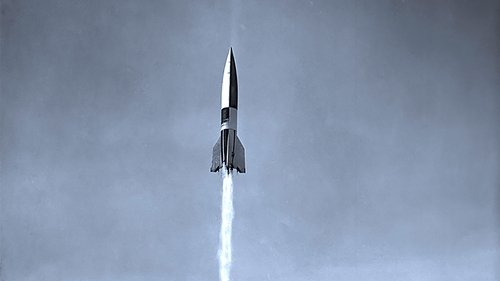
The fact that Neil Armstrong was the first man to set foot on the moon on July 19, 1969, was also the success of Wernher von Braun and a team of more than 100 NASA technicians and engineers from Germany. But the success story is shrouded in dark shadows: Many of the Germans had a Nazi past and were part of the development of the infamous V2 rocket. Some 20,000 forced laborers lost their lives during the production under the inhumane working conditions at several Nazi underground weapons factories. In a secret operation to secure German rocket technology, the Americans brought the scientists to the USA in 1945. Only decades later were classified documents released, detailing the involvement of German NASA employees with the Third Reich.
The Day Before the Moon Landing (1969) is the first in a series of videos Tambellini made to capture broadcast television as it was experienced live. Unlike more involved works such as Black TV, the video simply records Tambellini channel surfing between the networks on July 19, 1969, the day before Apollo 11 landed.
The Lacey watch British astronauts landing on the moon
In an age where conspiracies become a reality, Jimmy Failla has now become skeptical of the most outstanding achievement of mankind, the Apollo 11 mission to the Moon.

In 1969, Apollo 11 landed on the moon. Despite all the conspiracy theories around it, The US successfully showed the world what a powerful country can accomplish. 50 years later, people in Taiwan are struggling between an identity crisis and economic fluctuations, hoping for something or someone that would save the day. This desire is why you are hired to be a national hero – the very first Taiwanese who lands on the moon.
July 1969. Astronauts Neil Armstrong and Buzz Aldrin are 240,000 miles from earth facing the most hazardous venture in the history of space flight; the first human landing on another world. They'll succeed, abort, or die in the attempt.
Apollo 17 was the eleventh and final mission of NASA's Apollo program, the sixth and most recent time humans have set foot on the Moon or traveled beyond low Earth orbit. Commander Gene Cernan and Lunar Module Pilot Harrison Schmitt walked on the Moon, while Command Module Pilot Ronald Evans orbited above.

A girl and a cat discuss how easy or not it'd be to fake the moon landing.
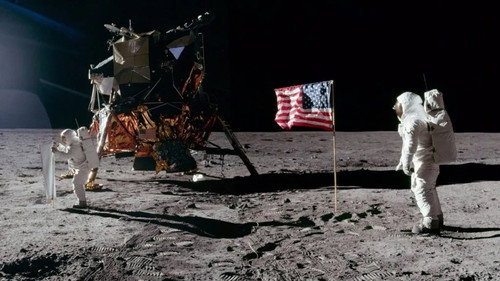
No description available for this movie.

On a soundstage in the San Fernando Valley in 1969, mankind's greatest achievement was faked by cinema's greatest madman: Stanley Kubrick.

The Moon Landing celebrates the historic 50th anniversary of Apollo 11, in a fresh and distinctive style. This inspiring documentary subverts usual conventions by beginning with the momentous event, exploring the preceding dramatic sixty minutes in granular detail. Packed with surprising details which reveal a whole new perspective on the story of how humans landed on the moon, this documentary rewinds one hour before Neil Armstrong's famous footstep to reveal a whole untold story, hidden in the forensic moment-by-moment details driven by powerful footage from the time and authentic audio recordings from the capsule and the command module and mission control in Houston. In the last 60 minutes, the Apollo mission could fall apart. Without dazzling on-the-spot ingenuity, a 240,000-mile helpline to Houston, and almost unnatural abilities to remain calm under incredible pressure, the first step onto another world might not happen at all.
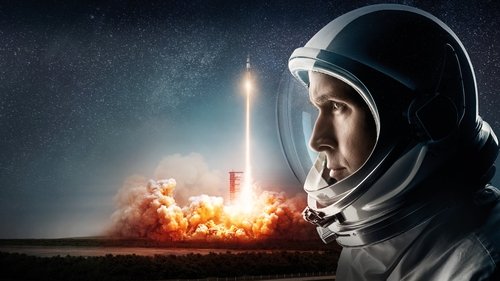
A look at the life of the astronaut, Neil Armstrong, and the legendary space mission that led him to become the first man to walk on the Moon on July 20, 1969.
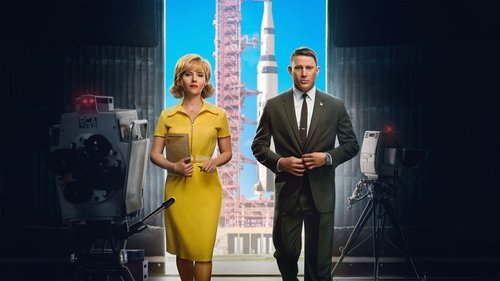
Sparks fly in all directions as marketing maven Kelly Jones, brought in to fix NASA's public image, wreaks havoc on Apollo 11 launch director Cole Davis' already difficult task of putting a man on the moon. When the White House deems the mission too important to fail, Jones is directed to stage a fake moon landing as backup, and the countdown truly begins.
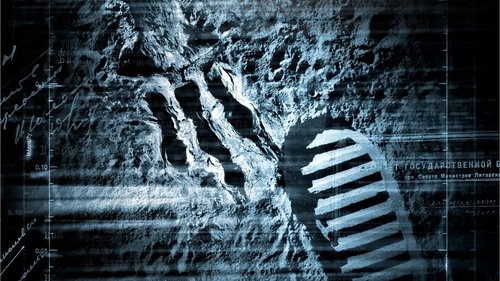
Officially, Apollo 17 was the last manned mission to the moon. But a year later in 1973, three American astronauts were sent on a secret mission to the moon funded by the US Department of Defense. What you are about to see is the actual footage which the astronauts captured on that mission. While NASA denies its authenticity, others say it's the real reason we've never gone back to the moon.

Wallace and Gromit have run out of cheese, and this provides an excellent excuse for the duo to take their holiday to the moon, where, as everyone knows, there is ample cheese.
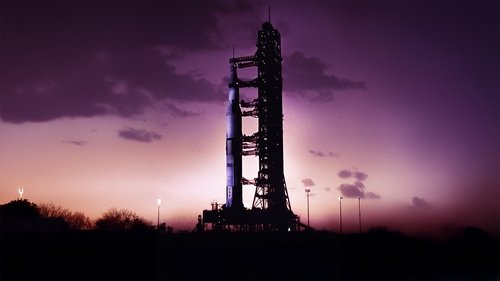
A look at the Apollo 11 mission to land on the moon led by commander Neil Armstrong and pilot Buzz Aldrin.

The world of a young housewife is turned upside down when she has an affair with a free-spirited blouse salesman.

A man narrates stories of his life as a 10-year-old boy in 1969 Houston, weaving tales of nostalgia with a fantastical account of a journey to the moon.
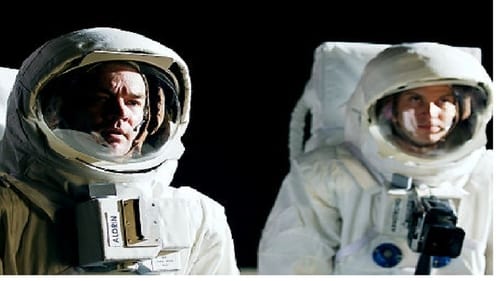
Man's landing on the moon was our greatest technological achievement. The Apollo 11 mission was truly the stuff of dreams. For the first time, our species walked on another celestial body. Even more remarkable was their ability to make it back. This is the story of the July 20, 1969, Apollo 11 moon landing. Drama with digitally remastered original footage.

Desperate to land a man on the moon before Russia does, NASA hastily preps a would-be spaceman for a mission that would leave him alone in a lunar shelter for a year.
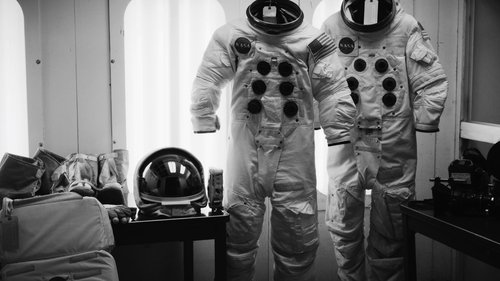
In 1967, four undercover CIA agents were sent to NASA posing as a documentary film crew. What they discovered led to one of the biggest conspiracies in American history.
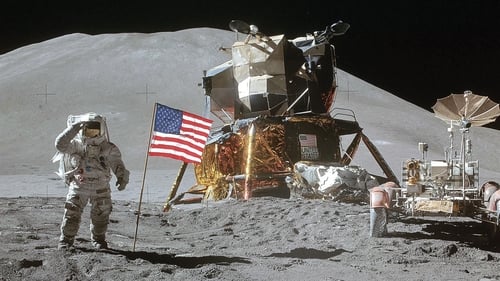
A testament to NASA's Apollo program of the 1960s and '70s. Composed of actual NASA footage of the missions and astronaut interviews, the documentary offers the viewpoint of the individuals who braved the remarkable journey to the moon and back.
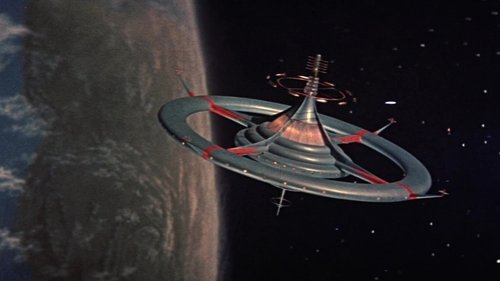
In 1965, the space station JSS-3 is destroyed by a fleet of UFOs, which then begin a global siege on Earth, using rays to manipulate gravity and control the minds of men. In response, a global council meeting is held to determine the source of the attacks and prepare a rocket ship armada for a counter-attack, a true battle in outer space. . . The film is a sequel of sorts to Toho's THE MYSTERIANS in the reprise of the Etsuko Shiraishi character of that film as its heroine. It was edited to 74 minutes for its American release.

What if Apollo 11 never actually made it? What if, in reality, Stanley Kubrick secretly shot the famous images of the moon landing in a studio, working for the US administration? This is the premise of a totally plausible conspiracy theory that takes us to swinging sixties London, where a stubborn CIA agent will never find Kubrick but is forced to team up with a lousy manager of a seedy rock band to develop the biggest con of all time.
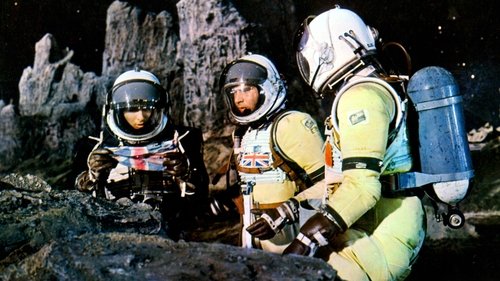
The world is delighted when a spacecraft containing a crew made up of the world's astronauts lands on the moon, but are shocked when the astronauts discover an old British flag and a document declaring that the moon is taken for Queen Victoria proving that the astronauts were not the first men on the moon.

A group of young boys must decide whether to buy a TV set to watch the launch of Apollo 11 or visit Uranya to learn about the secrets of love.
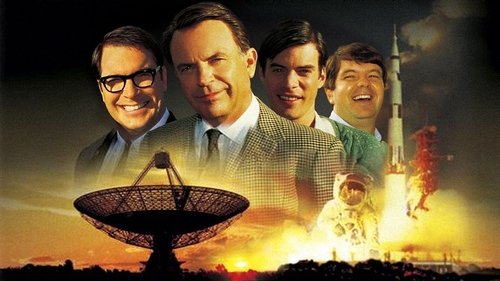
A group of maverick scientists on a remote Australian sheep farm are the globe's only hope for obtaining the epic images of man's first steps on the moon.

When the brave and determined 12-year-old Mike Goldwing discovers that an eccentric billionaire plans to fly to the moon, steal its vast, valuable natural resources, and destroy the American flag planted by the Apollo XI astronauts during man's historic moon landing, the countdown to a spectacular adventure begins! Mike, teamed with his grandfather, best friends Amy and Marty, and a clever chameleon, blasts off on an incredible moon-bound mission, determined to thwart the billionaire's evil plan, capture the flag, and reunite his family.
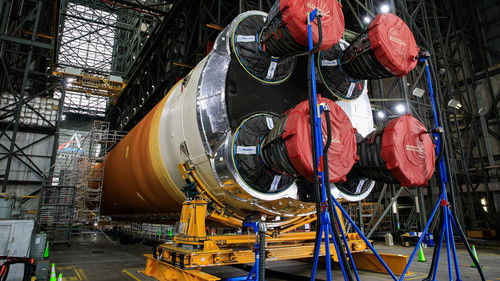
The inside story of the Artemis II mission - filmed over three and a half years at NASA. How did four astronauts travel to the moon, going deeper into space than ever before?

In front of television crews and thousands of spectators, Spaceship-1—commanded by Commodore Hardt, inventor of the powerful rocket fuel "Neotan-X"—blasts off on the first flight to the Moon.
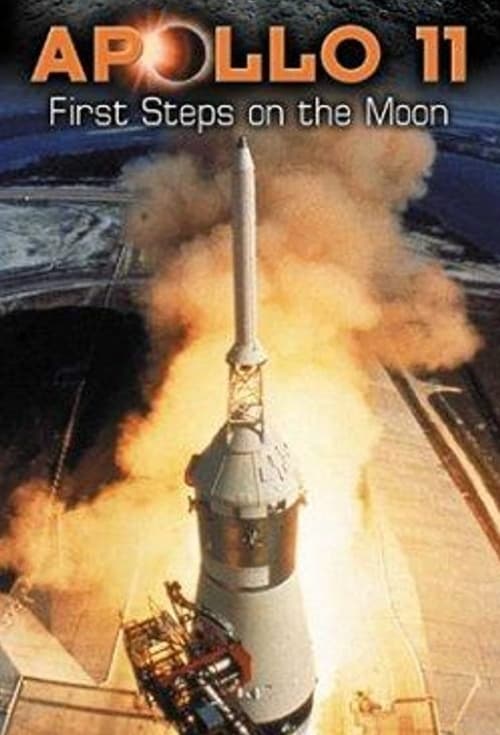
Fearful that the Russians would continue their lead in the space race and be the first to put a man on the moon, NASA felt an enormous pressure to push the Apollo Program forward as quickly as possible, though they knew that pushing too hard could lead to the ultimate disaster. This film recreates the tensions that were felt not only by the three astronauts, Armstrong, Aldrin and Collins, but also by their families and by the teams of technicians training to deal with anything that could go wrong.