
Action
Adventure
Animation
Comedy
Crime
Documentary
Drama
Family
Fantasy
History
Horror
Music
Mystery
Romance
Science Fiction
Thriller
War
Western
Found 23 movies, 3 TV shows, and 0 people
Can't find what you're looking for?
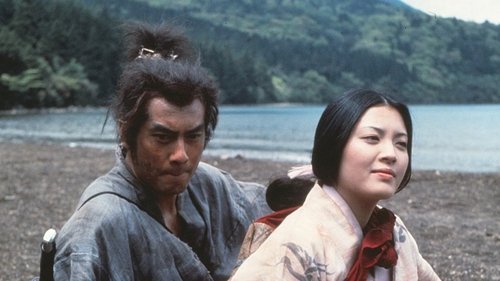
In Part I we see the young would-be swordsman setting out to achieve greatness in war, achieving nothing because fighting on the losing side, & then beginning his long period of wandering & training, with the goal always in mind of his duel with Kojiro. Part II builds toward that great duel on Ganryu Island, with considerable focus on Musashi's planning & forethought as to how to gain an advantage.
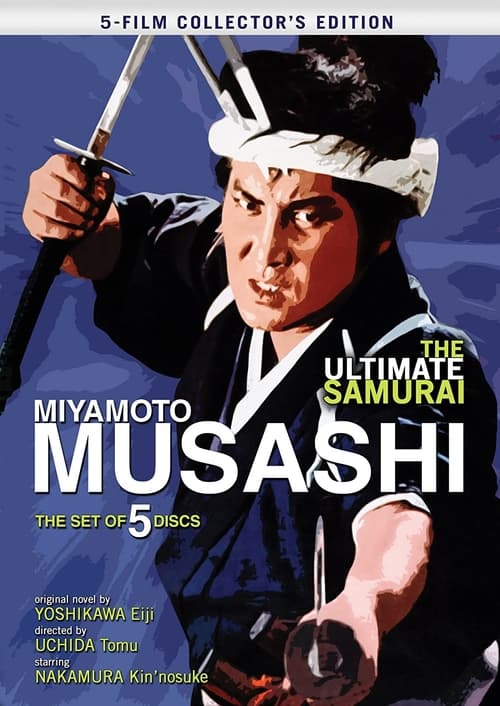
In this first episode, we are introduced to Takezo, what Musashi used to be before he became the man of legend. His beginning are not exactly auspicious. He sides with the Toyotomi at Sekigahara, and as a result finds himself on the losing side of the historic battle. He and his friend Matahachi manage to escape the slaughter although the latter is wounded in his leg. They stumble across the young Akemi who makes her living with her mother Oko by robbing corpses of their armor and anything else they can sell. Oko takes it into her head to seduce Matahachi, which she does first by skillfully sucking the gangrene from his blood, and then just by sucking.
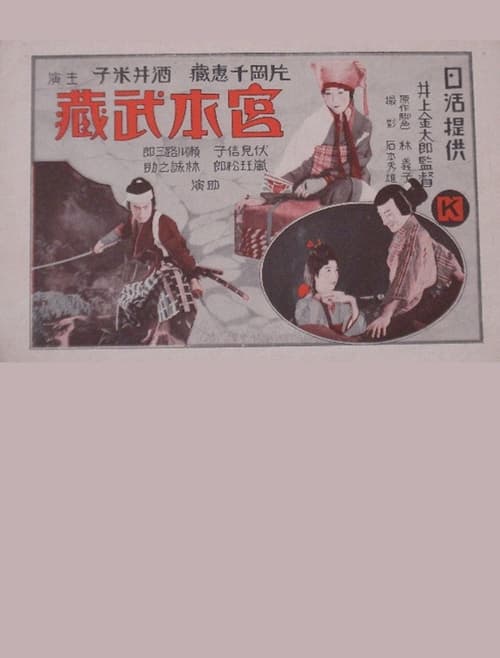
Silent jidaigeki film

The first of five Musashi series, Shinobu and her brother Genichiro plead with the famous swordsman Musashi Miyamoto to teach them swordsmanship to avenge their father's death. The killers of their father see the sister and brother practicing with Miyamoto, and so enlist the help of another powerful swordsman, Kojiro Sasaki, which gives Sasaki an excuse to battle Miyamoto.

Miyamoto Musashi is challenged by a series of opponents in this follow up to Miyamoto Musashi's Kongoin Ketto (1942, also called Nitoryu Kaigen) also directed by Ito Daisuke.
1942 Japanese movie
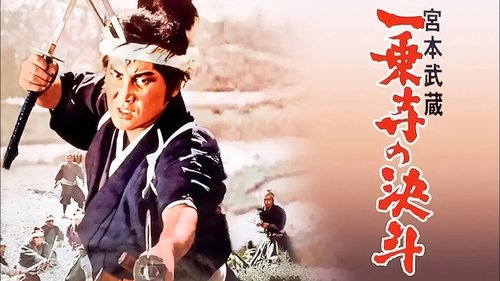
In the fourth installment, Musashi's potentially greatest opponent Kojiro jumps in and out of the story at the oddest and most coincidental moments. As his great love Otsu has succumbed to madness. Musashi then sets off to beat the functionaries of a treacherous clan in an arranged duel. 73 against one. Boastful Kojiro watches, secure in the knowledge that only he is a worthy opponent.
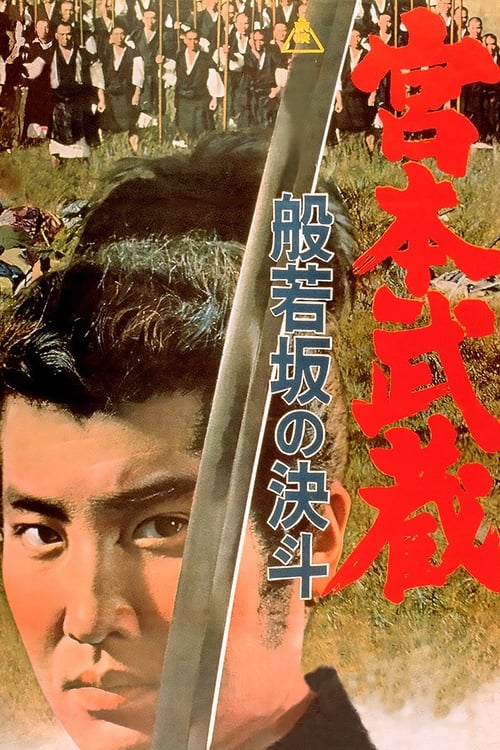
The remake of Yoshikawa's novel continues with the second installment in which Takezo, soon to be Miyamoto Musashi, emerges from the Himeji Castle after three years of intense contemplation and philosophical study and starting on his epic quest to complete his skill in the Way.
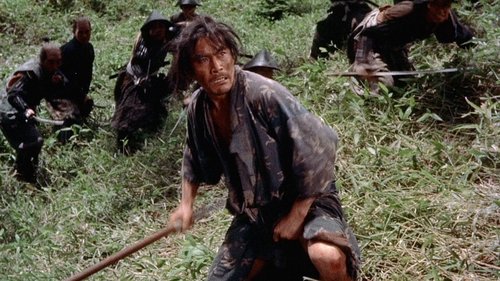
Struggling to elevate himself from his low caste in 17th century Japan, Miyamoto trains to become a mighty samurai warrior.
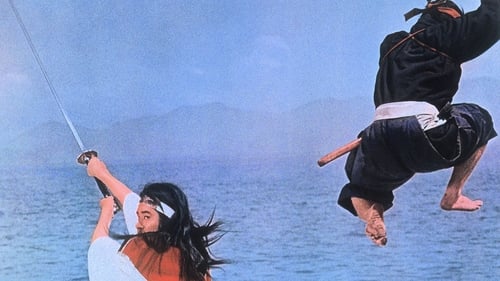
The fifth and final installment with the build up of the epic battle between Sasaki Kojiro and Miyamoto Musashi. With all the familiar characters making appearances: Otsu (Musashi's great love), Akemi, Matahachi (his former fellow soldier), old lady Osugi (still doggedly trying to defeat Musashi), and even the return of Priest Takuan (the man responsible for his journey towards enlightenment). But most of all, the boastful, long-haired and long-sworded Sasaki Kojiro.
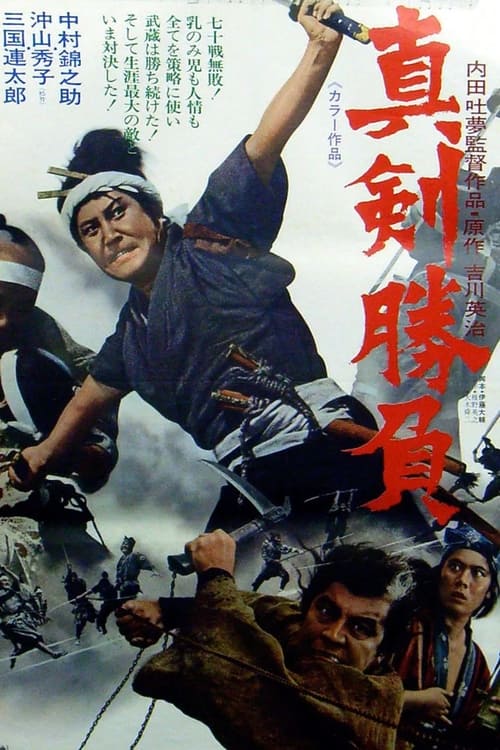
In the sixth and final episode Rentaro Mikuni steals the show as Baiken Shishido, Musashi's nemesis. Mikuni is the nominal villain of the film, but he is a devoted husband and father as well. He tries to kill Musashi only to avenge the death of his brother-in-law. While Baiken (who wields a chain and sickle against Musashi's sword) is a very human character and the emotions that Mikuni displays in his performance are quite believable and engaging
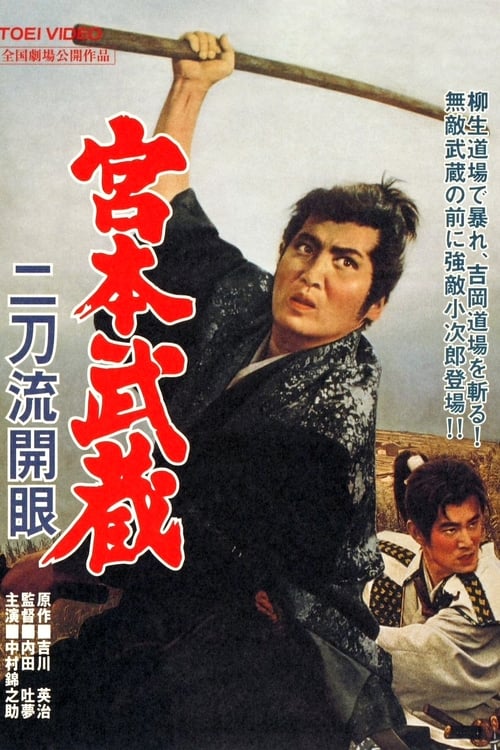
In the third installment of Yoshikawa's novel Musashi, things continue from the 2nd film at the end of battle, where Miyamoto continues on a mission of learning; with the introduction of his arch-rival Sasaki Kojiro; and lastly the large cast of characters rendezvouses for a fateful finale.
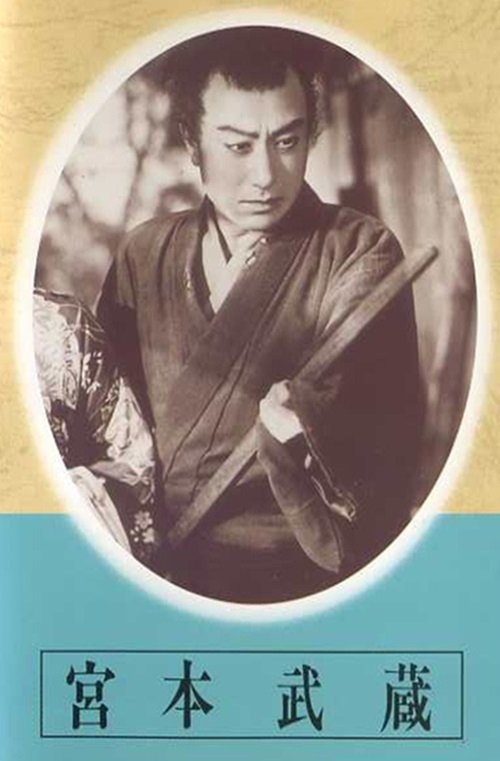
Second part of director Hiroshi Inagaki's 1940 adaptation of the story of Musashi Miyamoto.
Among the many famous 16th-century samurai who made the leap from myth and ukiyo-e to early cinema screen was sword-master Miyamoto Musashi, previously depicted in prints by Kiniyoshi Yoshitoshi and others slaying an array of grotesque creatures including giant bats, giant lizards, and the mythical tengu. This imagery informed his first screen depiction in Miyamoto Musashi Taiji No Ba, which showed him combatting the mythic white ape of the mountains.

Amakusa Shiro led the Shimabara Rebellion as a Christian and died an untimely death at the age of 16. This documentary explores the real image of Amakusa Shiro, who dared to take revenge on the world by conducting seance experiments and other means.
An early Miyamoto Musashi silent short film
First part of director Hiroshi Inagaki's 1940 adaptation of the story of Musashi Miyamoto.
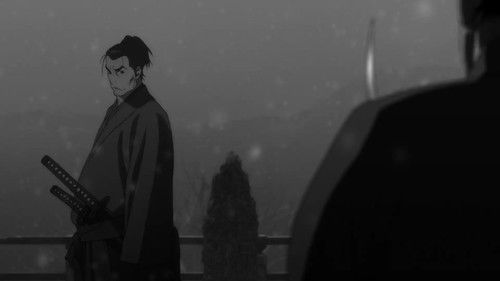
The film’s story centers on Musashi Miyamoto, one of the most famous swordsmen in Japanese history. He pioneered the Hyouhou Niten Ichi-ryuu style of two-sword fighting and wrote “The Book of Five Rings,” a book that has been compared to Sun Tzu’s “The Art of War” for its insight on tactics and strategy.
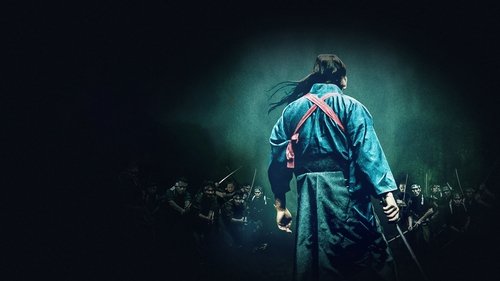
In 1604, Miyamoto Musashi attacked the Yoshioka family at their dojo and defeated master Seijūrō and his younger brother Denshichirō in two duels. To save their reputation, the Yoshioka family decides to fight back with all 100 family members and hire an additional 300 samurai. Now Musashi sets out to defeat all 400 enemies in his most famous battle.
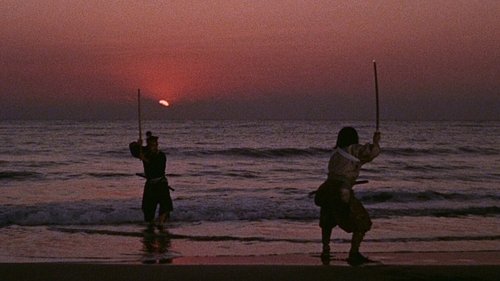
A humble and simple Takezo abandons his life as a knight errant. He's sought as a teacher and vassal by Shogun, Japan's most powerful clan leader. He's also challenged to fight by the supremely confident and skillful Sasaki Kojiro. Takezo agrees to fight Kojiro in a year's time but rejects Shogun's patronage, choosing instead to live on the edge of a village, raising vegetables. He's followed there by Otsu and later by Akemi, both in love with him. The year ends as Takezo assists the villagers against a band of brigands. He seeks Otsu's forgiveness and accepts her love, then sets off across the water to Ganryu Island for his final contest.
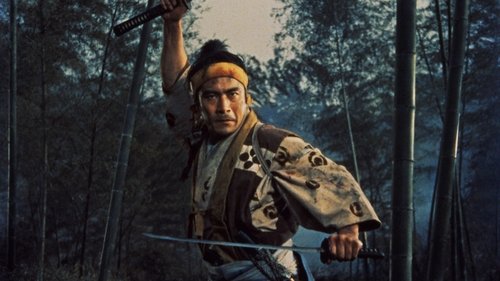
After years on the road establishing his reputation as Japan's greatest fencer, Takezo returns to Kyoto. Otsu waits for him, yet he has come not for her but to challenge the leader of the region's finest school of fencing. To prove his valor and skill, he walks deliberately into ambushes set up by the school's followers.
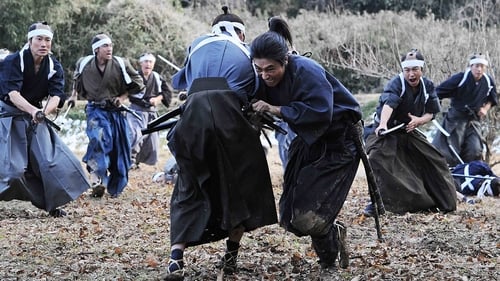
Musashi returns Japan's legendary swordsman and philosopher to the screen once again. In an original period drama based on the historical facts of the life and travels of the famous Miyamoto Musashi we find an apprentice, an instructor and the account of a famous battle in Japan of the Middle Ages where many questions will be answered.
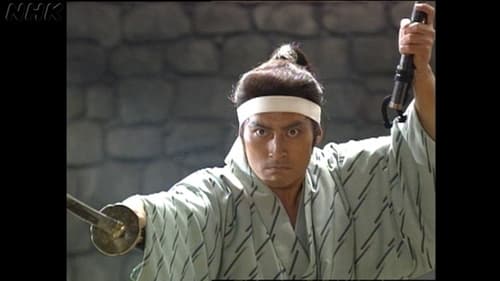
In the 16th Year of Keityo (1611), the lord of Ogura Castle in Kyushu admitted Sasaki Kojiro's because of his great sword techniques. However, a group within the feudal clan which supported to use guns considered Kojiro an obstacle in their goals and has the well-known ronin, Miyamoto Musashi, fight him. Now because of political gain and greed, two honorable men are to fight to the death on Ganryu Island.