
Action
Adventure
Animation
Comedy
Crime
Documentary
Drama
Family
Fantasy
History
Horror
Music
Mystery
Romance
Science Fiction
Thriller
War
Western
Found 22 movies, 1 TV show, and 0 people
Can't find what you're looking for?
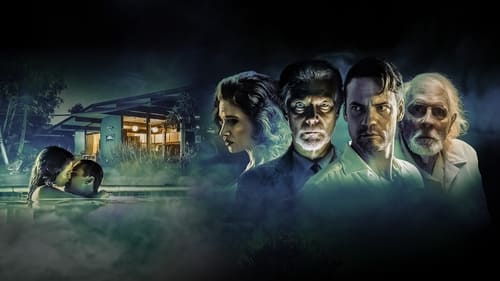
A husband and wife's weekend in a mid-century modern vacation rental turns deadly when the husband discovers the owner is a psychopath with a backyard of buried secrets and designs on his wife.

Anthology of tragic love. A noblewoman falls for a commoner. A doctor keeps quiet about his patients' infidelities. Expectant father is sent to fight in WWI. A 1920s fascist enjoys Rome's nightlife. WWII airman falls for a girl in Naples.
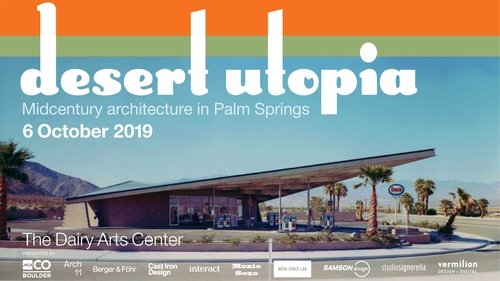
Southern California’s Coachella Valley, including the communities of Palm Springs, Palm Desert, Desert Hot Springs, boasts hundreds of extraordinary midcentury modern homes, public buildings and commercial structures. Modern designers such as William F. Cody, Albert Frey, William Krisel, John Lautner, Richard Neutra, R.M. Schindler, Donald Wexler, E. Stewart Williams left their collective mark on this desert paradise. Desert Utopia: Mid-Century Architecture in Palm Springs traces the history of modern architecture in Palm Springs from the first bold forays into modernist design to the preservation challenges facing the region today. Director Jake Gorst’s film features rare archival images and footage as well as interviews with historians, homeowners and the architects who helped create this mecca of modernism.

Clean lines, bold colors and the festive glow of a roaring retro fire. Mix and mingle in the merriest way with a cozy — and very vintage — vibe.
1962, a world where radiation from atomic weapons testing has awakened an unlikely new species: mid-century furniture. Harry, a grieving 10-year-old boy, must join forces with a wise old recliner and a feisty ottoman to save their furniture friends from the destructive plans of a power-hungry Army General Frank Holtzman.
This edition of the March of Time series takes a brief look backwards at where the world has come in the first 50 years of the century, and then presents a number of prominent people who state their views of the next fifty years of the 20th century. Among those shown are labor leader Walter Reuther, Joint Chiefs of Staff chairman General Omar Bradley, and A-Bomb scientist Robert Oppenheimer. Harry Pollitt, leader of the Communist Party in Britain, predicts that all roads will lead to world-wide Communism.

A showcase of 3-D Kodachrome slides taken between the 40's and 70s.
A home-media compilation of animation rarities in the stylized "mid-century modern" aesthetic of the 1950s, including industrial and educational films and vintage TV commercials. Presented on DVD and Blu-ray by Thunderbean Animation.
Thunderbean is proud to present this collection of rare, 'modern design' cartoons from the 40's, 50's and early 60's. These theatrical shorts, commercials, industrial films and drive-in commercials were produced by studios stepping away from the established cartoon design styles that had become standards in the industry, instead finding inspiration in modern graphic design and the work of contemporary fine artists. These new ideas in animation design became staples of the Television age, largely because of the influences and pioneering work of United Productions of America (UPA) as well as the many newly established commercial studios. This new collection is mastered from original 16mm and 35mm prints.
This documentary film goes beyond the walls and hedges of Mid-Century homes that were built in neighborhoods like Twin Palms, Vista Las Palmas and Racquet Club Estates. The film features interviews with noted architects James Harlan, author of The Alexanders. Watch as home owners in various Palm Springs neighborhoods speak directly to the pride that goes beyond home ownership as they tour us through their homes. They gladly accept that they are the stewards of these mid-Century monuments that they live with everyday.
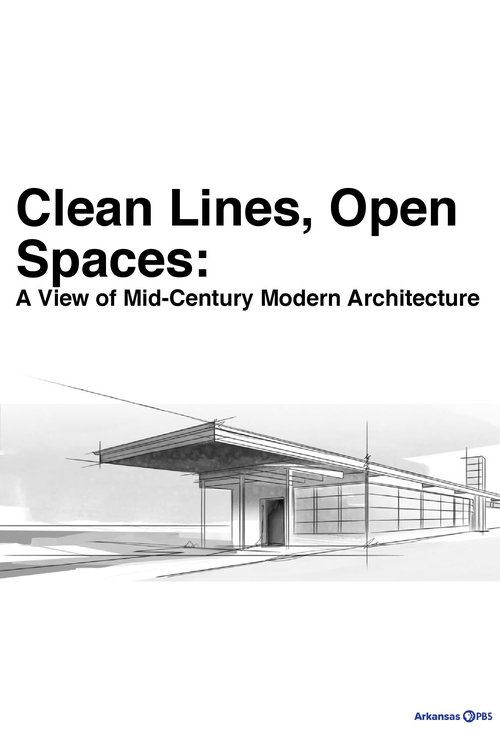
"Clean Lines, Open Spaces: A View of Mid-Century Modern Architecture" focuses on the construction boom in the United States after World War II. Sometimes considered cold and unattractive, mid-century modern designs were a by-product of post-war optimism and reflected a nation's dedication to building a new future. This new architecture used modern materials such as reinforced concrete, glass and steel and was defined by clean lines, simple shapes and unornamented facades.
How to Dance Through Time, Volume I gives clear and repeated instructions to teach viewers the Waltz, Gallop, Polka, Schottische, and Polka Mazurka; five dances that were essential for anyone attending a mid-19th century ball. For the first time, dance partners held each other in a face-to-face embrace as they turned and swirled around the ballroom.

Lily Pierce is sick of being haunted. She decides to reconnect with her estranged father, a disgraced history professor, and learn how to draw upon a time of steel and blade when armor-clad knights rode out and dueled their monsters to the death.
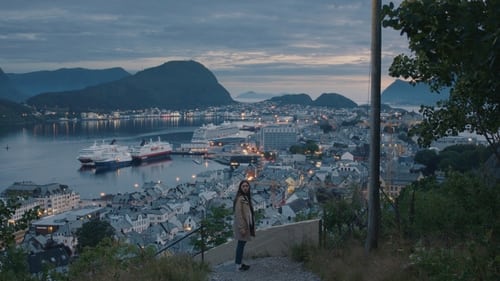
Long blue hours characterise summer nights in the sleepy Norwegian port town of Ålesund. Asta is a young journalist working for the local newspaper, where she is expected to report on local sports, historic preservation, and cruise ships. It is only when she stumbles across the strange story of a refugee’s forced deportation, that she finds new meaning in her work and life.
A jetliner spans the miles, sheering through clouds to open sky and scenic vistas of the provinces below. Glimpses of town and country, of people of many ethnic origins, of a resourceful and industrious nation - impressions it would take days and weeks to gather at first hand - are brought to you in this vivid 1800-kilometer panorama.
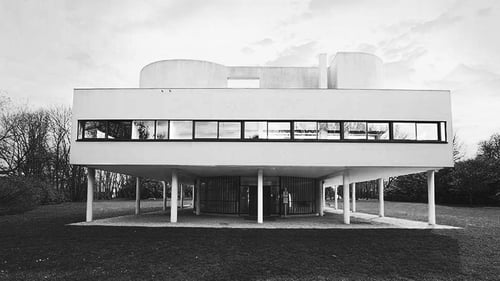
Regarding Le Corbusier: the man and his architecture
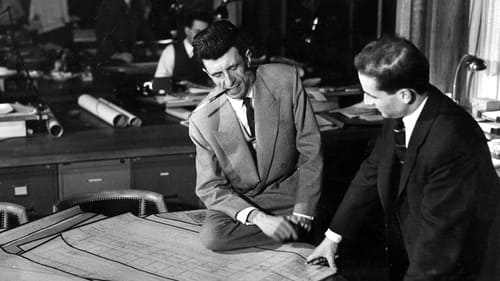
Constructing freestone buildings on the cheap, Pouillon made a name for himself at the end of the 1940s in Aix-en-Provence and Marseille, shaking up his peers who only dreamed of towers and concrete bars. In Algiers, until Independence, he built in record time thousands of homes for the poorest, real urban projects inspired by traditional forms. In the Paris region, to build comfortable buildings quickly and well, nestled in the greenery, he becomes a promoter: this too adventurous bet leads him to prison and retains his reputation. Not very explicit about this complex affair, but seduced by a contemporary architecture that combines technical inventiveness and ancient references, Christian Meunier films by multiplying the angles of view. Today's lively atmospheres are interspersed with archive footage, while Pouillon's writings are read off. Moved, his collaborators evoke a demanding and generous man, with an infectious passion.
A documentary about the history of modern Danish Design and architecture and its worldwide impact on contemporary international designers.
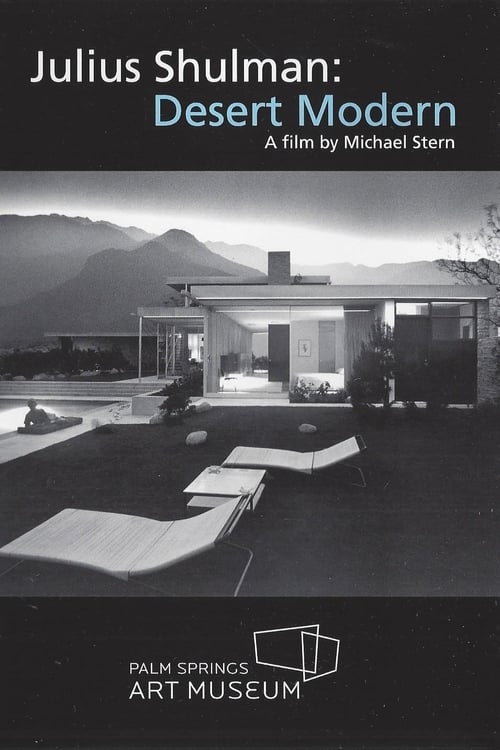
Julius Shulman: Desert Modern focuses on Shulman's remarkable 70-year documentation of the renowned Mid-Century Modern architecture of the Palm Springs area/ Shulman, at the age of 97, describes with humor and insight his artistic intentions and the back-story to some of his most legendary photographs. He is joined by noted architectural historian Alan Hess and Michael Stern, co-authors of the book, "Julius Shulman: Palm Springs". Stern is also curator of the "Julius Shulman: Palm Springs" exhibition which originated at the Palm Springs Art Museum in February 2008. The flm showcases Shulman's inspired photography of the architecture of Richard Neutra, Albert Frey, John Lautner, E. Stewart Williams, Palmer and Krisel and William Cody, among others. E. Stewart Williams' Frank Sinatra House is featured, as well as Richard Neutra's Kaufmann House, one of the most famous homes in America, largely due to Shulman's iconic 1947 photograph.
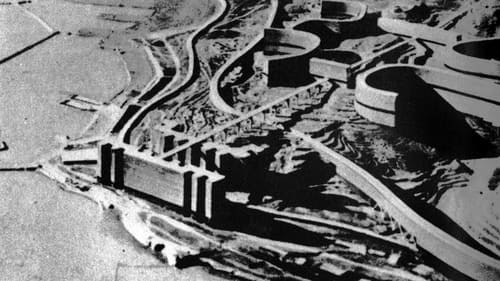
Making a documentary on Le Corbusier is not easy, because he is undoubtedly the architect most familiar to the general public but also the most unknown. If most people know his great achievements, such as the Cité radieuse of Marseille, the pavilions of the Cité universitaire de Paris or the Tourettes convent, many are unaware of his works in Moscow, Rio de Janeiro or Chandigarh. Roy Oppenheim pays a vibrant tribute to Corbusier, dismissing the criticisms and darker facets of the character. It presents the career of this pioneering architect, as well as his thinking, the essential principle of which was aimed at the development of human beings and the balance of society. Light, space and greenery are integrated into his large futuristic cities, because according to him the eyes of the inhabitants should be drawn into the distance and not into their neighbor's bathroom.
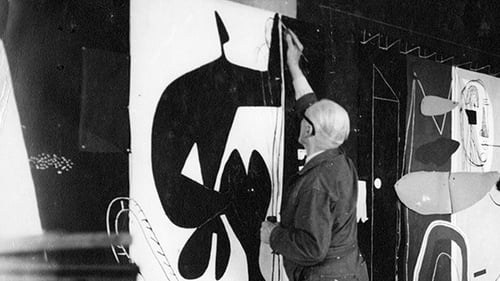
Documentary devoted to the architectural and urban planning designs of Le Corbusier. The architect supports his in-depth reflection on the city and its necessary adaptation to modern life with plans, drawings and images, particularly Paris, whose revolutionary development dreamed of by Le Corbusier is exhibited here. Its first projects will remain at the stage of a model: the modernization plan for the city of Algiers. Some will be created by other architects: Ministry of Education in Rio de Janeiro, UN Palace in New York. From the post-war period in less than 10 years, Le Corbusier created large housing units in Marseille, Nantes, a chapel in Ronchamps, a factory in Saint-Dié, a town in Chandigarh in India. Through diagrams, the architect presents his theory of the "radiant city", the mathematical key modulor of his work as well as his project for reorganizing the countryside, industrial and urban cities into a grouping around a cooperative system.
After filming the construction site of the Berlitz Palace (2nd), Pierre Chenal shows us in contrast other contemporary architectural achievements which, using the same technical processes, do not sacrifice the structure of iron and concrete for decoration. A documentary to the glory of the modern designs of Mallet-Stevens and Le Corbusier.