
Action
Adventure
Animation
Comedy
Crime
Documentary
Drama
Family
Fantasy
History
Horror
Music
Mystery
Romance
Science Fiction
Thriller
War
Western
Found 20 movies, 9 TV shows, and 0 people
Can't find what you're looking for?
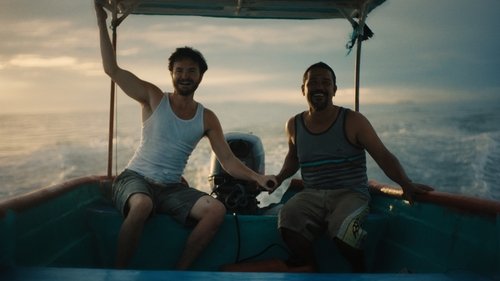
Parallel stories of two siblings. One follows a marine biologist searching for a mythical sea creature in Costa Rica, who perhaps has dark intentions. The other follows her shipwrecked older brother who is saved by a Costa Rican fisherman who believes he has found his new son.
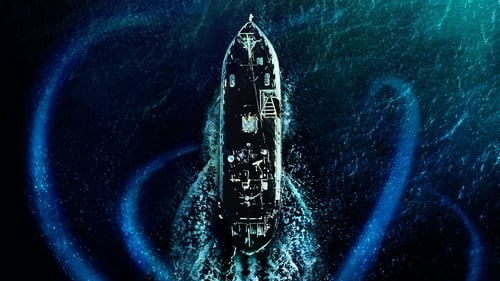
The crew of a West of Ireland trawler—marooned at sea—struggle for their lives against a growing parasite in their water supply.
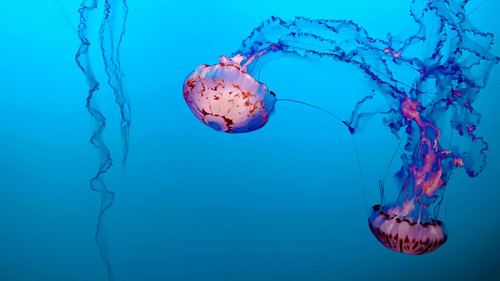
Jellyfish blooms are making headlines around the world. This is due to the damage they cause to tourism, fishing and our health. How can these creatures, which are over 98% water and have no shell, skeleton or brain, expand so rapidly? Although this is a normal stage in the life cycle of these gelatinous animals, we have to admit that blooms have become much more frequent and massive in recent decades. We're even witnessing jellyfish populations appearing in more and more regions where fish have been replaced by them, such as off the coast of Namibia, in the Black Sea, in the Sea of Japan and in certain areas of the Baltic Sea. What causes this? Why has the role of jellyfish in the ocean been underestimated, even though they outlived the dinosaurs? Are jellyfish on their way to dominating the oceans as they once did? What if they were to be the only ones left?
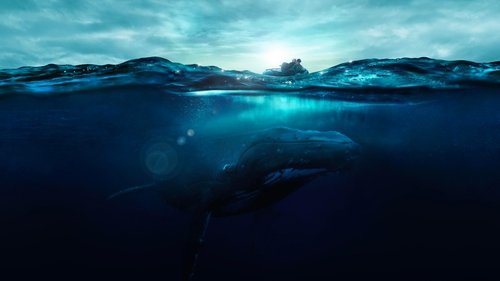
Two biologists set out on an undertaking as colossal as their subjects—deciphering the complex communication of whales. Dr. Michelle Fournet and Dr. Ellen Garland journey to opposite hemispheres to uncover a culture eons older than our own.
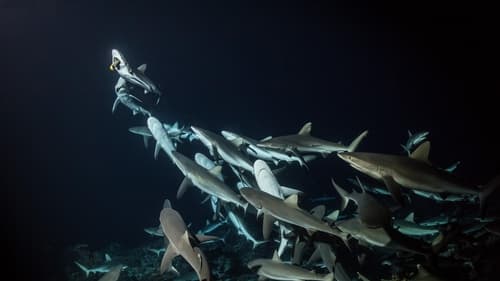
Gombessa Expedition 4 Laurent Ballesta went to observe a gathering of thousands of groupers during the full moon of June 2014 (Le mystère mérou) in the southern pass of the Polynesian atoll of Fakarava, where he discovered a pack of over seven hundred grey sharks. How can this unprecedented density be explained? Could it be that social behaviors govern this wild horde? During three years of preparation, he and the other divers on his international scientific team tamed their fear by abandoning the defensive reflexes that provoke shark aggression, with the aim of slipping into the heart of the raging pack to study and film it from the inside. Sharks fitted with microchips, receiving antennas, hydrophones, an ark of 32 synchronized cameras...: a whole technological arsenal is mobilized for the project. As the groupers approach for their annual spawning, what battle plan will the sharks deploy?

No description available for this movie.
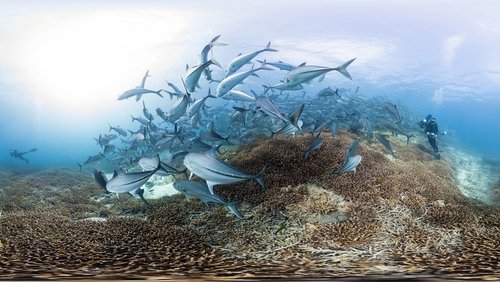
Coral reefs are the nursery for all life in the oceans, a remarkable ecosystem that sustains us. Yet with carbon emissions warming the seas, a phenomenon called "coral bleaching" -- a sign of mass coral death -- has been accelerating around the world, and the public has no idea of the scale or implication of the catastrophe silently raging underwater.
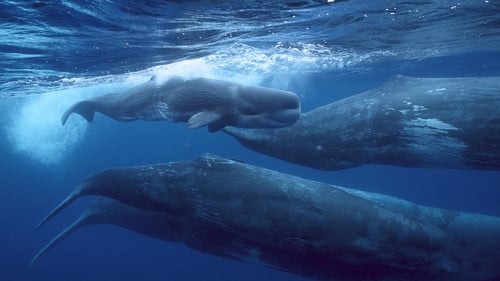
Pre-historic giants roam the world's oceans. Go beneath the surface of the sea for an extraordinary look & listen at these majestic creatures, as we explore their social behavior & hunting strategies.

At only twelve inches long, the menhaden are a keystone species in the East Coast's marine ecosystem, yet their numbers are threatened by industrial-scale fishing operations in the Chesapeake Bay.

Todd Keane, and his two best friends from the University of Illinois, travel through the tech boom of Silicon Valley to the phosphate-mined Polynesian island of Makatea.
No description available for this movie.

A marine biologist and a government agent investigate mysterious deaths and rumors of a sea monster in a secluded ocean cove, and find themselves involved with a marine biology professor conducting secretive experiments, international spies trying to steal his secrets, a radioactive light on the sea bottom, and the malevolent thing which guards it.

On his ship "Calypso," as well as in a submarine, Jacques Cousteau and his crew sail from South America and travel to Antarctica. They explore islands, reefs, icebergs, fossils, active volcanic craters, and creatures of the ocean never before seen. This voyage took place in 1975, and Captain Cousteau became one of the first explorers ever to dive beneath the waters of the frozen South Pole.
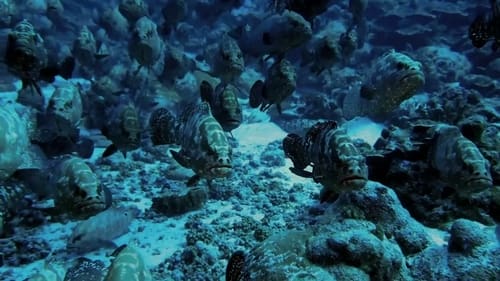
In French Polynesia, there is a place where every year, thousands of groupers gather in secret followed by hundreds of sharks… The photographer, diver and biologist Laurent Ballesta, with his team, wanted to better understand what motivates these fish to wait until the exact day of the full moon to spawn all at once! With the help of researchers from the CNRS of Moorea, they dived and conducted numerous experiments to study and witness this unique phenomenon. Taking advantage of this period of incredible richness, Laurent Ballesta did a record dive of 24 hours at over 20 meters.
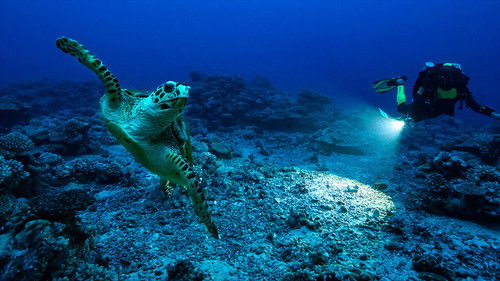
Oceanographer Sylvia Earle and a cast of marine scientists tell the story of the incredible work being done to protect our oceans fragile ecosystem.
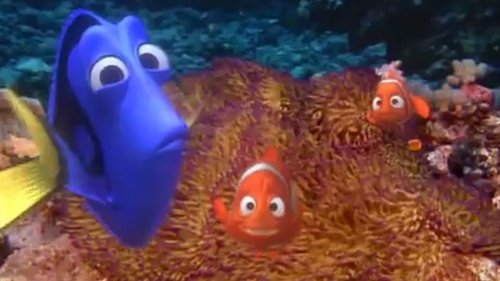
Jean-Michael Cousteau's documentary about the Great Barrier Reef keeps getting interrupted by characters from Disney's Finding Nemo.
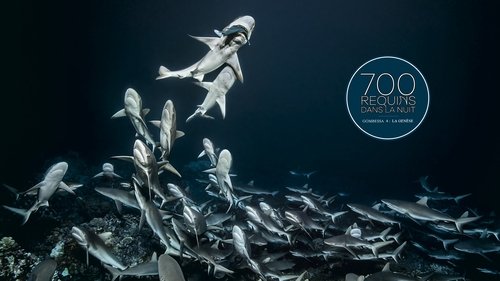
Originally, in 2014, Laurent Ballesta had just one precise objective: to unravel the mystery of groupers. To understand the issues involved in their collective reproduction. But although focused on the study of groupers, the real surprise came from the sharks. Never before had the team been confronted with such a density of grey reef sharks. The divers took up the challenge of counting them. Methodically, they repeated the operation many times to arrive at the impressive figure of 700 grey reef sharks. Each year, the team returned to the southern pass of Fakarava in French Polynesia. Until 2019, for the fourth expedition, "Gombessa 4" is the synthesis of precise and unique scientific protocols. The mission demonstrated that shark hunts are not anarchic, but rely in part on social organization within the horde, following in the footsteps of the 700 grey sharks in "700 sharks in the night (Gombessa 4, Genesis)".

No description available for this movie.

No description available for this movie.
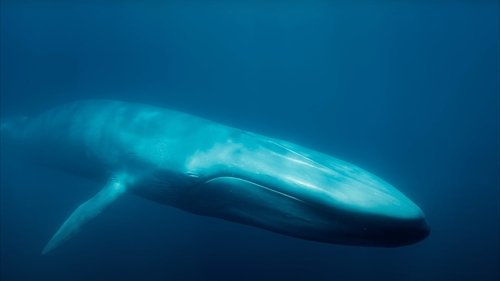
Blue Whales: Return of the Giants 3D takes viewers on a journey of a lifetime to explore the world of the magnificent blue whale, a species rebounding from the brink of extinction. Following two scientific expeditions—one to find a missing population of blues off the exotic Seychelles Islands, the other to chronicle whale families in Mexico’s stunning Gulf of California—the film is an inspirational story that transforms our understanding of the largest animal ever to have lived.