
Action
Adventure
Animation
Comedy
Crime
Documentary
Drama
Family
Fantasy
History
Horror
Music
Mystery
Romance
Science Fiction
Thriller
War
Western
Found 26 movies, 1 TV show, and 0 people
Can't find what you're looking for?

A mysterious cult has decided to take a new direction in giving Victor, a hard working trusted member, a promotion. However, his cruel minded disciples have decided to take action of their own. Growing tired of their monotonous plans, they begin to take their malevolent acts one step further. In a world seemingly far removed from Victor's, two young girls, Annabel and Tina, are trying to make changes in their own lives. Annabel prepares for a second date with Jerry, a man she met online, while Tina keeps focused on an important meeting that is sure to open up new doors in her life. Soon these two worlds collide as Annabel and Tina find themselves deep within the belly of the beast, and the long, dark history of a secret organization is revealed.
Compiled from stock footage, Livestock is a visual poem exploring the digital, physical and metaphysical synergy of the modern workplace.

Study on one of the stages of film production. Most of the animals at the Warren Livestock Auction will be sold for industrial meat production. The bodies will be quartered and processed and bones prepared to make gelatin which may one day have silver halide suspended in an acetate strip.
Tamie’s husband Shuhei is a famous novelist. However he mysteriously disappeared after WWII. One day, his old friend Mikuni shows up to Tamie’s house. He accuses Tamie of killing him. Mikuni shows her proof, in the form of a letter the novelist wrote before he disappeared. However, the truth is much more twisted than he could imagine... This period film, set in post-WWII Japan, is truly one of the more bizarre and twisted Pink Films you'll ever see.
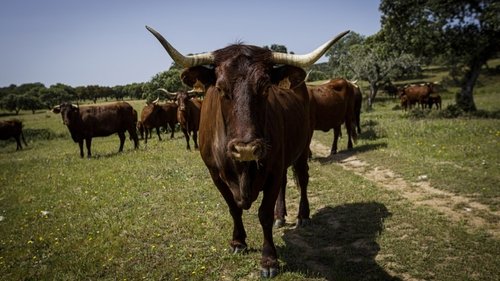
Livestock are not the enemy. They are the key. The fight to reverse climate change is putting animals in the spotlight. The purpose of this documentary is to show the use of livestock for the regeneration of grasslands, soils, woodland and water. Good livestock management is shown in a real way as a solution for the restoration of ecosystems and rural economies.

Similar to Livestock Industry Promotion Exhibition in Hwanghae-do, this film contains another livestock exhibition held at Sariwon Public Agricultural School in Hwanghae-do Province. While Livestock Industry Promotion Exhibition in Hwanghae-do conveys the overall festive atmosphere and the expressions of the crowd, Livestock Industry of Korea shows livestock such as chickens, cows, pigs, and ducks exhibited at the festival, the farmers exhibiting them, and the award ceremony. This film focuses more on the details of the festival. According to the related materials, at the time of the exhibition, there were other events, such as hunting contests, restaurants, essay contests, concerts, and motion-picture screenings. Acquired in 1993.

A series of Civil Defense spots explaining to American farmers what to do in the event of a Nuclear attack.
With Taiyu narration and traditional Chinese tunes, the film explains breeding, feeding, and disease prevention in an idealized farm setting.
Informative about progress and industry in Magallanes. Film restored by the National Cinematheque of Chile.
The film documents an exhibition for livestock industry promotion held in Sariwon, Hwanghae-do from October 21 to 25, 1924. At that time, Sariwon was an up-and-coming city whose “daily development is known to everyone” (Chosun Ilbo, October 9, 1924). The exhibition was held as a grand festival, attracting crowds of 30,000 on its opening day and 40,000 the following day. A moving camera passes through the square decorative doors of various designs installed in Sariwon’s downtown, conveying the festival atmosphere. Acquired in 2010, and transferred in 4K resolution.
After the death of their flock of chickens, Joan Doyle and her family struggle to make ends meet. Matters draw worse when Joan discovers that her parents are considering selling their farm and home. Desperate to save it, Joan gets to work.
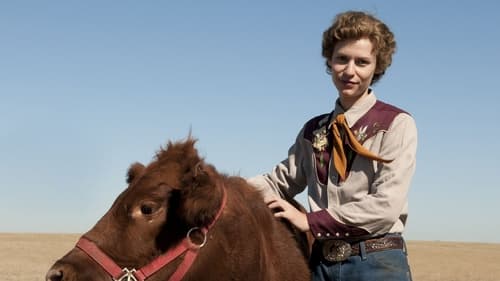
A biopic of Temple Grandin, an autistic American who has become one of the leading scientists in humane livestock handling.
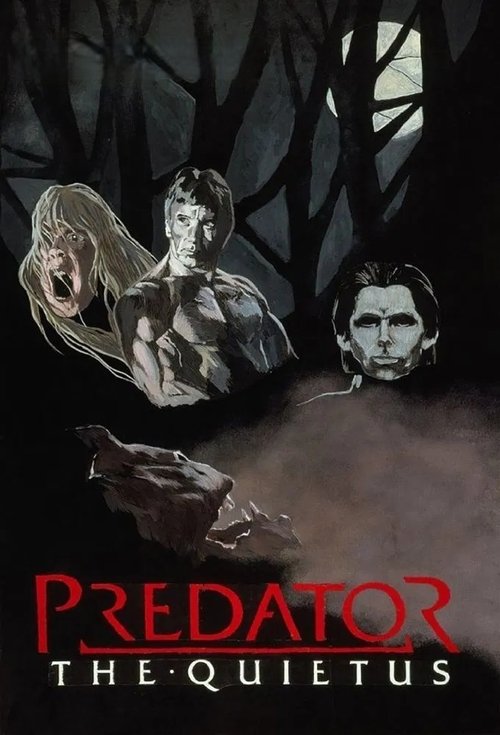
A New York reporter investigates disappearances in an English village, where she must overcome their distrust while dealing with a evil force.

Filmmakers Robert Kenner and Melissa Robledo reunite with investigative authors Michael Pollan and Eric Schlosser to take a fresh look at our efficient yet vulnerable food system.
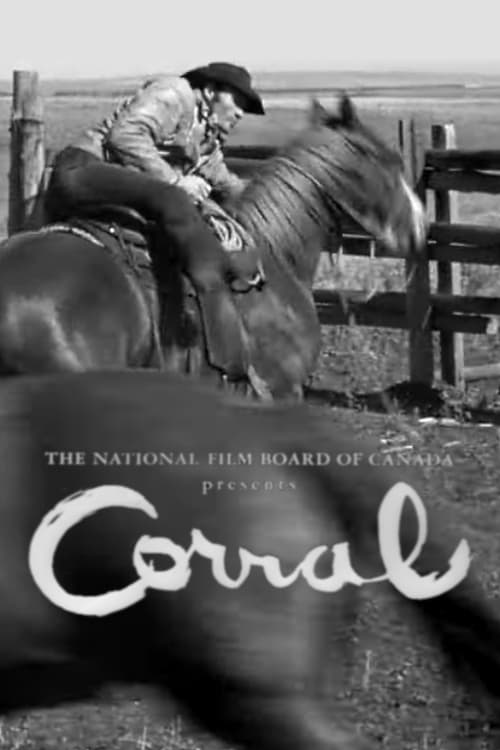
Corral is a 1954 National Film Board of Canada documentary by Colin Low, partly shot in the Cochrane Ranch in what is now Cochrane, Alberta. In the film, a cowboy rounds up wild horses, lassoing one of the high-spirited animals in the corral, then going on a ride across the Rocky Mountain Foothills of Alberta.

As the global economics of dairy farming has winnowed out most small and medium-sized dairies, the surviving farmers confront pressures to intensify production, even as they find that getting bigger presents new problems.
1. Mooring Cattle on Barges. Preparatory to shipping them to Constantinople. 2. Taking Cattle off to the Steamer. Towing the laden barges through the harbor. 3. Hoisting the Cattle on Board. The cattle being slung by legs and horns from the barges to the liner.
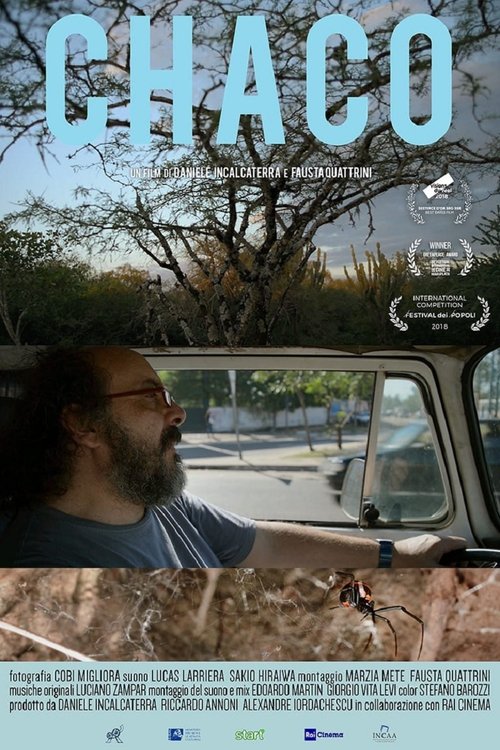
An Italian descendent inherited 5000 hectares of virgin forest in Chaco Paraguaio. He tries to stop deforestation to intensive farming and livestock, while advocating for native Guaraní Nandevas.

A retired truck driver reflects on a life spent on the road while his children explore the emotional toll of his absence, honouring the unsung heroes who keep the world moving.
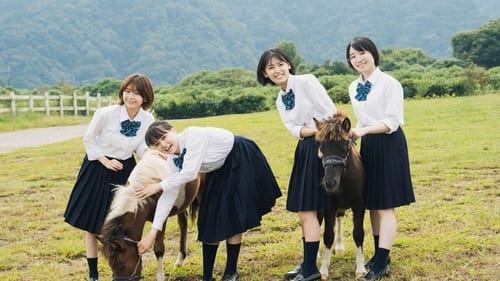
17-year-old high school students struggle and grow up while facing the life and death of animals.
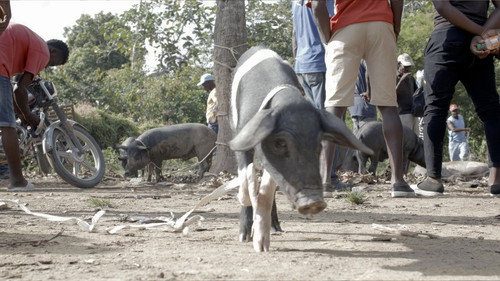
In the 1980s, a swine flu crossed the Haitian-Dominican border and started to affect the Creole pig, an important commodity in Haiti. The flu also threatened livestock in the United States. As a preemptive measure, the USAID in conjunction with the Haitian government proceeded to exterminate all Creole pigs from the island, leading to a crushing economic blow for an already impoverished country.
A whodunnit on a sheepstation.

During the 2001 foot-and-mouth outbreak, Rhian and her brother Dewi struggle to keep the Welsh hill farm they inherited from their father running. As the disease reaches their doorstep, Rhian tries to control her increasingly unstable brother. Adaptation of the novel White Ravens by Owen Sheers.
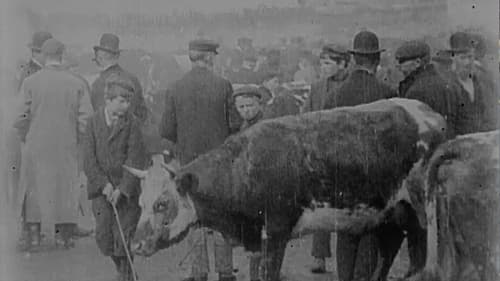
Bustling scenes show Edwardian Derry-Londonderry before industrialisation took hold.
For generations, the Samburu people and their livestock have had a deep connection with water, depending on the rains for their survival. The Land Smiles Back is the story of the Samburu community in Westgate Conservancy, who made the land “smile” again by returning to ancient hydrotechnology.
What the heck is a heritage breed, anyway, and why should we all care? What started out as a simple question at a livestock fair inspired filmmakers Rick and Elara Bowman to search for answers across North America, from those who actually do the work and the experts that back it up with science. With interviews from agriculturalists, scientists and personalities to find out more about Heritage Breed livestock, this film explores why diversity is important in today's agricultural model that's based on large volume, fast growth, and the cheapest product possible for the consumer, but little else. Heritage breed animals have things to offer that we won't know we need until we need them, like pest and disease resistance, fertility, and tolerance to climate extremes.