
Action
Adventure
Animation
Comedy
Crime
Documentary
Drama
Family
Fantasy
History
Horror
Music
Mystery
Romance
Science Fiction
Thriller
War
Western
Found 21 movies, 4 TV shows, and 0 people
Can't find what you're looking for?

The bible from the viewpoint of literature, including a small dramatization of the account of Job.
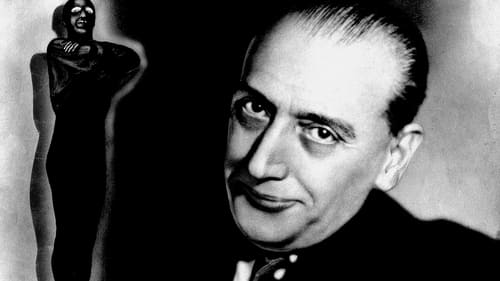
The story of Fantômas, the first villain of modernity, from his birth in 1911 as a novel character to his contemporary vicissitudes, passing through Louis Feuillade, André Hunebelle, surrealism and Moscow.
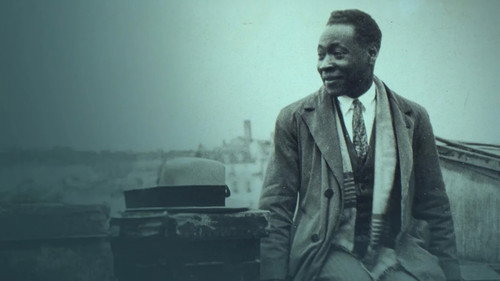
At the crossroads of Black literary consciousness and political struggle, the ideas of Claude McKay, Jamaican poet and novelist, laid the foundations for major literary movements, including Négritude. Proudly wandering, both bohemian and politically committed, a chameleon with a magnetic personality, he traveled across the globe: New York’s literary scene, Parisian aristocracy, Communist intelligentsia in Russia, and Black diasporas in the port of Marseille. Using archival materials and texts read in voice-over by Gaël Faye and Manon Azem, the film traces McKay’s journey as he crosses paths with major figures of his time, from George Bernard Shaw to W.E.B. Du Bois, Trotski, and many others.
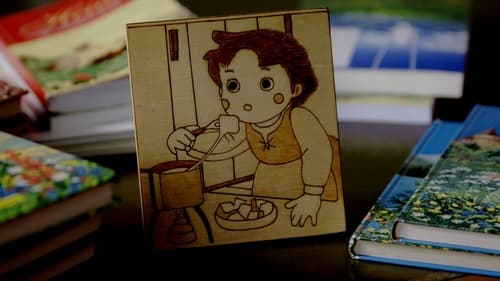
An account of the life and work of the Swiss writer Johanna Spyri (1827-1901), the barely known artistic mother of Heidi, her brave alpine heroine, who was first introduced to the world between 1880 and 1881, in a novel published in two parts, and became definitely immortal thanks to an anime series, released in 1974, directed by the Japanese genius Isao Takahata.

A fascinating exploration of the literary — The Tragedy of Othello, the Moor of Venice, by English playwright William Shakespeare (1604) — and lyrical — Othello, by Italian opera composer Giuseppe Verdi (1887) — myth of Othello, the desperately tragic story of a Moorish general in the army of the Venetian Republic whose absurd jealousy poisons his love for his wife Desdemona.
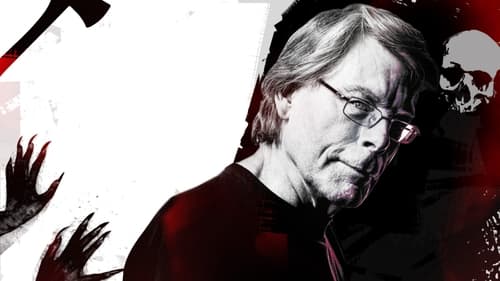
The American writer Stephen King has been one of the world's best-selling authors for decades. How can the overwhelming success of his numerous works be explained? Perhaps by the boundless inventiveness of his literature? And what else is behind the longevity of his astonishing career?
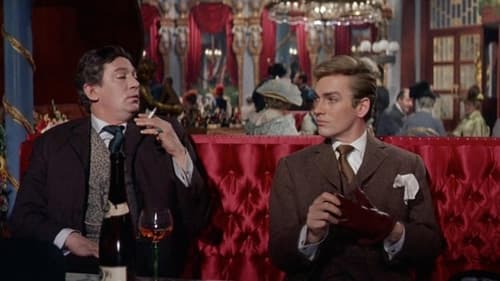
England, 1890s. The brutal and embittered Marquis of Queensberry, who believes that his youngest son, Bosie, has an inappropriate relationship with the famous Irish writer Oscar Wilde, maintains an ongoing feud with the latter in order to ruin his reputation and cause his fall from grace.
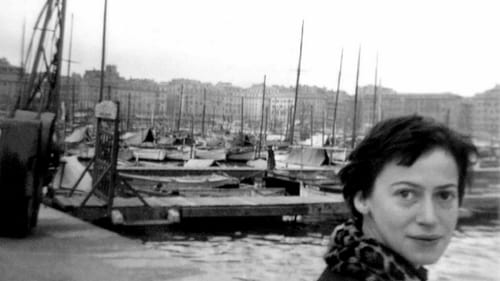
The extraordinary life story of science fiction and fantasy writer Ursula K. Le Guin (1929-2018) who, in spite of remaining for many years on the sidelines of the mainstream literature, managed to be recognized as one of the most remarkable US writers of all time, due to the relevance of her work and her commitment to the human condition.
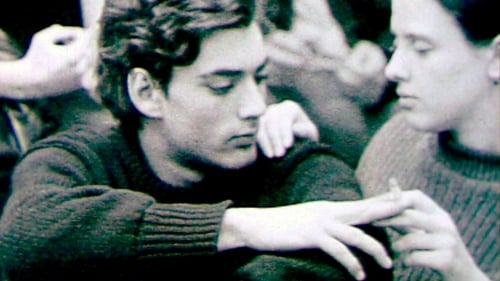
A look at the world of US writer Paul Auster, on the occasion of the publication of his new novel, an exploration of human identity and the soul of New York, the city that Auster has portrayed as no one else has ever done.

The story of the making of The Bell Jar, the unique, semi-autobiographical novel written by American writer Sylvia Plath (1932-63), published in February 1963, shortly before her death.
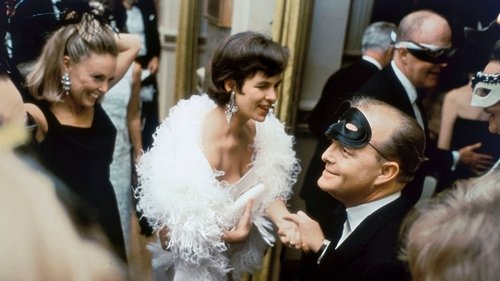
A portrait of the brilliant American writer Truman Capote (1924-84) and the New York high society of his time.
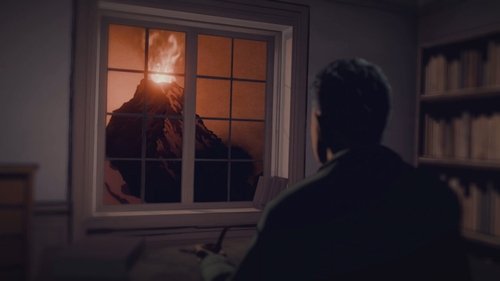
An analysis of the sources of inspiration that fed the imagination of the British writer, poet and philologist J. R. R. Tolkien (1892-1973), great master of epic fantasy.
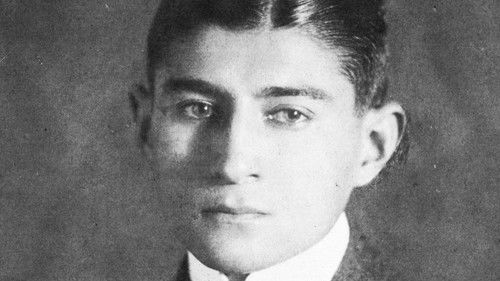
A portrait of the German-language Czech writer Franz Kafka (1883-1924), a mysterious, strange and solitary individual, but also a visionary creator.
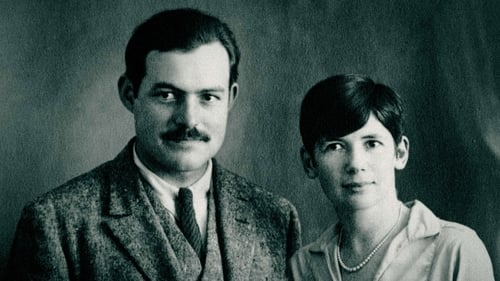
A look at the intimacy of the US writer Ernest Hemingway (1899-1961), a man infinitely more complex than his public image suggested, through the story of his relationship with his four wives.

Edgar Allan Poe is one of the most famous American authors. And probably the most abysmal. In his texts, he deals with the dark side of humanity like no other. And was himself scarred by this throughout his life. The writer not only shaped the genres of horror literature and science fiction novels, but today seems more popular than ever.

A look at US society through the prism of Moby Dick, the mythical novel published by Herman Melville (1819-1891) in 1851.
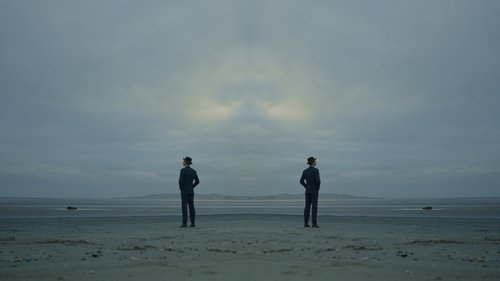
Paris, France, February 2, 1922. The novel Ulysses, by Irish writer James Joyce (1882-1941), is published by US poet Sylvia Beach (1887-1962), owner of the small bookstore Shakespeare & Co. The book, whose writing consumed seven years of Joyce's life, years in which his family was in financial need, would have a profound and unprecedented impact on 20th century literature and culture.
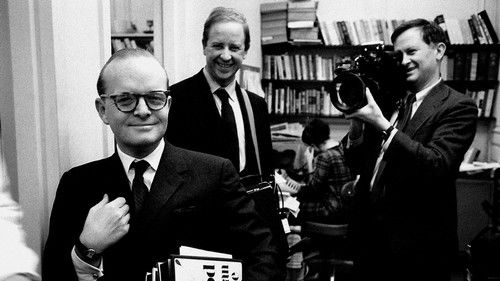
At his Long Island beach house, and on the occasion of the publication of his masterful nonfiction novel In Cold Blood, reporter Karen Dennison interviews celebrated writer Truman Capote, who displays his exuberant personality, makes witty jokes, shares his thoughts on writing, reflects on various aspects of the book and, in a sweet and endearing voice, reads and explains some of its highlights.

A bitter postcard of the town of the Buenos Aires countryside that Argentinean writer Manuel Puig (1932-90) portrayed with singular mastery, based on his own land, a town named General Villegas. Its inhabitants never forgave him. However, a woman, owner of a painful and enigmatic past, will build a bridge between Coronel Vallejos, the town created by Puig, and the real General Villegas, trying to reconcile the place with the writer.
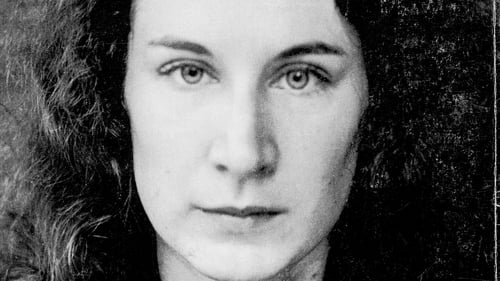
The views and thoughts of Canadian writer Margaret Atwood have never been more relevant than today. Readers turn to her work for answers as they confront the rise of authoritarian leaders, deal with increasingly intrusive technologies, and discuss climate change. Her books are useful as survival tools for hard times. But few know her private life. Who is the woman behind the stories? How does she always seem to know what is coming?

An account of the life and work of the charismatic Spanish writer Terenci Moix (1942-2003).