
Action
Adventure
Animation
Comedy
Crime
Documentary
Drama
Family
Fantasy
History
Horror
Music
Mystery
Romance
Science Fiction
Thriller
War
Western
Found 40 movies, 29 TV shows, and 0 people
Can't find what you're looking for?

The protagonist of the story, Konoha Inoue, is a seemingly normal senior high 2nd year student. His high school life, other than a hinted incident 2 years ago, can be summed up as normal- if one can dismiss the secret fact that he used to be a female bestselling romance author. Due to that incident, however, he has now vowed never to write again. This continued on until he was forced to join the literary club by the literary club president, the 3rd year female student Amano Tooko, a beautiful girl who has a taste for eating literary works. Now he has been tasked with writing her snack every day after school. (Source: To Say Nothing of the Dog)
A man reading on the street.
A young literature teacher does not like his job. He feels he has to change something in his life. And one day he decides to tell only the truth. This decision leads to a breakup with his fiancée, a series of misunderstandings at school.

A romance between a beginning writer and a publisher.
Jørgen Leth's personal, pleasurable distillation of Danish literature covers seven poets alive at the time of production and twenty classical poets. A handful of actors share readings of the classical texts in semi close ups against a dark background; the living poets read their own works.
On November 20, 2009, UNESCO designated Iowa City, Iowa, the world's third City of Literature. Through the voice, poetry and writings of more than 20 international writers in residency the following year, this documentary aims to provide refreshing perspectives of Iowa City, the "City of Literature."
An experimental film featuring students of Westchester County, NY performing and interpreting various pieces of Shakespeare's plays, as well as engaging in other Cullum-led activities. Depicts examples of Cullum's mixing of poetry, drama, and play to foster educational motivation.

An adaptation of Bram Stoker's Dracula, presented as a 90s point-and-click adventure game.
Takes students to England to show them the land that inspired many great writers... the London of Chaucer, Dickens and Browning...the countryside which was so meaningful to Shakespeare, Keates, Wordsworth and Kipling...and the sea as Coleridge, Conrad and Masefield wrote of it.

"THE COMPUTER WAS ON FIRE" An animated short film made for a literature assignment in a high school class. In a metalanguage, a group of young people try to present their work to the class, but a harsh teacher and other problems get in their way.
The Black Contribution – Literature and Theater 1978 is a rare documentary highlighting the voices and cultural impact of African American writers and performers during the civil rights era. Introduced by NAACP leader Benjamin Hooks and narrated by Roscoe Lee Brown, the film weaves together dramatic readings, theatrical excerpts, and candid urban street footage. Margaret Walker’s poem For My People is performed alongside scenes of daily Black life in New York City — children playing, families on stoops, open fire hydrants, and the realities of poverty in 1970s neighborhoods. James Baldwin appears in interview footage, while signs for his play The Amen Corner and stage excerpts from Lorraine Hansberry’s A Raisin in the Sun underscore the powerful presence of Black voices in American theater. With rare shots of Harlem life, literature, and performance, this film documents the enduring contributions of African American artists to U.S. culture and history.
Based on the story of the same name by A.P. Chekhov.

2015 is declared a year of literature in Russia. But what is it for a writer to live the year of literature? Neighbor informs the writer that his house will be demolished for the construction of the highway. The highway project is posted on the Internet. And you can see a schematically designated house, where the famous contemporary writers have gathered recently: Alisa Ganieva, Anna Kozlova, Pavel Sanaev, Sergei Shargunov, Anton Sekisov and others. Months of waiting are on. And the writer decides to live as if nothing happened. He's writing.
Explore the life and career of one of Britain's finest writers with this fascinating biographical documentary. Born Marian Evans, author George Eliot led an unconventional life in 19th-century England, sharing a home with a man to whom she wasn't married and refusing to attend church. Her insightful novels provided groundbreaking social commentary during the strictly structured Victorian era, offering a completely new form of literature.
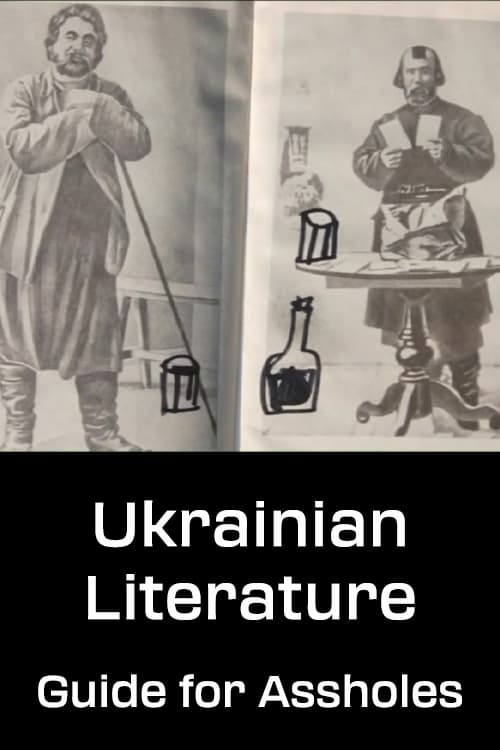
It was a common habit in Soviet schools to draw the intimate organs on all portraits in textbooks.

No description available for this movie.
Short piece for Electric Literature's Single Sentence Animation series, based on a sentence from the short story 'Watching Mysteries with my Mother' by Ben Marcus. The story features in the first issue of Electric Literature's 'Recommended Reading'. Single Sentence Animations are creative collaborations. The writer selects a favorite sentence from his or her work and the animator creates a short film in response. Animation by Edwin Rostron, music by Supreme Vagabond Craftsman. Words by Ben Marcus © 2012

What is going on behind the closed doors of the women-only secret club? The first rule is that love is prohibited. When Sophie falls in love with a mysterious man, she must choose between her last chance for true love to her loyalty to the club.
The Elements of Poetry Figurative language, meter and rhyme, simile, and metaphor -- these are a few of the many topics explored in this lively video tour through the genre of poetry. Other elements illustrated in the program include: Oxymoron Assonance Alliteration Imagery Understatement Hyperbole And more... A young host and hostess guide viewers through the basic elements of poetry with colorful graphics and an informative narrative. In addition, professors of English provide insight to help viewers understand poetry. An interactive component of multiple choice questions reinforces concepts presented in the program and enhances understanding of the basic elements of poetry.
In this program, a young host and hostess guide students through the basic elements of fiction with colorful graphics and an informative narrative. In addition, professors of English provide insight to help viewers understand the genre of fiction. An interactive component of multiple choice questions reinforces concepts presented and enhances understanding of the basic elements of fiction.
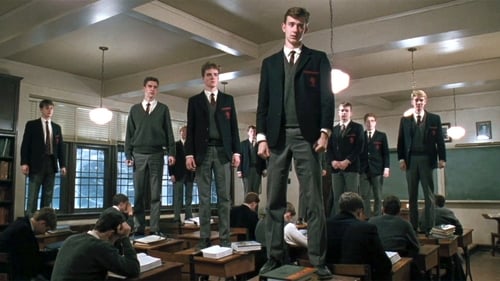
At an elite, old-fashioned boarding school in New England, a passionate English teacher inspires his students to rebel against convention and seize the potential of every day, courting the disdain of the stern headmaster.

A New York suburban couple's marriage goes dangerously awry when the wife indulges in an adulterous fling.

Humbert Humbert is a middle-aged British novelist who is both appalled by and attracted to the vulgarity of American culture. When he comes to stay at the boarding house run by Charlotte Haze, he soon becomes obsessed with Lolita, the woman's teenaged daughter.
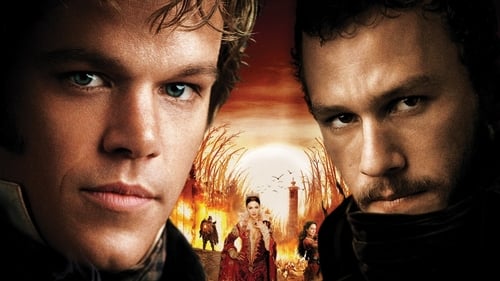
Folklore collectors and con artists, Jake and Will Grimm, travel from village to village pretending to protect townsfolk from enchanted creatures and performing exorcisms. However, they are put to the test when they encounter a real magical curse in a haunted forest with real magical beings, requiring genuine courage.
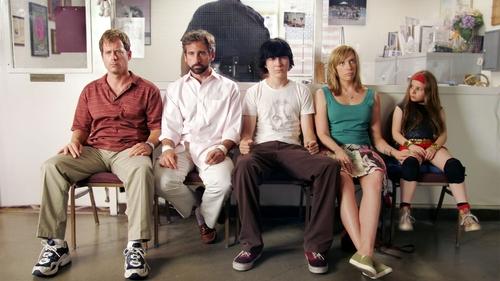
A family loaded with quirky, colorful characters piles into an old van and road trips to California for little Olive to compete in a beauty pageant.
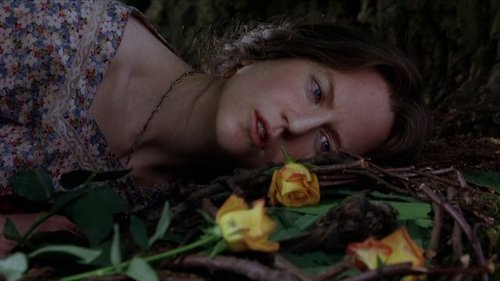
The story of three women searching for more potent, meaningful lives. Each is alive at a different time and place, all are linked by their yearnings and their fears. Their stories intertwine, and finally come together in a surprising, transcendent moment of shared recognition.
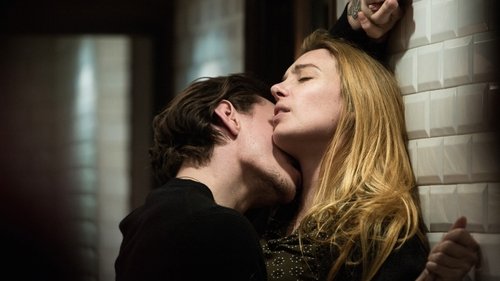
A man and a woman are brought together by chance for several months. He is younger than she is, married, Russian, officially a diplomat stationed in Paris. She is a beautiful teacher and researcher, with her feet firmly on the ground. The film follows the evolution of their love, from the beginning to end.

Precocious teenager Juliet moves to New Zealand with her family and soon befriends the quiet, brooding Pauline through their shared love of fantasy and literature. This friendship gradually develops into an intense and obsessive bond.

By day, Richard Haig is a successful and well-respected English professor at renowned Trinity College in Cambridge. By night, Richard indulges his own romantic fantasies with a steady stream of beautiful undergraduates. But Richard has grown tired of the game and is looking for something more meaningful and lasting. So when Kate, Richard’s tanned, athletic, 25-year-old American girlfriend tells him that she is pregnant, Richard is thrilled. He looks forward to having a family of his own, being a father his children could be proud of, not some sex-fueled bobcat. There is only one problem. Richard’s not in love with Kate. Richard is in love with Kate’s sister, Olivia. He had been in love with her ever since he first saw her.
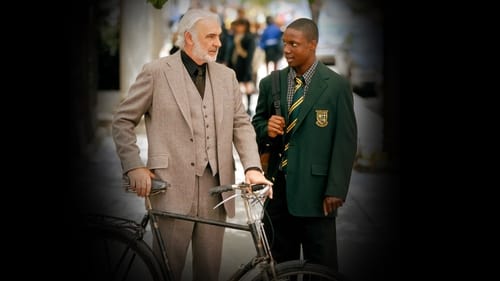
Gus Van Sant tells the story of a young African American man named Jamal who confronts his talents while living on the streets of the Bronx. He accidentally runs into an old writer named Forrester who discovers his passion for writing. With help from his new mentor Jamal receives a scholarship to a private school.

In 2013, Vanessa Springora recounts how she found herself under the influence of a famous writer. In 1986, she was 13; him, almost 50. The victim of a triple predation: sexual, literary, and psychic, there's more beyond her individual story. She questions the excesses of an era, and the complacency of an environment blinded by talent and celebrity.

Newly single, 35, and uninspired by his job, Jesse Fisher worries that his best days are behind him. But no matter how much he buries his head in a book, life keeps pulling Jesse back. When his favorite college professor invites him to campus to speak at his retirement dinner, Jesse jumps at the chance.
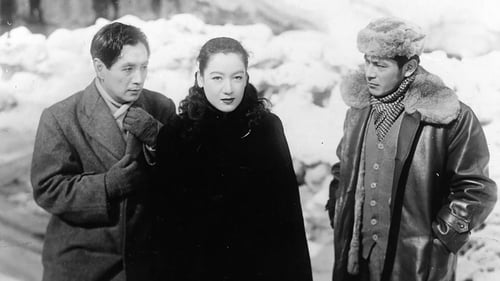
A gentle, war-shattered ex-soldier, Kinji Kameda, arrives in wintry Hokkaidō and is pulled into a volatile tangle of love and pity between the disgraced Taeko Nasu, the proud Ayako, and his possessive friend Akama. Kameda’s saintly compassion exposes everyone’s wounds, steering the quartet toward jealousy, violence, and inexorable tragedy. Adapted from Dostoevsky’s novel.

Harold Crick is a lonely IRS agent whose mundane existence is transformed when he hears a mysterious voice narrating his life.
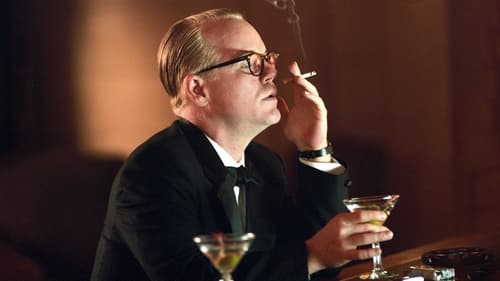
A biopic of writer Truman Capote and his assignment for The New Yorker to write the non-fiction book "In Cold Blood".
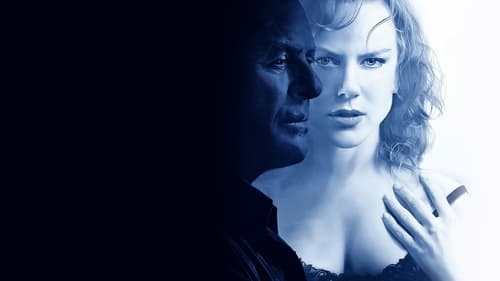
Coleman Silk is a worldly and admired professor who loses his job after unwittingly making a racial slur. To clear his name, Silk writes a book about the events with his friend and colleague Nathan Zuckerman, who in the process discovers a dark secret Silk has hidden his whole life. All the while, Silk engages in an affair with Faunia Farley, a younger woman whose tormented past threatens to unravel the layers of deception Silk has constructed.

Max is a 25-year-old freelance writer and aspiring novelist who seems well on his way to success in London’s cultural spheres. Yet by night, he finds a different kind of exhilaration as a sex worker with the pseudonym Sebastian, meeting men via an escorting platform. Max uses his experiences as Sebastian to fuel his stories and the worthy debut novel that he has been longing to write, finally seems within reach.
C.S. Lewis, a world-renowned writer and professor, leads a passionless life until he meets spirited poet Joy Gresham.
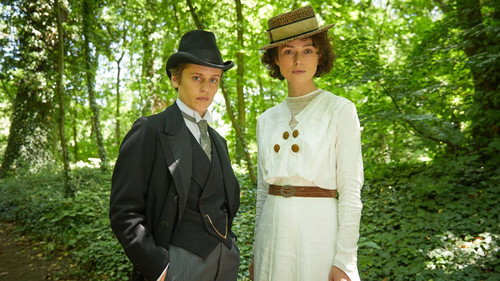
After marrying a successful Parisian writer known commonly as Willy, Sidonie-Gabrielle Colette is transplanted from her childhood home in rural France to the intellectual and artistic splendor of Paris. Soon after, Willy convinces Colette to ghostwrite for him. She pens a semi-autobiographical novel about a witty and brazen country girl named Claudine, sparking a bestseller and a cultural sensation. After its success, Colette and Willy become the talk of Paris and their adventures inspire additional Claudine novels.
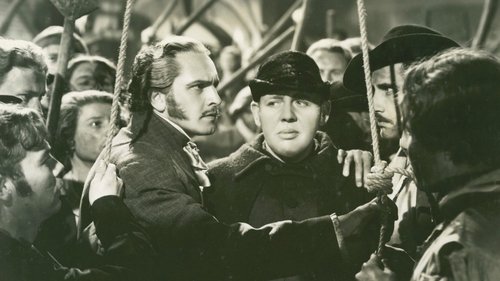
In 19th century France, Jean Valjean, a man imprisoned for stealing bread, must flee a relentless policeman named Javert. The pursuit consumes both men's lives, and soon Valjean finds himself in the midst of the student revolutions in France.