
Action
Adventure
Animation
Comedy
Crime
Documentary
Drama
Family
Fantasy
History
Horror
Music
Mystery
Romance
Science Fiction
Thriller
War
Western
Found 10 movies, 6 TV shows, and 0 people
Can't find what you're looking for?

A History of Israeli Cinema is the result of years of researches, studies, documentation, screening, interviews, some recorded, some to learn, to understand, to unfold. Actors, thinkers, producers, filmmakers, professors, critics negotiated to build a narrative that remains fragile and incomplete. It is the process rather than the result that is shared here.
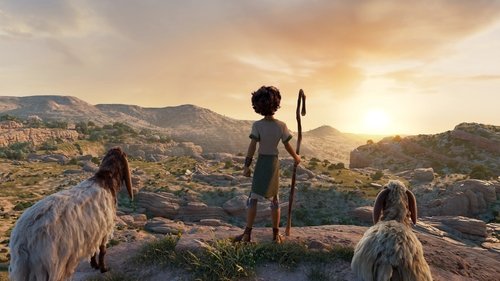
From the songs of his mother’s heart to the whispers of a faithful God, David’s story begins in quiet devotion. When the giant Goliath rises to terrorize a nation, a young shepherd armed with only a sling, a few stones, and unshakable faith steps forward. Pursued by power and driven by purpose, his journey tests the limits of loyalty, love, and courage—culminating in a battle not just for a crown, but for the soul of a kingdom.

When, in the late 1990s, Israeli student Teddy Katz exposed the massacre of Palestinian civilians by Israeli forces in the village of Tantura, in May 1948, during the first Arab-Israeli war, he was initially praised for his pioneering work; but he was soon infamous and branded a traitor. Decades later, incendiary new evidence emerges that corroborates Teddy's findings.

Palestine, 1948. After the withdrawal of the British occupiers, tensions rise between Arabs and Jews. Meanwhile, Farha, the smart daughter of the mayor of a small village, unaware of the coming tragedy, dreams of going to study in the big city.
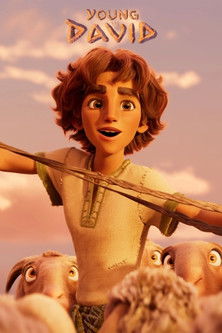
In the quiet hills of Bethlehem, a shepherd boy named David finds meaning in every melody and strength in every trial. Follow the early adventures of Israel’s future king as he learns courage in the fields, kindness through friendship, and faith in the face of fear. Each story reveals the humble beginnings of a legend whose greatest victories began long before the battlefield.
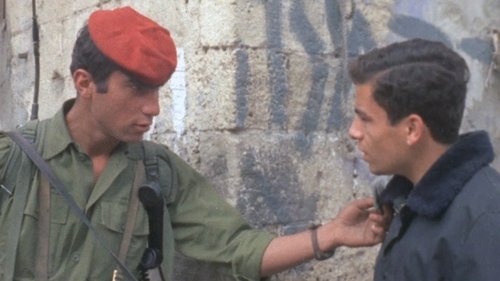
Archival film maestro Göran Hugo Olsson has assembled—from a vast catalogue of footage in the vaults of Sweden’s national television service SVT—accounts of the Israeli-Palestinian conflict as witnessed and represented by Swedish journalists. Stories of the beginning of the Israeli state interwoven with the Palestinian struggle for independence. News coverage with Yasser Arafat and interviews with Israeli foreign minister Abba Eban during a visit to Sweden unseen since first broadcast. From the tenth anniversary of Israel’s founding to the First Intifada, perspectives and encounters with statesmen, civilians, revolutionaries, and intellectuals tell the story from myriad angles of an evolving media landscape, revivifying a history of the ongoing conflict.

The film shows Solly who is Jewish and a retired music teacher who meets Salim, a Palestinian journalist, and becomes his friend. They spend time together discussing the Palestinian-Israeli conflict.

Sima Shimony, age 69, embarks on a mission to find her friends and staff from the "ALYN" Institute for Children with Disabilities, which was situated in the secluded San-Simon monastery in Jerusalem, during the 1960s. Armed with a small camera attached to her wheelchair, she sets off on a journey across the country together with her friend Pini Newirth, also a polio child, to unfold and reclaim the story of the children affected by the Polio epidemic. In a futile attempt to rebuild their bodies so they could walk, the children were subjected to excruciating medical procedures with no parents or family at their side. But growing up together forged a group of remarkable, self-driven women and men with disabilities who eventually launched the Disability Rights movement in Israel.
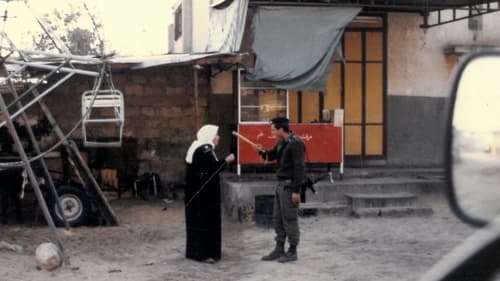
An exhaustive explanation of how the military occupation of an invaded territory occurs and its consequences, using as a paradigmatic example the recent history of Israel and the Palestinian territories, the West Bank and the Gaza Strip, from 1967, when the Six-Day War took place, to the present day; an account by filmmaker Avi Mograbi enriched by the testimonies of Israeli army veterans.

No description available for this movie.