
Action
Adventure
Animation
Comedy
Crime
Documentary
Drama
Family
Fantasy
History
Horror
Music
Mystery
Romance
Science Fiction
Thriller
War
Western
Found 33 movies, 7 TV shows, and 0 people
Can't find what you're looking for?

Shattering taboos about the politically correct and debunking dominant social constructions Ideology takes a sudden turn into the dichotomy and the contradictions of love beyond ideological commitment.

A short film that explores the concept of “gender ideology” as invoked by global political and cultural leaders. It opens with provocative quotes from figures such as Recep Tayyip Erdoğan, Viktor Orbán, and others — e.g., “They are planting a time bomb in our national structure.”

Confronting half of her mother’s life—her mother who had survived the Jeju April 3 Incident—the director tries to scoop out disappearing memories. A tale of family, which carries on from Dear Pyongyang, carving out the cruelty of history, and questioning the precarious existence of the nation-state.

Ivan Komendantov is only 16 years old. But he is already the secretary for ideology of the Stalingrad district committee of the Komsomol of Moscow. Vanya wants to quickly become an adult, so he enthusiastically takes up any business: whether it be the rise of the world economy or a special task to seduce a girl.
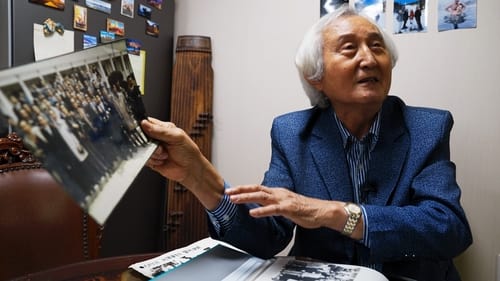
One year after the Korean War, the conflict had reached a stalemate. The two opposing forces began to search for a way to end the grueling war of attrition, eventually settling on a modest village called ‘Pan Mun Jom’ near Gaeseong as the designated site for negotiations. Despite initial hopes for a quick resolution, the negotiating parties encountered obstacles that prevented an agreement. Disputes over the military demarcation line and the repatriation of prisoners of war thwarted their efforts. The film peels back the layers to reveal the untold story of Pan Mun Jom, shedding light on a history that has remained hidden until now.

No description available for this movie.
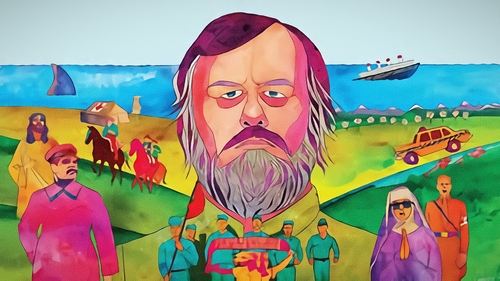
A journey into the labyrinthine heart of ideology, which shapes and justifies both collective and personal beliefs and practices: with an infectious zeal and voracious appetite for popular culture, Slovenian philosopher and psychoanalyst Slavoj Žižek analyzes several of the most important films in the history of cinema to explain how cinematic narrative helps to reinforce prevailing ethics and political ideas.

People wear vivid colours to express political stances in the demonstrations in Hong Kong and Taiwan. This digital video artwork explores how colour, particularly skin tone, is ideologically constructed in media and design. Through sampling, glitches, and critical overlays, the work questions the perceived neutrality of colour standards and highlights how visual systems encode racial and cultural biases. Blending theory with experimental aesthetics, it invites viewers to rethink how identity and power operate through the language of colour.

After writing antifascist graffiti to impress a girl he likes, Luka must face local nazi hooligans.

A generous and lyrical continuation of Lebanese artist Marwa Arsanios’ interest in the ties between ecology, feminism, and collective organization, this documentary showcases the radical politics of a Lebanese farming cooperative and the citizens of Jinwar, a women-only village in the north of Syria.

Marwa Arsanios’s new film examines the structures of self-governance and knowledge production fostered by the Kurdish autonomous women’s movement. She asks: what kinds of democracies are enabled without a state, and what kind of ecology is produced under the conditions of war? A propositional portrait of guerrilla ethics, Who is afraid of ideology? Part I disassembles the traditional documentary format, not only to show the contradictions inherent in such a portrayal, but also to doubt the regime of transparency.
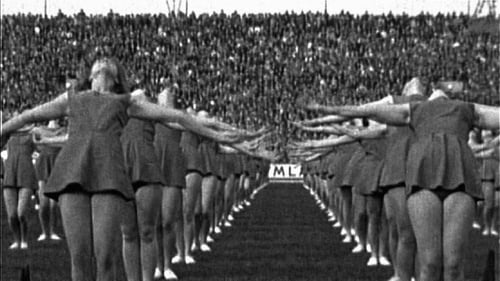
A research-based essay film, but also a very personal perspective on the history of socialist Yugoslavia, its dramatic end, and its recent transformation into a few democratic nation states.

Inspired by these intense exhanges and images partially filmed in the South of Tolima in Columbia. The final film of the trilogy focuses on the current systemic war led by transnational firms against the tiniest and most essential aspect of life: seeds.

A prospective wish is announced at the very beginning: "Imagine a land without ownership". Ownership? Since when? How? Where? With which implications? This is what Marwa Arsanios endeavours to discover in the fourth part of her meticulous ongoing project whose generic title is Who Is Afraid of Ideology? After documenting feminist experiments of community autonomy in Lebanon, Kurdistan and Syria (Who Is Afraid of Ideology? I&II, FID 2019), Marwa Arsanios ventures a hypothesis in the form of speculative fiction, from a remote piece of land in Lebanon, a cut in a stone quarry. In this small piece of land, a few sidekicks make that postulate, and slowly share stories of domination and exploitation. This land has a complicated administrative, legal, geological and biological history. (Nicolas Feodoroff - FIDMarseille)
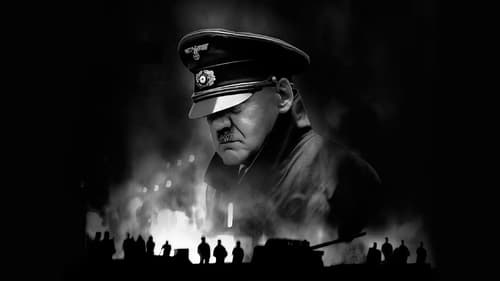
In April of 1945, Germany stands at the brink of defeat with the Russian Army closing in from the east and the Allied Expeditionary Force attacking from the west. In Berlin, capital of the Third Reich, Adolf Hitler proclaims that Germany will still achieve victory and orders his generals and advisers to fight to the last man. When the end finally does come, and Hitler lies dead by his own hand, what is left of his military must find a way to end the killing that is the Battle of Berlin, and lay down their arms in surrender.
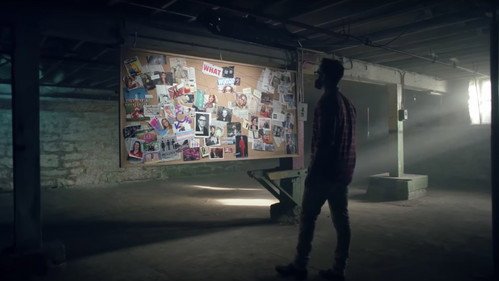
Matt Walsh's controversial doc challenges radical gender ideology through provocative interviews and humor.
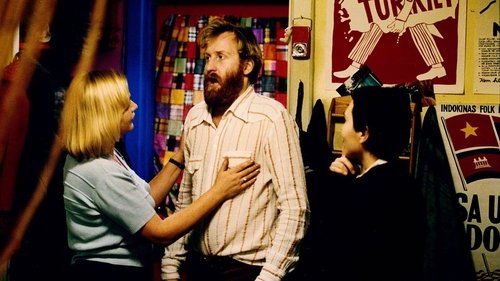
Elisabeth leaves her abusive and drunken husband Rolf, and goes to live with her brother, Göran. The year is 1975 and Göran lives in a commune called Together. Living in this leftist commune Elisabeth learns that the world can be viewed from different perspectives.
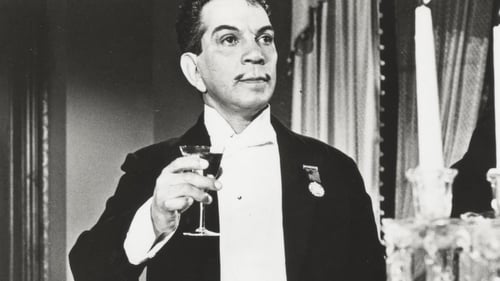
Lopitos, who is horribly inefficient but quick-witted, is invited (because of the current ambassador's superstition about 13 sitting down to a meal) to a banquet attended by the ambassadors of both superpowers. After the news of a series of coups d'état in Los Cocos arrives throughout the meal, Lopitos becomes the official ambassador. At a summit of world leaders, the representatives of the two world superpowers court the allegiances of third-world diplomats to tilt the balance of global power in their favor. The last diplomat to remain unaligned, Lopitos instead harangues the superpowers for infringing on the rights of developing countries to self determination, talking to them with his point of view as a citizen not as ambassador because he arranged his demise as ambassador one day before his speech.
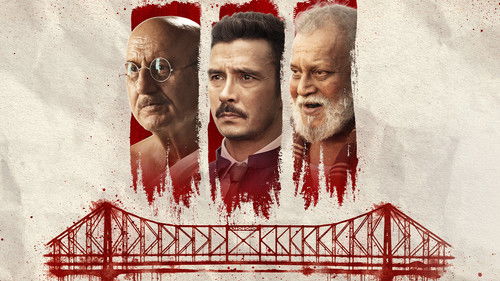
A criminal investigator uncovers a web of corruption during a missing person investigation, while a figure connected to the case reflects on the communal violence which broke out ahead of India's partition.

Iris, a woman abroad in Seoul, teaches French and English in an idiosyncratic fashion that allows her to pursue her own philosophical and personal interests. Through four encounters over a single day, Iris probes students and strangers for information about poetry, their own histories, and their relationship to their egos.
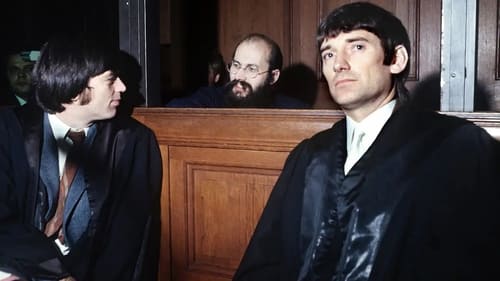
In the early 1970s, Otto Schily and Hans-Christian Ströbele were part of the group of attorneys of the left-wing extraparliamentary opposition in Germany. In this function, they, for instance, represented the militant Horst Mahler in court. One thing that united all three of them was their goal to create a new and different republic. They viewed Federal Germany as an oppressor of political freedom and as a vassal of the United States. Today, Schily is a former Federal Minister of the Interior with a firmly conservative stance and Ströbele is a well-respected member of the left wing of the Green Party in the German parliament while Mahler has again come into conflict with the law because of his extremist right-wing activities.
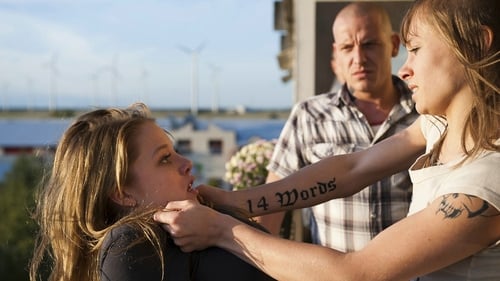
Marisa, a 20-year-old German girl, hates foreigners, Jews, cops, and everyone she finds guilty for the decline of her country. She provokes, drinks, fights and her next tattoo will be a portrait of Adolf Hitler. But Marisa's convictions begin to crumble when she meets a young Afghan refugee, and she learns that the black and white principles of her gang are not the only way.

A historical perspective to understand Neoliberalism and to understand why this ideology today so profoundly influences the choices of our governments and our lives.

Japan has been invaded and conquered by the Britannian Empire. Japan is now known as Area 11 and its citizens known as Elevens. The Britannian Empire takes away Japan's autonomous power and imposes its rule through the use of Knightmares. The Empire's rule has never faltered, but cracks have begun to show. 25 episodes | 1600 minutes | 2 seasons
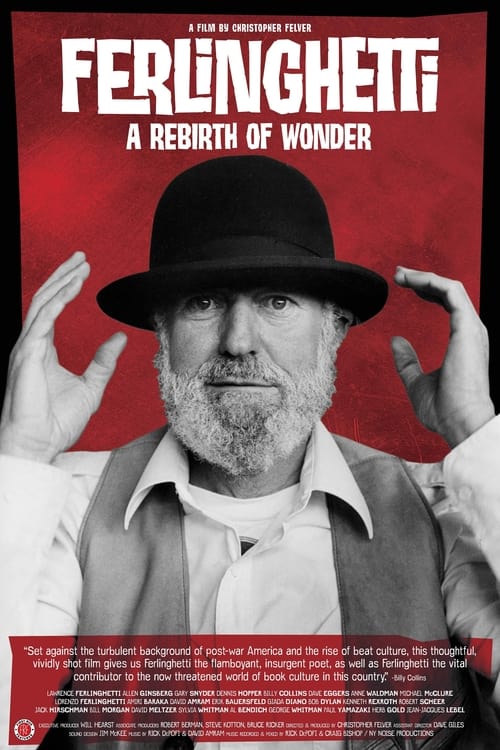
The poet and painter, Lawrence Ferlinghetti, is among the world's living monuments to arts and letters. For well over a half century, Ferlinghetti helped shape the currents of poetry and literature with his forceful engagement with society and an ideological position that often found him at odds with the political currents of his day. Ferlinghetti's quiet, behind the scenes demeanor and disarming mien may have assuaged, or even fooled, certain opponents, while in reality he was a literary mercenary, a rebel at the forefront of our own cultural revolution.

When Dr. Schmith's proposal for international research on infant mortality is rejected, he decides to leave East Germany and strikes a deal with an escape agency that promises him a leading position at a children's hospital in West Germany. But then the decision is reversed: the project is approved and his international colleagues want Dr. Schmith to head the GDR section. Moreover, he falls in love with his new colleague, Katharina. Schmith initially tries to ignore the arrangements he made with the escape agency, but they blackmail him. Things soon turn deadly...
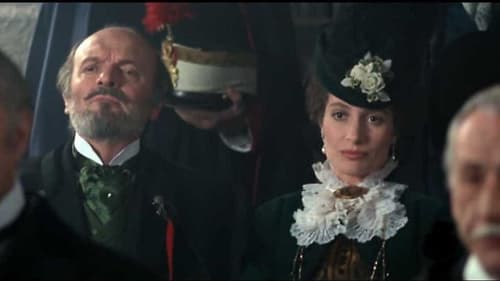
A fencing master in pre-revolution Spain is hired to teach fencing to a beautiful young woman. Although he has never taught a woman before he is fascinated by her and agrees. She wishes to learn a particular thrust which he is famous for. When a local nobleman becomes involved with her the intrigue begins.
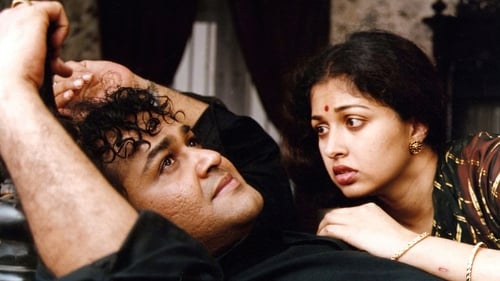
A fictionalized account of the lives of 1980s Tamil Nadu political icons M. G. Ramachandran and M. Karunanidhi, continuing the tryst between Tamil cinema and Dravidian politics.
Miles struggles with growing feelings of emasculation and emotional impotency within his relationship with Remona. An opportunity to reclaim his sense of self arises from another man’s act of heroism during a violent home invasion — but as events spiral out of control, he’s forced to confront the destructive masculine ideals driving him.
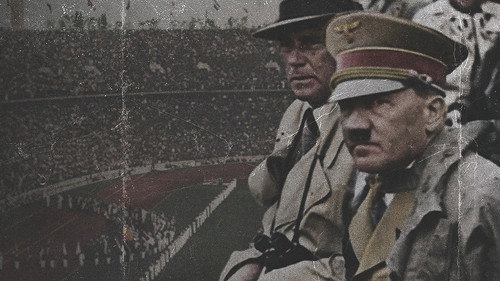
In 1931, Germany was awarded the Olympic Games in the hope this would draw them into the international community and world peace would be promoted through sport. For two weeks in August 1936 cameras captured the world’s greatest sporting spectacle, including the Gold Medal triumphs of record-breaking sprinter Jesse Owens. The Berlin Olympics were groundbreaking – many innovations introduced in 1936 such as television coverage and the torch relay became part of every subsequent Games. Hitler’s Games in Colour tells the story of the remarkable amateurs who excelled, but also how Hitler used the Games as propaganda for his brutal regime, to show the Nazis as benign and their military ambitions as modest. Using black and white archive, transformed by cutting-edge restoration and colourisation, this is the story of 16 days that fooled the world…

An unsettling mystery about desperation and class divisions in the age of digital capitalism.
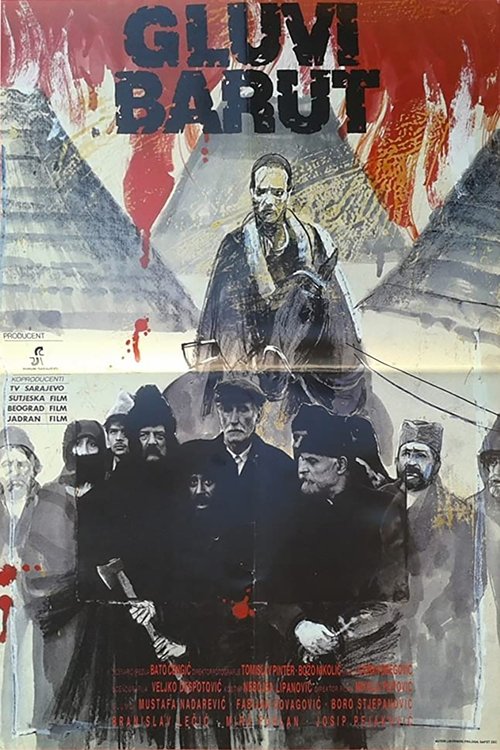
Silent Gunpowder (Serbo-Croatian: Gluvi barut) is a Yugoslavian war film Based on a novel by Branko Ćopić and set during World War II, the film tells the story of a Serbian village in the mountains of Bosnia and its villagers who found themselves divided along two opposing ideological lines, represented by the Chetniks and the Partisans. These two opposing sides are personified in the Partisan commander Španac and a former Royal Army officer Radekić. Španac sees Radekić as the cause of villagers' resistance to the new, Communist, ideology and so the main plot axis is the conflict between them. At the 1990 Pula Film Festival, the film won the Big Golden Arena for Best Film, as well as the awards for Best Actor in a Leading Role (Branislav Lečić), Best Film Score (Goran Bregović). The film was also shown at the 1991 Moscow International Film Festival, where both Branislav Lečić and Mustafa Nadarević won the Silver St. George Award for their performances.
"Africa Light" - as white local citizens call Namibia. The name suggests romance, the beauty of nature and promises a life without any problems in a country where the difference between rich and poor could hardly be greater. Namibia does not give that impression of it. If you look at its surface it seems like Africa in its most innocent and civilized form. It is a country that is so inviting to dream by its spectacular landscape, stunning scenery and fascinating wildlife. It has a very strong tourism structure and the government gets a lot of money with its magical attraction. But despite its grandiose splendor it is an endless gray zone as well. It oscillates between tradition and modernity, between the cattle in the country and the slums in the city. It shuttles from colonial times, land property reform to minimum wage for everyone. It fluctuates between socialism and cold calculated market economy.