
Action
Adventure
Animation
Comedy
Crime
Documentary
Drama
Family
Fantasy
History
Horror
Music
Mystery
Romance
Science Fiction
Thriller
War
Western
Found 25 movies, 9 TV shows, and 0 people
Can't find what you're looking for?

Overview of raw and finished products of the chemical industries in the GDR.
The well-known illustrator Werner Klemke uses his drawings to teach the youngest bookworms about the value of reading. Taking this as a starting point, Lotte Thiel presents the GDR as a land of books whose capital is Leipzig. Figures and images from the 1971 International Book Art Exhibition underscore the significance accorded to books as a tool for shaping the “socialist personality”.
Short film showing the impact Lenin has had on the USSR and GDR with the spread of ideas of Marxism, Lenism and socialism. (Synopsis) Short film featuring footage of Lenin energetically speaking in front of a crowd and scenes from political parades in Moscow.

Erich Honecker visits the Republic of Zambia
In a breakneck undertaking, the musicians of the "Modern Soul Band" take on the GDR rugby champions "Stahl Henningsdorf" in a seriously comical game.
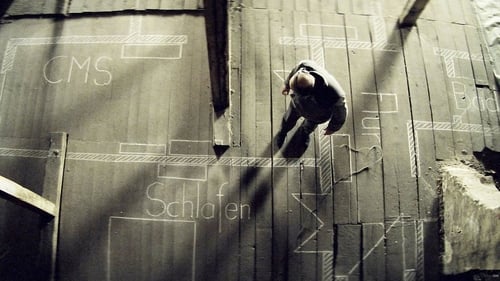
In 1984 East Berlin, dedicated Stasi officer Gerd Wiesler begins spying on a famous playwright and his actress-lover Christa-Maria. Wiesler becomes unexpectedly sympathetic to the couple, and faces conflicting loyalties when his superior takes a liking to Christa-Maria.

A quintet of cabbies in five cities and their remarkable fares on the same eventful night.
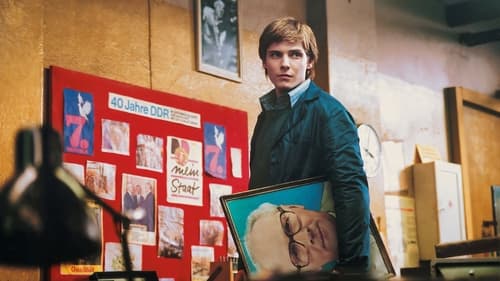
Alex Kerner's mother was in a coma while the Berlin wall fell. When she wakes up he must try to keep her from learning what happened (as she was an avid communist supporter) to avoid shocking her which could lead to another heart attack.

Two families attempt a daredevil plan to escape the GDR with a homemade hot air balloon, but it crashes just before the border. The Stasi finds traces of this attempt to escape and immediately starts investigations, while the two families are forced to build a new escape balloon. With each passing day the Stasi is closer on their heels – a nerve-wracking race against time begins.
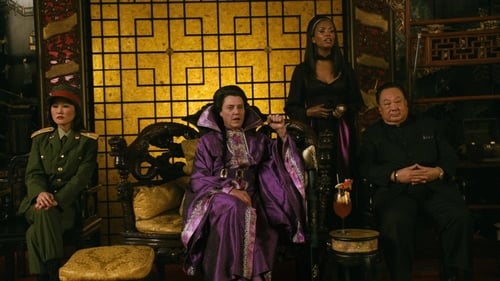
Randy Daytona was a child ping pong prodigy who lost his chance at Olympic gold when his father is murdered by the mysterious Feng over a gambling debt. 15yrs later he's down on his luck and scraping a living doing seedy back room shows in Vegas; when the FBI turn up and ask for his help to take down Feng... who just happens to love Ping Pong.
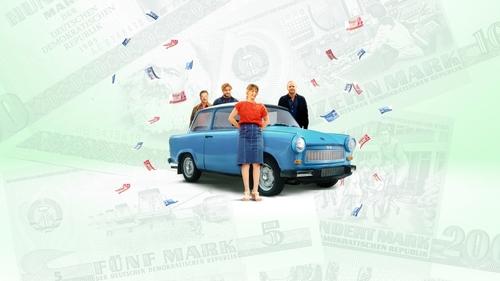
After the fall of the Berlin Wall, a communist family discovers a bunker full of money soon to be worthless. With the help of their neighbors, they embark on a race against time to enter the capitalist world in style.

A young man from East Germany travels to San Francisco to search for his father, who fled 12 years ago. Together with his best friend, he starts the journey from New York with no money and the only word they ever learned in english-lessons: "friendship".
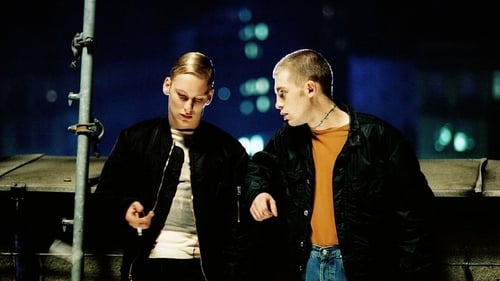
Ingo Hasselbach, whose parents were Communist Party members in East Germany during his childhood, has lived at both ends of the political seesaw. The question of how people reach a change of heart is a profound one; Hasselbach describes the external forces that led to his founding Germany's first neo-Nazi political party and the internal ones that led him away from it five years later.
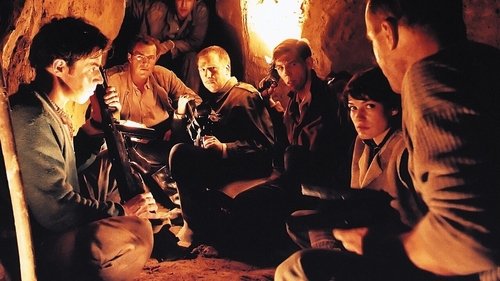
Inspired by true events, Olympic swimmer Harry Melchior defects from East Germany in the 1960s and hatches a daring plot to help his sister and others flee East Berlin through a 145-yard underground tunnel.
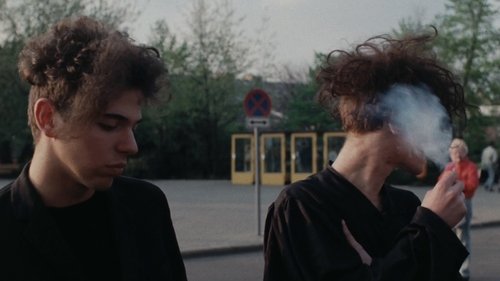
From an official perspective, marginal youth culture did not exist in East Germany. The topic of subcultures was taboo in the GDR, and groups such as goths, skinheads, anti-skins, punks and neo-Nazis were dismissed as social deviations promoted by western countries. Director Roland Steiner had access to such young East Germans in the late 1980s. Over the course of four years, he brought them before the camera in an attempt to understand what drew them to these groups.
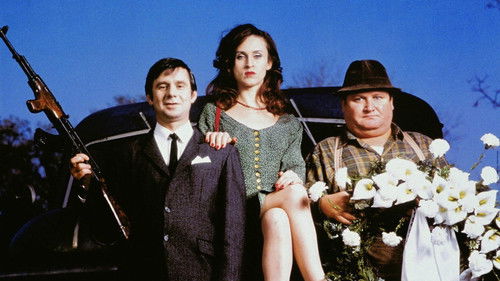
The brothers Kipp and Most set off to inherit their grandmother's estate. Along the way, they meet Viktor, a deserted Russian soldier who kidnaps them, and Nadine, who joins them voluntarily. On their way to their inheritance, the protagonists get into some seemingly hopeless situations.
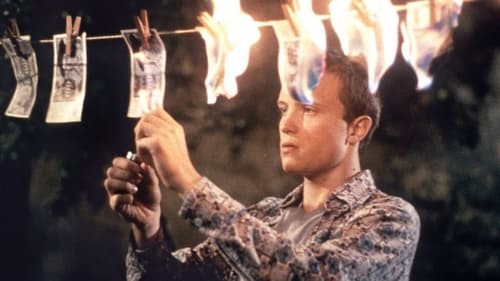
The movie's plot is based on the true story of a group of young computer hackers from Hannover, Germany. In the late 1980s the orphaned Karl Koch invests his heritage in a flat and a home computer. At first he dials up to bulletin boards to discuss conspiracy theories inspired by his favorite novel, R.A. Wilson's "Illuminatus", but soon he and his friend David start breaking into government and military computers. Pepe, one of Karl's rather criminal acquaintances senses that there is money in computer cracking - he travels to east Berlin and tries to contact the KGB.

The young Russian Leonid Zaharov tries to flee to the West via the GDR at the end of the 1980s. When he is bounced and there is no way forward, he looks back. Does he give up everything for freedom or does his happiness lie at his back?
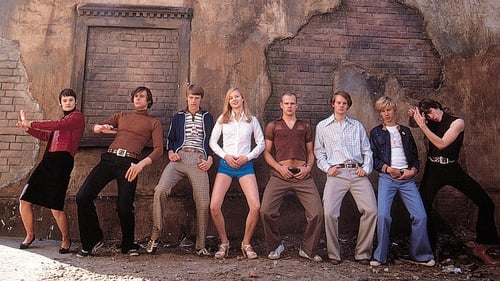
A group of kids grow up on the short, wrong (east) side of the Sonnenallee in Berlin, right next to one of the few border crossings between East and West reserved for German citizens. The antics of these kids, their families, of the "West German" friends and relatives who come to visit, and of the East German border guards, all serve to illustrate the absurdity of everyday life on the Sonnenallee, and therefore throughout the former East Germany.
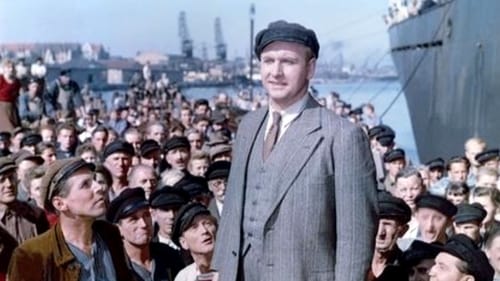
This film is the first of a two-part historical and biographical portrait of the communist politician and anti-fascist Ernst Thälmann. In early November 1918, Ernst Thälmann is an unwilling soldier serving on the western front. As the revolutionary movement at home is threatened by the betrayal of the Social Democrats and fissures in the working class, Thälmann calls on his fellow soldiers to put down their weapons and unite with the workers in the communist struggle at home. Thälmann’s qualms about which side he is fighting on continue, but when the local police attempt to prevent a shipment of provisions and supplies from reaching the people in Petrograd, he intervenes and the ship is unloaded. With this moment of clarity, Thälmann continues to follow his political convictions and joins the workers at the Hamburg uprising in October 1923.
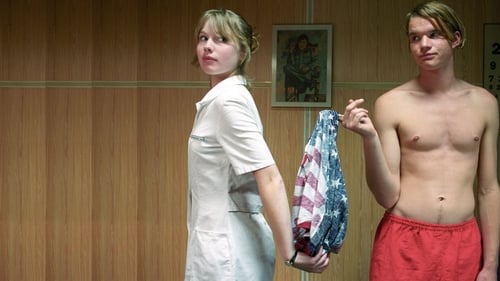
Two twin brothers are living on a different sides of Berlin Wall after being separated after birth.
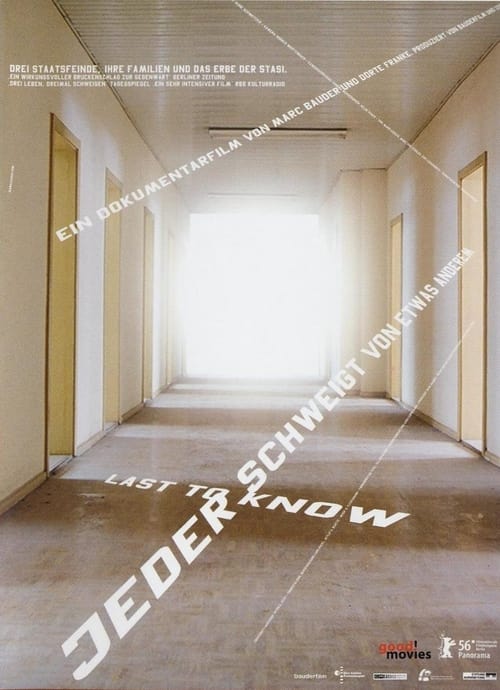
In the documentary Last To Know political prisoners, sent to jail for openly opposing the East German regime that existed until the German reunification in 1990, talk about their times of trial and their lives today. Neither they, nor their families have come to terms with what happened.
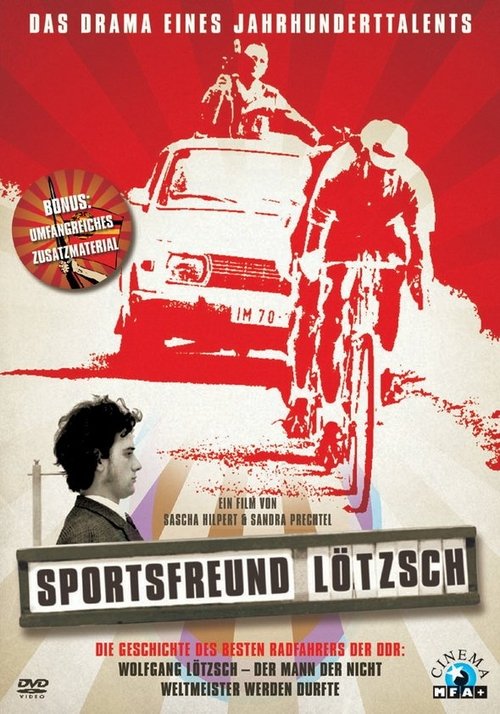
No description available for this movie.
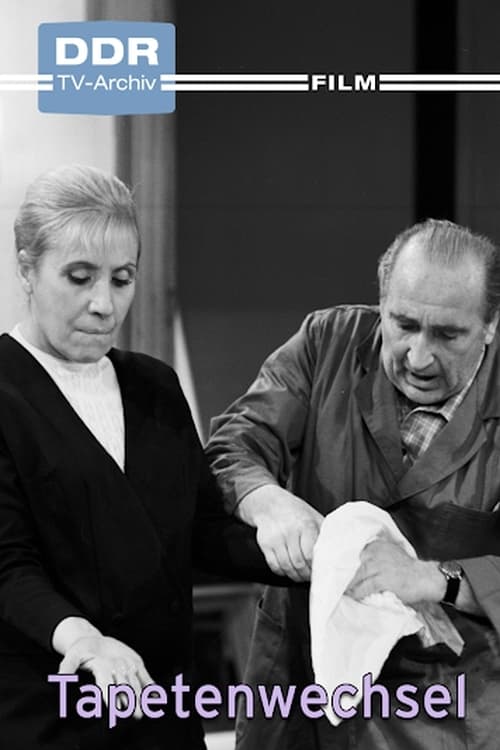
Marcel Schlurfke is not exactly the heartthrob that friends Elke and Gitte are looking for. So they think about how to get rid of this annoying admirer. The best way is to put him in a position where he makes a fool of himself. This is what happens to the aforementioned Marcel, who suffers a total shipwreck with his "cooking skills". And after this failure, Marcel can only place himself in the care of his father Wollermann.Elke's father is a very desirable man in certain respects: in his spare time, he likes to wallpaper and transform worn-out rooms into pretty rooms. For Elke herself, however, this is a problem, because her father repeatedly takes possession of her (desired) admirers and promotes her to "honorary helper" in wallpapering matters. Only Marcel Schlurfke proves his touchingly helpless clumsiness in these assignments too.
No description available for this movie.