
Action
Adventure
Animation
Comedy
Crime
Documentary
Drama
Family
Fantasy
History
Horror
Music
Mystery
Romance
Science Fiction
Thriller
War
Western
Found 23 movies, 17 TV shows, and 0 people
Can't find what you're looking for?

Highlights aspects of food handling which are the personal responsibility of the food handler. Discusses the sources of potentially hazardous bacteria and the various means by which these bacteria may be transferred to food.

The China Style for Eating Places
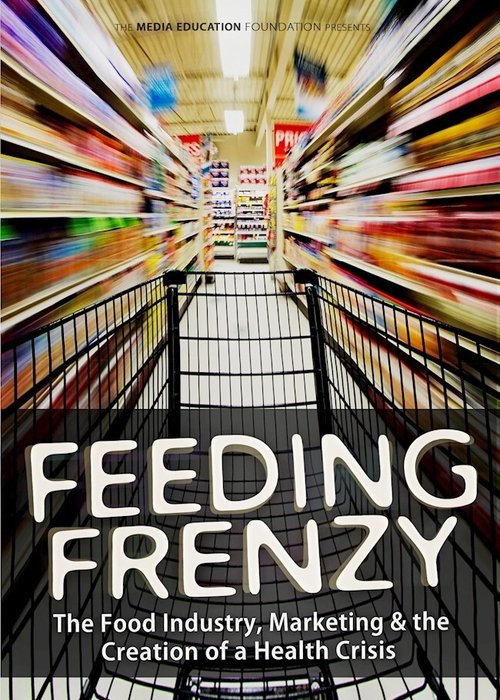
In the past three decades, obesity rates in the US have more than doubled for children and tripled for adolescents, and 70% of adults are now obese or overweight. The result has been a widening epidemic of obesity-related health problems, including coronary heart disease, high blood pressure, stroke, and Type 2 diabetes. While discussions about this spiraling health crisis have tended to focus on the need for more exercise and individual responsibility, FEEDING FRENZY trains its focus squarely on the responsibility of the processed food industry and the outmoded government policies it benefits from. It lays bare how taxpayer subsidies designed to feed hungry Americans during the Great Depression have enabled the food industry to flood the market with a rising tide of cheap, addictive, high calorie food products, and offers an engrossing look at the tactics of the multi billion-dollar marketing machine charged with making sure that every one of those surplus calories is consumed.
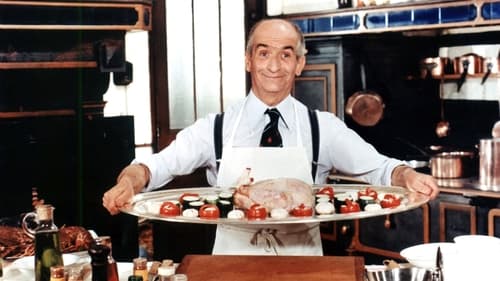
Charles Duchemin, a well-known gourmet and publisher of a famous restaurant guide, is waging a war against fast food entrepreneur Tri- catel to save the French art of cooking. After having agreed to appear on a talk show to show his skills in naming food and wine by taste, he is confronted with two disasters: his son wants to become a clown rather than a restaurant tester and he, the famous Charles Duchemin, has lost his taste!
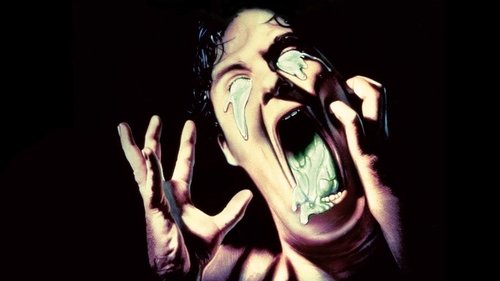
Amalgamated Dairies hires David Rutherford, an FBI man turned industrial saboteur, to investigate a popular new product called “the Stuff,” a new dessert product that is blowing ice cream sales out of the water. Nobody knows how it’s made or what’s in it, but people are lining up to buy it. It's got a delicious flavor to die for!
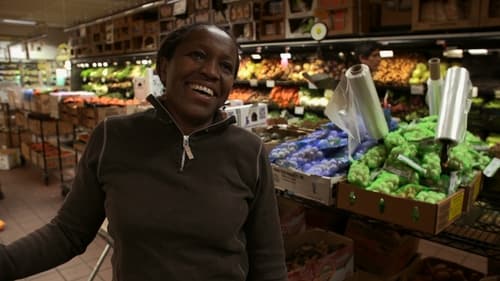
In the middle of an economic crisis, in the shadow of Wall Street, an institution that represents a less well-known American tradition is booming. The Park Slope Food Coop: a cooperative supermarket where all 16,000 members work 3 hours per months to earn the right to buy the best food in New York at incredibly low prices. The success of this cooperative is a bad new for capitalism and aggro-alimentary business, and an opportunity to change the food production and distribution systems. We will see what has become of the Park Slope Food Coop, now a well-rooted institution in the heart of Brooklyn: the way it functions, its hundreds of rules, the diversity and eccentricity of its members. We'll see how the culture that has been created at the coop gives its members daily visceral lessons in democracy, how this could represent a potential change in mentality for Americans faced with increasingly difficult economic times.
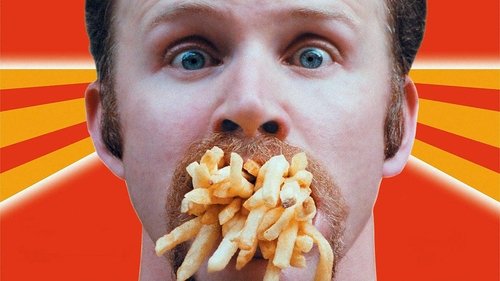
Morgan Spurlock subjects himself to a diet based only on McDonald's fast food three times a day for thirty days without exercising to try to prove why so many Americans are fat or obese. He submits himself to a complete check-up by three doctors, comparing his weight along the way, resulting in a scary conclusion.

A food safety officer and a teacher who has no sense of smell come together to fight the practice of food adulteration and its devastating effect on people.

They are everywhere. At home, in the canteen, in restaurants, processed foods fill our plates. Overcome by obesity, diabetes, heart disease, taste dulled by the easy and artificial flavors of gastronomy, the population no longer has a choice. For fifty years, the agri-food industry has been at our table. And she stuffs herself. Indulgence or complacency with regard to this takeover, the authorities only exercise limited and a posteriori control over this mountain of foodstuffs that are too fatty, too sweet, too salty. Unlike the good recipes of our grandmothers, inspection in the back kitchens of these feeders.
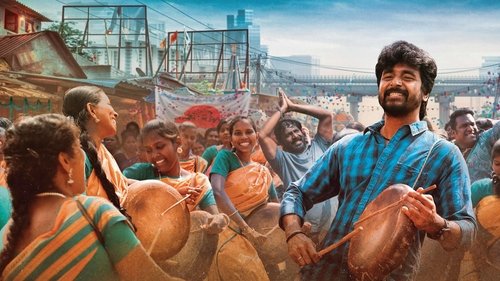
An enterprising youngster in a slum wants his people to lead a life of dignity, but has to take on an ambitious capitalist, who only wants to dominate his field.
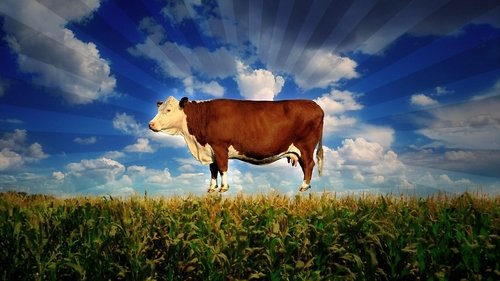
Documentary filmmaker Robert Kenner examines how mammoth corporations have taken over all aspects of the food chain in the United States, from the farms where our food is grown to the chain restaurants and supermarkets where it's sold. Narrated by author and activist Eric Schlosser, the film features interviews with average Americans about their dietary habits, commentary from food experts like Michael Pollan and unsettling footage shot inside large-scale animal processing plants.
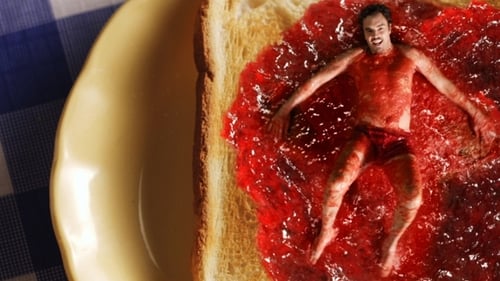
One man's journey to discover the bitter truth about sugar. Damon Gameau embarks on a unique experiment to document the effects of a high sugar diet on a healthy body, consuming only foods that are commonly perceived as 'healthy'. Through this entertaining and informative journey, Damon highlights some of the issues that plague the sugar industry, and where sugar lurks on supermarket shelves.
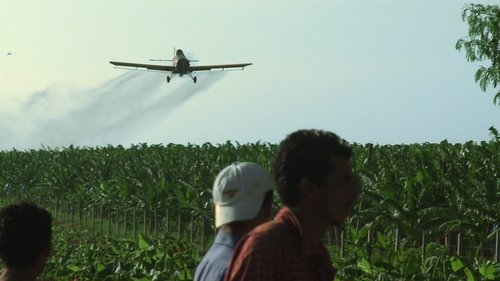
Juan “Accidentes” Dominguez is on his biggest case ever. On behalf of twelve Nicaraguan banana workers he is tackling Dole Food in a ground-breaking legal battle for their use of a banned pesticide that was known by the company to cause sterility. Can he beat the giant, or will the corporation get away with it?

No description available for this movie.

The moral dimension of humanity's interaction with nonhuman animals and the industries that profit from their exploitation, as informed by world religions. A historical explanation of how the current global situation came to be.
No description available for this movie.
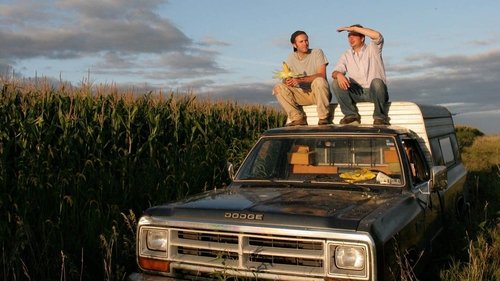
King Corn is a fun and crusading journey into the digestive tract of our fast food nation where one ultra-industrial, pesticide-laden, heavily-subsidized commodity dominates the food pyramid from top to bottom – corn. Fueled by curiosity and a dash of naiveté, two college buddies return to their ancestral home of Greene, Iowa to figure out how a modest kernel conquered America. With the help of some real farmers, oodles of fertilizer and government aide, and some genetically modified seeds, the friends manage to grow one acre of corn. Along the way, they unlock the hilarious absurdities and scary but hidden truths about America’s modern food system in this engrossing and eye-opening documentary.
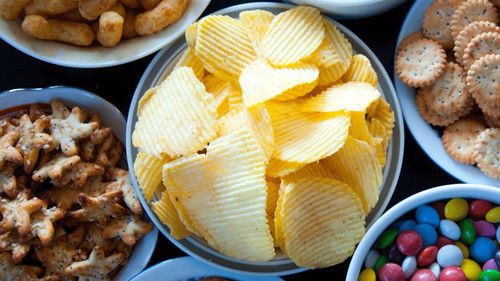
Sales of organic products have increased tenfold in 20 years. In 2020, the market will have exceeded 13 billion euros in sales. The heavyweights of the food industry are surfing on this consumer craze for healthy food by offering more and more "green" products. But organic does not necessarily mean nutritionally balanced.
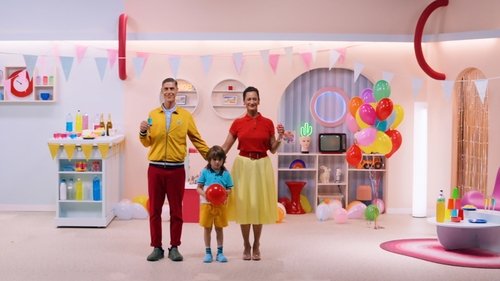
Every day, we eat and breathe tiny plastic residues. What effects does this insidious contamination have on our bodies? Rigorous and lucid, this scientific investigation gathers the most recent discoveries and sounds the alarm.
Fed Up blows the lid off everything we thought we knew about food and weight loss, revealing a 30-year campaign by the food industry, aided by the U.S. government, to mislead and confuse the American public, resulting in one of the largest health epidemics in history.
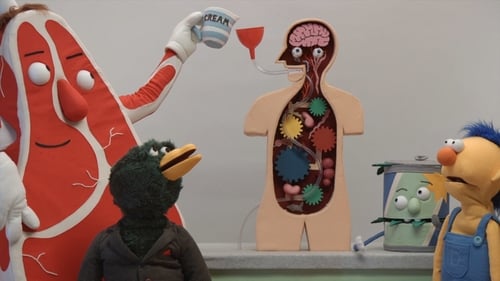
The two remaining puppets learn about eating healthy, but things go awry when they receive a mysterious phone call.
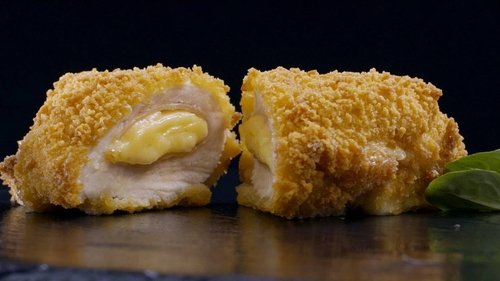
Industrial food production has provided the public with an abundance of food at very low prices. But with obesity and diabetes at record levels in Europe, there is clearly a problem with the food we eat. This documentary puts the spotlight on the agri-food industry and reveals how low-cost ultra-processed foods are really made.

Filmmakers Robert Kenner and Melissa Robledo reunite with investigative authors Michael Pollan and Eric Schlosser to take a fresh look at our efficient yet vulnerable food system.