
Action
Adventure
Animation
Comedy
Crime
Documentary
Drama
Family
Fantasy
History
Horror
Music
Mystery
Romance
Science Fiction
Thriller
War
Western
Found 32 movies, 0 TV shows, and 1 person
Can't find what you're looking for?

So my caring mother would rub the Fluxus Hair Tainer into my scalp, comb my disobedient locks, and then send me off to school looking like that ass-wipe kind on the bottle. I was an independent kid by gum, and this hair meant that I belonged, that my parents knew what was fucking what. This film is an adaptation of Paul Auster story: "Timbuktu".

In 1961 Lithuanian American artist and impresario George Maciunas established the avant-garde art movement Fluxus. George details the rise of Fluxus following a sensationalized tour of “concerts” in Europe in 1962, and continuing in New York for most of the 1960s and ’70s. During this time Maciunas was converting the dying industrial buildings of Soho into a network of artists’ lofts, creating one of the first official real estate co-ops of artist-owned buildings. Maciunas’s life and legacy—as recounted by artists of his generation, including Yoko Ono and Jonas Mekas—ignited debates that remain pivotal to artists working today.

The German artist Wolf Vostell and his family moved to a little village in Cáceres (Extremadura/Spain) in the seventies. In the middle of this primitive environment, he founded a contemporary art museum in connection with the local inhabitants, thus turning Malpartida into the first Fluxus village.

The film portrays a group of artists who since the early 1960s have completely disrupted our ideas of what art can be. In large part filmed in Venice in 1990, when many of the original Fluxus artists met to hold a large exhibition almost 30 years after the first highly untraditional Fluxus' performances. Features Eric Andersen, Philip Corner, Dick Higgins, Yoko Ono, Nam June Paik, Ben Vautier, and many others.
“Drawing on his personal archives, Mekas has assembled a Fluxus vaudeville starring Yoko Ono, Joseph Beuys, and the late Nam June Paik. Most of the material is relatively recent although Ben Vautieur shows some early 1960s work to hilarious effect and Mekas channels Fluxus founder George Maciunas throughout.” – J. Hoberman, VILLAGE VOICE
The life and work of Fluxus artist George Maciunas as seen in clips filmed between 1952 and 1978.
The film reproduces the historic performances by some of the iconic artists of Fluxus from the 60s: Nam June Paik, Yoko Ono, Dick Higgins, George Brecht, Alison Knowles, Ben Patterson, Jackson Mac Low etc.
No description available for this movie.
Black & White Video
This video documentary explores the breadth and diversity of Fluxus. Some Fluxus features performances from Miller's extensive archive, including works by Ay-O, Eric Anderson, George Brecht, Philip Corner, Jean Dupuy, Ken Friedman, Al Hansen, Geoffrey Hendricks, Dick Higgins, Joe Jones, Milan Knizak, Alison Knowles, Larry Miller, Takako Saito, Mieko Shiomi, Yasunao Tone, Yoshi Wada, Ben Vautier, and Robert Watts. Excerpts from Miller's 1978 Interview with George Maciunas are intercut with the performances, providing historical contextualization for this highly influential movement.

brings together two specific references from the history of theater and that of performance art. Invited to exhibit at the Wadsworth Atheneum in Connecticut, Sullivan explored the history of the theater connected to the museum, focusing on A. Everett “Chick” Austin. Amateur actor and director of the Wadsworth Atheneum since 1927, Austin was forced to submit his resignation in 1943, following a scandal created by his staging of ‘Tis Pity She’s a Whore, a tragedy written by the English playwright John Ford in 1633.
Word & number gag, no camera.
This feature-length documentary chronicles the life and playful methods of Dutch pianist and composer Misha Mengelberg, a significant figure in post-WWII European Jazz and free improvisation. Archival footage, rehearsal / performance sequences and interviews with both Mengelberg (the "godfather of Dutch improvised music") and key collaborators provide a clear insight in Mengelberg's original way of thinking and way of working.
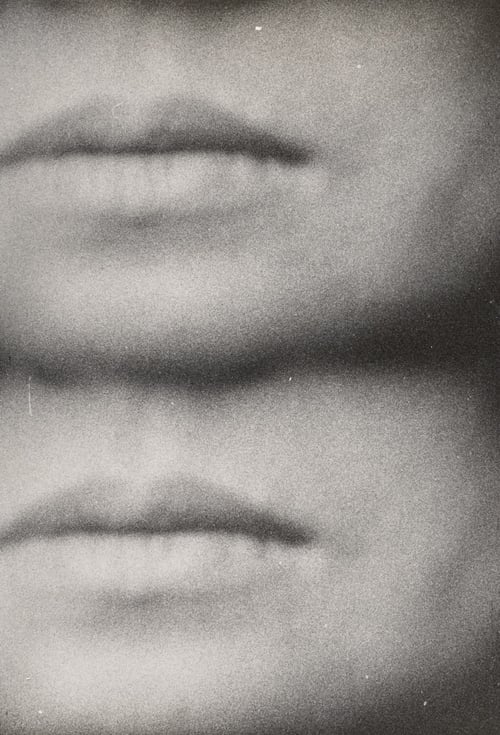
A smile gradually fades into a neutral facial expression.

This film consists entirely of close ups of famous persons' bottoms. Ono meant it to encourage a dialogue for world peace.
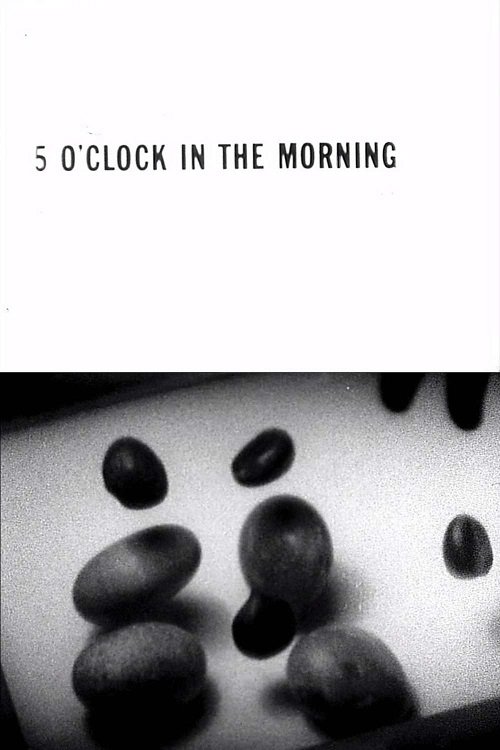
A handful of rocks and chestnuts falling, filmed with high speed camera.
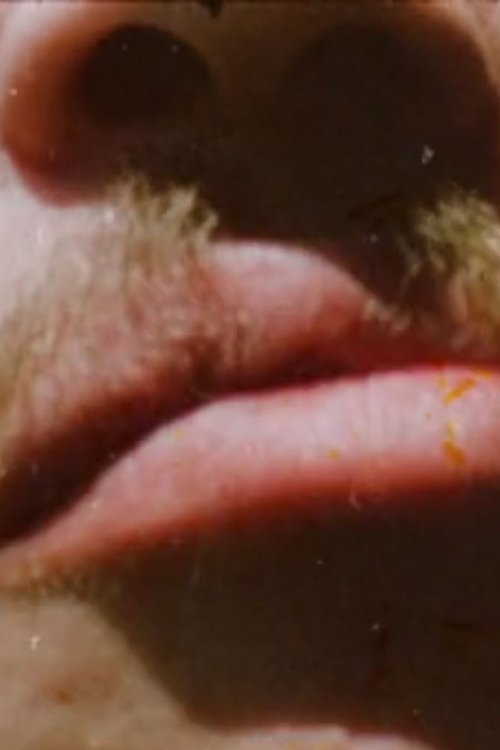
"INVOCATION is Higgins' Satie movie... the purest attempt to clear art from any or all historical, esthetic, thematic, ornamental claptrap to regain the lost-eye consciousness." - Jonas Mekas

In an endless loop, unexposed film runs through the projector. The resulting projected image shows a surface illuminated by a bright light, occasionally altered by the appearance of scratches and dust particles in the surface of the damaged film material. This a film which depicts only its own material qualities; An "anti-film", meant to encourage viewers to focus on the lack of concrete images.
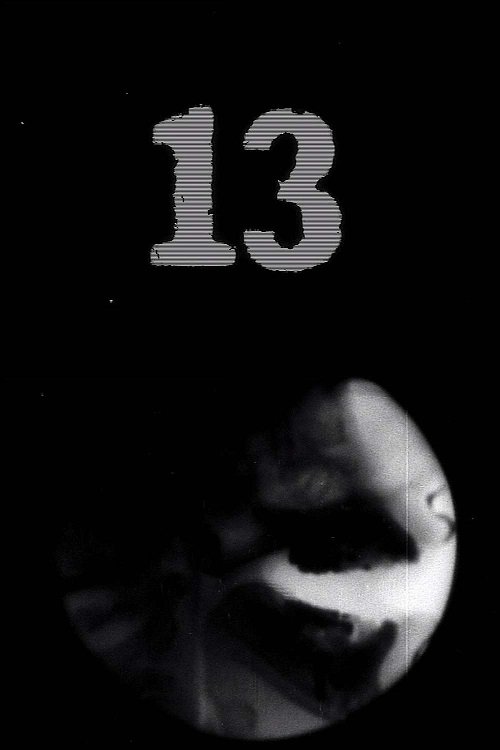
X-ray sequence of mouth and throat; eating, salivating, speaking.
Single frame exposures, color. Different image each frame, various items in the room, etc.
Begins with a shot of a demarcation line on an asphalt tennis court. A hand points to the distant landscape, then numbers 408 and 409 appear on a female torso.
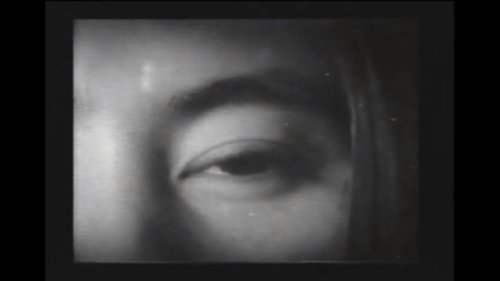
A 16 mm film, featuring Yoko Ono's own eye slowly blinking, shot by Peter Moore with a high-speed camera at 2,000 frames per second, which is projected at normal speed, 24 frames per second, thus creating a slow-motion effect.

Mary Bauermeister is considered the mother of the Fluxus movement. In an attic on Cologne's Lintgasse, she made art history in the early 1960s alongside personalities such as Karlheinz Stockhausen and Nam June Paik. Today, at the age of 85, she has no intention of stopping. From morning till night, this extraordinary artist works in her studio near Cologne: a magical place.
Lifting and holding up a chest of drawers.
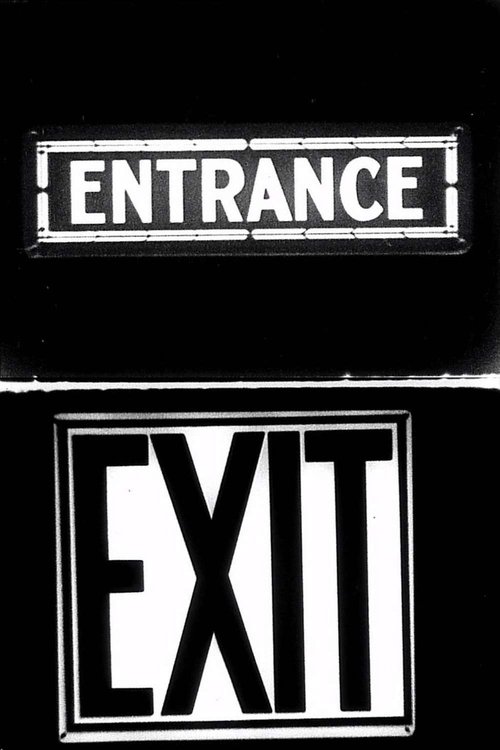
Features entrance and exit door signs, fading through black and white.
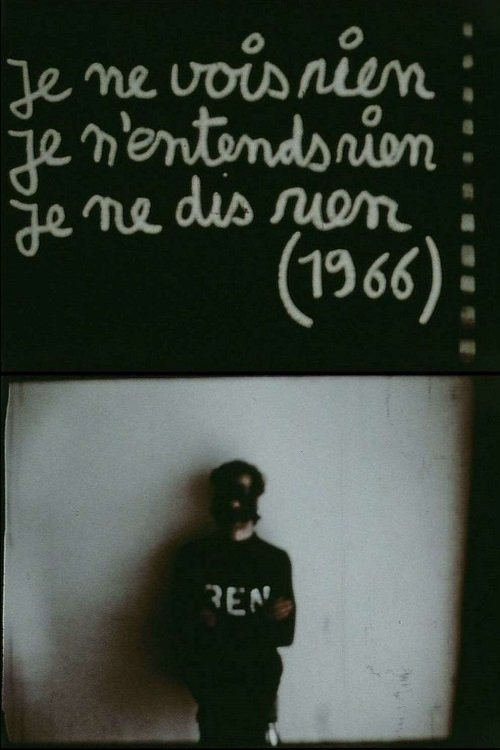
Seeing, Hearing, Saying Nothing. Ben stands with ears, eyes, mouth bandaged.
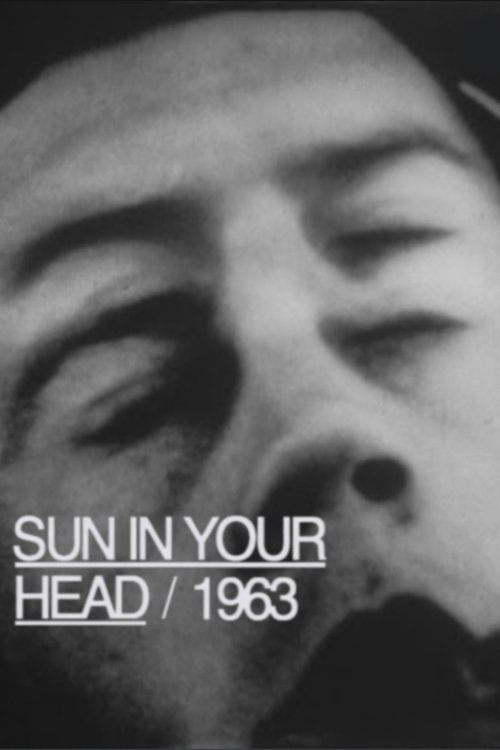
"Single Frame sequences of TV or film images, with periodic distortions of the image. The images are airplanes, women men interspersed with pictures of texts like: 'silence, genius at work' and 'ich liebe dich.' The end credit is 'Television décollage, Cologne, 1963."
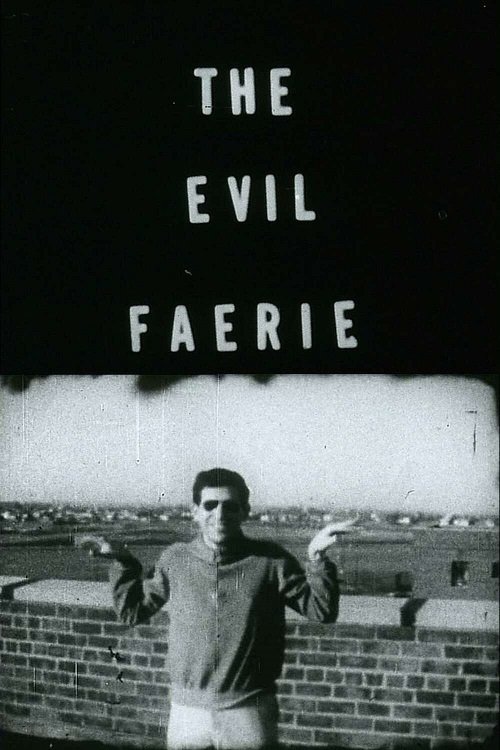
Following a series of title cards, a man in sunglasses briefly flutters his hands like fairy. Owen Land states that this film was not made by George Landow, and believes it should be credited to John Cavanaugh. "George Maciunas had a number of films which didn’t have titles on them. Then he put them together into his Fluxus reel and tried to remember who made them. It was an intentional Fluxus joke." (Owen Land, interview with Mark Webber, 2004)

Each film frame is a different image from the Sears Roebuck mail order catalogue. The film places pictures of the objects sold by Sears to the consumer society side by side with pictures of female models

Prestype on clear film measuring tape, 10ft. length. No camera. At the end of every foot of film numbers appear, 1, 2, etc to 10
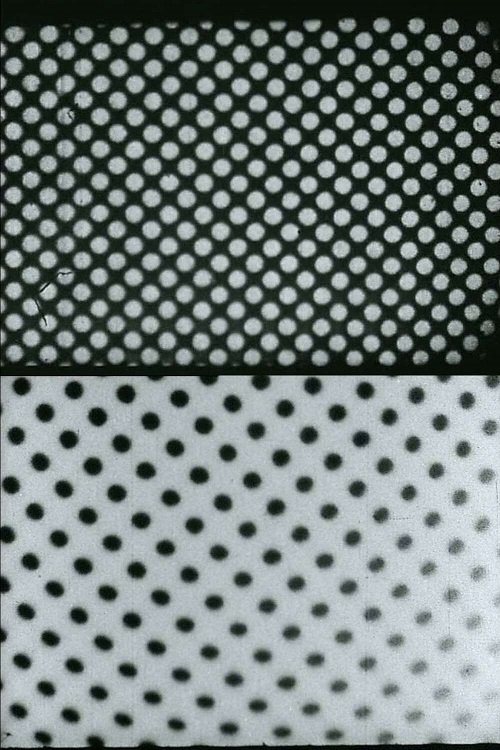
Single frame exposures of dot-screens.
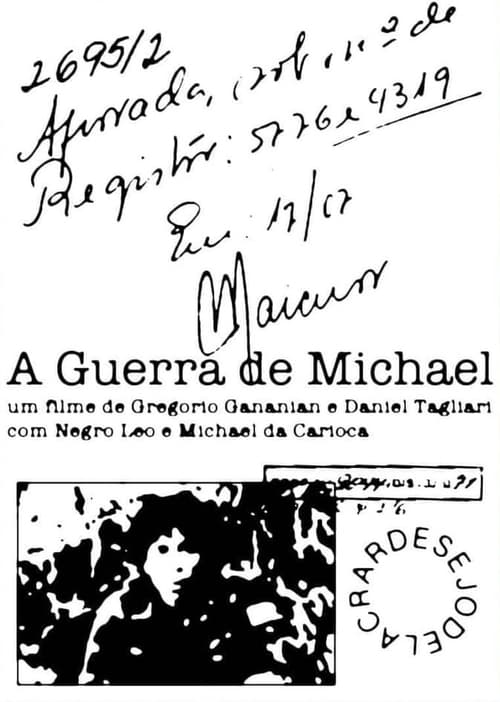
Negro Leo, recording session.