
Action
Adventure
Animation
Comedy
Crime
Documentary
Drama
Family
Fantasy
History
Horror
Music
Mystery
Romance
Science Fiction
Thriller
War
Western
Found 35 movies, 8 TV shows, and 1 person
Can't find what you're looking for?

On the 15th of January, 1999, in front of the coast of Magdalena, at the Río de la Plata, a containership crashed onto a Shell ship. 5.400.000 liters of crude spilled over the estuary waters. Two days later, the southeast wind and the rising tide caused the hydrocarbon to pour into the streams and wetlands, which produced a severe damage to the ecosystem. This film explores the judicial and political plot through documents and testimonies, but it also boosts the collective memory with activities that involve younger generations through a sensitive approach to the land, art activism and environmental education.
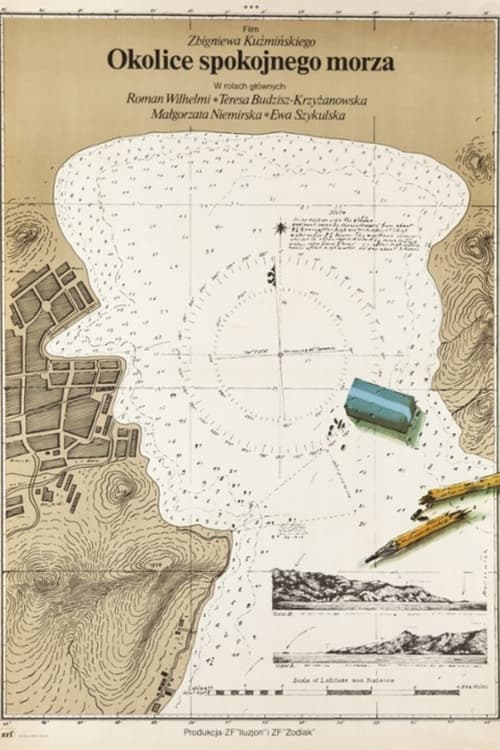
Captain Roman Markowski is a sailor. One day, after returning from the sea, his ex-wife calls him. It turns out that their son has disappeared. It also turns out that the boy got to the Maritime School. The captain's life gets complicated when his son suffers a serious accident.
Rare materials go missing from the archive. A conflict arises between two researchers—Ozerov and Rozhkin—over these missing materials.

The silent film is about a depressive lady of the last century who travels through time to a beach of current times, but ends up coming across a completely polluted environment.
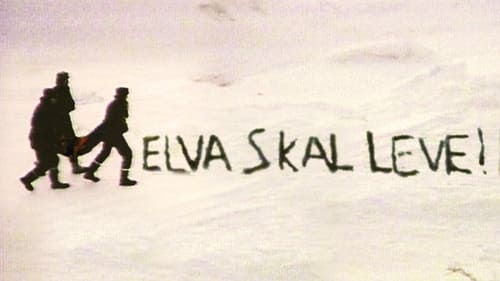
Personal accounts from the Alta actions in the years 1979 to 1981. Large police forces were deployed against the demonstrators. The dispute over the Alta river began as an environmental issue, but became a major turning point for the Sámi people's struggle for equal rights in Norway.

On the occasion of the GDR Landeskulturgesetz (Law on the Conservation and Protection of the Environment), passed in 1970, the speaker explains the various aspects of environmental protection through vivid, visually pointed examples. The film repeatedly refers to the fundamental contradiction between exploitation and preservation of nature in a developed industrial state but is unable to resolve it.

There are many ways to overcome the losses and drop-outs of childhood. Three boys reinvent the concept of family to face the traumas of their lives.
Villagers in the state of Guerrero, Mexico, are working together to stop deforestation in their mountains, which has intensified since 1950. The state's response has been repression, military actions, and further deforestation. After the signing of the North American Free Trade Agreement (NAFTA) in 1994, the multinational Boise Cascade Corporation logged thousands of kilometers of rainforest. This is the story of the Organization of Rural Environmentalists (OCE), founded in 1998, and its success in slowing deforestation. The documentary also exposes the Mexican government's campaign to destroy OCE, including arrests and torture of villagers by the military. OCE's founders were sentenced to 7 and 10 years in prison based on false charges.
The old world is gone. Our landscape bears scars. Entire cities have been levelled. Is it possible to regenerate the city without covering over the warnings of war’s aggressions? Or can these ruins provide a unique chance to reinvent the city thoroughly? The art historian Heinrich Klotz took precisely these questions, concerning the reconstruction of Germany’s historical districts after World War II, as the departure point of his practice.
YERT (Your Environmental Road Trip) is an adventure and a celebration of the American spirit in the face of adversity - a thought-provoking, inspiring, and sometimes hilarious, documentary about the courageous and creative individuals, groups, businesses and leaders of this country who are tackling the greatest environmental threats in history. Called to action by a planet in peril, three friends hit the road to explore every state in America in search of the extraordinary innovators and citizens who are tackling humanity's greatest environmental crises.
Imagine Slovenia completely uninhabitable. Such is the territory of the Semipalatinsk test site. In these 18.5 thousand square kilometers, the atom was not peaceful. For 40 years, from 1949 to 1989, more than 500 nuclear and thermonuclear explosions thundered here, including the most powerful of the ground ones. How does this land live now, and will it ever be habitable? The film crew of the program "Aggressive Environment" visited one of the most radioactive places on the planet.

An account of the Nazi background of numerous West German government officials.

Every war carries a hidden threat, because hostilities destroy the environment, polluting it for many years. A full-scale war in Ukraine will be a tragedy on a global scale. The environment has no boundaries. Poisonous waters will enter European rivers and the world's oceans, and polluted air can be carried by winds to any point on the globe. The "Eastern Variant" team gathered a pool of profile experts to find out what the consequences of war will be for our environment.
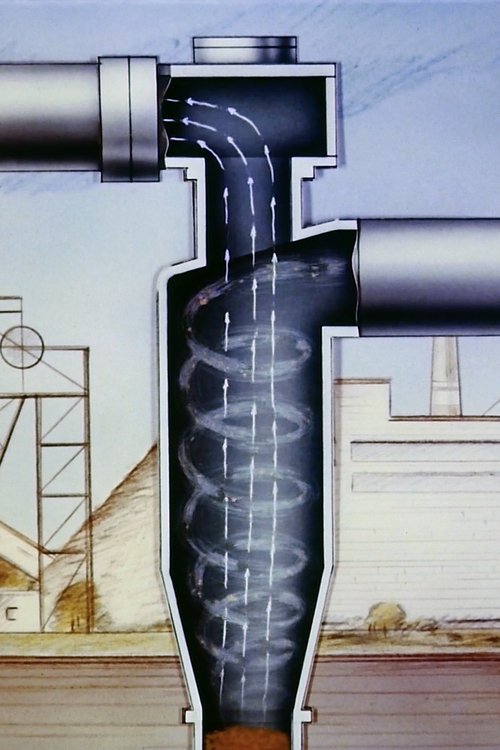
Concerns about coal are inevitably linked to concerns about the environment. Development of original technologies for implementation in Kuzbass, Donbas, and Karaganda.

With unprecedented access to the nuclear industry in France, Russia, and the United States, Nuclear Now explores the possibility for the global community to overcome the challenges of climate change and energy poverty to reach a brighter future through the power of nuclear energy. Beneath our feet, Uranium atoms in the Earth’s crust hold incredibly concentrated energy. Science unlocked this energy in the mid-20th century, first for bombs and then to power submarines. The United States led the effort to generate electricity from this new source. Yet in the mid-20th century as societies began the transition to nuclear power and away from fossil fuels, a long-term PR campaign to scare the public began, funded in part by coal and oil interests.

Suzume, 17, lost her mother as a little girl. On her way to school, she meets a mysterious young man. But her curiosity unleashes a calamity that endangers the entire population of Japan, and so Suzume embarks on a journey to set things right.
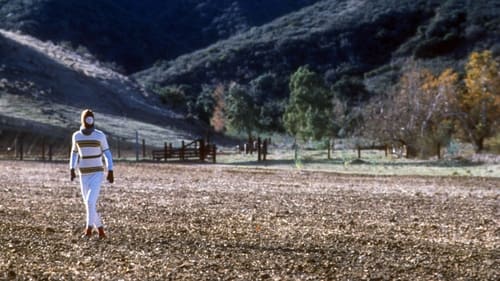
Carol White, a Los Angeles housewife in the late 1980s, comes down with a debilitating illness with no clear diagnosis.

Masaharu Fukuyama reprises his role from 2008's "Suspect X," playing the physicist-cum-detective Manabu Yukawa. The scientist-sleuth arrives in an oceanside town to speak on a panel. But when a man turns up dead outside the inn where he's staying, Yukawa begins to unravel the connections that tie the victim to the activist daughter of the innkeepers, and a precocious boy who first appears on a train—and keeps popping up. It's a Sherlock Holmes mystery with an environmental twist, and one that should please fans of a classic whodunnit.
This may be the one of the most important Horizon films of recent years. Climate scientists have just discovered a phenomenon that threatens to disrupt our world. It may already have contributed to the deaths of hundreds of thousands through drought and famine. Unchecked, it will strike again. The good news is that there is a cure. The bad news is that the cure may be worse than the disease. If they are right, then in tackling the one problem, we may unleash a climate catastrophe on our planet. This is a film about stark choices and about the dawning realisation that all our predictions about the world's climate may be completely wrong. At its heart is something that scientists are calling "global dimming".

The world is on the brink of major social and economic collapse, and powerful billionnaire Malcolm Hunt has the solution. Malcolm invites eight 'candidates' to a house in the country for a weekend adn each must prove themselves worthy of attending a prestigious world summit call 'Advanced Earth'. But when they awake on their frst morning in the house, the candidates fnd themselves trapped, cut off from the outside world, and the true, terrifying purpose of Advanced Earth is revealed...
In June 2010, French actress Marion Cotillard spent a week in the heart of the tropical forests of the Democratic Republic of Congo with members of Greenpeace France and Greenpeace Africa. She delivers in video a strong testimony on the looting of Congolese forests which benefits a few industrial groups, often European.
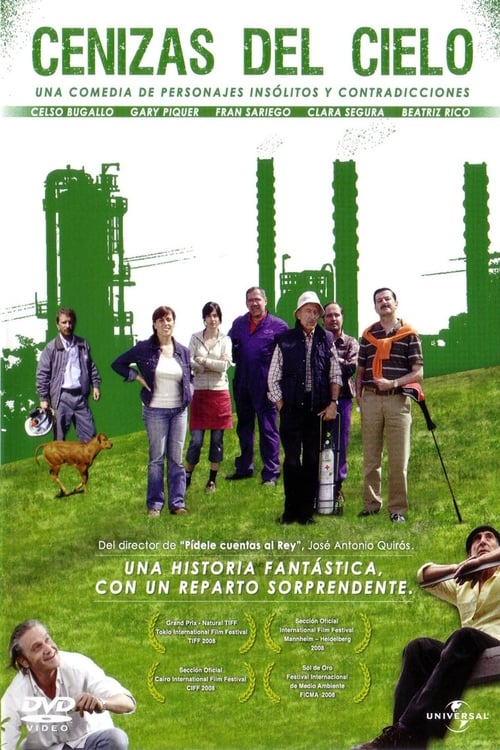
Environmental drama set in Asturias, Spain. A Scottish travel writer is forced to stay in a valley town in northern Spain when his camper van breaks down. There he gets to know the different inhabitants, some of them struggling to close down the nearby power station and some trying to make it more prosperous.
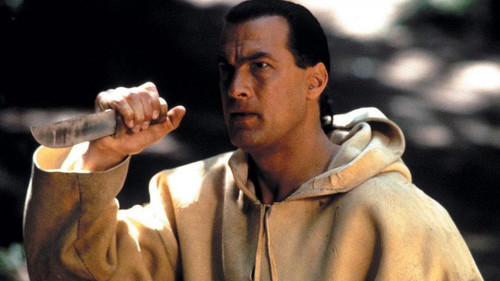
Forrest Taft is an environmental agent who works for the Aegis Oil Company in Alaska. Aegis Oil's corrupt CEO is the kind of person who doesn't care whether or not oil spills into the ocean or onto the land—just as long as it's making money for him.

In April 1977, the small coastal town of Seabrook, New Hampshire became an international symbol in the battle over atomic energy. Concerned about the dangers of potential radioactive accidents, over 2,000 members of the Clamshell Alliance, a coalition of environmental groups, attempted to block construction of a nuclear power plant. 1,414 people were arrested in that civil disobedience protest and jailed en masse in National Guard armories for two weeks.

On April 10, 2014, the environmental activist and president of the Junín community, Javier Ramírez, was arrested and sentenced to ten months in prison for the crimes of “rebellion, sabotage and terrorism”. A few days later, the National Mining Company entered the area accompanied by a squad of at least 200 policemen to carry out studies related to the Llurimagua mining project, in the Íntag cloud forest. Javier with I, Íntag collects Javier Ramírez's reflections after his release, his feeling of condemned innocence, the pain of living in a divided, busy and frightened community, with its social fabric destroyed.
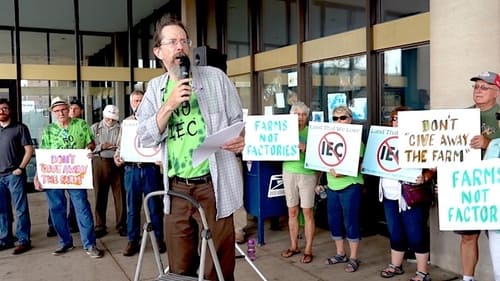
This documentary film follows farmers and activists fighting together to stop the Indiana Enterprise Center, a mega-sized industrial park planned west of South Bend, Indiana

A conservationist fights to save the habitat of the California condor and to do it she works her way into the affections of a representative of the oil company that wants the land for their own purposes.

When a ship sinks during a storm, a slave from the industrial island of Plutonia is washed up on the beaches of paradise island Melonia, where the "all-powerful" wizard Prospero and his strange friends reside.
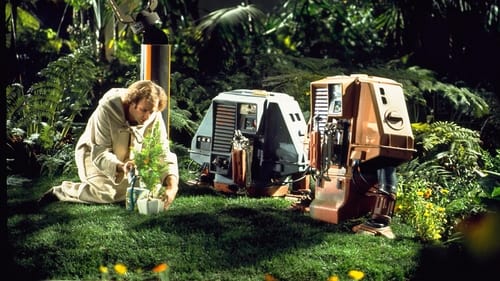
After the entire flora goes extinct, ecologist Lowell maintains a greenhouse aboard a space station for the future with his android companions. However, he rebels after being ordered to destroy the greenhouse in favor of carrying cargo, a decision that puts him at odds with everyone but his mechanical companions.
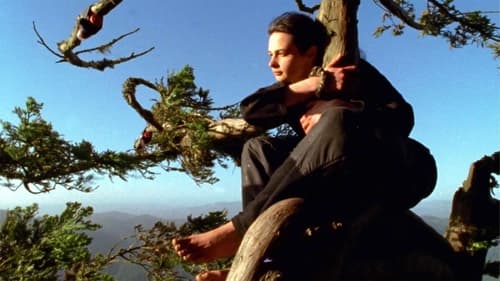
Living in an ancient redwood tree for more than two years to prevent the tree from being clear-cut, Julia Butterfly Hill captured our hearts and minds by showing us that one person can make a difference. Through interviews with Hill, filmmaker Doug Wolens paints a portrait of an intensely spiritual and articulate woman who encountered both beauty and horror (she was assaulted by lumber company helicopters at one point) during her time above ground.
An experimental silent film made with a team of three. Humanity is being wiped out and the last people left are friends May and Pearl. The main themes of the film are friendship that gives strength and hope, as well as current concern for the future of humans and our nature. Could we start over or was this it?
A husband-and-wife team play detective, but not in the traditional sense. Instead, the happy duo helps others solve their existential issues, the kind that keep you up at night, wondering what it all means.

Follows four women of the estimated 40,000 displaced people moved from the banks of the Xingu River in the Amazon Basin to make space for construction of one of the world's largest dams, the Belo Monte.
On 1500 metres above sea level, on the slope of the mountain Hallingskarvet, stands "Tvergastein', the cabin of Norwegian philosopher Arne Naess. In his life he has spent nearly 12 years in this hut, where he wrote several books and essays on philosophy and ecology. In this film, Naess tells about the concept of 'deep ecology', which was first introduced by him in 1973. One of the basic tenets of deep ecology is that nature has a value in itself, apart from its possible use value to humans. Next to being a famous mountaineer, Naess has been a longtime activist in the environmental movement. He gives an inspiring account of his participation in blockades to prevent the Alta river in northern Norway (the area of the Sami, an indigenous people) from being dammed.
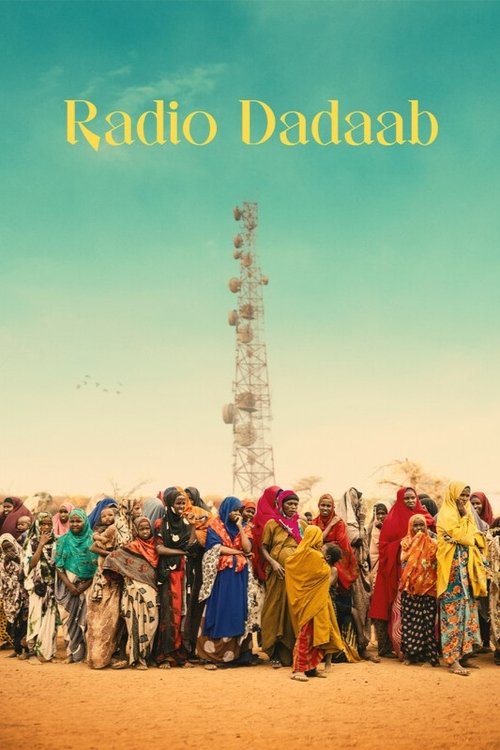
Dadaab, Kenya. The world’s second largest refugee camp. A place where hundreds of thousands of people have lived for decades, trapped in a limbo of statelessness and uncertainty. Opened in 1991 to shelter those fleeing the horrors of war and violence in Somalia, Dadaab is now seeing a new influx of refugees. But this time, it is climate rather than conflict that is forcing people from their homes and into the camp.