
Action
Adventure
Animation
Comedy
Crime
Documentary
Drama
Family
Fantasy
History
Horror
Music
Mystery
Romance
Science Fiction
Thriller
War
Western
Found 40 movies, 26 TV shows, and 1 person
Can't find what you're looking for?

Economist Armine Yalnizyan offers a radically honest and deliciously sweet review of our absurdly dysfunctional economic system and what we must do in order to survive and thrive in the 21st century.

Threshold Economics is surveillance video by the occupant subject. Tinged with a faint influence of radio noir, this cinematic immersion offers a complex of security peepholes, passing shadows, disembodied voices, the music of steam radiators. Installation at SAW Gallery, Ottawa in group show Take Me To Your Leader/Lead Me To Your Taker, May-July 2011; Single-channel exhibition in group show My Winnipeg, la Maison Rouge, Paris, June-August 2011.
Plot TBA.
An independent comedy film directed by Gerald Sprayregen.
The first match of Feminist Economic Football: A Cooperative Game was played in June 2021 in Glasgow. The work was created by Ailie Rutherford, Sapna Agarwal and Mandy Roberts for Feminist Exchange Network.

Economic life and welfare are told from the point of view of a refrigerator of an affluent family. The film challenges the audience’s sense of justice and concern for the common good, and highlights the promotion of the welfare of the marginalized.
Two sisters are trying to decide which classes to take next semester. When one wants to take home economics, the other is stunned. Why should anyone need to study home economics?
'The Economics of Happiness' features a chorus of voices from six continents calling for systemic economic change. The documentary describes a world moving simultaneously in two opposing directions. On the one hand, government and big business continue to promote globalization and the consolidation of corporate power. At the same time, all around the world people are resisting those policies, demanding a re-regulation of trade and finance - and, far from the old institutions of power, they're starting to forge a very different future. Communities are coming together to re-build more human scale, ecological economies based on a new paradigm - an economics of localization.
This high-school educational film describes the benefits and opportunities available to young women who go to college and major in home economics. The film follows Kay, Helen, Louise, and Jean throughout their college years, as they take a variety of interesting and useful classes and eventually accept job offers in their chosen specialties. Nevertheless, the traditional middle-class ideals of marriage and stay-at-home motherhood are reinforced.

A film about spit, tears and austerity. Dating apps, late-stage capitalism and broken hearts. An experiment in immediacy. A salacious piece of gossip.
In the premiere episode of Economics in Chateau Versailles, we see foundation laid......for a youth....and something "much" bigger than her.
Designed as a primer of economic terms and concepts, uses the career of the Chicken, America's first professional sports mascot, as a source of illustrative material. Shows how the chicken could succeed only in market economy, what the characteristics of such an economy are, and how they have influenced the chicken's career.
A re-staging of instructional texts from Home Economics Textbooks used in the 1970s, outlining the correct manner for personal grooming, house-keeping, and entertaining. The film critiques the extreme performativity of femininity through gestures and costumes to a soundtrack of highly gendered phrases taken verbatim from the textbooks.
Jenny Cool interviewed women in a suburban housing development outside Los Angeles, discovering a fragile lifestyle dominated by social pressures and the daily commuter grind.

Teslaism is a 3rd person-racing musical game featuring Elon Musk and his self-driving car/lover and life coach, as they drive towards a shareholder meeting in a post-gamified Berlin landscape. The film takes the newly built Gigafactory in Berlin as a prism to describe the emergence of Teslaism (succeeding Post-Fordism) as an upgrade to the system of production and consumption predicated on advanced storytelling, financial worldbuilding, and imagineering »the look of the future«.

An interview with economist Bernard Maris, a.k.a. 'Oncle Bernard', who was killed during the Charlie Hebdo shooting, on January 7, 2015.

In the aftermath of a recent breakup, Alexander and Birgitte are stuck in the strangest family visit of their lives as they are set to stay overnight at Alexander's aunt and uncle's house, the last stop of their road trip.
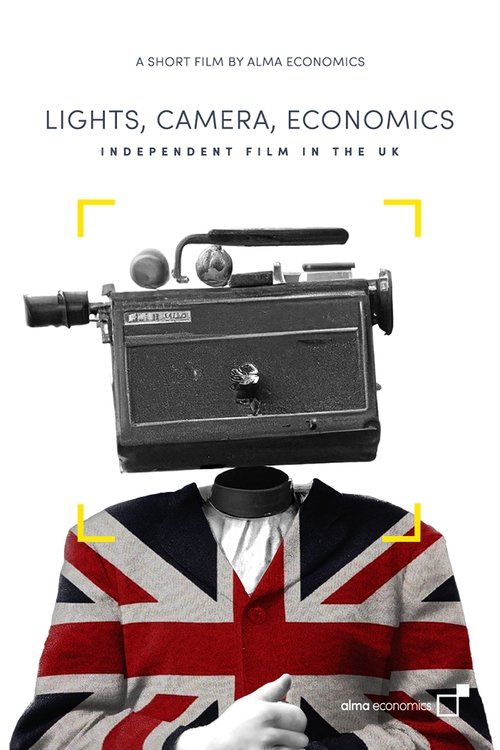
Lights, Camera, Economics is a short documentary on the growing economic challenges faced by independent filmmakers wrapped in a love letter to the world of UK independent film. Based on research by Alma Economics, commissioned by the British Film Institute (BFI).

Yannis Kyriopoulos is a Greek academic internationally recognized as a pioneer who combined the study of health with economics and politics. His work has had a significant impact, as it contributed to the promotion of social justice. After his death, his legacy continues to inspire and guide his colleagues and students. The narratives of his friends, associates, and students highlight his multifaceted personality and his spiritual legacy.
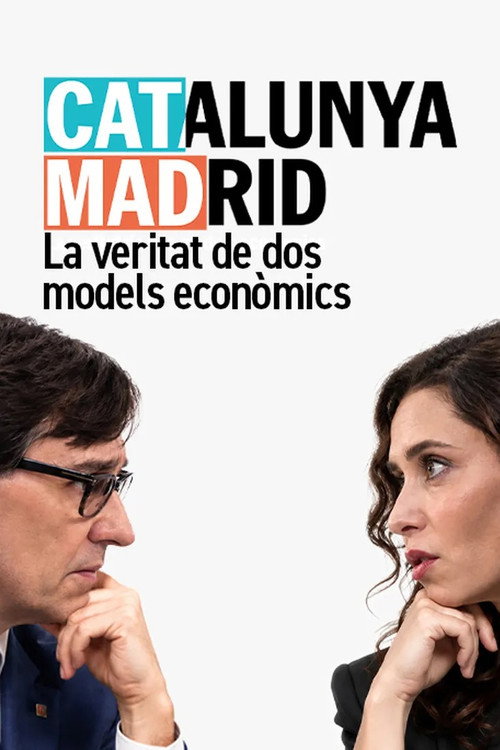
No description available for this movie.

Set in the high-stakes world of the financial industry, involving the key players at an investment firm during one perilous 24-hour period in the early stages of the 2008 financial crisis. An entry-level analyst unlocks information that could prove to be the downfall of the firm.
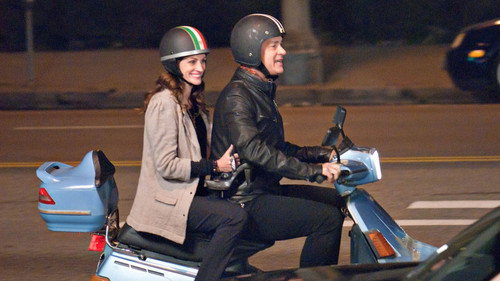
When he suddenly finds himself without his long-standing blue-collar job, Larry Crowne enrolls at his local college to start over. There, he becomes part of an eclectic community of students and develops a crush on his teacher.
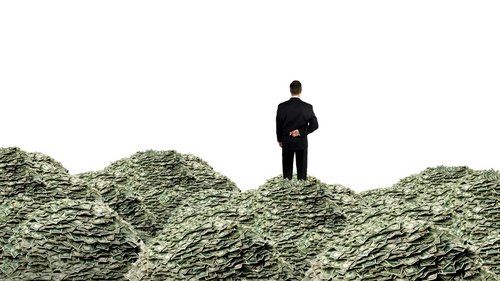
A film that exposes the shocking truth behind the economic crisis of 2008. The global financial meltdown, at a cost of over $20 trillion, resulted in millions of people losing their homes and jobs. Through extensive research and interviews with major financial insiders, politicians and journalists, Inside Job traces the rise of a rogue industry and unveils the corrosive relationships which have corrupted politics, regulation and academia.
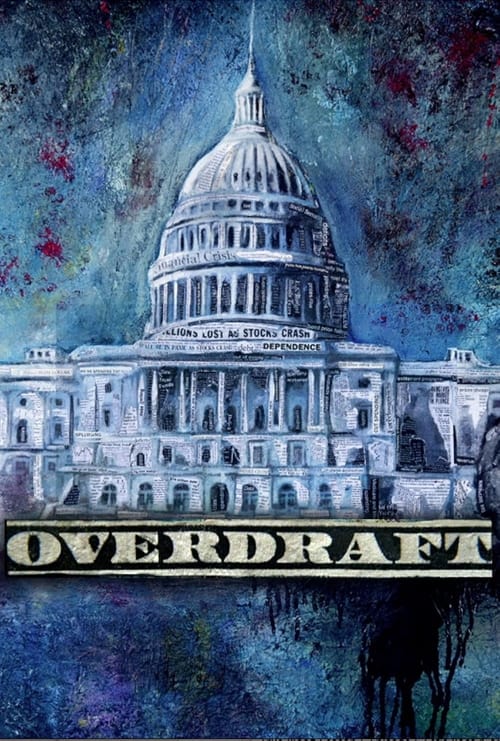
Overdraft is an award-winning film featuring leading thinkers and policymakers from across the aisle exploring major topics such as entitlement programs, defense spending, tax reform and the choices that America’s debt forces on individuals and businesses. Independently produced, Overdraft was launched in August 2012, and made available for broadcast on public television for two years through the National Educational Telecommunications Association (NETA).
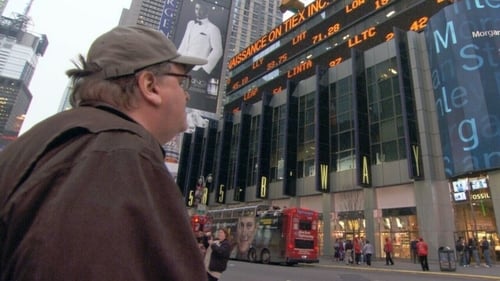
Michael Moore comes home to the issue he's been examining throughout his career: the disastrous impact of corporate dominance on the everyday lives of Americans (and by default, the rest of the world).
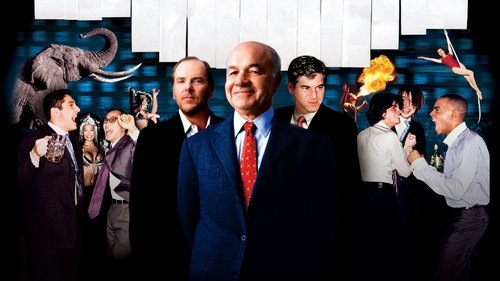
A documentary about the Enron corporation, its faulty and corrupt business practices, and how they led to its fall.
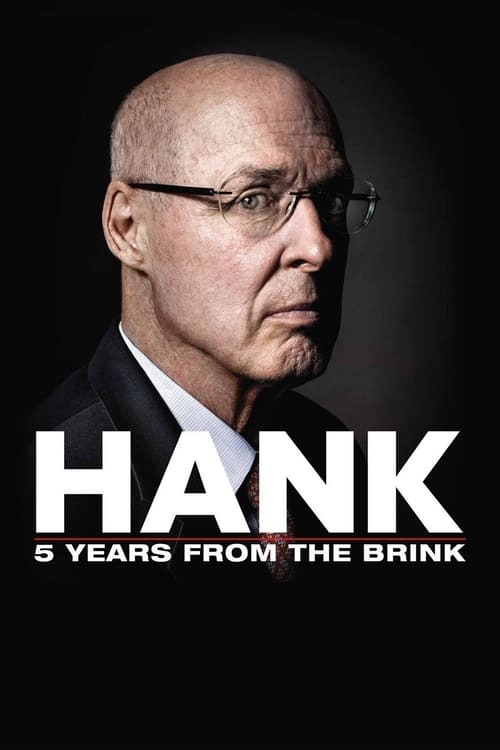
For three weeks in September 2008, one person was charged with preventing the collapse of the global economy. No one understood the financial markets better than Hank Paulson, the former CEO of Goldman Sachs. In Hank: Five Years from the Brink, Paulson tells the complete story of how he persuaded banks, Congress and presidential candidates to sign off on nearly $1 trillion in bailouts - even as he found the behavior that led to the crisis, and the bailouts themselves, morally reprehensible. Directed by Academy Award nominee Joe Berlinger (Paradise Lost Trilogy, Some Kind of Monster), the film features Paulson, and his wife of 40 years, Wendy. it's a riveting portrait of leadership under unimaginable pressure - and a marriage under unfathomable circumstances.

Since the late 18th century American legal decision that the business corporation organizational model is legally a person, it has become a dominant economic, political and social force around the globe. This film takes an in-depth psychological examination of the organization model through various case studies. What the study illustrates is that in the its behaviour, this type of "person" typically acts like a dangerously destructive psychopath without conscience. Furthermore, we see the profound threat this psychopath has for our world and our future, but also how the people with courage, intelligence and determination can do to stop it.
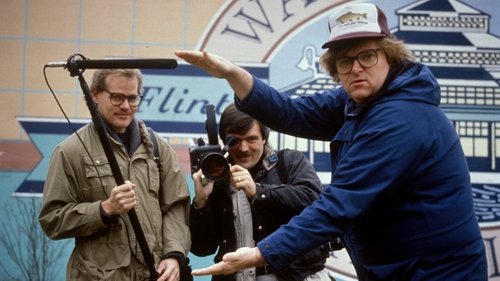
A documentary about the closure of General Motors' plant at Flint, Michigan, which resulted in the loss of 30,000 jobs. Details the attempts of filmmaker Michael Moore to get an interview with GM CEO Roger Smith.
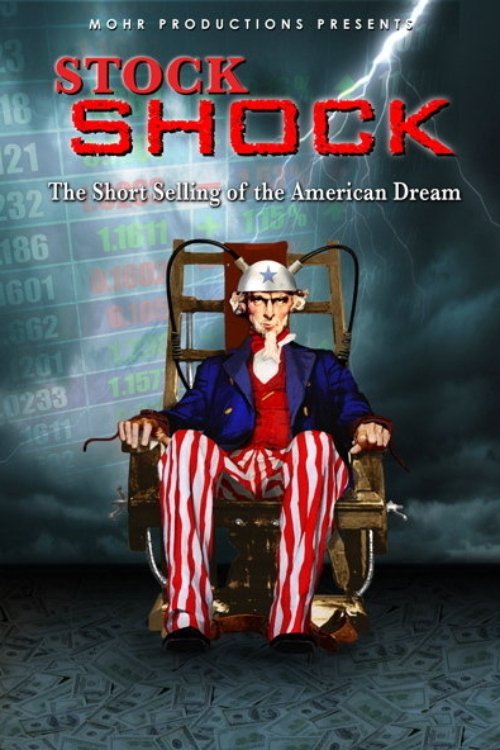
Exposes the down and dirty schemes and calculated market manipulation behind the glitter of Wall Street. It is a must see for anyone who has ever lost money in stocks...or fears they're about to.

Some of the world's most innovative documentary filmmakers will explore the hidden side of everything.

No description available for this movie.

MARTIN ARMSTRONG, once a US based trillion dollar financial adviser, used the number pi to predict economic turning points with precision. When some big New York bankers asked him to join the club to help them to take over Russia, he refused to join the manipulation. A few days later the FBI stormed his offices accusing him of a 3 billion dollar Ponzi Scheme - an attempt to stop him talking about the real Ponzi Scheme of debts that the US has build up over the years and which he thinks starts to collapse after October 1, 2015, a mayor pi turning point he is predicting.
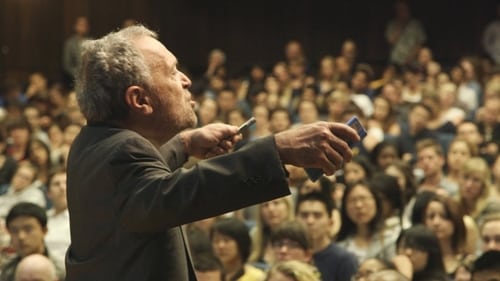
Based on Reich's 2010 book Aftershock: The Next Economy and America's Future, the film examines widening income inequality in the United States. U.S. Labor Secretary Robert Reich tries to raise awareness of the country's widening economic gap. He publicly argued about the issue for decades, and producing a film of his viewpoints was a "final frontier" for him. In addition to being a social issue documentary, Inequality for All is also partially a biopic regarding Reich's early life and his time as Secretary of Labor under Bill Clinton's presidency. Warren Buffett and Nick Hanauer, two entrepreneurs and investors in the top 1%, are interviewed in the film, supporting Reich's belief in an economy that benefits all citizens, including those of the middle and lower classes.
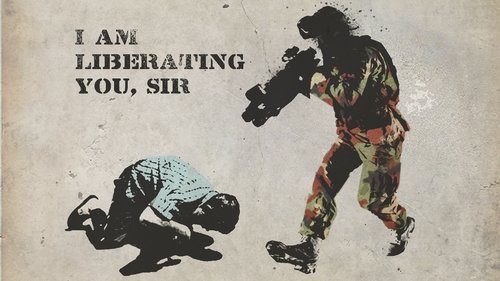
An investigation of "disaster capitalism", based on Naomi Klein's proposition that neo-liberal capitalism feeds on natural disasters, war and terror to establish its dominance.
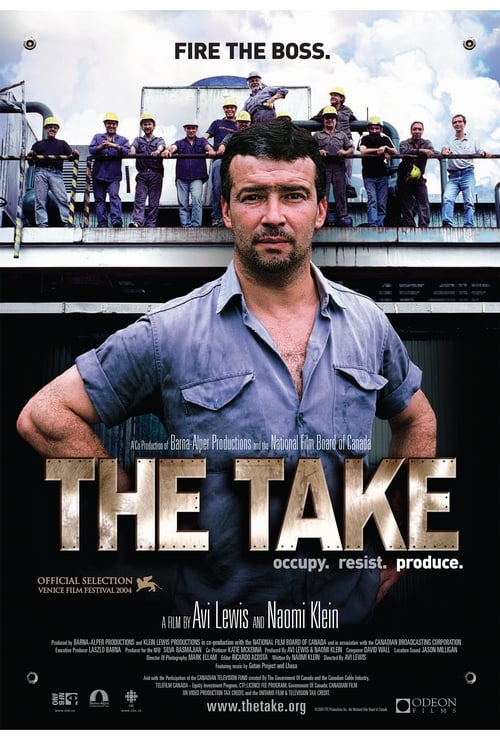
In suburban Buenos Aires, thirty unemployed ceramics workers walk into their idle factory, roll out sleeping mats and refuse to leave. All they want is to re-start the silent machines. But this simple act - the take - has the power to turn the globalization debate on its head. Armed only with slingshots and an abiding faith in shop-floor democracy, the workers face off against the bosses, bankers and a whole system that sees their beloved factories as nothing more than scrap metal for sale.

With dreams of colonising Mars and beyond, billionaires such as Elon Musk or Jeff Bezos are fuelling a boom in the space industry. But many criticise the pollution and resources needed for such an endeavour. By promising humanity’s survival through an escape into space, New Space may be contributing to the destruction of our planet.

Through interviews filmed over four years, Noam Chomsky unpacks the principles that have brought us to the crossroads of historically unprecedented inequality – tracing a half-century of policies designed to favor the most wealthy at the expense of the majority – while also looking back on his own life of activism and political participation. He provides penetrating insight into what may well be the lasting legacy of our time – the death of the middle class, and swan song of functioning democracy.
The factors that influence supply are surveyed, as well as production costs and rate of production, using an ant farm as an example.
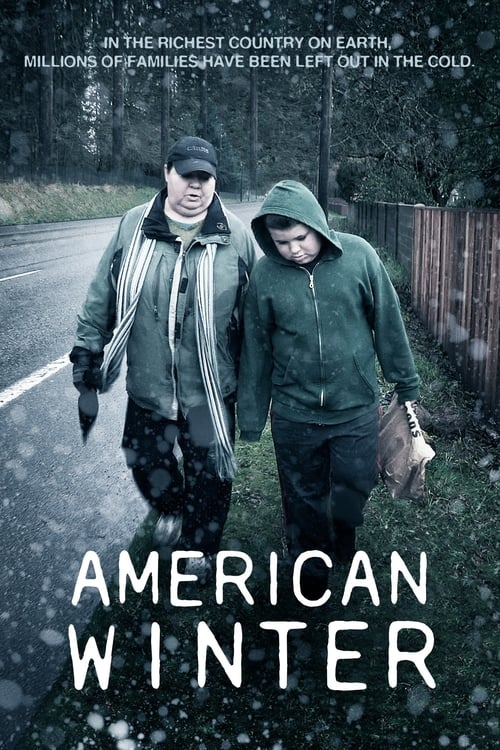
Documentary feature film that follows the personal stories of families struggling in the aftermath of the worst economic crisis since the Great Depression. Filmed over the course of one winter in one American city, the film presents an intimate snapshot of the state of the nation's economy as it is playing out in millions of American families, and highlights the human consequences of the decline of the middle class and the fracturing of the American Dream