
Action
Adventure
Animation
Comedy
Crime
Documentary
Drama
Family
Fantasy
History
Horror
Music
Mystery
Romance
Science Fiction
Thriller
War
Western
Found 20 movies, 3 TV shows, and 0 people
Can't find what you're looking for?
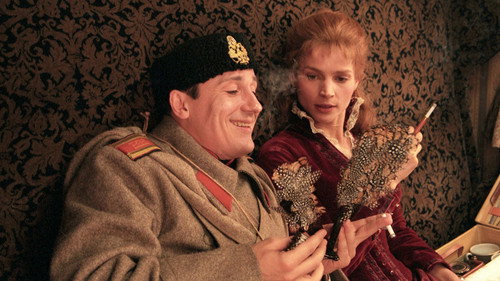
Douglas is a foreign entrepreneur, who ventures to Russia in 1885 with dreams of selling a new, experimental steam-driven timber harvester in the wilds of Siberia. Jane is his assistant. On her travels, she meets two men who would change her life forever: a handsome young cadet Andrej Tolstoy with whom she shares a fondness for opera, and the powerful General Radlov who is entranced by her beauty and wants to marry her.
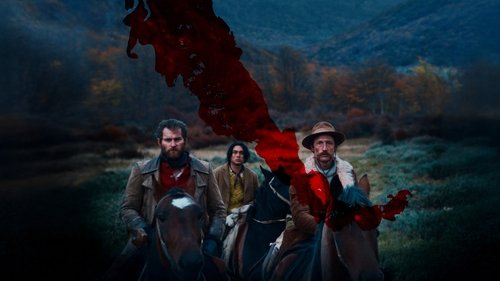
Chile, early 20th century. José Menéndez, a wealthy landowner, hires three horsemen to mark out the perimeter of his extensive property and open a route to the Atlantic Ocean across vast Patagonia.

1909, cinematography by Frank Ormiston-Smith.
The peculiarity of this waterfall, with its narrow funnel-shaped opening, from which, on to the jagged rocks the torrent dashes, is here portrayed in all its pristine grandeur and beauty.
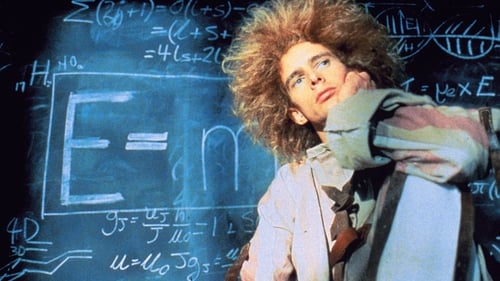
Albert Einstein is the son of a Tasmanian apple farmer, who discovers the secret of splitting the beer atom to put the bubbles back into beer. When Albert travels to Sydney to patent his invention he meets beatuiful French scientist Marie Curie, as well as several unscrupulous types who try to take advantage of the naive genius and his invention.
1903, cinematography by Frank Ormiston-Smith.
Distributed under the title of ‘Switzerland’ or ‘Playground of Europe’, the film consists of a collection of scenes filmed in the Alps by Frank Ormiston-Smith between 1903 and 1905. The scenes belong to concrete moments in different ascents and treks in the Alps and are presented together without the intention to narrate a concrete ascent. These are some of the scenes: Snow avalanche on the Shreckhorn, Difficult ascent of a Rock Peak, A close call - Dangerous climbing, Descent of steep snow drift, Crossing a dangerous snow bridge, Fusillade of rocks on the Alps, Descending a steep rock-faced mountain side, Capt. Spelterini's balloon trip across the Jungfrau, Surmounting the summit of the Finsteraar-joch.
1904, cinematography by Frank Ormiston-Smith.
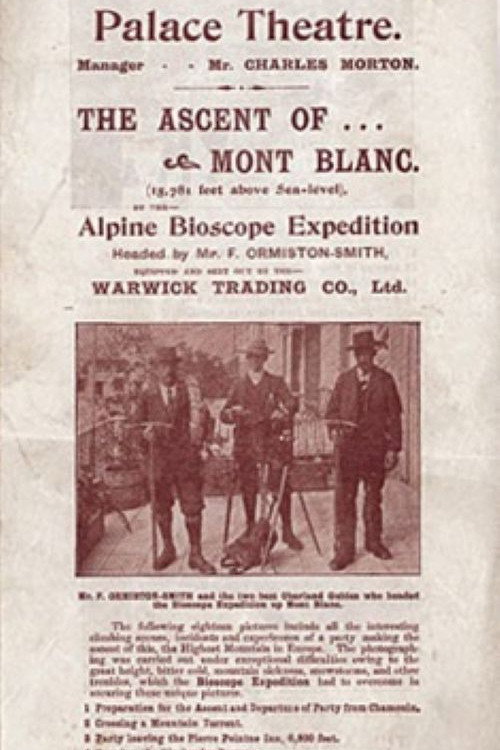
A pioneering mountaineering film made by Frank Ormiston-Smith for the Warwick Trading Company in 1902. Ormiston-Smith himself led and filmed an expedition of seven men up to the top of Mont Blanc. The party left Chamonix the 23rd of september up to Pierre-Pointue and Grands Mulets and reached the top the 25th. The film consists of 18 scenes including a final scene of the team on the summit. This is the first major mountain film shown widely in cinemas. The mountaineering filming is rudimentary by later standards, but in 1902 it gave audiences moving pictures of places, and altitudes, which they could never expect to witness otherwise.
1903, cinematography by Frank Ormiston-Smith
1907, cinematography by Frank Ormiston-Smith.
In 1901, Argentine naval officer José María Sobral joins Otto Nordenskjöld’s Swedish scientific expedition to Antarctica. After establishing a winter camp on Snow Hill Island, six men are left stranded when the ship meant to retrieve them never returns. Drawing on Sobral’s diary, this documentary reconstructs their two-year struggle for survival and the Argentine rescue mission led by Lieutenant Julián Irízar aboard the corvette ARA Uruguay.
This film gives a fine panoramic view of this wonderful railway track through immense gorges and cuttings and snow baulks of from 15 to 20 feet high on either hand. Large squads of men are met at short intervals on this trip, busily and deftly clearing away the huge snow accumulations - in fact cutting the railway path through solid snow-wreaths. Then we see the Railway Hotel on the summit of the Wenger Alp and other group of snow diggers displaying great activity, and filling car load after car load with the frozen snow until at the signal for stopping time, they rush wildly and gladly away, waving their shovels aloft in triumph at the day's work accomplished.
1907, cinematography by Frank Ormiston-Smith.
Austrian military detachment out for Ski practice, showing how the Ski may be used in crossing snow-covered and ice hardened surfaces with great speed and apparent ease kneeling and firing and rapidly changing into new positions. Well illustrates the value of skiing in an army under suitable conditions.
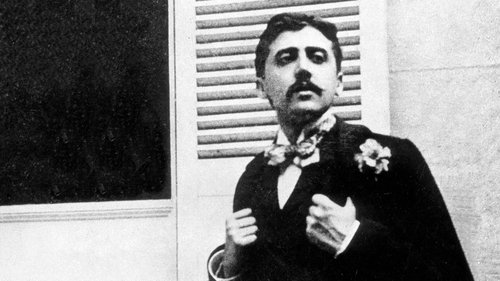
Marcel Proust's "In Search of Lost Time" is one of the great novels of world literature. The documentary immerses itself in the very own cosmos, spanning 3,000 pages and hundreds of characters, for which Proust's own world was the source of inspiration, and brings Proust's moral portrait of the Belle Epoque to new life.
A curious incident which happens in early summer when the cattle are taken to the high pastures for three months.
Cinematography by Frank Ormiston-Smith.
The goats of the Grimsel are almost as famous as the Hospice itself, and form a most attractive picture among the bleak and desolate surroundings.
1. Panoramic View from the Acropolis. A fine view of modern Athens. 2. Mar's Hill. Probable site of St. Paul preaching to the Athenians. 3. A View of the Acropolis from the Hill of the Muses. Showing the Propylea, Parthenon, and Theater of Dionysus. 4. The Arch of Adrian. Built by Adrian on the completion of the Olympieum. 5 The Olympieum. A few of the original 104 columns of this Temple are seen. 6. Temple of Victory. Originally built to commemorate three of the most celebrated Athenian victories. 7. The Propylaea. Begun in 437 B.C. The entrance to the Acropolis. 8. The Erectheum. With the famous caryatid Porch. 9. The Parthenon. Three views of this beautiful Temple, built 454 B.C. 10. Mount Lycabettus. Commanding a magnificent view of Athens.