
Action
Adventure
Animation
Comedy
Crime
Documentary
Drama
Family
Fantasy
History
Horror
Music
Mystery
Romance
Science Fiction
Thriller
War
Western
Found 12 movies, 0 TV shows, and 1 person
Can't find what you're looking for?

Interview with Peter Nestler about his filmmaking practice conducted and directed by Christoph Hübner
Interview with Volker Koepp about his filmmaking practice conducted and directed by Christoph Hübner
The cinematographer and idiosyncratic filmmaker Elfi Mikesch has significantly contributed to the extension of the aesthetic boundaries of the "standard" documentary.
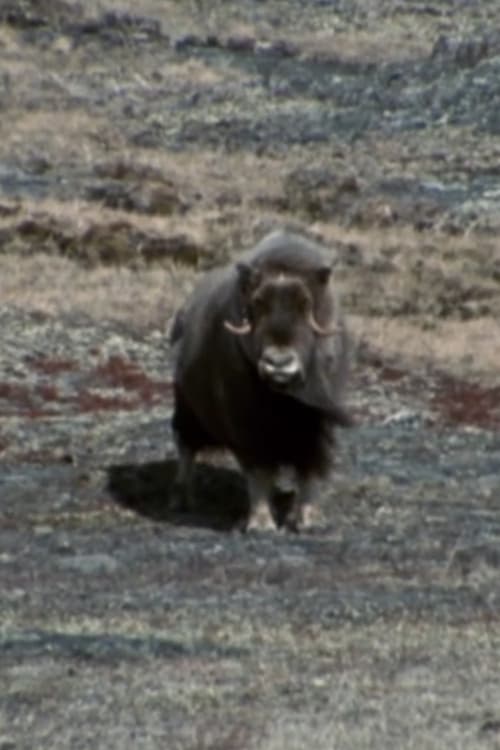
From the bottom of the Baie aux Feuilles, itself in the hollow of Ungava bay, at the summer solstice, a filmmaker is on the lookout. His camera scans the tundra, looking for a herd of muskox stubbornly refusing to be targeted - even by a documentary. A film which illustrates the thoughts of a humanist who is insatiably curious.
Interview with Jürgen Böttcher about his filmmaking practice conducted and directed by Christoph Hübner
With his background in Brechtian theater and the material-like, pure poetic style of his documentaries, Thomas Heise has created his very own kind of filmic expression.
Interview with Klaus Wildenhahn about his filmmaking practice conducted and directed by Christoph Hübner
Despite or perhaps because of his position at the public television channel ZDF, Hans-Dieter Grabe has developed his own unmistakable signature style which falls between journalism and documentary (similar to Klaus Wildenhahn during his time at the TV channel NDR).
No description available for this movie.

No description available for this movie.
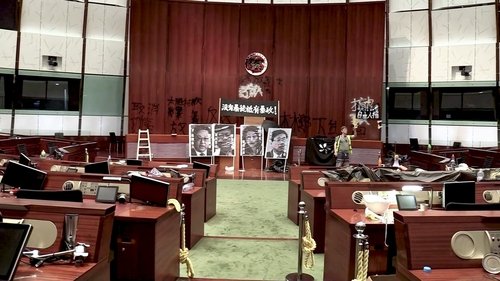
After a night of planning and mourning, a storm is brewing at early hours of 1 July, 2019. In face of the absurdity of the government's indoor flag ceremony, protesters question the usefulness of peaceful protest and hope to storm the Legislative Council Complex as a last-ditch effort to ignite change in the movement. As they confront pro-democracy councillors outside the complex, their pent-up anger and despair explode.
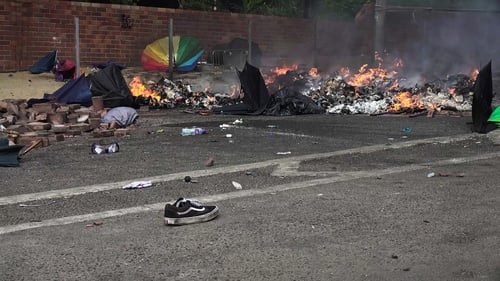
In 2019, Hong Kong was swept by demonstrations against the controversial extradition bill. At the Polytechnic University, a group of students also takes a stand for freedom and democracy. Negotiations with the police are chaotic and aggressive, conducted via megaphones and politically charged music played over loudspeakers. The colorful umbrellas which the young people use to protect themselves against the brutal police actions emphasize the group’s bravado, which borders on recklessness. What begins as an energetic battle against the establishment turns into a lopsided game of cat and mouse when the police decide to surround the building. Within its red brick walls, the university building becomes a prison. Over the nearly two weeks that follow, as fear and exhaustion grow among the hundreds of students, so does the uncertainty. Should they hang on inside, or leave the building to face the armed police?