
Action
Adventure
Animation
Comedy
Crime
Documentary
Drama
Family
Fantasy
History
Horror
Music
Mystery
Romance
Science Fiction
Thriller
War
Western
Found 27 movies, 8 TV shows, and 3 people
Can't find what you're looking for?
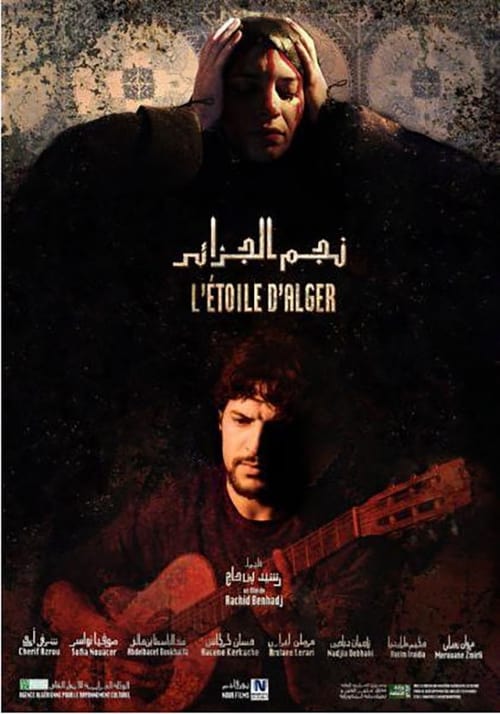
A young musician, Moussa, dreams of becoming the Michael Jackson of Algiers. All he has to offer is his talent and energy, taking his crazy dream on the road with his small band, initially playing at weddings then posh bars and nightclubs. He becomes Algier's new star, but he will soon come face to face with a barbaric, totalitarian form of Islam hijacked by new officials who want to ban him from singing.

"Djazaïrouna", produced by the cinema service of the Provisional Government of the Algerian Republic (GPRA), is a montage film intended to inform the international community at the UN in 1959 on the objectives pursued by the Algerian resistance during the war of 'Algeria. Independence in Algeria (1954-1962). In 1959, Djamel-Eddine Chanderli and Mohammed Lakdar-Hamina produced Djazaïrouna (Our Algeria) from images taken by René Vautier and Doctor Pierre Chaulet. This film, completed a little later and will result in the film “The Voice of the People”. This documentary on the history of Algeria through a montage of current events, traces the political and military actions of the A.L.N, the demonstrations of December 1960, and the attack on a fortified French base on the border between Algeria and Tunisia.
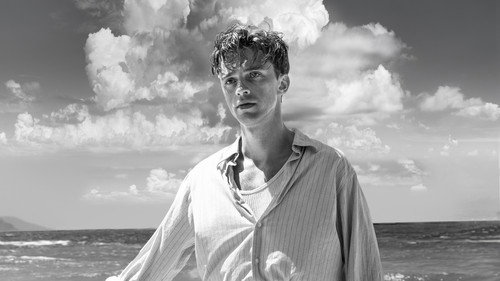
Algiers, 1938. Meursault, a quiet and unassuming employee in his early thirties, attends his mother's funeral without shedding a tear. The next day, he begins a casual affair with Marie, a work colleague. He quickly slips back into his usual routine.

Across two countries, France and Algeria, and five cities, Mohamed Gholam takes us south to tell us about the earthen and vernacular-inspired architecture of André Ravéreau. Passing through Lyon, Marseille, Algiers, and Djelfa, this adventure will take us to Ghardaïa, in the Algerian desert. The documentary presents the following buildings: L'Orangerie in Lyon, the Village Terre de l'Isle-d'Abeau in Villefontaine, the Unité d'Habitat or Cité Radieuse in Marseille, L'Aérohabitat in Algiers, the Palais des Raïs or Bastion 23 in Algiers, the Hôtel des Postes in Ghardaïa, and the low-cost housing of Sidi Abbaz de Bounoura.
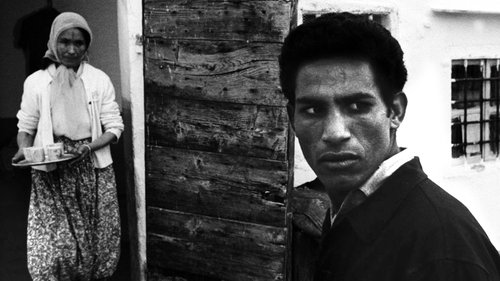
Paratrooper commander Colonel Mathieu, a former French Resistance fighter during World War II, is sent to Algeria to reinforce efforts to squelch the uprisings of the Algerian War. There he faces Ali la Pointe, a former petty criminal who, as the leader of the Algerian Front de Liberation Nationale, directs terror strategies against the colonial French government occupation. As each side resorts to ever-increasing brutality, no violent act is too unthinkable.

Documentary on the French Alpine expedition to Hoggar in Algeria, starring Roger Frison-Roche, Raymond Coche, Pierre Lewden, and François de Chasseloup-Laubat. The 1935 French Alpine Expedition to Hoggar was conceived and prepared by Lieutenant Raymond Coche, the ideal leader for an expedition that would combine alpine and Saharan terrain in Algeria. Among his goals, he set himself the task of leading a French rope team to the still-untouched summits of Atakor and Tefedest and planting the French flag there. His old friend, Pierre Lewden, an athlete and journalist, was soon on the team, and to complete their project and complete the trio, they called on Roger Frison-Roche, a guide from Chamonix and one of the best climbers of this generation. A few days before their departure from Paris, filmmaker Pierre Ichac joined them.
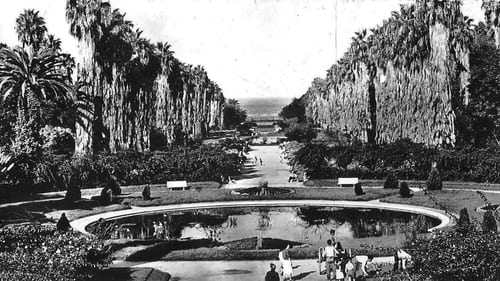
The film, shot in 1938, is part of a series entitled “The true face of Algeria”. The film highlights the proximity of Algiers to Paris and promotes air travel. The commentary supporting the images highlights the urban dynamism (“Every day, a new skyscraper replaces a wasteland”) and the comparison with Paris (“Algiers is often nicknamed the Paris of North Africa because of its elegance become proverbial). Contemporary architectural achievements are described as the sign of “grandiose modernism”: “we love the new, the bold”. But the point does not forget the buildings illustrating “the Moorish, classic and attractive style”. The description of the Casbah also attempts to understand the architectural organization but also the diversity and even the atmosphere.

In this film, four key witnesses, who live in Algeria today, as full-fledged Agerians, show us what this colonization was really like, so "beneficial" that they themselves perceived it as the oppression of one people by another. Three of them, who today would be called "pieds noirs," in other words, those Europeans to whom France, the occupying power, gave the best land, taken from the indigenous populations, work, and exclusive rights, not shared by the entire population, lived rather well compared to the majority of the "natives." The fourth was far from all that and lived in Argentina. Annie Steiner, Felix Colozzi, Pierre Chaulet, and Roberto Muniz explain to us what led them to show solidarity with the struggle of the weak, the humiliated, and to risk their freedom and their lives by committing to liberate Algeria.
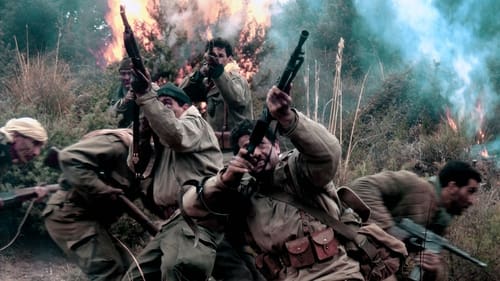
The film revolves around the life of the martyr Mustapha Ben Bouleid (1917-1956), who was a member of the Algerian National Movement, who worked with his comrades to explain the idea of the armed revolution in which he led in Aures region in 1954. The film depicts how Ben Bouleid traveled to a number of Arab countries Disguised to bring arms to Algeria for the revolution and how the French colonial forces arrested him in the Tunisian-Libyan border, and from there to Algeria to be sentenced to death.
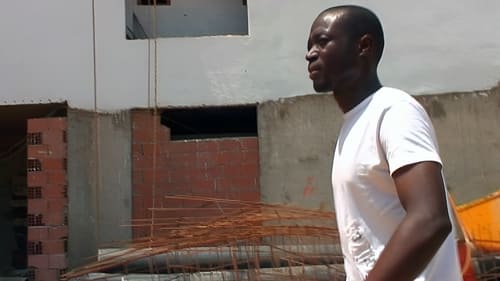
In the furnace of Algiers, the camera follows and accompanies Ibrahim, Adam, and Ismael, originally from sub-Saharan Africa, in an irregular situation who live in this hotel with the predestined name. They live from odd jobs. One is an elevator operator in a building, the second is a shoemaker and the third works in the construction sector. The other side of immigration from sub-Saharan Africa. Behind the statistics hide people, bodies waiting to be able to start another life elsewhere. A hotel thus becomes a transit point in which stories and hopes mingle, a place which seems suspended in time and space. A static journey waiting for another to begin.
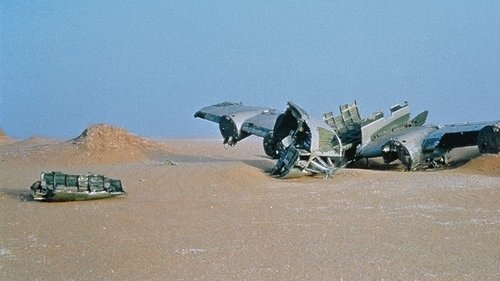
Shot under extreme conditions and inspired by Mayan creation theory, the film contemplates the illusion of reality and the possibility of capturing for the camera something which is not there. It is about the mirages of nature—and the nature of mirage.
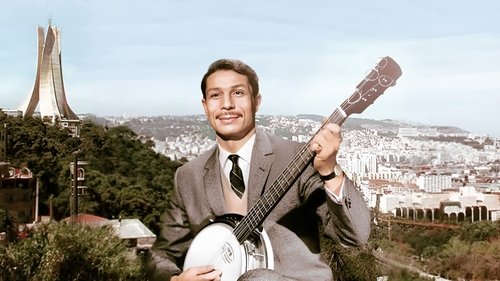
Film about Dahmane El Harrachi, musician, singer and composer of the famous song "Ya Rayah", a cult song covered by Rachid Taha, which will enjoy international success. Virtuoso of the banjo, the work of Dahmane El Harrachi did not initially respond to the canons of the purists of Algiers Chaâbi song. However, he will end up establishing himself alongside great masters of the genre, El Hadj M'hamed El Anka, Boudjemaâ El Ankis, El Hachemi Guerouabi, Amar Ezzahi... He plays his own role in this film shot with his musician friends, just before his tragic death in 1980 in a car accident on the Corniche of Algiers.
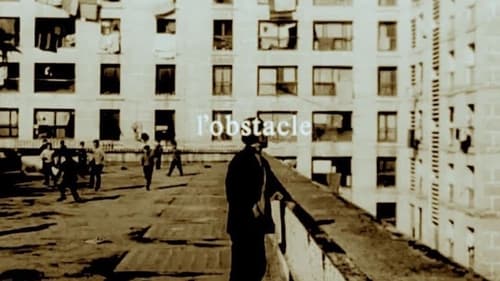
Algerian youth of the 1960s, straddling traditional South Mediterranean and Western culture and the desire for emancipation of younger generations to find true love.
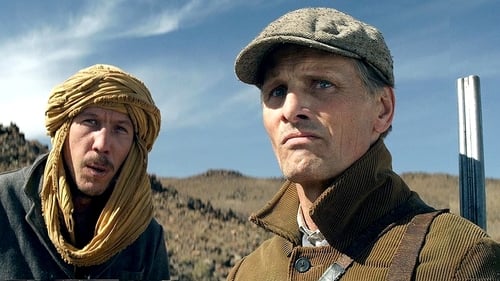
A French teacher in a small Algerian village during the Algerian War forms an unexpected bond with a dissident who is ordered to be turned in to the authorities.
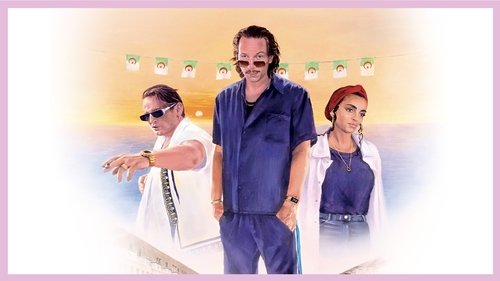
Omar, better known as Omar the Strawberry, is an old-fashioned bandit. Forced to flee to Algeria, he makes a living out of petty crime, accompanied by his famous sidekick Roger. After decades of ruling the French criminal underworld, they must come to terms with their new life together, which until now has been one of debauchery and violence.

The exceptional portrait of a pacifist general, the only senior officer to have spoken out against torture. This precious testimony still remains censored in France, since no national channel has to date decided to program this documentary. Son and brother of a soldier, General Pâris de Bollardière was destined for a career in arms. He was, for many years, one of the most brilliant representatives of this adventurer career in France, from Narvik to the Algerian War. After fighting in the French maquis, he reached Indochina, where he suddenly found himself in the aggressor's camps. His beliefs are strongly shaken. But it is in Algeria, where the French army practices torture and summary executions, that he takes the big turn. He expresses his contempt to Massu, and is relieved of his command. Until his death in 1986, Jacques de Bollardière fought for world peace, from the Larzac plateaus to the Mururoa atolls.
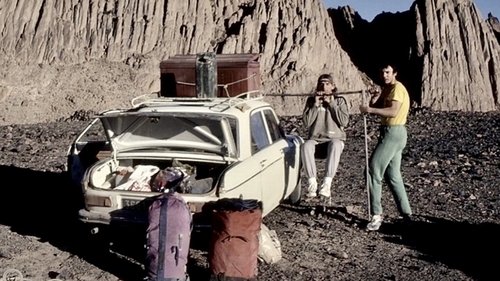
Oversand is one of the first films about free climbing, the third film in a series of three with "Overdon" and "Over-Ice". Directed by Jean-Paul Janssen, the film was shot in 35mm in Algeria, in the Sahara Desert, in the Tamanrasset region, on the walls of the majestic peaks of the Atakor massif, central sub-region of Hoggar, mountainous heart of Hoggar, a volcanic plateau of almost circular shape, whose average altitude is 2000 meters, and which culminates at Mount Tahat (2918m), the highest point in Algeria. The Atakor is distinguished by its spectacular volcanic peaks, its needles, and its rugged landscapes, resulting from the erosion of ancient volcanic chimneys, which make it the most emblematic summits of the Hoggar, such as the Assekrem, the Ilamane, or the Tizouyag, where climbers Patrick Edlinger, Patrick Bérhault, Bernard Gorgeon, Hugues Jaillet, Jacques Perrier, Stéphane Troussier and Odette Schoënleb evolve under the watchful eye of the Tuareg caravans.
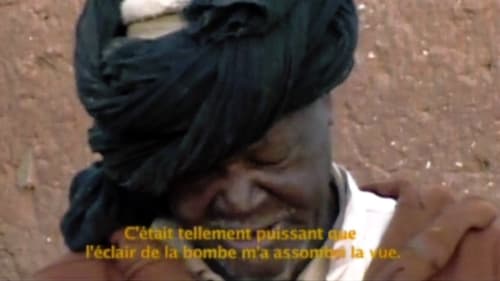
"Gerboise bleue", the first French atomic test carried out on February 13, 1960 in the Algerian Sahara, is the starting point of France's nuclear power. These are powerful radioactive aerial shots carried out in areas belonging to the French army. Underground tests will follow, even after the independence of Algeria. From 1960 to 1978, 30,000 people were exposed in the Sahara. The French army was recognized recognized nine irradiations. No complaint against the army or the Atomic Energy Commission has resulted. Three requests for a commission of inquiry were rejected by the National Defense Commission. For the first time, the last survivors bear witness to their fight for the recognition of their illnesses, and revealed to themselves in what conditions the shootings took place. The director goes to the zero point of "Gerboise Bleue", forbidden access for 47 years by the Algerian authorities
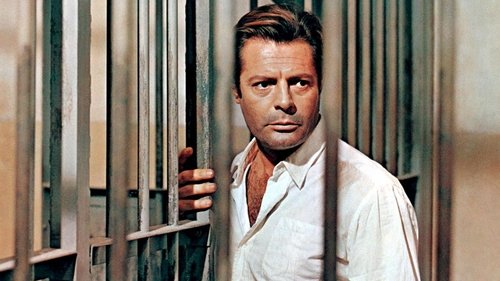
Meursault is a man who feels utterly isolated from everyone and everything around him. This alienation results in sudden, inexplicable bursts of violence, culminating in murder.
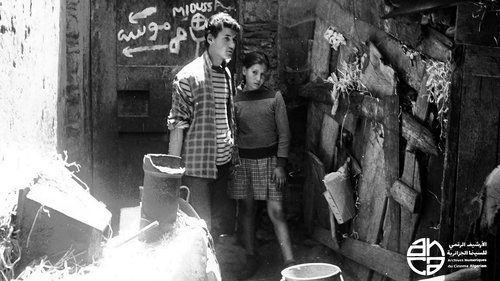
Fadila is a short film shot in the Casbah of Algiers during the Algerian War by a young French army conscript with the young Fadila Tizraoui and Djamel Bendeddouche who would become filmmakers after independence. The film depicts the friendship of two children in the streets of the Casbah and their encounter one day in December with Santa Claus... Fadila won the Grand Prix du Cinéma at the 1959 Children's Fair, was awarded a prize by the National Center for Cinematography (CNC) and was successfully exported.

"Yasmina" filmed in 1961 in the middle of the Algerian war tells the story of a little Algerian girl with her hen and her family whose father was killed in a bombing by the French colonial army of occupation. The family, after a long journey, heads towards the refugee camps on the Tunisian border. Produced by the Cinema Service of the Provisional Government of the Algerian Republic (GPRA) in the midst of the war of independence, these films were intended to re-inform the population and international public opinion on the abuses committed by the French colonial army: torture, arrests and arbitrary executions, napalm bombings, fires in douars, entire villages wiped off the map, etc. which the French media described as a "pacification" campaign. The latter censoring or reorienting any images that could harm the colonial narrative.
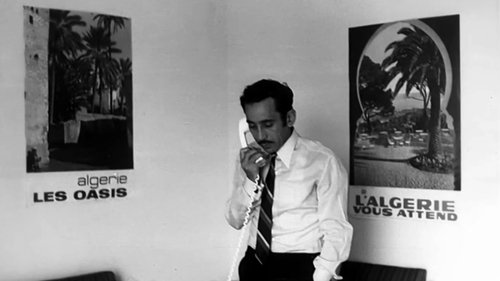
Ahmed Malek’s name might have been forgotten by his fellow Algerians but his timeless tunes certainly haven’t. Called the Ennio Morricone of Algiers, he composed music for more than 200 movies, amongst which the most famous films of the Algerian New Wave in the 70s and the 80s can be found. Paloma Colombe, a DJ, digger and documentary director, went to Algiers to meet his daughter, friends and former coworkers. Images of the city by night offer a perfect background to Ahmed Malek’s music. Globetrotter, pioneer of electronic music and of the concept of the home studio, he created a unique sound that truly goes beyond genres and countries.
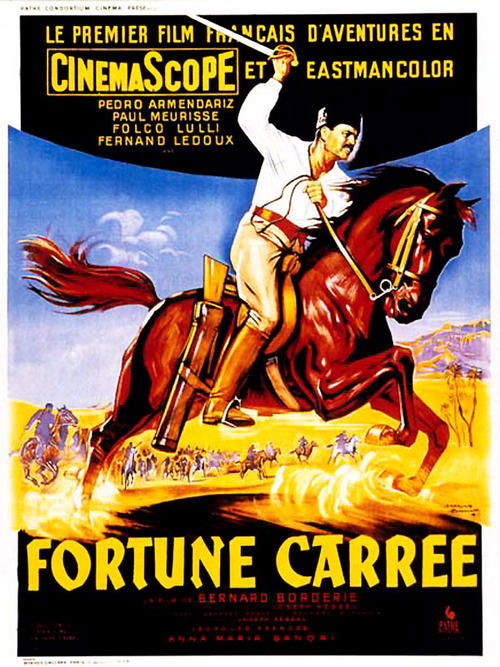
Igricheff, the Amiris' instructor, refuses to take part in the Cadi's arms deal. Deposed, he flees and joins the Ghafaris, determined to help his former enemies against the Amiris. Taken prisoner, he is saved by his young slave, Yasmina, while the Ghafaris are almost completely annihilated. He takes refuge on the ship of the trafficker Mordhom. Having provoked the death of his servant, he is put on trial by Mordhom but acquitted by his peers. Mordhom then lands Igricheff on the coast, and the latter succeeds in saving the Frenchman from an Amiri attack. The two men reconcile and set off on their adventures together.
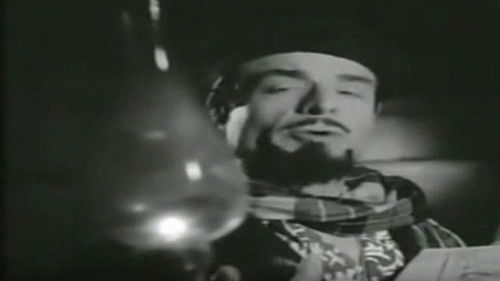
When a musician's family faces financial difficulty, the daughter starts working as a singer in a nightclub owned by her mother's lover. When she learns about her mother's affair, the girl claims that she's in a relationship with the nightclub's owner in order to save her mother's reputation.
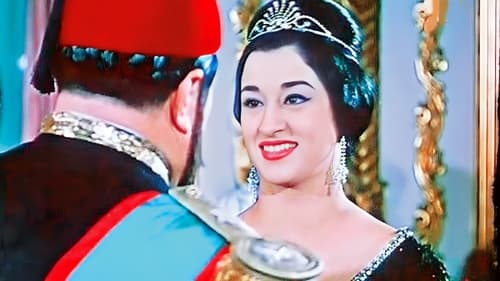
Almaz goes from a simple worker to one of the brightest singing stars during the reign of Khedive Ismail. The great singer Abdo Al-Hamuli encouraged him and introduced him to high-end circles. The Khedive wants to keep it for himself. Almaz agrees to give her his voice without his body, so the Khedive agrees to marry her. Abdo Al-Hamouli will prevent her from singing after the wedding. Problems arise between the palace and all the singers, which leads them to join the popular revolutionary movement which was beginning to gain strength at that time...
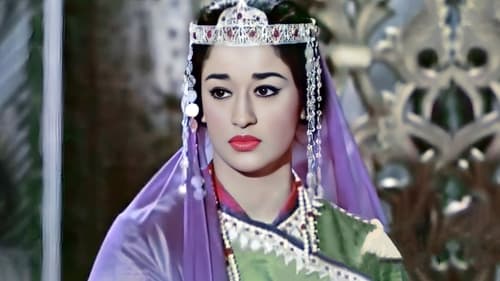
Prince Mahboob and his friend Yazid roam the country in search of a bride for his uncle who has a distinctive mark. They arrive in Wardistan, and rescue a woman who is being fought over by thieves, who was none other than Princess Shalia. Her father admires Mahboob's courage and decides to marry him to her, but Mahboob discovers that Shalia is his uncle's longed-for bride.

Dunya is married to Mustafa. They have a beautiful child and live a happy life. However, a family friend, a doctor, discovers that the husband is on the verge of death due to a serious illness. Dunya will be unjustly accused of killing her husband, businessman Mustafa, out of greed for his money, while the real criminal enjoys freedom and money. The doctor friend tries to find out the truth and with all his might prove Dunya's innocence.