
Action
Adventure
Animation
Comedy
Crime
Documentary
Drama
Family
Fantasy
History
Horror
Music
Mystery
Romance
Science Fiction
Thriller
War
Western
Found 40 movies, 8 TV shows, and 0 people
Can't find what you're looking for?
It may be that exhibitionistic displays of emotion are purely for the benefit of the demonstrator, in an act of self-indulgent catharsis, but that doesn’t mean they can’t communicate some of that weird emotion to an unrelated party. (Mark Toscano)
Remarkable footage of a Barcelona anti-austerity demonstration – and its quelling – shaped into a lyrical tribute to the spirit of protest by Victor Kossakovsky ( ¡Vivan las Antipodas!) and 32 Spanish film students.

Anti-war demonstration, 1968, New York City march to Sheep's Meadow, shows Vets against the war, Yippies, arrests, and flags of a half-forgotten revolution.
A monster film with no monsters. Inspired by the existence of taxonomies of monsters at the heart of Early Modern European science, the film explores and reinterprets a way of seeing the natural world that is almost impossible to imagine from today’s vantage point.

Anti-war demonstration, 1968, New York City march to Sheep's Meadow, shows Vets against the war, Yippies, arrests, and flags of a half-forgotten revolution.
No description available for this movie.
Noted lecturer, Eugene M. Wank, instructs us using a folding chair as a metaphor for life's choices. In this theatre event he shows the audience how to turn their chairs so that instead of facing front, facing the screen, they change to face each other across an aisle in which the innocent, funky ballet will be performed.
Publicity film for manufacturers and retailers of television equipment. A survey of the programmes transmitted by the British Broadcasting Corporation during the first six months of operation, November 1936 - May 1937, intended for manufacturers and retailers to show sample types of programmes transmitted.
Miho, Maki, Akiho and Director Suzuki visit a village in the mountains for the recording of the program. A murder had previously occurred in this village, and the villagers feared that it was the curse of the mountain god, "Kishidaden." Still, the group enters the village disapering one by one.
An account of the building and bringing into operation of Canada's pioneer nuclear power plant - the Nuclear Power Demonstration Station (NPD), built in northern Ontario as a prototype for larger plants. The film explains the principle of nuclear fission. Produced by Crawley Films Ltd. for Atomic Energy of Canada Limited, Ontario Hydro and Canadian General Electric Company Limited.
Jim Harris, division engineer of the C. and K. and Mary Lane, are sweethearts but quarrel when Mary, a convert of the suffragette movement, asserts her intention of provoking by securing and holding a "man's job" that woman is fully as competent, and therefore entitled to all privileges enjoyed by man.
Movie Clips: Despicable Me (2:08) DD 5.1 Bourne Supremacy (2:23) DD 5.1 Bourne Ultimatum (2:52) DD 5.1 Robin Hood (1) (1:01) DD 5.1 Robin Hood (2) (0:50) DD 5.1 Music Clips: Rihanna – Don't Stop The Music (4:30) DD 5.1 Rihanna – Shut Up And Drive (4:59) DD 5.1 Quincy Jones – Ai No Corrida (5:12) DD 5.1 U2 – City Of Blinding Lights (5:43) DD 5.1 U2 – Ultraviolet (5:37) DD 5.1 Movie Clips 3D: Clash Of The Titans 3D (1:47) DD 5.1 Coraline 3D (2:02) DD 5.1 Despicable Me 3D (2:33) DD 5.1 The Polar Express 3D (1) (1:49) DD 5.1 The Polar Express 3D (2) (2:33) DD 5.1 Demo Clips 3D: The Foundling 3D (5:44) DD 5.1 The Ultimate Wave Tahiti 3D (1:08) DD 5.1

Short film directed by Robert Todd.
Student demonstrations in Strahov are shown in this illegally made film by a film professional with access to 35mm cameras and collaborating laboratories.
At this rally, a Turkish woman (Halide Edip Adıvar) addressed the public for the first time in an open-air meeting. This film is a documentary of the rally.
A newsreel produced by the British brand of Pathé Frères, featuring one of the earliest mass marches organised by the Women's Social and Political Union (WSPU). Up to 15,000 women marched from the Embankment to the Albert Hall to hear speeches from Christabel Pankhurst and other suffragette leaders (Ros Cranston, Make More Noise! Suffragettes in Silent Film).
Martha Graham narrates as two dancers demonstrate her technique.
Documenting a May Day demonstration in West Berlin in 1972
No description available for this movie.

No description available for this movie.

James Bond is sent to investigate the connection between a North Korean terrorist and a diamond mogul, who is funding the development of an international space weapon.
Moa is in her early 20s, works at a factory and lives by herself in a cottage in the forest. She is a vegan and follows her friends and demonstrations, mostly to fit in. But at home, by herself, she listens to pop music and use make-up.
In the early years of the 20th century, Mohandas K. Gandhi, a British-trained lawyer, forsakes all worldly possessions to take up the cause of Indian independence. Faced with armed resistance from the British government, Gandhi adopts a policy of 'passive resistance', endeavouring to win freedom for his people without resorting to bloodshed.
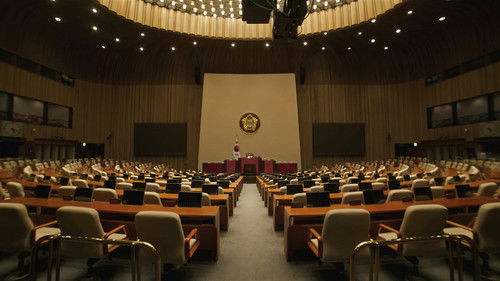
On December 3, 2024, in Seoul, the President of South Korea Yoon Sukyeol declares the martial law. Troops move toward the National Assembly to seize control. Meanwhile, citizens rush to the National Assembly to block the troops, while lawmakers break through police's barricades at the main gate, climb over the walls to attend the session that lifts the martial law.
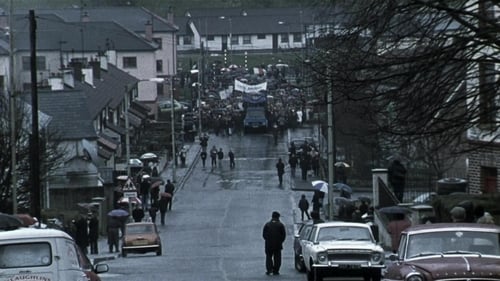
The dramatised story of the Irish civil rights protest march on January 30 1972 which ended in a massacre by British troops.
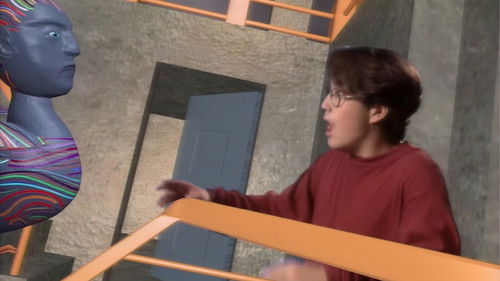
A boy travels through the world of M.C. Escher.
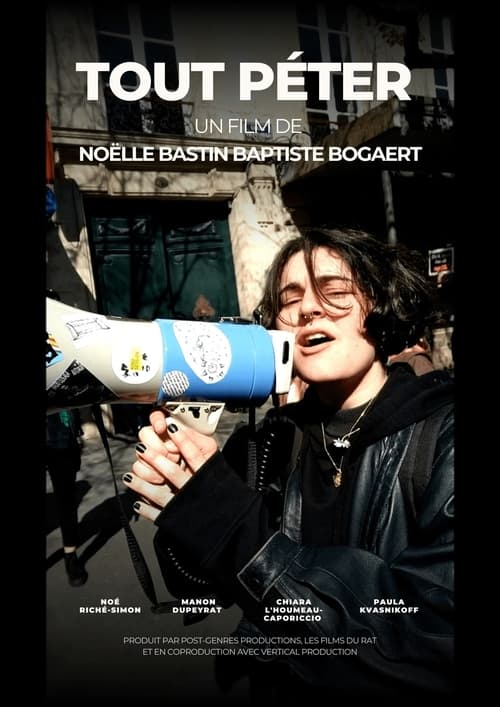
In an insurrectionary climate, four twenty-year-old friends talk about politics. As a big protest looms, one of them, Clara, has to write a college essay. Caught in the virtual images and the comfort of her bedroom, going out is harder than expected.
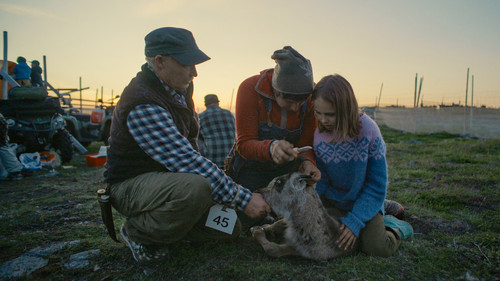
Sami reindeer herders win a Supreme Court victory against Europe’s largest wind farm - but when the state refuses to act, their fight reveals a deeper crisis of justice and trust.
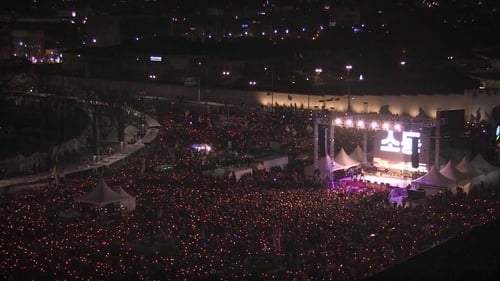
Project 1 _ Hong Hyung-sook The children who are enthusiastically painting and cutting a doll. What stories will be told at the Square? - Project 10 _ Kim Jeong-geun The janitorial worker from the Busan Subway Station, Kim Young-ja talks about how she hopes to see a clean world, just like how she cleans everywhere in the subway.
Germany is in uproar; the new government has adopted a law which enables a government-controlled censorship. Media and cultural facilities are being inspected. The theatre house of Jan Reeberger is one of the inspected institutions. During the inspection two different world views collide, on the one side, there’s Jan with his idealistic and cosmopolitan worldview, on the other side, there’s Micky who is standing up for the new political system.

Johan Falk hasn't been working for over a year since he resigned from the police. Most of all he wants to move out to the countryside, but fate has a different thought.
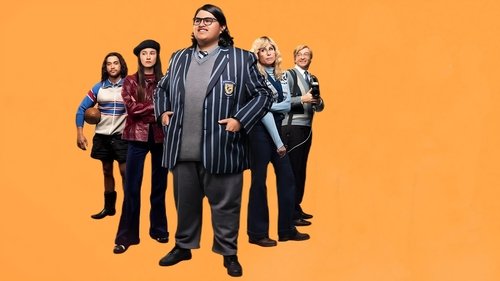
A 17 year-old student is forced to get off the fence he has actively sat on all his life to stand up for himself, his whanau (family) and his future in this heartwarming story of identity.
A look at the controversial riot cops unit, told through the stories of three veteran cops and a young recruit.
No description available for this movie.
As a director and his crew shoot a controversial film about Christopher Columbus in Cochabamba, Bolivia, local people rise up against plans to privatize the water supply.

The story of Salvador Puig Antich, one of the last political prisoners to be executed under Franco's Fascist State in 1974.
No description available for this movie.
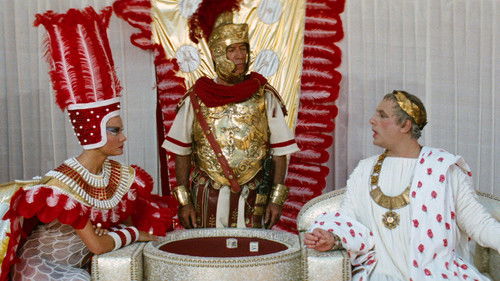
In ancient Rome, a simple pepboy for chars becomes involved in a coup against Cesar. Rahatlocum is a North African Roman colony where Julius Caesar came to spend an expensive holiday. The revolt rumbles among the locals who find a leader in the person of Ben-Hur Marcel.

January 2019. France is shaken by a revolutionary movement. Thousands of yellow vests are blocking the roads. Among them, Fred and Bouly are preparing a spectacular blockage, but they have forgotten their yellow vests...
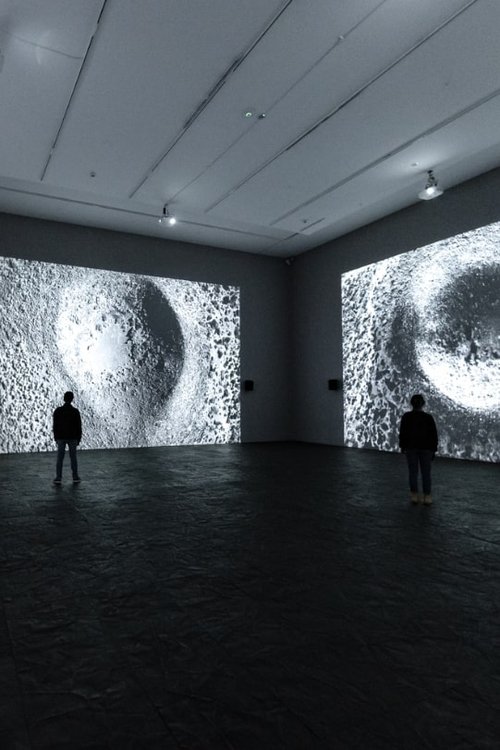
Arrancar los ojos is a project that proposes a constellation of works around the gaze and its political dimension. A reflection on the concepts of institutional violence, repression and collective trauma, focusing on the pattern of eye attacks by state security forces.