
Action
Adventure
Animation
Comedy
Crime
Documentary
Drama
Family
Fantasy
History
Horror
Music
Mystery
Romance
Science Fiction
Thriller
War
Western
Found 42 movies, 19 TV shows, and 1 person
Can't find what you're looking for?

As Viktor Orbán dismantles Hungary’s democratic institutions, three women—a journalist, a politician, and a nurse—work tirelessly to fight for their country’s soul. A chilling exposé of far-right nationalism and an inspirational beacon of resistance.
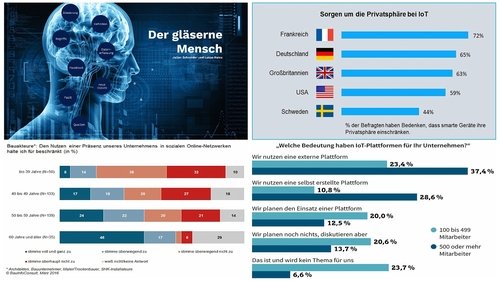
Digitalization has changed society. While data is becoming the "new oil", data protection is becoming the new "pollution control". This creative documentary opens an astonishing inside view into the lawmaking milieu on EU level. A compelling story of how a group of politicians try to protect todays society against the impact of Big Data and mass surveillance.
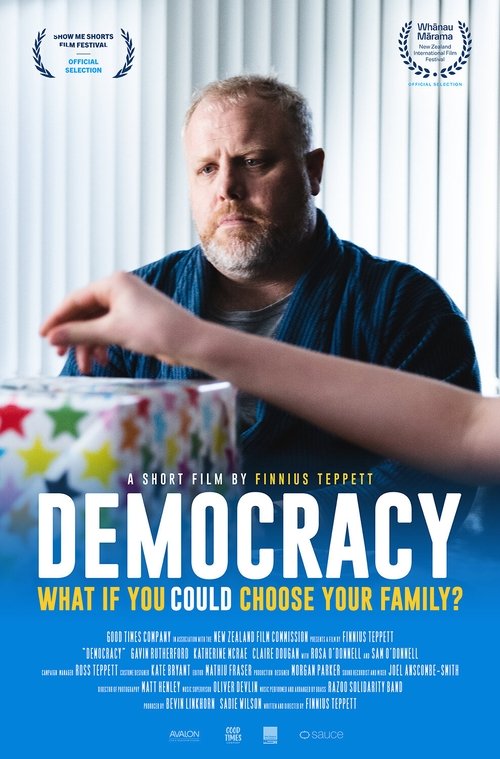
A dad is voted out of his family, and when he mounts a campaign for re-election, he finds out he's not the only one in the running.

Donald Trump became the 45th President of the United States by winning three key states, a victory engineered by an ultra-conservative faction that quietly mapped its way to power using fake news, lies and psychometrics. This explosive documentary follows the money to the elusive multi-billionaire Robert Mercer who bought Breitbart News and funded the effort, while inserting Steve Bannon into the presidential campaign as its manager.

The film is a controversy on democracy. Is our society really democratic? Can everyone be part of it? Or is the act of being part in democracy dependent to the access on technology, progression or any resources of information, as philosophers like Paul Virilio or Jean Baudrillard already claimed?

A housewife galvanises her docker husband to take an interest in more important matters than the football pools.
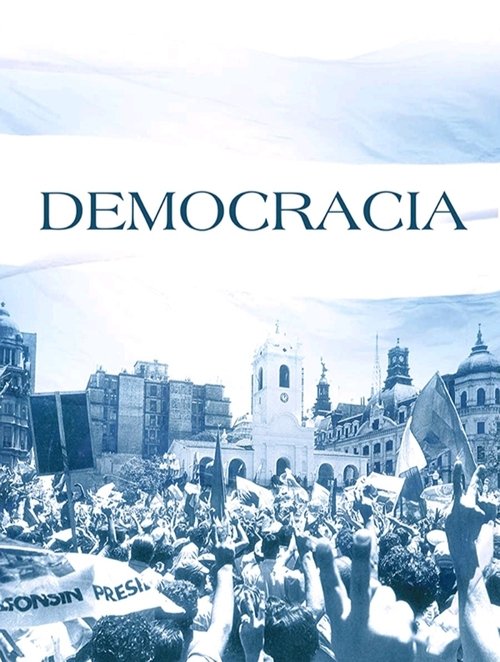
1983: After more than seven years of terror, the Argentineans recover the democracy. The reconstruction of a climate of time and an event that marked a point of break not only in the policy but in the culture and the arts of Argentina

Nowhere else does the experimental kitchen of digital democracy simmer as intensely as in the geopolitically threatened island republic of Taiwan. The "recipes" for these menus were created by activist students from the open-source community. Visionary Digital Minister Audrey Tang is spreading the concept internationally. At the heart of the film, however, are the creative cooks of the LGBTQI+ community and the emerging environmental movement.
A wall fan convincing the modern situation of India, a large democratic country.
Part of paraconsistent sequence series. “A paraconsistent logic allows inconsistency without absurdity.” The works in this subcollection contain contradictions of time and place, reorganizations of past, present and future.
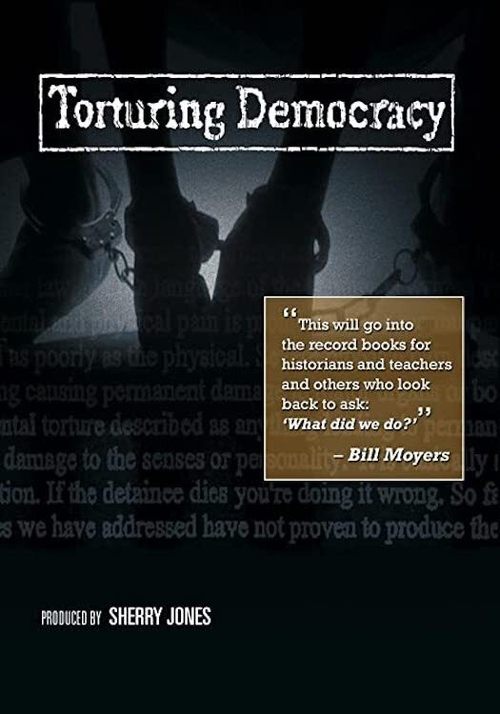
Democracy is a 2008 documentary film produced by Washington Media Associates and narrated by Peter Coyote. The film details the use of "enhanced interrogation techniques," including waterboarding, by the Bush administration in the "War on Terror". The documentary includes interviews from U.S. State Department and military personnel, including former Deputy Secretary of State Richard Armitage.

Documentary film investigating allegations of election fraud during the 2004 U.S. presidential election. Electronic voting machines count approximately 90% of America's votes in county, state and federal elections. The technology is also increasingly being used across the world, including in Canada, the United Kingdom, Europe and Latin America. The film uncovers incendiary evidence from the trash cans of Texas to the ballot boxes of Ohio, exposing secrecy, votes in the trash, hackable software and election officials rigging the presidential recount.Ultimately proving our votes can be stolen without a trace "Hacking Democracy" culminates in the famous 'Hursti Hack'; a duel between the Diebold voting machines and a computer hacker from Finland - with America's democracy at stake.

Marlena Cooper is the first black Democratic candidate in the Republican fiefdom of Gregg County, East Texas. Democracy in America tells the story of the electoral campaign of Marlena and her Republican opponent Jay Dean, attempting to paint a picture of two communities that seem to live in parallel realities. In the first electoral campaign in 30 years that sees a Democratic candidate against the Republican Party, the characters and their stories will explore the themes of white superiority, abortion, firearms and, reconnecting to Toqueville's Democracy in America, the fundamental role played by religion in the young American democracy to emerge. A journey into the bowels of Texas, into the true heart of America, in search of the reasons, to discover the roots of the present and future of the United States.
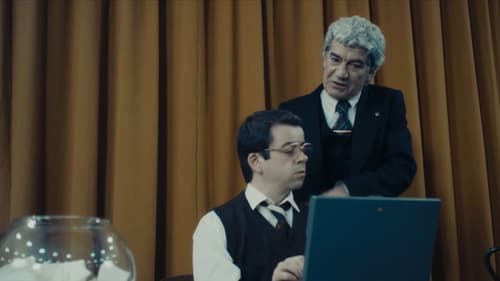
The manager of a company proposes a daring plan for keeping the workers’ morale high.
A year ago, thanks to the precious support of 7819 people, we started a journey in democracy (s). Over the weeks and months, according to meetings, exchanges and readings, we questioned this strange word: democracy. In France but also in Greece, Iceland, Belgium and Spain, we met citizens who are working to insert more democracy in their daily lives. Here is, in 90 minutes, the result of this adventure to try to grasp what this word contains.

After living in exile for 20 years, Aye Chan Naing can finally return to Myanmar's homeland. As chief editor of the radio and television station The Democratic Voice of Burma (DVB), Naing, together with reporter Than Win Htut and their colleagues, fought for democracy and freedom of speech from an office in Oslo. The journalists go home to test the newborn democracy in their home country, and with them in their luggage they have a dream of freedom of the press and the opportunity to continue their work in the country they hold so dearly.

The sharp wit and insightful art of Pulitzer Prize-winning cartoonist Ann Telnaes to examine the challenges confronting US democracy ahead of the 2024 presidential election.

For three days in March 2023, people spontaneously took to the streets to protest against the government and its prime minister for attempting to change the delicate fabric of Israeli society. At 9 PM on Monday, March 27, things went off course and the seeds of fear and anger burst into a violent cry of frustration. This is a one-shot, unedited continuous take of our BURNING DEMOCRACY.

Documented footages from Thailand's demonstrations against Prayuth Chan-ocha, led by students and citizens in 2020, chronicled and intercut with its series of events, incidents and aftermaths.
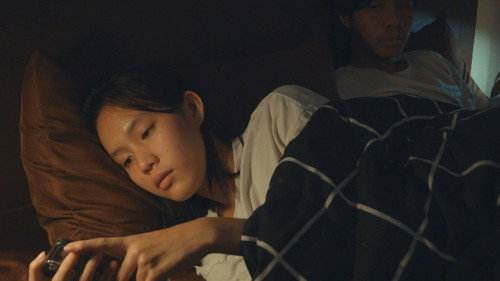
A couple facing problems due to political differences.

A clash of ideologies. One stands for the people, the other feeds on control. Their paths collided once before. Years later, a child’s silent fear ignites the past, drawing a former police officer into a battle far bigger than personal revenge.
No description available for this movie.
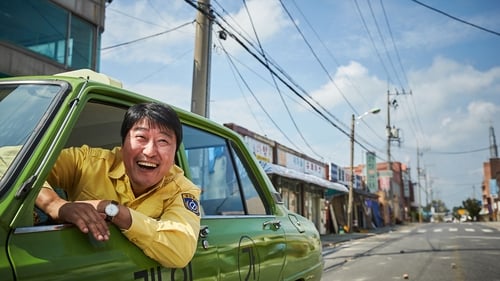
May, 1980. Man-seob is a taxi driver in Seoul who lives from hand to mouth, raising his young daughter alone. One day, he hears that there is a foreigner who will pay big money for a drive down to Gwangju city. Not knowing that he’s a German journalist with a hidden agenda, Man-seob takes the job.

As local newsrooms vanish, "News Without a Newsroom" explores journalism's uncertain future in the digital age. Through powerful stories and expert insights, the film examines the collapse of traditional media, the rise of misinformation, and the fight to preserve truth, trust and accountability in an era of disruption.
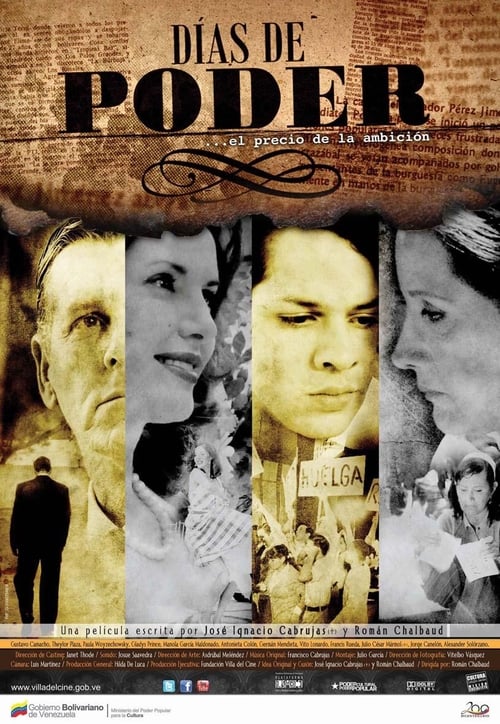
The film tells the story of Fernando Quintero (Gustavo Camacho), revolutionary leader who, after the fall of the dictatorship of Marcos Perez Jimenez, ascends to power, betraying their ideals to become an accomplice of repression against whom he fought.
In 1987 Korea under an oppressive military regime, the unlawful interrogation and death of a college student ignite ordinary citizens to fight for the truth and bring about justice.

What would American democracy look like in the hands of teenage girls? In this documentary, young female leaders from wildly different backgrounds in Missouri navigate an immersive experiment to build a government from the ground up.

No description available for this movie.

February 2011: 20 000 people demonstrate in southern France against the shale gas licenses that have been issued in backroom deals, Meanwhile the European Parliament begins its first inquiry on the subject, From the outset, there is a split between the conservative representatives, swayed by the economic arguments in favor of fracking, and opponents invoking the precautionary principle. In areas affected by the permits, people are getting organized, building their knowledge, and taking action. Local mayors step up, issue local bylaws and relay information about the situation up to the national government. This grassroots movement makes it all the way to European-level institutions.

On 9 April 1940, German soldiers arrive in the city of Oslo. The King of Norway faces a choice that will change his country forever. The King's Choice is a story about the three most dramatic days in Norway's history, the royal family's escape and King Haakon's difficult choice after Nazi Germany's invasion of Norway.
In 1988, Chilean military dictator Augusto Pinochet, due to international pressure, is forced to call a plebiscite on his presidency. The country will vote ‘Yes’ or ‘No’ to Pinochet extending his rule for another eight years. Opposition leaders for the ‘No’ vote persuade a brash young advertising executive, René Saavedra, to spearhead their campaign. Against all odds, with scant resources and while under scrutiny by the despot’s minions, Saavedra and his team devise an audacious plan to win the election and set Chile free.
Song Woo-seok is a lawyer with no clients. When his friend's son is falsely accused of a crime and tortured, he takes up the case and the course of his life changes for good.
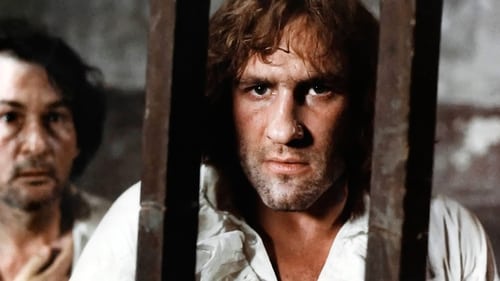
Danton and Robespierre were close friends and fought together in the French Revolution, but by 1793 Robespierre was France's ruler, determined to wipe out opposition with a series of mass executions that became known as the Reign of Terror. Danton, well known as a spokesman of the people, had been living in relative solitude in the French countryside, but he returned to Paris to challenge Robespierre's violent rule and call for the people to demand their rights. Robespierre, however, could not accept such a challenge, even from a friend and colleague, and he blocked out a plan for the capture and execution of Danton and his allies.
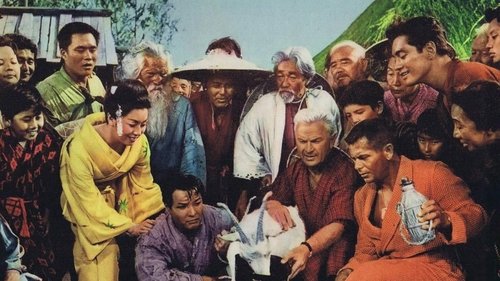
In post-WWII Japan, an American captain is brought in to help build a school, but the locals want a teahouse instead.
A documentary about a proposed military training area in Rothenthurm, Central Switzerland, and the village's resistance to those plans.
A man that is a stranger, is an incredibly easy man to hate. However, walking in a stranger’s shoes, even for a short while, can transform a perceived adversary into an ally. Power is found in coming to know our neighbor’s hearts. For in the darkness of ignorance, enemies are made and wars are waged, but in the light of understanding, family extends beyond blood lines and legacies of hatred crumble.

Since the late 18th century American legal decision that the business corporation organizational model is legally a person, it has become a dominant economic, political and social force around the globe. This film takes an in-depth psychological examination of the organization model through various case studies. What the study illustrates is that in the its behaviour, this type of "person" typically acts like a dangerously destructive psychopath without conscience. Furthermore, we see the profound threat this psychopath has for our world and our future, but also how the people with courage, intelligence and determination can do to stop it.
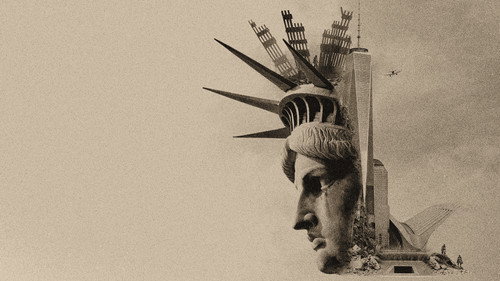
After the 9/11 attacks, after the smoke was gone, after the rubble cleared away, New Yorkers had a city to rebuild. In response to fast-tracked redevelopment plans, more than 5,000 people gathered in the largest town hall in American history. They came to vote on the city’s six proposals for rebuilding Ground Zero. But instead, the people rejected the top down approach and successfully charted a new path forward. Their work determined what is at Ground Zero today. And their story is an example of what democracy can look like.
No description available for this movie.
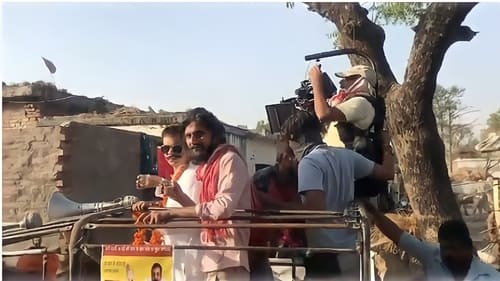
BISCUT (HOTSTAR-DISNEY RELEASE -2022) In an Indian village ruled by muscle and money, one man sparks a revolution without guns or bullets by betting his life on just the power of democracy. Biscut is the awe-inspiring story of Bhoora, a poor Dalit (lower caste) youth condemned to a daily struggle for survival, who turns a collective curse into a formidable force for change. BISCUT is the Hindi language word for a cookie or a biscuit.

An in-depth look into the inner workings of the commune system of Rojava and how they work in practice.
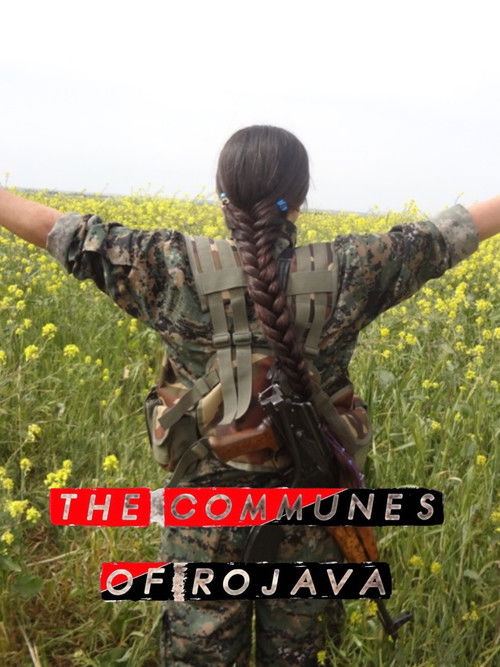
Six years later sequel of "The Communes of Rojava" (2018), made in the face of some of the most dire attacks yet faced by the pluralist, women-led, radically democratic project in North and East Syria. Though deeply inspired by the Rojava Revolution, this film is not about the Kurdish and Syrian Revolutions’ influence for an activist in America.