
Action
Adventure
Animation
Comedy
Crime
Documentary
Drama
Family
Fantasy
History
Horror
Music
Mystery
Romance
Science Fiction
Thriller
War
Western
Found 45 movies, 26 TV shows, and 7 people
Can't find what you're looking for?

Documentary, Experimental
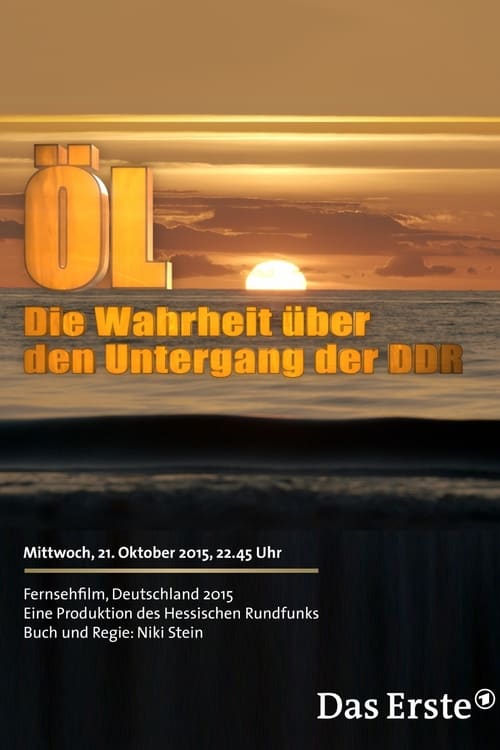
No description available for this movie.
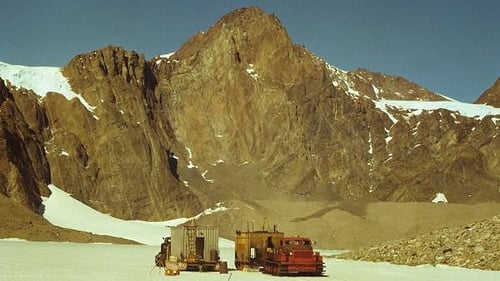
In 1989, thirteen GDR scientists and technicians set off from East Berlin to the Georg Forster research station in the Antarctic. During their expedition the Berlin Wall fell on November 9th. Cut off from the images that go around the world, the men can only experience the historical events passively. When they returned in the spring of 1991, their homeland was a foreign country. The documentary reconstructs the thoughts and feelings of the East German researchers on the basis of eyewitness accounts, diary excerpts, letters, film material, grandiose landscape shots from the location of the action and unique photos to make the consequences of the events tens of thousands of kilometers away on the small GDR expedition in the middle of the eternal ice tangible.
An exciting story that made history itself. The legendary record label stands for a turbulent success story in East and West that is unparalleled both musically and economically. The record company is home to its own genre, East German rock. City, Puhdys, Karat and Silly became the sound of the GDR, which AMIGA successfully exported to the West even back then. The label probably landed its biggest coup with Karat's "Der Blaue Planet". By 1989, almost 480,000 records had been sold on the other side of the Wall. We were known throughout Germany, sums up the last AMIGA boss, Jörg Stempel, and laid the foundations back then for East German rock to remain so popular today.
No description available for this movie.
Superstar concerts in East Berlin? A year before the fall of the Berlin Wall, this was an almost unthinkable scenario for many East German rock and pop fans. But suddenly, within just a few months, the top stars were all over the place.
No description available for this movie.
No description available for this movie.
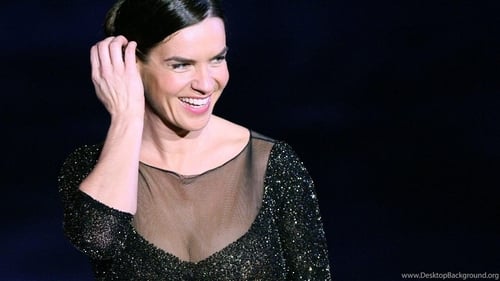
With two Olympic victories, four world championship titles and six European championship titles, Katarina Witt is the most successful female athlete in the history of figure skating. She combines East German identity with international flair and is still the "most beautiful face of socialism" - and the most internationally renowned citizen of the former GDR. The film follows the path of the girl from Saxony all the way to Hollywood.
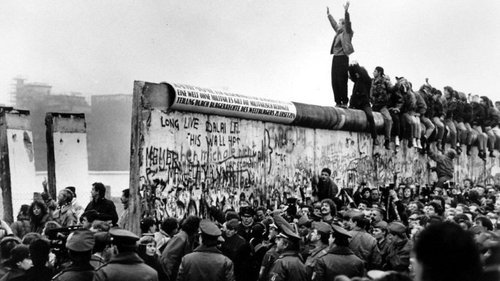
East Berlin, October 7, 1989: While the state elite was celebrating the GDR's 40th birthday before the eyes of the world, resistance was forming in the streets. Guests celebrated in the Palace of the Republic in Berlin. In front of it, people loudly demanded reforms. There were also demonstrations outside Berlin, for example in Plauen. The situation escalates ...
In the midst of the transition towards reunification and a market economy, two teams meet for the last time in the final of the FDGB Cup shortly after the 1990 Volkskammer elections: favorites Dynamo Dresden and Polizeisportverein Schwerin. Matthias Hufmann and Benjamin Unger take a look back 30 years later.

Life in the GDR was not only documented on behalf of the state, but also by photographic artists and journalists. The documentary goes on a journey through time with some of them and shows little-known aspects of the GDR from its foundation to the fall of the Wall. Photographers in the GDR had a surprising amount of freedom; there was no explicit censorship of images. This allowed them to make visible what the state wanted to hide. This documentary presents two photographers who observed life in the GDR and whose work has been rediscovered in recent years.
Depicts the West German rocker Udo Lindenberg's concert at the Palace of the Republic, East Berlin, on October 25, 1983, during the "Festival for World Peace".
No description available for this movie.
No description available for this movie.

"GDR The uprising of June 17, 1953" - : Since its founding, the German Democratic Republic (GDR) has repeatedly struggled with domestic political problems. While the standard of living of the population in the western part of Germany steadily increased, it stagnated in the GDR . A one-sided, industry-oriented reconstruction policy, coupled with rapid militarization, weighed on the country's economy, which was already under pressure from Soviet reparations demands. A majority of the population did not identify with the socialist system, which accordingly stood on shaky ground.
Documentary about the German sex industry after the German reunification.
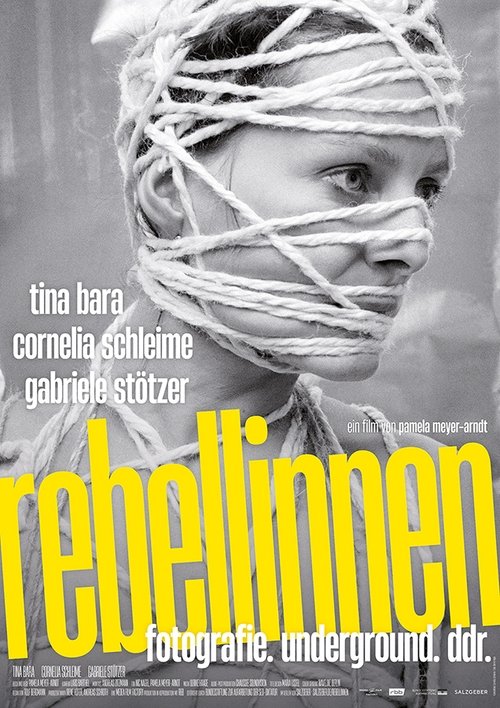
The rough, unkempt facades in Prenzlauer Berg – as if the skin had been peeled off the houses, says photographer Tina Bara. Having grown up in a prefabricated building, the young woman was drawn to East Berlin. She quickly got in conflict with the state, just like the artists Cornelia Schleime and Gabriele Stötzer, whom director Pamela Meyer-Arndt questions in her film about memories, traumas and creative genesis.
"I'm walking through my city...", sings a cheerful pop singer. She fervently praises the new metropolis of East Berlin. As an emphatically lively, often anthemically condensed revue, the film tells of the "growth and development of our new capital". Accompanied by cheerful music, the camera indulges in high-altitude views, shows squares whose fountains, benches and green spaces are designed to make you forget that you are in a big city, as well as visitors from all over the world in top hotels. An emphatically cheerful, yet meaningful insight into the brave new GDR world.
No description available for this movie.

An undercover MI6 agent is sent to Berlin during the Cold War to investigate the murder of a fellow agent and recover a missing list of double agents.
Erich Honecker ruled the GDR for 18 years. His fall in 1989 heralded the downfall of the state that had called itself "the better Germany" for 40 years. Nazi victim and autocrat, bourgeois and power-conscious: Honecker was an ideological hardliner who coordinated the construction of the Wall in 1961 and whose regime was known as an unjust state for Wall deaths, firing orders, the Stasi and forced adoptions. In the wake of the fall of communism, the former model socialist fell into homelessness and found himself on the run in his own country. Suffering from cancer, he managed to evade responsibility before a court by emigrating to Chile, where he died in 1994. This gripping documentary portrays the rise and fall of this contradictory German politician with an impressive array of top-class international and national contemporary witnesses. Erich Honecker would have been 100 years old on August 25, 2012.
No description available for this movie.
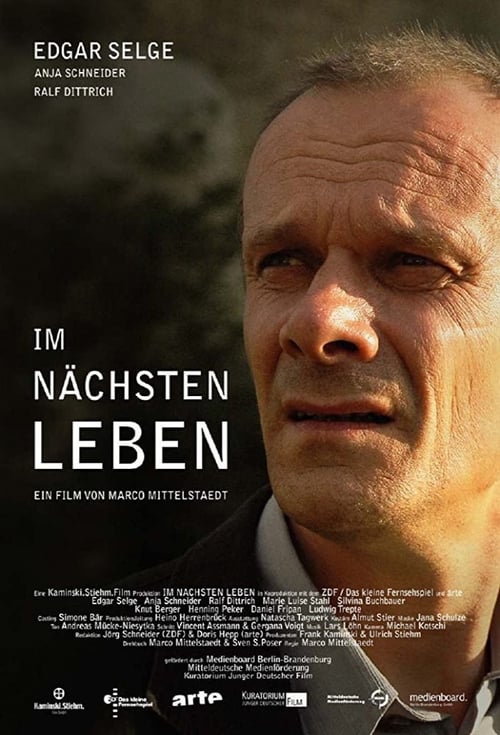
No description available for this movie.
When people think of DEFA, the film heritage of the GDR, they probably don't just think of film images, but also some of the timeless melodies that were created in Babelsberg.
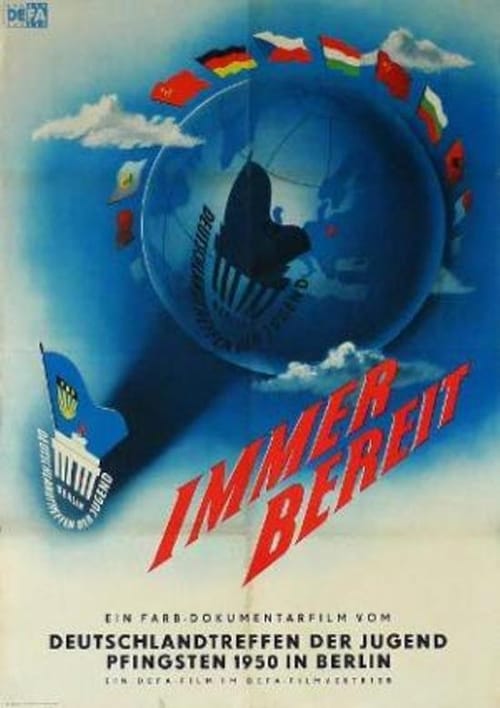
Documentary (in colour) about the first youth meeting (Deutschlandtreffen der Jugend) in East Berlin in 1950.

A film on the surveillance and the control in East Germany also speaks about it - representing extreme and almost unbelievable image of a society which has acquired one super-narrative and developed a system which makes it impossible to even speak about the possibility of anything outside it.
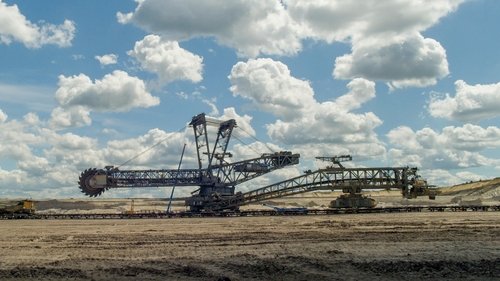
The viewpoints of women from a country that no longer exists preserved on low-band U-matic tape. GDR-FRG. Courageous, self-confident and emancipated: female industry workers talk about gaining autonomy.
No description available for this movie.
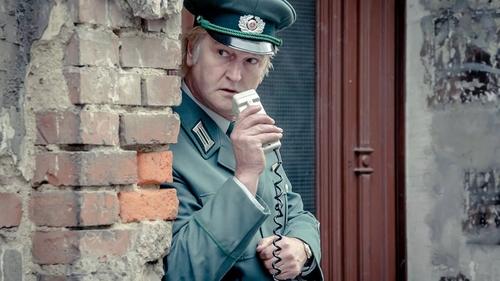
East Berlin, early 1980s: Ludger is hired by the Stasi to spy on the oppositional arts scene in Prenzlauer Berg. But when he falls in love with the mysterious Nathalie, he has to choose between a life as a celebrated underground poet and his career as a Stasi agent. A choice that will turn back on him 30 years later.
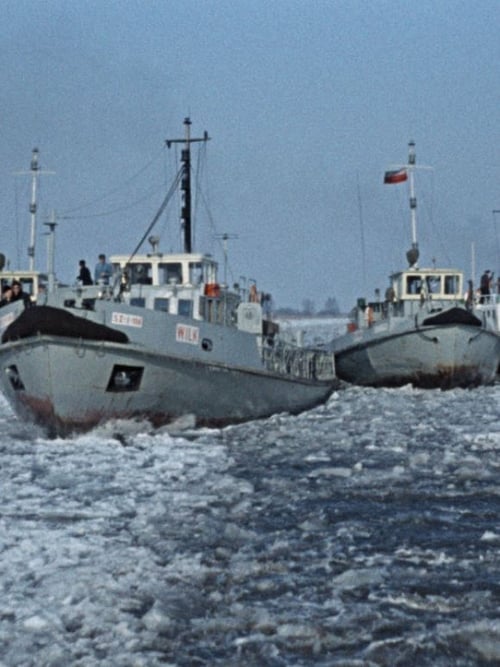
Documentary reports on the annual icing of the Oder in the 160-kilometer border area between the GDR and the People's Republic of Poland. Icebreakers from both countries with experienced skippers join forces to make the international waterway between Frankfurt and Szczecin navigable again. Everyone works hard as a team and even a broken-down ship cannot stop them from achieving their goal. A look back at the winter of 1947 with its flooding shows what the freezing of the river and the subsequent thaw can do if the ice floes are not drained into the Baltic Sea via Lake Dammsch in good time. The skippers from both countries have known each other for years and trust each other; the camaraderie that has developed on the Oder unites the people, they control the river in winter for the common benefit of all.
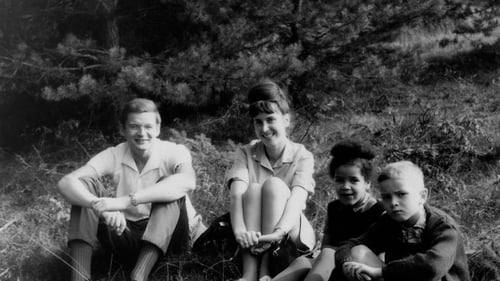
In the 1960s, a white couple living in East Germany tells their dark-skinned child that her skin color is merely a coincidence. As a teenager, she accidentally discovers the truth. Years before, a group of African men came to study in a village nearby. Sigrid, an East German woman, fell in love with Lucien from Togo and became pregnant. But she was already married to Armin. The child is Togolese-East German filmmaker Ines Johnson-Spain. In interviews with Armin and others from her childhood years, she tracks the astonishing strategies of denial her parents, striving for normality, developed following her birth. What sounds like fieldwork about social dislocation becomes an autobiographical essay film and a reflection on themes such as identity, social norms and family ties, viewed from a very personal perspective.
Jette and Johannes have been living together for two years when Johannes suggests that they "legalize" their relationship. Jette loves him, but the proposal of marriage terrifies her.
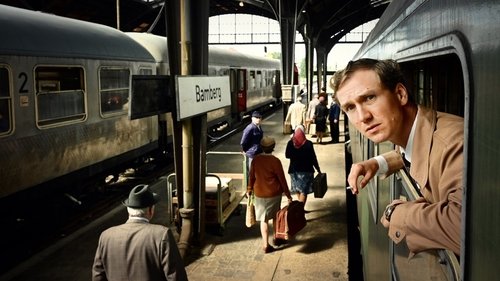
August 13, 1961: The passengers on the interzonal train from Munich to East Berlin learn 3½ hours before crossing the border that the Wall is being built in Berlin. They have 3½ hours to make a life-changing decision: to get off the train or keep going.

A punk documentary about the life and death of the GDR punk Dieter "Otze" Ehrlich and his band Schleimkeim aus dem Schweinestall. With the fall of the Wall, Otze loses not only his enemy images, but also his life at the price of freedom.
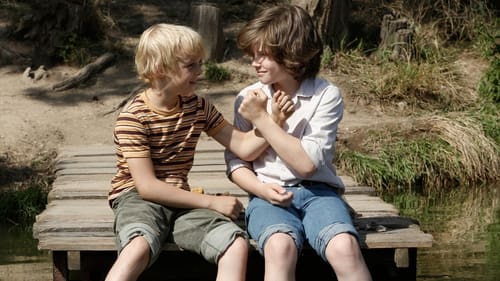
End of the 1970s in East Germany: Fred and Jonas are close friends. The 10-year-olds live near at the German-German frontier. After the mother from Jonas has made an exit application, the boys have to recognize that they are soon separated from each other. But they want to dig a tunnel to Australia to meet there themselves again. When Jonas should leave the country with his mother this night changes everything.
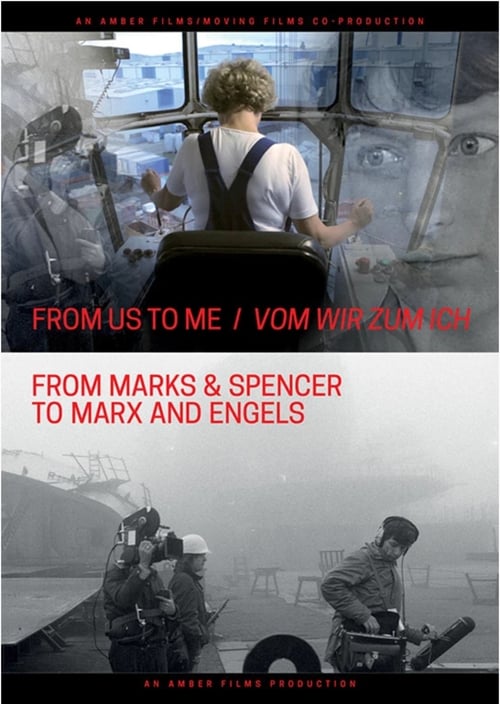
This first co-production between the GDR and Great Britain is intended to contribute to an understanding of the situation and attitudes of millions of working people in opposing social orders. Using the example of shipyard workers, fishermen, the brigade and family of a trade union active cook and unemployed person of various ages and professions in Newcastle on the one hand and a brigade of crane operators of the Warnowwerft and fishermen of the Warnemünde cooperative on the other hand, insights into the way of life and attitudes of people of our time are to be conveyed.
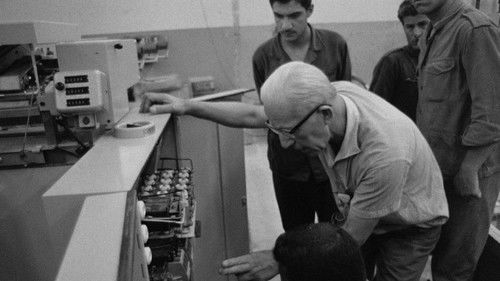
The film is a reportage showing the help of workers from the GDR in the industrial reconstruction of Syria. We witness the friendly relationship between workers from both countries, who are jointly involved in the construction of the cotton spinning mill in Homs. In impressive pictures the exoticism of the environment and the mentality of the Syrian hosts is shown. At the same time it becomes clear that the workers from the GDR become 'ambassadors of the GDR' through their collegial behaviour and good work.
No description available for this movie.
Alitt's breakup with his long-term girlfriend, Wina, has left him feeling betrayed. His best friends, Supri tries his best to find him a new girlfriend. Vivi is finally able to make Alitt move on, but Wina suddenly comes back into his life.
No description available for this movie.
Aphrodite, the Greek goddess of love, wants to celebrate Valentine's day with her husband Hephaestus.
Austrofred, Austria's #1 Rock export, delivers with Giving Gas! a critical overview of the constraints and traps of the Austrian individual transport. But the Champion wouldn't be the Champion, if he didn't use his heart, brain and almost 20 years of driving experience to fight against these nuisances and always be a few Horsepowers ahead of his enemies.
During the ewing-period the shepherd has to take especially care of the flocks. He has to assist the ewes in ewing, to control the feeding of the lambs, and to switch orphaned and abandoned lambs to ewes that have lost their lamb. This is still done by the traditional method of skinning: The dead lamb's skin is slipped on the abandoned lamb to deceive the mother ewe. At this time the shepherd must also warm newly-born, supercooled lambs inside the house and feed them artificially.
Before shearing, done with electric devices and hand shears, lambs are separated from the flock. The lambs are not yet shorn but dipped in a disinfectant, parasiticidal liquid prescribed by law. For the auction, held in autumn, the sheep for sale are loaded on special trucks and transported from the pasture to the public sale.