
Action
Adventure
Animation
Comedy
Crime
Documentary
Drama
Family
Fantasy
History
Horror
Music
Mystery
Romance
Science Fiction
Thriller
War
Western
Found 7 movies, 4 TV shows, and 0 people
Can't find what you're looking for?
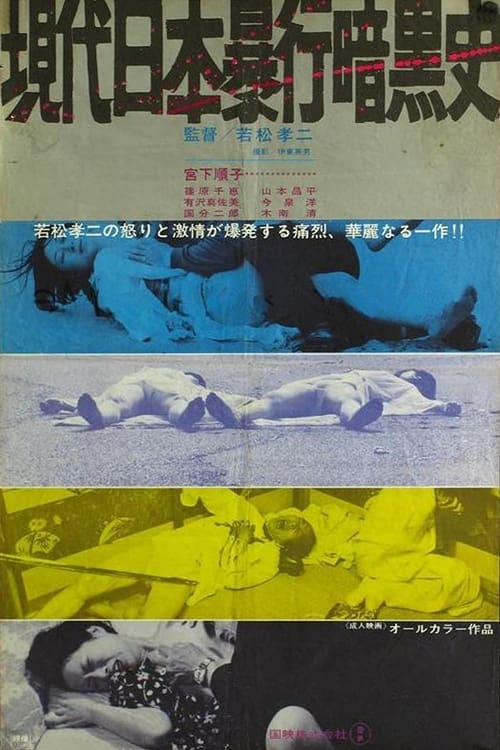
Pinku from 1972.

World War I (1914-18): French cities are reduced to rubble. World War II (1939-45): Allied bombardments turn most of the major German cities into a desolate wasteland. The political, social and aesthetic problems caused by the ruins, indisputable proof of the devastation of war.

Contemporary History of Ukraine is a performative walk that examines transpersonal landscapes of memories, and geographically situated ecologies of feelings across various Ukrainian localities. While the walk is mediated via digital environments (personal videos, recorded conversations, google maps, etc.), it is based on various footage and chats with different people with whom Kazmina has friendships, intimacies, partnerships, and shared walks. To a large extent, the walk consists of the footage of the documentary project Underwater on which Kazmina has been working since 2015. From the nowadays' perspective of Russia's full-scale invasion, the work observes the chains and ruptures of collective digitized sensitivity, as well as fragile relations between bodies and territories that are neglected within the logic of informational warfare.
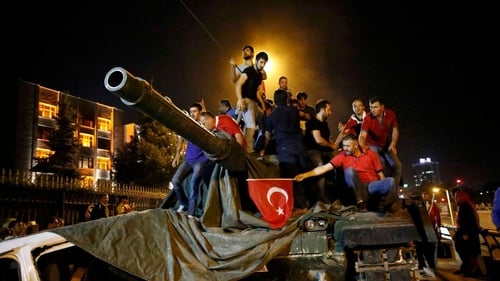
The night of July 15, 2016 changed the history of Turkey. On that day there were coordinated attacks by parts of the Turkish army, among others in Istanbul. The aim of the military: a coup against the government. The decisive confrontation occurred on the Bosporus Bridge. While President Erdogan was still on vacation, live at TV he called on the people who were devoted to him to stand against the military. As an enemy for the masses, he presented his adversary Fethullah Gülen, whom he branded as the coup leader. He also urged the imams of the country's mosques to condition the population to resist. And so it happens that at night thousands of agitated people take to the streets to oppose the armed insurgents. The death toll was high. 352 people died across Turkey during the attempted coup. The consequences are even more serious: Erdogan used this gift, as he called it himself, to undermine democracy, to arrange mass arrests of dissidents and to transform Turkey into a dictatorship.
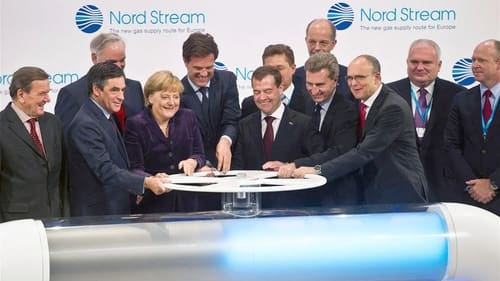
The war in the Ukraine has changed the way many European countries view Russian politics. Suddenly it became clear how dependent countries had become on Russian gas imports for decades and what Vladimir Putin was up to. However, no country needs more gas than Germany. It was only after Russia's invasion of the Ukraine that the German government realized that Russia had long used gas as a weapon to impose its will on states. The instrument created for this purpose is the natural gas production company GAZPROM. So how did Germany become so dependent on Russian gas? The documentary shows how, over several decades and several changes of government, a broad alliance of politicians and business representatives did everything possible to secure Germany's energy supply with cheap Russian gas, while the Kremlin's foreign policy became increasingly aggressive and the warnings of experts went unheeded.

No description available for this movie.
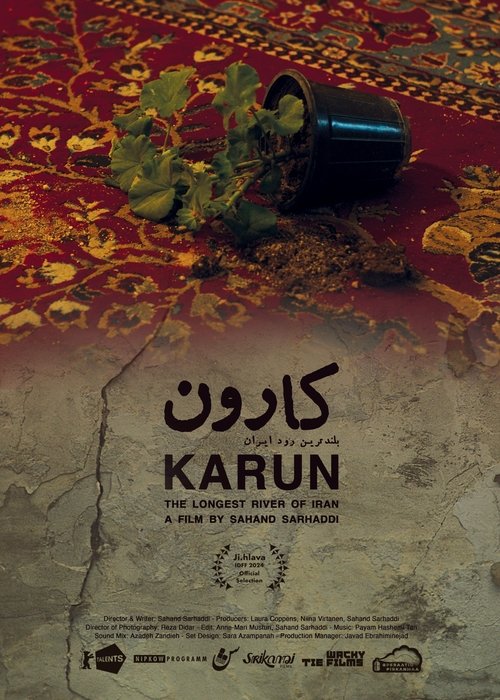
On September 22, 1998, the Iranian poet Hamid Hajizadeh and his nine-year-old son Karun, whose name symbolically refers to Iran's longest river, were brutally murdered in their home in Kerman. The documentary film, based on the statements of the survivors, tries to sensitively reconstruct one of the many terrible motivated events that took place in Iran at the end of the previous century and draws us into the fateful day with the help of detailed shots of the objects in Hamid's study.