
Action
Adventure
Animation
Comedy
Crime
Documentary
Drama
Family
Fantasy
History
Horror
Music
Mystery
Romance
Science Fiction
Thriller
War
Western
Found 13 movies, 1 TV show, and 0 people
Can't find what you're looking for?
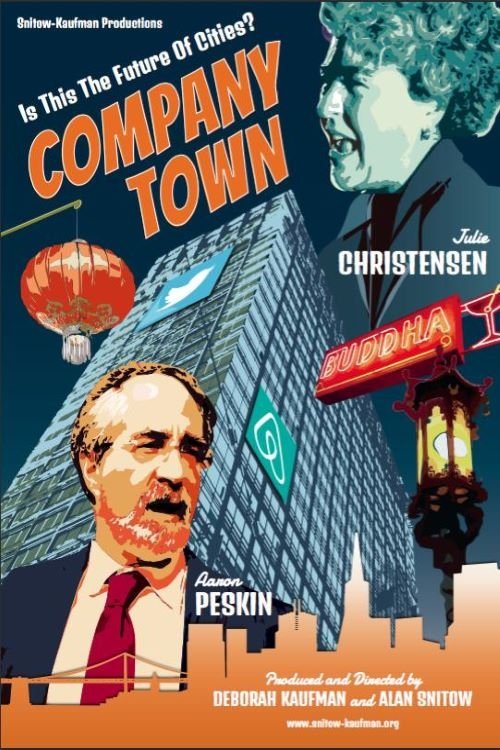
The once free-spirited city of San Francisco is now a 'Company Town,' a playground for tech moguls of the 'sharing economy' and social media. Billionaire venture capitalists virtually control the city's government. Skyrocketing rents and evictions have driven out ethic and middle class communities. But a grassroots backlash threatens the power of tech. The feature-length documentary, 'Company Town,' is the story of an intense election campaign that will determine the fate of the city at the epicenter of the digital revolution. The whole world is watching as similar revolts against Uber, Airbnb, and other multi-billion dollar companies erupt around the world.

A look at the lives of government agents who all live in the same Washington D.C. neighborhood.
Company Town is an investigative documentary following one man's mission to save his town in Crossett, Arkansas, polluted by Georgia-Pacific, one of the nation's largest paper and chemical plants, owned by Charles Koch and David Koch. They produce Brawny paper towels, Angel Soft toilet paper, and Dixie cups. Neighbors work for the mill and are sick with cancer. Company Town represents hidden towns across America battling illness and pollution by big business.
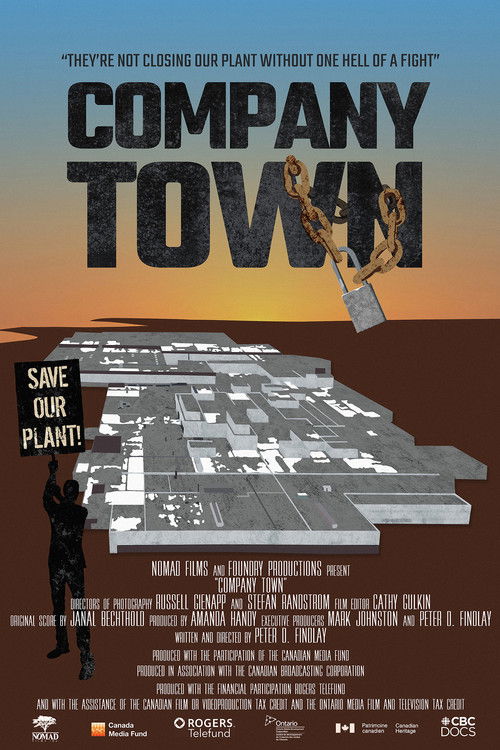
A Canadian union and workers in a GM plant mobilize to save it in what will become the fight of their lives.

The former coal town of Widen, West Virginia. Once a model of paternalistic domination, Widen had been sold to the Pittston Corporation in 1963. Ricky Leacock said of the film, "I find Company Town to be a beautiful film that I can enjoy over and over. It manages to avoid the obvious cliches but causes one to wonder 'why do they stay?' and at the same time to understand that this place, these activities, these people, with all their limitations, are unique and wonderful."
Lee Anne Schmitt explores California's landscape and past to document the history of one-time boom towns built and abandoned by the industries that necessitated their creation. Sold as a limitless land expansive with free opportunity, California was actually, from its onset, fissured by the interwoven needs of private and public interests. Schmitt's film covers various locations through time, as the major industries of the early 20th century (mining, lumber, oil) give way to the military, eventually leading to multinational corporations, and the use of small towns as satellites for growing urban metropolises.

This short documentary examines the changing relations between labour and management in the long-established company town of Trail, BC, in which 90% of the workforce is employed by Cominco, the world’s largest lead-zinc smelter. The metal workers in the town are outspoken about the health risks associated with their line of work, and a debate about unionization ensues. The days of paternalistic management are gone, and the emphasis is now on participation and involvement. An eventual strike over dissatisfaction with labour relations turns violent when management, union executives, and workers clash over competing interests.
African-American residents in Norco, Louisiana, who believe that increasing pollution is negatively impacting their health, demand to be relocated from under the shadow of a Shell oil refinery.

After consolidating itself as a tourist destination in the mid-1960s, this small coastal village has become the dormitory town for the workers of a Nuclear Power Plant. With the liberal promise of prosperity and socioeconomic wellfare, many workers left their homes to move to the small city and started working at the new Nuclear Power Plant. The collective unrest and the silence, cut off by the great gusts of wind, articulate the landscape of the village that is now under the aid of the Nuclear Power Plant.
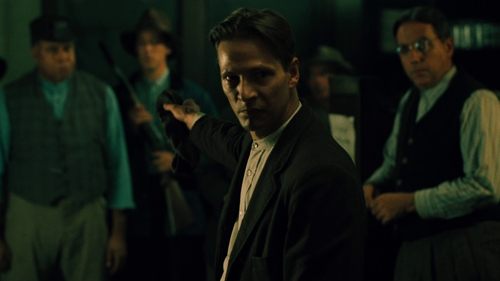
Filmed in the coal country of West Virginia, "Matewan" celebrates labor organizing in the context of a 1920s work stoppage. Union organizer, Joe Kenehan, a scab named "Few Clothes" Johnson and a sympathetic mayor and police chief heroically fight the power represented by a coal company and Matewan's vested interests so that justice and workers' rights need not take a back seat to squalid working conditions, exploitation and the bottom line.
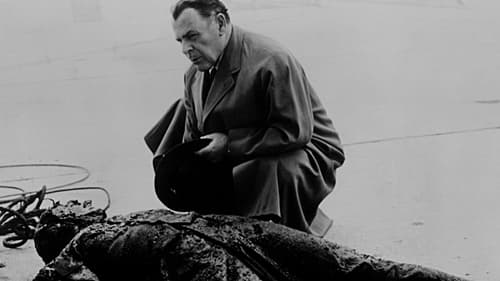
In England, a group of space scientists led by Bernard Quatermass, who have developed plans for the first Moon colony, learn that a secret, ostensibly government-run, complex of identical design has been built in a remote part of England and is the focus of periodic falls of small, hollow "meteorites" originating in outer space. Quatermass determines to investigate and uncovers a terrifying extraterrestrial life form which has already begun action to take over the Earth.

In the 1920s, Tomas Baťa and his stepbrother Jan Antonín Baťa, entrepreneurs from Zlin, Czechoslovakia, began establishing new cities worldwide to expand their business. Over the next decades, about fifty towns were built on their unique social and architectural model, but only a few remain today. Our film explores the lives of people in these surviving “Bata cities”: Zlín in the Czech Republic, Bata-Borovo in Croatia, Batanagar in India, Bataypora in Brazil, and Batadorp in the Netherlands. Characters like Matea, Shona, Bé, Henrik, and Věra, despite their differences, are linked by their shared history. The film questions how the vision of a brilliant business dreamer has evolved nearly 100 years later.

The year is 1891. The director of MoDo, Frans Kempe, is about to build the largest and most modern sawmill in Europe and a complete ideal society after his own mind. The place he chooses is Norrbyskär, some skerries in the Baltic Sea outside the cost of Västerbotten in northern Sweden. The experimental society with it's 1500 inhabitants and the large sawmill will live for almost 60 years.