
Action
Adventure
Animation
Comedy
Crime
Documentary
Drama
Family
Fantasy
History
Horror
Music
Mystery
Romance
Science Fiction
Thriller
War
Western
Found 34 movies, 20 TV shows, and 0 people
Can't find what you're looking for?
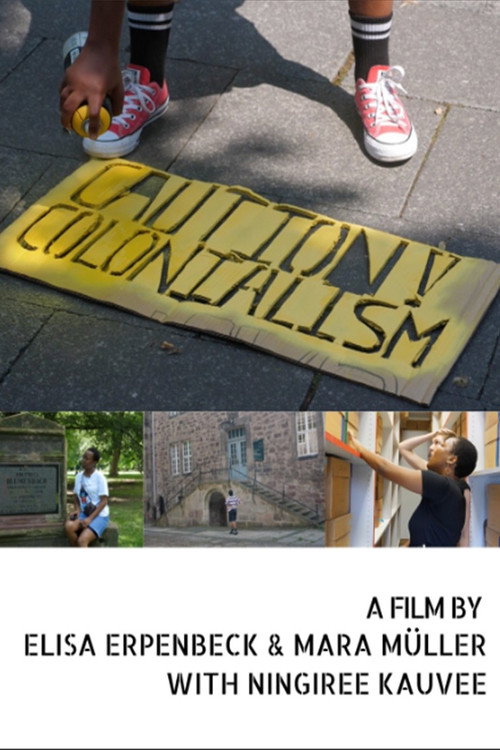
No description available for this movie.
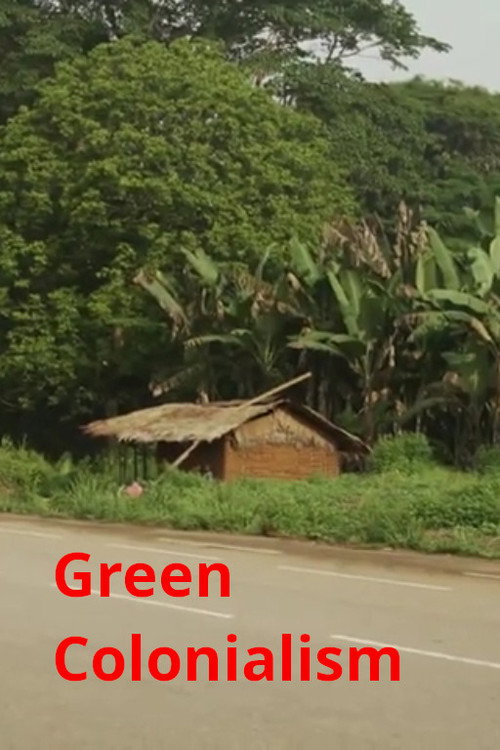
Protection for animals, loss for people. Nature reserves in Africa are cutting off access to forests and rivers for Indigenous communities, threatening their livelihoods. To ensure the protection of rhinos, lions, and gorillas, African governments are increasingly ceding territories to NGOs like WWF, African Parks, and the Northern Rangelands Trust, to the detriment of Indigenous peoples.
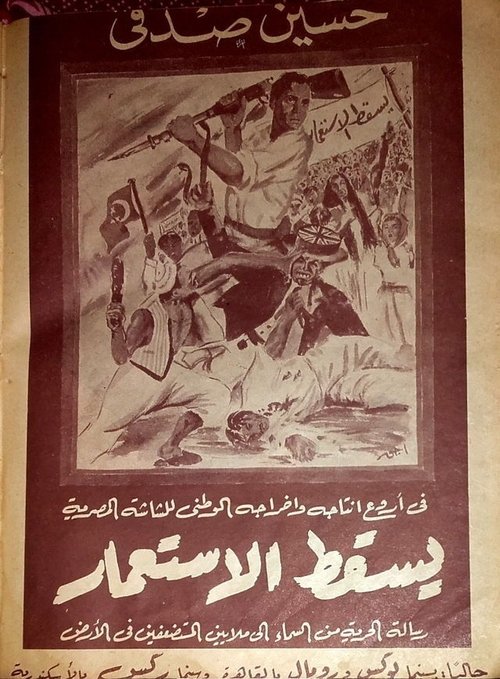
Professor Fahmi, a history teacher, went out to get a doctor for his wife, and he was martyred in a demonstration in support of Saad Zaghloul. The son, Mujahid, was born and his mother raised him to hate the English. He was expelled from school, but the school principal took care of him because of his connection to his family and his father. He raised him with his only daughter, Azza, who loved Mujahid. World War II was declared. He goes to Sudan to continue his struggle.

A deep, innovative analysis of the current worldwide crisis and revolts built with alternating materials from the ground and intellectual reflections. Following the pacific and extravagant movement Occupy Wall Street in his fight for social justice is the beginning to go into the US current situation and the main controversial aspects of this society.
For his entire life Reginald has wanted to follow in his father's footsteps and serve his country; after enlisting on his eighteenth birthday, Reginald is thrust in to the one war Australia has lost and must reckon with his colonial views.

Between 1966 and 1976, thousands of Greenlandic girls and women were subjected to IUD insertion without their informed consent. These procedures were carried out under the guise of routine medical school examinations and were part of a secret population control programme orchestrated by the Danish authorities. This short investigative film reveals the overall mechanisms of a system that used contraception as a weapon against minority women.

Jomo Kenyatta's death in 1978 brought to an end a political career that encompassed more than 50 years of African history. Kenyatta entered politics in the mid-1920s and then spent 17 years in exile in Europe. He returned to Kenya in 1946, and was elected president of the nationalist movement, the Kenya African Union. Arrested and imprisoned in 1952 for allegedly leading 'Mau Mau', he was released in 1961 and two years later became Kenya's first Prime Minister. In power, the man whom European settlers had once reviled as "the leader to darkness and death" was eulogized by them as a pillar of stability, while former allies challenged him by creating a left-leaning political opposition. Kenyatta weaves archival and contemporary images with interviews with friends and relatives, comrades and opponents, to create a biographical portrait of a key figure in 20th century politics, and a case study of what Frantz Fanon called the pitfalls of nationalism as a political force in Africa.

In the late 19th century, Britain, France, Germany and other European states agreed on the division of Africa into a patchwork of colonies, and set about exploring and exploiting their new possessions. White Man's Country combines period photographs and contemporary location footage with the testimony of African and European witnesses, to examine both sides of Europe's "civilizing mission" in Africa.
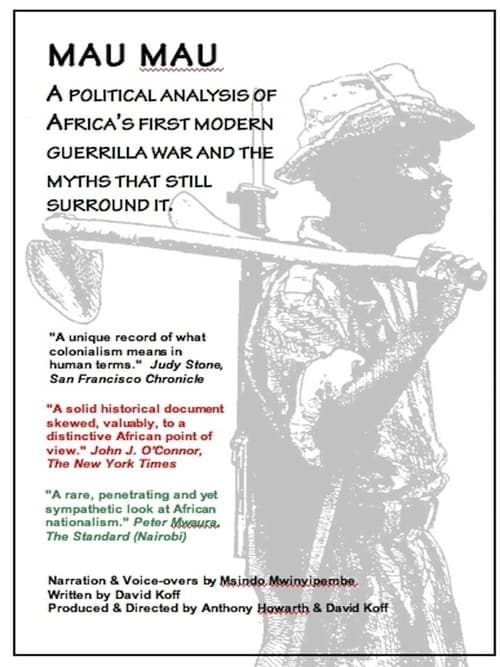
In October 1952 the British government declared a State of Emergency in Kenya. Its object: the defeat of "Mau Mau." In the war that followed, fewer than 40 of Kenya's 40,000 white settlers were killed while more than 15,000 Africans lost their lives, and hundreds of thousands more were arrested and subjected to a humiliating and often brutal process of "rehabilitation." But what was Mau Mau? A movement based, according to the British Colonial Secretary, on a "perverted nationalism and a sort of nostalgia for barbarism"? Or the Land Freedom Army, an organized political and military response to repression and armed aggression? Using newsreel and previously inaccessible archive footage, and drawing on interviews with participants on both sides, Mau Mau examines the myth and the reality of Africa's first modern guerrilla war.

The taking of wealth from Africa: Over 10,000,000 Africans were sold into slavery during the Trans-Atlantic slave trade. Should African Americans receive reparations for slavery.
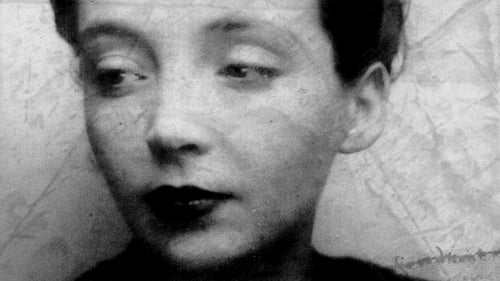
When French writer Marguerite Duras (1914-96) published her novel The Sea Wall in 1950, she came very close to winning the prestigious Prix Goncourt. Meanwhile, in Indochina, France was suffering its first military defeats in its war against the Việt Minh, the rebel movement for independence.
No description available for this movie.
No description available for this movie.

During the Belgian colonial empire, in Congo, Rwanda and Burundi, several thousand children of mixed race were victims of targeted segregation, which is still unknown today. Born to a Belgian father and an African mother, these children were hidden and isolated by the state, taken from their families and placed in boarding schools. On the eve of the conquest of independence by the 3 states, a legal kidnapping was organized: several hundred of the children were forcibly expatriated to Belgium and placed in foster families. The film tells the story of Evariste and Lena, Charles, François, Luc and Eveline. 60 years after the events, these witnesses revisit their past, following the search for their roots and their own identity, trying to close the wounds of childhood.

No description available for this movie.
Images and sounds are spliced together in this journey to the heart of the political, economic and cultural oppression of the Quebec people. A reflection on neo-colonial exploitation and the cancer of alienation. To the very Canadian multiculturalism of Trudeau and the métissage of the multinationals, celebrated by the high priests of the dominant ideology, is contrasted the idea of acculturation, even deculturation. A way of resisting as good as any other.

Factory worker Doug Quaid takes a virtual mind-trip vacation with the Rekall company, opting for implanted memories of being a spy. When the procedure goes wrong, Quaid becomes a wanted man by the police and joins forces with a rebel fighter to stop the evil Chancellor Cohaagen.

In this film, four key witnesses, who live in Algeria today, as full-fledged Agerians, show us what this colonization was really like, so "beneficial" that they themselves perceived it as the oppression of one people by another. Three of them, who today would be called "pieds noirs," in other words, those Europeans to whom France, the occupying power, gave the best land, taken from the indigenous populations, work, and exclusive rights, not shared by the entire population, lived rather well compared to the majority of the "natives." The fourth was far from all that and lived in Argentina. Annie Steiner, Felix Colozzi, Pierre Chaulet, and Roberto Muniz explain to us what led them to show solidarity with the struggle of the weak, the humiliated, and to risk their freedom and their lives by committing to liberate Algeria.
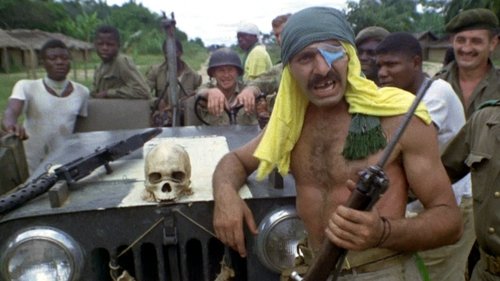
A chronicle of the violence that occurred in much of the African continent throughout the 1960s. As many African countries were transitioning from colonial rule to other forms of government, violent political upheavals were frequent. Revolutions in Zanzibar and Kenya in which thousands were killed are shown, the violence not only political; there is also extensive footage of hunters and poachers slaughtering different types of wild animals.
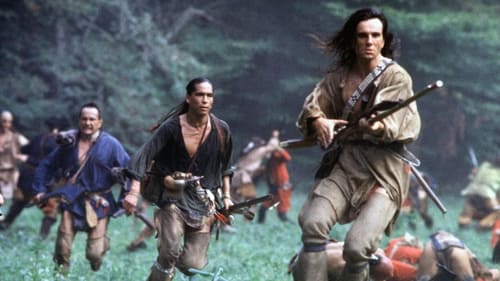
In war-torn colonial America, in the midst of a bloody battle between British, the French and Native American allies, the aristocratic daughter of a British Colonel and her party are captured by a group of Huron warriors. Fortunately, a group of three Mohican trappers comes to their rescue.

When a Spanish Jesuit goes into the South American wilderness to build a mission in the hope of converting the Indians of the region, a slave hunter is converted and joins his mission. When Spain sells the colony to Portugal, they are forced to defend all they have built against the Portuguese aggressors.
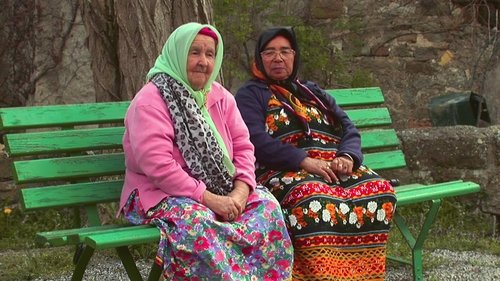
In 1963, Rosans, a village in the Hautes-Alpes region depopulated by the rural exodus, welcomed Harkis (military soldiers) forced to leave Algeria for supporting France during the Algerian War. Around thirty families settled in a camp below Rosans. Nearly half a century after their arrival, first- and second-generation Harkis and native Rosanais recount their experiences of this culture clash, often painful, sometimes happy. Language barriers, religious differences, living in barracks for 14 years, and unemployment were all obstacles to overcome in order to be accepted and then achieve mutual enrichment. Enriched with archive footage to explain the historical context of the time, the film seeks above all to express feelings and unspoken words.
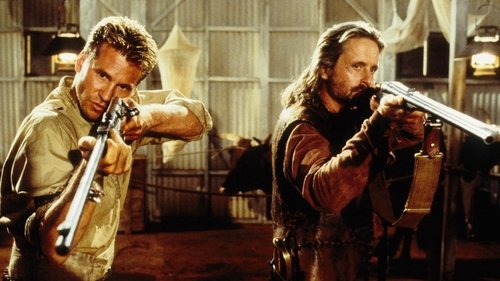
Sir Robert Beaumont is behind schedule on a railroad in Africa. Enlisting noted engineer John Henry Patterson to right the ship, Beaumont expects results. Everything seems great until the crew discovers the mutilated corpse of the project's foreman, seemingly killed by a lion. After several more attacks, Patterson calls in famed hunter Charles Remington, who has finally met his match in the bloodthirsty lions.
A man befriends a fellow criminal as the two of them begin serving their sentence on a dreadful prison island, which inspires the man to plot his escape.
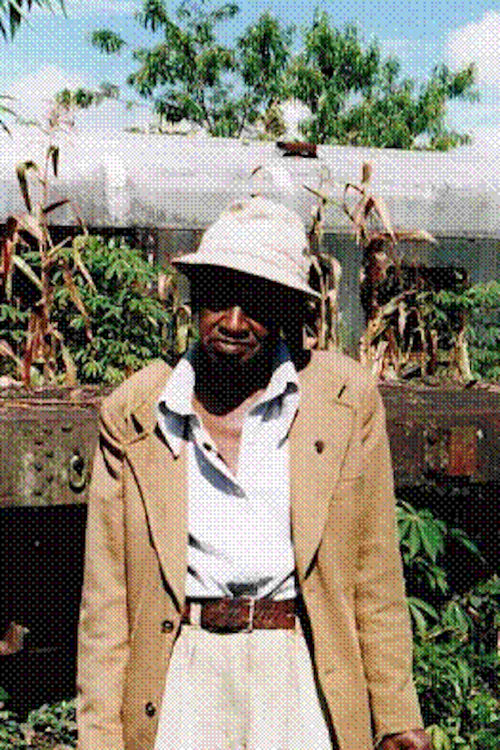
On March 29, 1947, peasants armed with sticks and knives attacked the French garrisons in Madagascar. The revolt would end twenty months later with the death of the last insurgents, shot down by the expeditionary force. France, accustomed to memory lapses, knew nothing of this insurrection and its trail of torture and abuses. In Madagascar, well after independence, the events of 1947 were never discussed. For more than a generation, parents refused to speak of them to their children. It wasn't until the 1980s that the silence was broken.
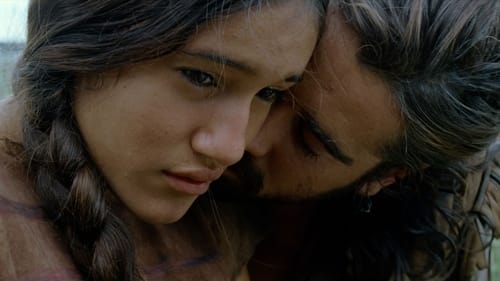
A drama about explorer John Smith and the clash between Native Americans and English settlers in the 17th century.
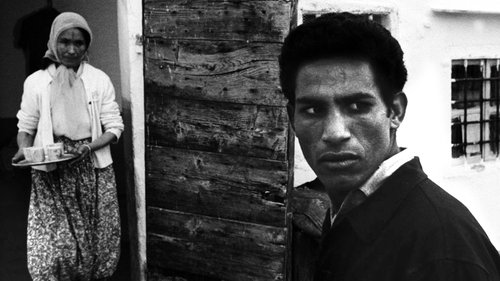
Paratrooper commander Colonel Mathieu, a former French Resistance fighter during World War II, is sent to Algeria to reinforce efforts to squelch the uprisings of the Algerian War. There he faces Ali la Pointe, a former petty criminal who, as the leader of the Algerian Front de Liberation Nationale, directs terror strategies against the colonial French government occupation. As each side resorts to ever-increasing brutality, no violent act is too unthinkable.
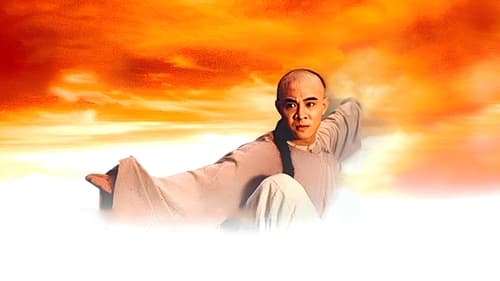
Master Wong and his disciples enroll in the 'Dancing Lion Competition' to stop an assassination plot and to battle an arrogant, deceitful opponent.
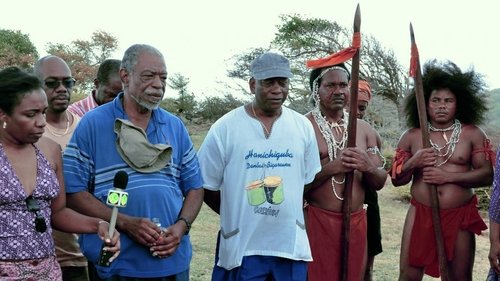
YURUMEIN (Homeland) is a documentary film which recounts the painful past of the Caribs on the island of St. Vincent in the Caribbean, their extermination at the hands of the British 200+ years ago, the decimation of their culture on the island, and their exile to Central America where much of that culture survived, even thrived. YURUMEIN (your -o- main) also explores what few cultural remnants of the Caribs, also known as Garifuna, still exist on St. Vincent and the beginnings of a movement to teach and revitalize Garifuna language, music and dance, and ritual to younger generations of Garifuna/ Caribs on St. Vincent.
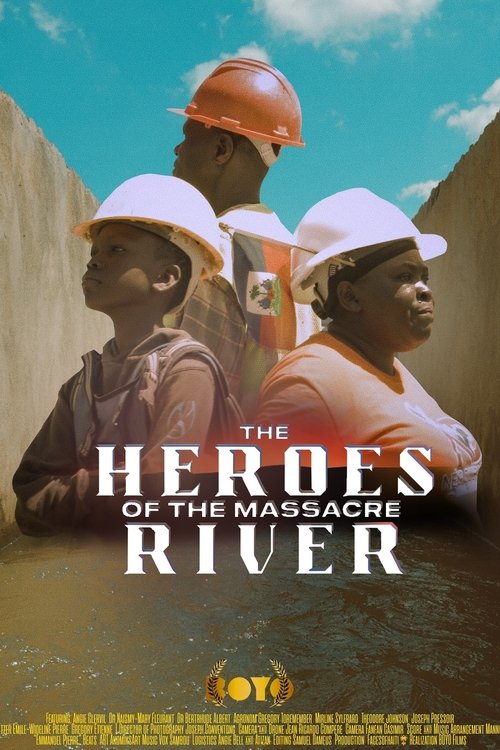
The Heroes of the Massacre River is a powerful documentary that chronicles the stories of the pioneers behind the construction of the historic Canal of Ouanaminthe, a project that united Haitians across the nation and the diaspora. This film celebrates the groundbreaking efforts of key figures, centering on Dr. Bertrhude Albert, Dr. Naismy-Mary Fleurant, architect Wideline Pierre, economist Etzer Emile as well as dedicated canal workers Milourie Sylfrard, Theodore Johnson and Joseph Pressoir — all guided by the investigative journey of Max Angie Clervil. It also serves as a commentary on the complexity of colonialism and borders, tracing the role that the Massacre River continues to play in the history of Ayiti.
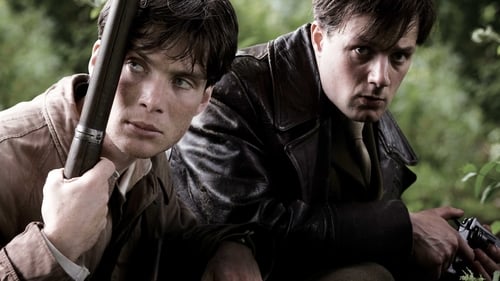
In 1920s Ireland young doctor Damien O'Donovan prepares to depart for a new job in a London hospital. As he says his goodbyes at a friend's farm, British Black and Tans arrive, and a young man is killed. Damien joins his brother Teddy in the Irish Republican Army, but political events are soon set in motion that tear the brothers apart.

A chronicle of Gertrude Bell's life, a traveler, writer, archaeologist, explorer, cartographer, and political attaché for the British Empire in the Near and Middle East at the dawn of the twentieth century. Her knowledge of the tribal leaders is used by the British to establish the Kingdoms of Iraq, Jordan and Saudi Arabia.
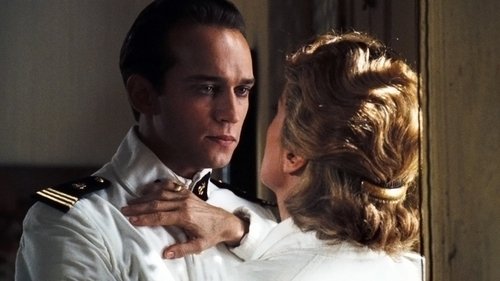
In colonial Vietnam, dashing French naval captain Jean-Baptiste, wealthy plantation owner Éliane Devries, and her adopted Vietnamese daughter Camillevare form the three points of a cross-cultural romantic triangle. As the struggle against European imperialism sweeps Indochina, Jean-Baptiste and Camille have to choose sides and Éliane faces the emotionally difficult challenge of raising the child of her daughter and ex-lover.

Year 1936. As villages across Palestine rise against British colonial rule, Yusuf drifts between his rural home and the restless energy of Jerusalem, longing for a future beyond the growing unrest. But history is relentless. With rising numbers of Jewish immigrants escaping antisemitism in Europe and some arriving with nefarious Zionist-colonial ambitions, and the Palestinian population uniting in the largest and longest uprising against Britain’s 30-year dominion, all sides spiral towards inevitable collision in a decisive moment for the British Empire and the future of the entire region.