
Action
Adventure
Animation
Comedy
Crime
Documentary
Drama
Family
Fantasy
History
Horror
Music
Mystery
Romance
Science Fiction
Thriller
War
Western
Found 29 movies, 5 TV shows, and 0 people
Can't find what you're looking for?

Make the rich pay for COVID-19
In this experimental documentary filmmaker Sobo Swobodnik explores his milieu of origin.

A wealthy Beverly Hills resident who has just become a widow, Clare Lipkin temporarily takes on her friend Lisabeth as a house guest. As the two women deal with their upper-class woes, Clare's driver, Frank, and Lisabeth's servant, Juan, make a wager to see who can be the first to seduce the other's boss.
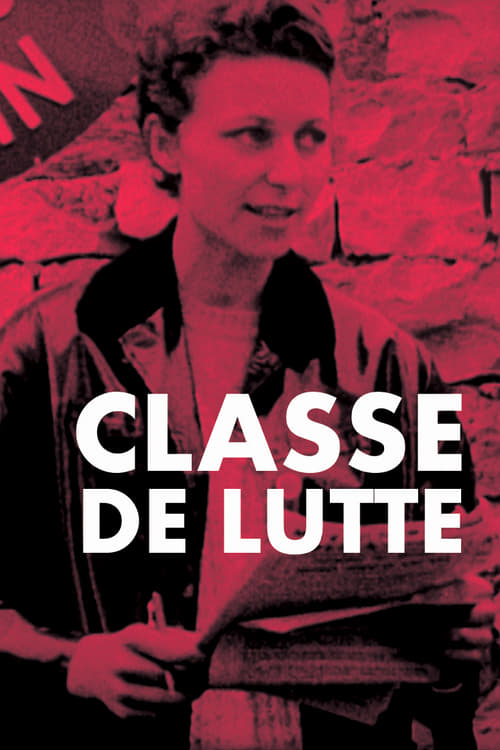
A follow-up to Be Seeing You (À bientôt, j’espère), this collective work—initiated by Chris Marker and the Medvedkin Group—was made in collaboration with workers at the Yema Watch Factory in Besançon. It follows a female worker who becomes active in labor organizing, depicting everyday struggles and the growing consciousness within the French labor movement.

A documentary made with shipyard workers during the occupation and work-in at the Upper Clyde Shipbuilders from July 1971 to October 1972. The yards were occupied and managed by a joint shop stewards’ committee after the government announced the decision to liquidate the company. The film includes footage from the ‘inside’ of organising, work, discussions, high-level negotiations, relations between the shop stewards and union officials and dealings with the press. Music by 7:84 and The Laggan.
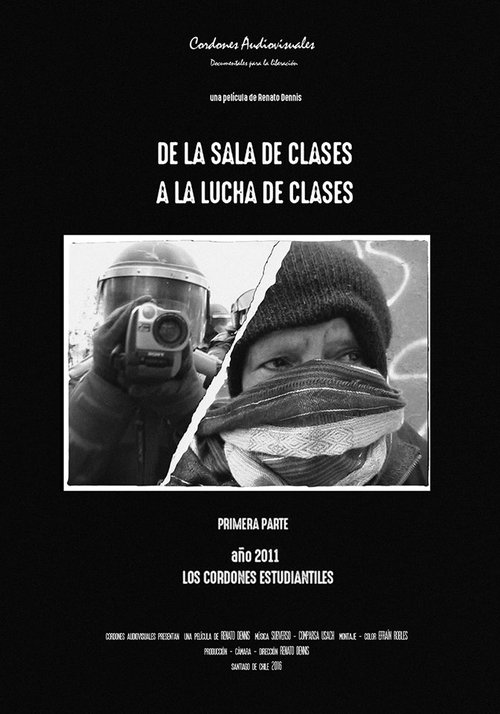
Students started revolting in 2011 in Chile. The streets are filled with demonstrations and this documentary tells us the history behind them.

Combining newsreel footage, still photographs, interviews, and analytical narration, this documentary focuses on the antifascist, anti-imperialist efforts of labor groups, peasants, and working-class soldiers to liberate Portugal from the control of the government of Antonio de Oliveira Salazar.
Red Star's 1982 account of the workers' film movement of the 1920s and 1930s.
Documentary about the effects of market economy and globalization on director Raoul Peck's homeland, Haiti.

The epic tale of a class struggle in twentieth century Italy, as seen through the eyes of two childhood friends on opposing sides.
A prodigal daughter rejoins her family at their farm during a difficult time, as her ailing father faces both a terminal diagnosis and mounting pressure from competitors. Old wounds resurface as they grapple with what lies ahead.

Cartman's deeply disturbing dreams portend the end of the life he knows and loves. Meanwhile, the adults in South Park are wrestling with their own life decisions, as the advent of AI is turning their world upside down.
A small group of French students are studying Mao, trying to find out their position in the world and how to change the world to a Maoistic community using terrorism.

Kirsty must survive an afternoon in the city centre until her accomodation can be arranged at a homeless shelter.
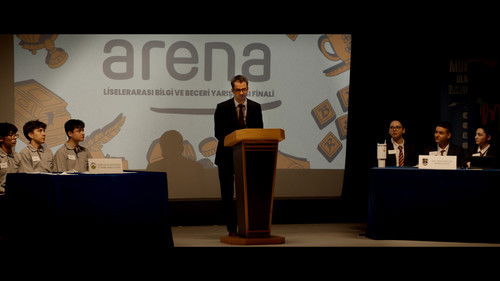
ARENA is a high-octane quiz show pulsating with an unrelenting rhythm of light and percussion. In the grand finale, two opposite worlds collide: The prestigious Private Saint Papillon French College, a generational winner, and Demirtaş Külhan Vocational High School, a newcomer fighting for existence. While the scores are tied, the conditions are not. The tension peaks with the final question. What is mere academic knowledge for one student is a harsh, lived reality for the other. As the final bell rings, the boards will reveal not just a winner, but the unbridgeable socioeconomic abyss that separates their lives.

After bankruptcy, Abah and Emak must adapt to a new life with their children in a remote village.

In an insurrectionary climate, four twenty-year-old friends talk about politics. As a big protest looms, one of them, Clara, has to write a college essay. Caught in the virtual images and the comfort of her bedroom, going out is harder than expected.
No description available for this movie.

A wealthy, self-absorbed Rome socialite is racked by guilt over the death of her young son. As a way of dealing with her grief and finding meaning in her life, she decides to devote her time and money to the city’s poor and sick. Her newfound, single-minded activism leads to conflicts with her husband and questions about her sanity.
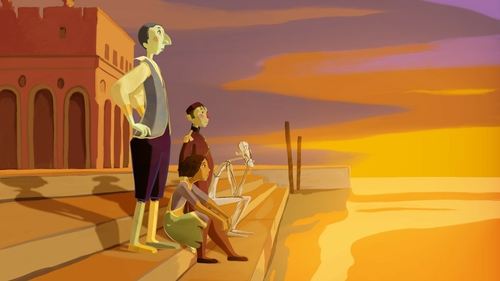
Three characters living in an unfinished painting venture out into the real world in search of their creator to convince him to finish his work.
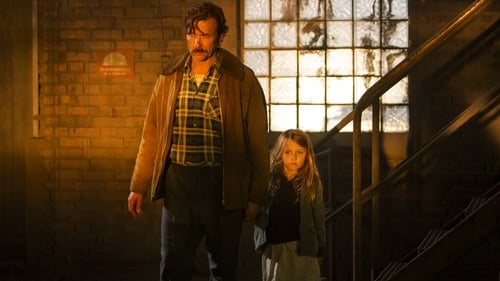
The story of a lone father's relationship with his daughter, of the destructive power of alcohol, of a child's vulnerability, but also of love, betrayal and socialist politics in 1970s Sweden.
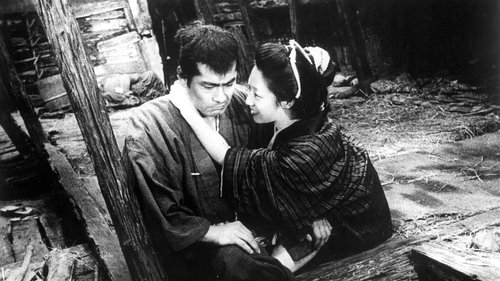
Residents of a rundown boardinghouse in 19th-century Japan, including a mysterious old man and an aging actor, get drawn into a love triangle that turns violent. When amoral thief Sutekichi breaks off his affair with landlady Osugi to romance her younger sister, Okayo, Osugi extracts her revenge by revealing her infidelity to her jealous husband.

Set in a former train factory turned art gallery in Milan, Italy, Classe Media explores the contradictions of being a working class artist. This documentary short follows the filmmaker as they question their class position as an unemployed artist in residence in this former working class space.

A low-intensity war is being fought on the streets of Europe and the aim is on fascism. This critically acclaimed documentary takes us behind the masks of the militants called antifascists. In 2013 a group of armed nazis attacks a peaceful demonstration in Stockholm where several people are injured. In Greece the neo-nazi party Golden Dawn becomes the third largest in the election and in Malmö the activist Showan Shattak and his friends are attacked by a group of nazis with knives and he ends up in a coma. In this portrait of the antifascists in Greece and Sweden we get to meet key figures that explain their view on their radical politics but also to question the level their own violence and militancy.

Maamar (Sid Ali Kouiret), a young fisherman working in a small port in western Algeria, is forced to sell his goods at a discount every day to Si Khelifa (Abdelhalim Rais), owner of many trucks and a cannery where the wives work fishermen. He has a strange encounter. As he returns from fishing, bassinet in hand, he witnesses a car accident. Indeed, a car hits a tree with a beautiful girl “Hayat” on board who has lost consciousness. Maamar pulls her out of the car and saves her. It is at this precise moment that he realizes the existence of another world. As if awakened from a long sleep, he realizes that this exploitation can no longer continue. He leaves his village and his wife Laâlia (Fatima Belhadj) on a whim for three years. He finds himself in the capital which he leaves to return to his village and carry out a saving action...

A European couple's vacation abruptly ends when they're kidnapped in Mexico. A working-class Mexican family is compelled to imprison them, leading to an unexpected cultural clash.
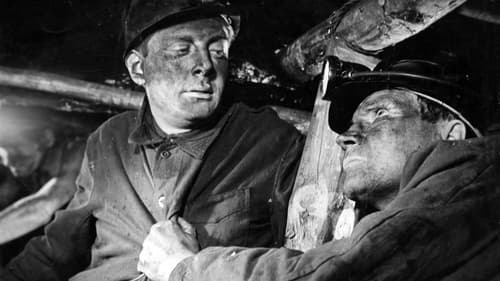
In a settlement in the northern mining country. The Marles, Bréhard and Gohelle families wake up and prepare for a new day at work. The young engineer Larzac, newly appointed to the mine, will soon oppose the authoritarian and conservative methods of his superior Dubard. Georges Gohelle would like to marry Marie Bréhard, but housing difficulties thwart their plans. Brezza, a Polish immigrant, who must return to his country, would like to hate his marriage to Louise Gohelle. Roger, Marie's little brother, has just turned 14. He does not want to go down to the mine as his elders have always done. He will however have to resign himself to it. Marles evokes for him the social struggles of 1906. Roger is injured during a landslide. In front of his family and his friend Marles, who had come to the hospital, he announced his decision to continue his profession. Larzac, invited to the Marles, reveals that he refused a quiet position at the Charbonnages de Paris. He too stays.

The story of those Italian women who, for eighty years, have fought against power in all its forms.

No description available for this movie.