
Action
Adventure
Animation
Comedy
Crime
Documentary
Drama
Family
Fantasy
History
Horror
Music
Mystery
Romance
Science Fiction
Thriller
War
Western
Found 40 movies, 26 TV shows, and 0 people
Can't find what you're looking for?
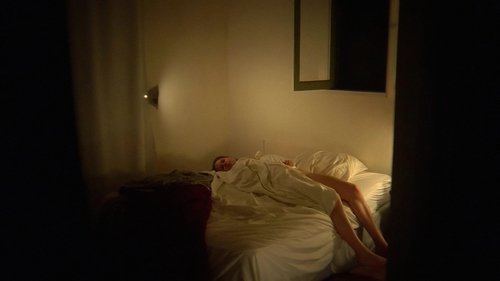
Tension mounts between a director and his lead actress on the set of a sexually explicit low-budget film. As the actress and her co-star develop real feelings for each other, the director's jealousy erupts and he begins sabotaging his own production.
Anne Bean, John McKeon, Stuart Brisley, Rita Donagh, Jamie Reid and Jimmy Boyle are interviewed about their artistic practice and the legacy of Surrealism on their work.

All sciences emerge from two questions. History is not science but a field of knowledge. It caused a tragedy of projection and coping of Hegel and his students, leading to a fascinating mistake; art history.
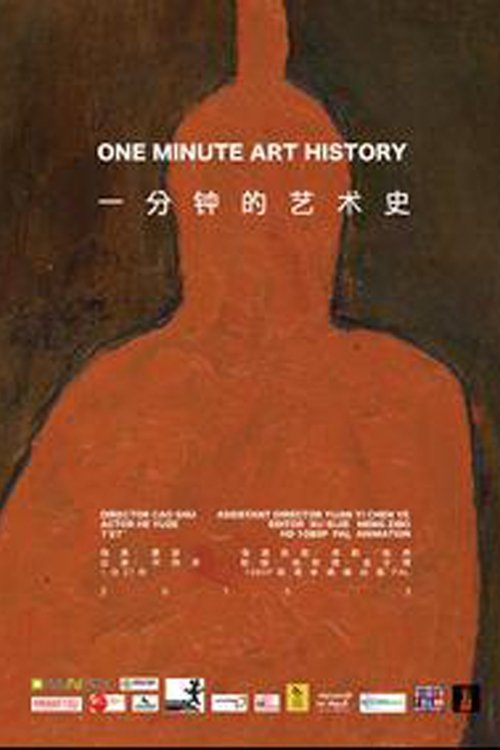
Filmmaker and educator Cao Shu captures the history of art in an experimental short film that lasts for less than one minute. Throughout the film, the central character goes through the small motions of everyday movements like checking the time and having a drink, with each frame rendered in a different art historical style. The film starts in ancient Egypt and progresses through Chinese ink paintings and Japanese block prints to Modigliani and Basquiat-style portraits. Cao renders a vast array of art styles in a manner that is evocative without being overworked.
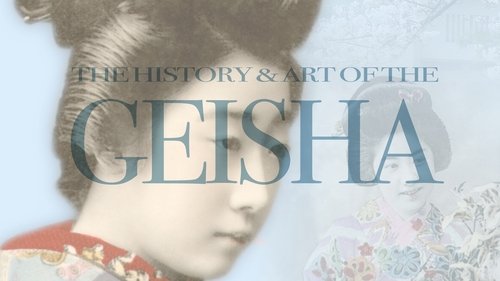
Veiled in mystery, the secret society of the Japanese geisha has fascinated Westerners for centuries. This revealing program charts the history and art of the geisha, from the society's all-male origins to the beautiful kimono-clad women trained from childhood to carry on the age-old tradition. Exploring the contemporary practice of the craft as well as its surrounding controversy, this program offers an enlightening look into the geisha culture.
Produced by the Palais de Tokyo in Paris, Smith's short video parodies the sort of cultural and educational programming interlude that one might see on European or American public television. Famous Quotes From Art History presents the bon mots of Henri Matisse as drolly recited, in French, by Smith, who then executes Matisse's suggestions with hilarious literalism.
No description available for this movie.
Filmmaker Alicia Dhanifu, who appears in director Jamaa Fanaka’s Emma Mae, constructs a rigorous and beautifully rendered history of belly dancing — its roots and history, forms and meanings. The filmmaker performs this art as well, alone and with other dancers. —Shannon Kelley
Sun Tzu's book Art of War, written 2,400 years ago, is the ultimate how-to for winning. Take a look at epic battles throughout history that prove an understanding of his strategy is the most dangerous weapon of all.
A look at the Sun, the star that revolves at the center of the Solar System, and its representation in art throughout history.
The Holographic Universe Theory of Art History (THUTOAH), investigates the holographic principle and the theory that our universe could be understood as a vast and complex hologram, and hypothesises that, beyond acknowledged art historical contexts and imperatives, artists may have also been unconsciously attempting to describe the holographic nature of the universe. Projecting over 25,000 chronological images from art history (from cave painting to global contemporary art, including outsider and psychedelic art), THUTOAH echoes conceptually the actions of CERN's particle accelerator, the Large Hadron Collider (LHC), accelerating at 25 images per second in a looped sequence. Alongside this colossal library of images is a soundtrack of interviews with scientists at CERN about the holographic principle and my Holographic Universe Theory of Art History.
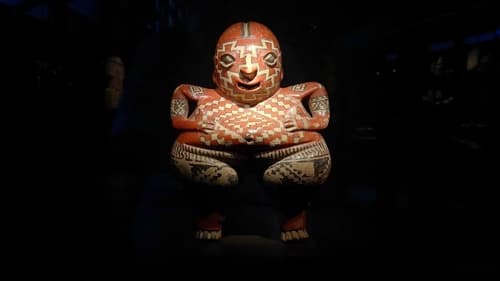
Many twentieth century European artists, such as Paul Gauguin or Pablo Picasso, were influenced by art brought to Europe from African and Asian colonies. How to frame these Modernist works today when the idea of the primitive in art is problematic?
An exploration of the pendulum between religion and sex throughout modern human history.
Fireworks enchant our senses – for a short but wonderful moment. Old family businesses have saved the tradition of fireworks to the present day. The film shows how this art form has developed over the centuries: Starting in China over a thousand years ago, we journey through the opulent Baroque era in Italy, Germany and France, experience Japanese hanabi artists in action and are also on hand to experience Guy Fawkes’ Night in the UK. We see how fireworks were democratised, becoming something that everyone could enjoy and have access to - before arriving in the present where the art of fireworks is again what it was in its heyday, a celebration of money, power and beauty.
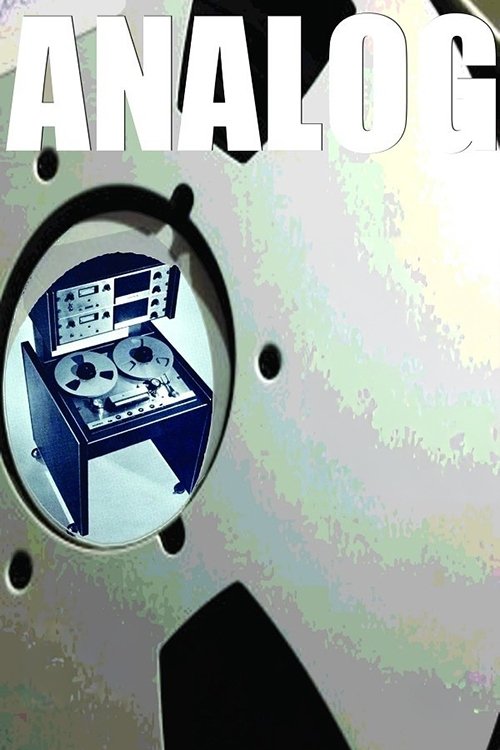
Through the passage of time, there was one format that could rival the sound quality of any other, the analog reel-to-reel tape recorder, and this is her story.
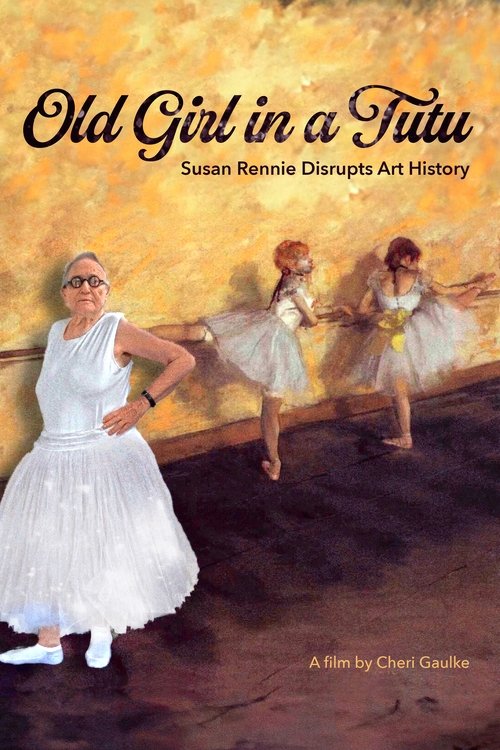
When Susan Rennie retired from academia, she returned to her first love – photography. With humor and wit, Rennie’s photographic interventions offer a feminist critique of the conventional canon of art history, and an unabashed embrace of her elder, queer identity. The results are juicy, eye-opening, and often hilarious.
As the strict classical disciplines of the eighteenth century began to fade, two very different movements came to prominence: from Constable and Turner influenced by nature, through to the stirring works of Goya and Gericault. This episode explores the genius of works such as The Third of May and The Haywain.
Following the development of non-secular art in the seventeenth century, the world of art in the eighteenth century assumed a more decorative role with a greater emphasis on pastoral themes. This episode features the work of Watteau, Boucher, Hogarth, Gainsborough and Reynolds.
Brenda Emmanus follows acclaimed artist Sonia Boyce as she leads a team preparing a new exhibition at Manchester Art Gallery, highlighting artists of African and Asian descent who have helped to shape the history of British art.

Between Dreams and History profiles American-born artist Shimon Attie as he attempts to create an ambitious work of public art in the United States after six years of artistic and public success in Europe.
While on a trip to Paris with his fiancée's family, a nostalgic screenwriter finds himself mysteriously going back to the 1920s every day at midnight.
Katherine Watson is a recent UCLA graduate hired to teach art history at the prestigious all-female Wellesley College, in 1953. Determined to confront the outdated mores of society and the institution that embraces them, Katherine inspires her traditional students, including Betty and Joan, to challenge the lives they are expected to lead.
A daughter is constantly overshadowed by her famous father, but she is determined to make her own mark in the world.
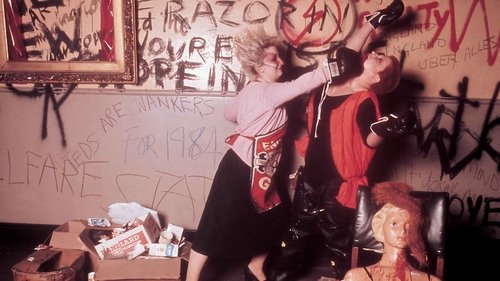
Queen Elizabeth I visits late 1970s England to find a depressing landscape where life has changed since her time.
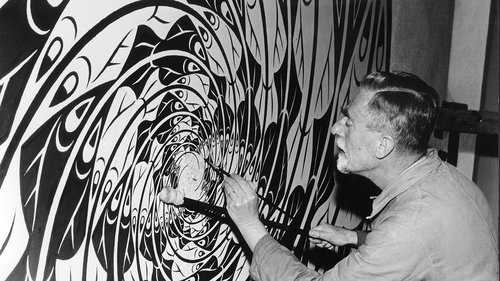
A portrait of the visionary Dutch artist M. C. Escher (1898-1972), according to his own words, taken from his diary, his correspondence and the texts of his lectures.
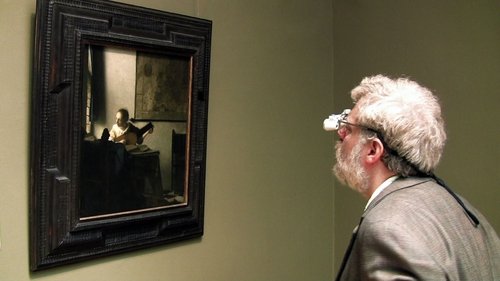
Tim Jenison, a Texas based inventor, attempts to solve one of the greatest mysteries in all art: How did Dutch Master Johannes Vermeer manage to paint so photo-realistically 150 years before the invention of photography? Spanning a decade, Jenison's adventure takes him to Holland, on a pilgrimage to the North coast of Yorkshire to meet artista David Hockney, and eventually even to Buckingham Palace. The epic research project Jenison embarques on is as extraordinary as what he discovers.
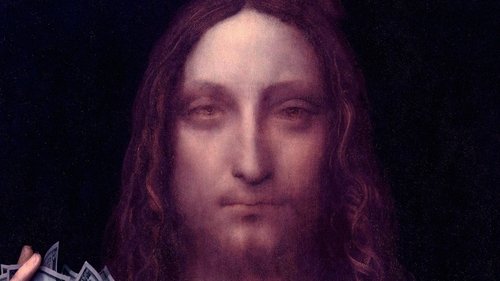
In November 15, 2017, the painting Salvator Mundi, attributed to Italian artist Leonardo da Vinci (1452-1519), was sold for an unprecedented $450 million. An examination of the dirty secrets of the art world and the surprising story of how a work of art is capable of upsetting both personal and geopolitical interests.
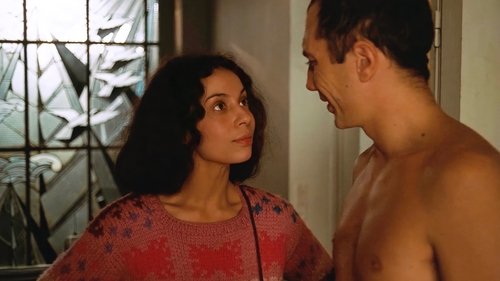
Sabine vows to give up married lovers, and is determined to find a good husband. Her best friend Clarisse introduces her to her cousin Edmond, a busy lawyer from Paris. Sabine pursues Edmond, with the encouragement of Clarisse, but Edmond does not seem very interested.

2016 marks the 500th anniversary of the death of Hieronymus Bosch. It is almost the only information about the artist of The Garden of Earthly Delights that we can put a precise date to. Bosch, the garden of dreams is a film about his most important painting and one of the most iconic paintings in the world: The Garden of Earthly Delights.
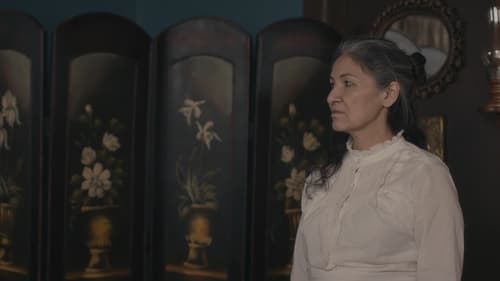
Already a successful portrait photographer, Hannah sets to reinvent this art form. Abandoning herself to a creative process that might easily be mistaken for madness, she's soon visited by mirror images of herself, as well as her daughter's ghost. Inspired by the life of photographer Hannah Maynard (1834-1918).

In the heart of Paris, an entire palace has disappeared. It was the very first residence of the kings of France. Long before Versailles, long before the Louvre, the Palais de la Cité stood on the most prestigious island in Paris, the historic cradle of France, facing Notre-Dame. So majestic in the Middle Ages, this palace has become a ghost of history. Over the centuries, this architectural masterpiece has almost completely disappeared. A trio of experts will resurrect it in 3D. Using science and unprecedented excavations, they will track down the pieces of the puzzle to reconstruct it at its peak in the 14th century, and bring back to life those who inhabited it. From the Romans to the Vikings, from Saint Louis to the cursed kings, all have left clues of this 'Versailles of the Middle Ages'.
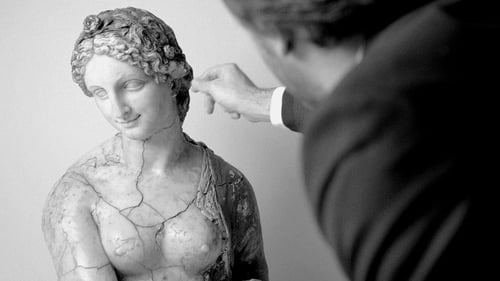
Acquired in July 1909 by art collector Wilhelm von Bode (1845-1929), director general of the Prussian Art Collections and founding director of the Kaiser-Friedrich-Museum, now the Bode-Museum, the Bust of Flora, Roman goddess of flowers, has been the subject of controversy for more than a century.
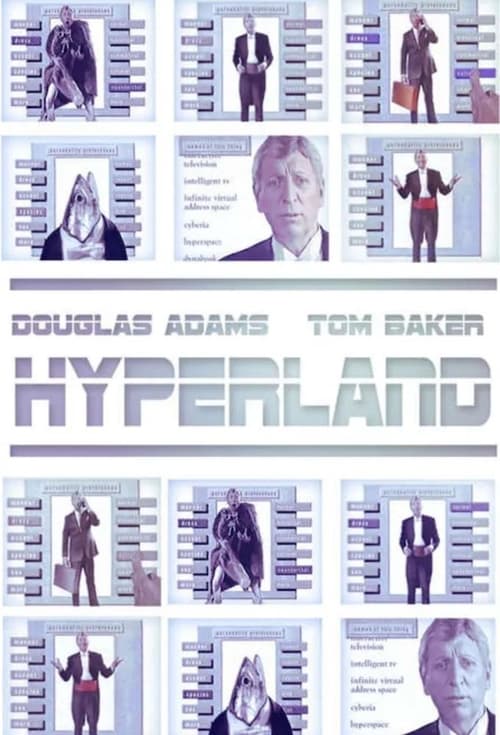
This made-for-TV documentary introduces the layperson to concepts and technologies that were emerging in computer interface design in the late 1980s and early 1990s: hypertext, multimedia, virtual assistants, interactive video, 3D animation, and virtual reality.
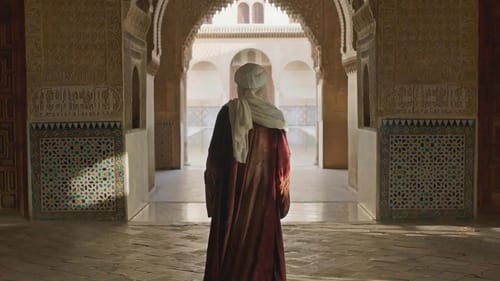
Kingdom of Granada, al-Andalus, 14th century. After recognizing that his land, always under siege, is hopelessly doomed to be conquered, Sultan Yusuf I undertakes the construction of a magnificent fortress with the purpose of turning it into the landmark of his civilization and his history, a glorious monument that will survive the oblivion of the coming centuries: the Alhambra.
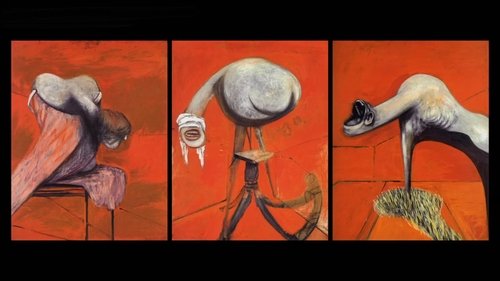
In this unique, compelling film, those who knew him speak freely, some for the first time, to reveal the many mysteries of Francis Bacon.
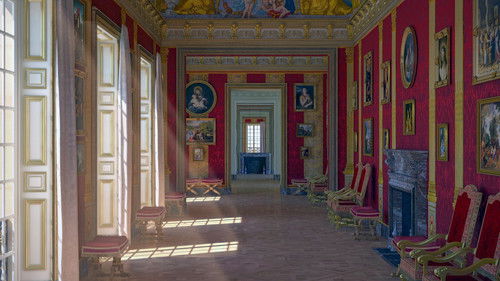
Based on the latest technological and scientific advances, this documentary explores the palace's architectural past to resurrect Louis XIV's vanished Versailles. Versailles was an ongoing building site at the time of Louis XIV and continued to be transformed by its successive occupants later on. The Versailles we know today only vaguely resembles the Versailles of the Sun King. Most of its original features and apartments no longer exist. Thanks to the digitisation of thousands of plans, a team of scientists takes us back in time to explore this forgotten past in a new way, through a large-scale reconstruction project to bring back the Versailles of Louis XIV as he designed it, according to his requirements and dreams.
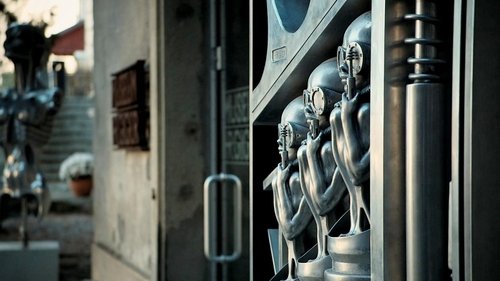
An account of the life and work of Swiss painter, sculptor, architect and designer H. R. Giger (1940-2014), tormented father of creatures as fearsome as they are fascinating, inhabitants of nightmarish biomechanical worlds.
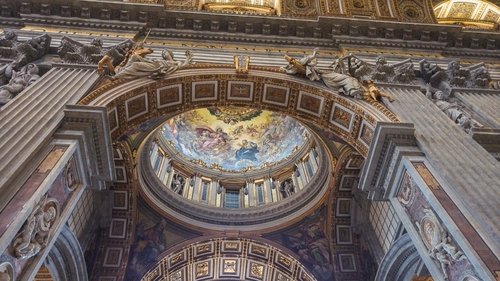
What started as a simple tomb became over a 2,000 years history the universal seat of Christendom and is today one of the most visited museum in the world with invaluable collections of Arts, Manuscripts, Maps. Using spectacular 3D modelisation and CGI to give viewers as never before a true understanding of the history of this architectural masterpiece and its extensions, the film will also use animation to tell relevant historical events. This heritage site reveals new untold secrets with the help of historians deciphering the Vatican’s rich archives and manuscripts collection and following the restorations at work (newly discovered frescoes by Raphael) and recent excavations. A story where Religion, Politics, Arts and Science meet to assert religious authority and serve as a spiritual benchmark.
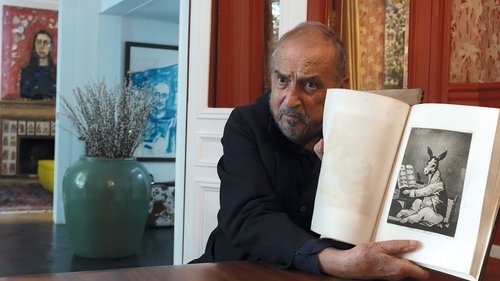
French writer Jean-Claude Carrière (1931-2021) traces the life and work of Spanish painter Francisco de Goya (1746-1828).

A documentary celebrating Lee Miller, a model-turned-photographer-turned-war reporter who defied anyone who tried to pin her down, put her on a pedestal, or pigeonhole her in any way.