
Action
Adventure
Animation
Comedy
Crime
Documentary
Drama
Family
Fantasy
History
Horror
Music
Mystery
Romance
Science Fiction
Thriller
War
Western
Found 51 movies, 13 TV shows, and 20 people
Can't find what you're looking for?
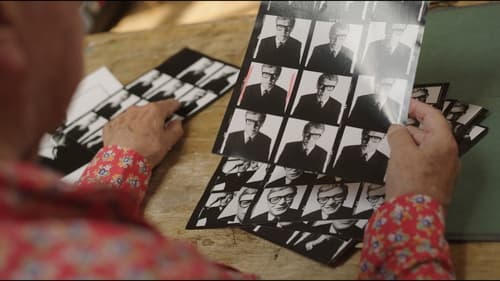
Legendary British actor Michael Caine, who began his brilliant career on stage during the 1950s, talks about his private life, his work in film and the books he has written.

A film about the Nuremberg Party Congress of the NSDAP in 1929.
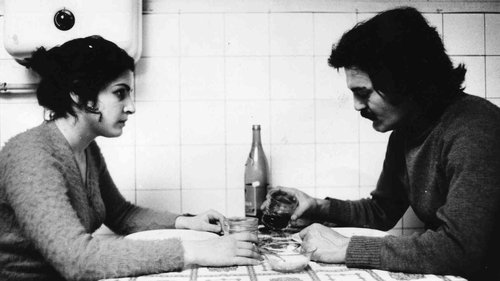
Using the example of a migrant worker couple, the film aims to draw attention to the plight of many working-class marriages. The husband works the night shift, the wife works during the day. The film dispenses with any commentary. However, its sparse, realistic images say more than any verbose analysis could.
Short film about queer left-wing people in West Berlin.
Short film about queer left-wing people in West Berlin.

Using one of the Lumière Brothers' first films of workers leaving the Factory as his starting point, Farocki provides an insight to changes in industrial production, workers' strikes and motion pictures-- via images of workers leaving factories throughout the years.

A documentary of the town of Sheffield's main pub and the people who went there.

This documentary shows how the Berliner workers lived in 1930. The director Slatan Dudow shows through images: a) the workers leaving the factory; b) the raise of the rents; c) the "unpleasant" guest, meaning the justice officer that brings the eviction notice; d) the fight of classes of the houses of capitalists and working classes; e) the parks of the working class; f) the houses of the working class, origin of the tuberculosis and the victims; g) the playground of the working class; h) the swimming pool for the working class, ironically called the "Baltic Sea" of the working class; i) the effects of humidity of basement where a family lives, with one member deaf; j) one working class family having dinner while the capitalist baths his dog; k) the eviction notice received from an unemployed family and their eviction.

During the preparations for its 100th anniversary, the Chamber of Labor is accompanied and proves to be a unique contact point for the many people fighting for their rights.
No description available for this movie.
"At the Baltic Sea spa town of Ahlbeck on the island of Usedom, Kaiser Wilhelm II becomes convinced that playing in the sand of the dunes is beneficial to the recuperation of children." - Edition Filmmuseum
No description available for this movie.
Montage of several photos of the work process of a Turkish guest worker.
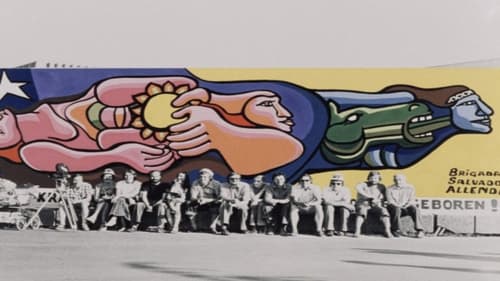
During the 16th Workers' Festival in Dresden in 1976, a student group of Chilean emigrants paints a mural symbolically depicting the activity of the Unidad Popular during Salvador Allende's reign. Festival guests comment on this work. Music by Chilean music group Jaspampa, formed in Leipzig in 1972.
A portrait of the writer and former miner Günter Westerhoff
Autobiographical documentary.
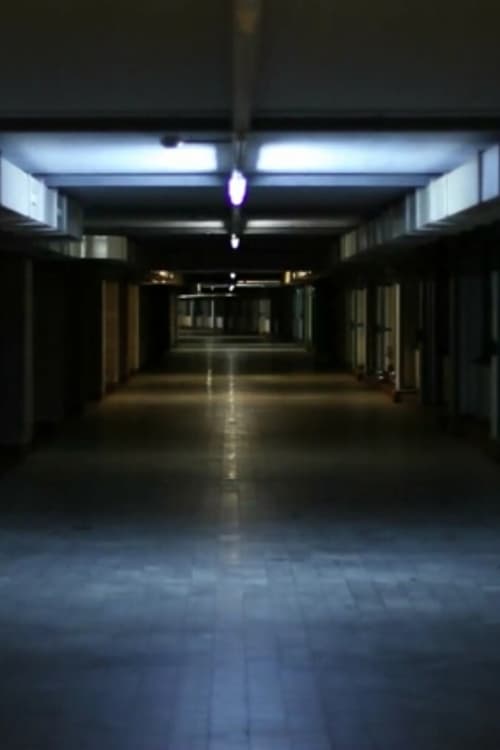
Katharina Gruzei combines a sociopolitical issue and a precise formal concept, which is rare in experimental film. Inspired by the Lumière brothers’ first film, La sortie de l’usine Lumière à Lyon, which shows a large number of workers leaving their factory’s gate, Gruzei begins in the interior, in a passageway (made to seem incredibly long by the editing) that emerges from the darkness. Solely portions of the corridor — a production line at the closed Austria Tabak factory — flash into view in the buzzing neon light. The impressive sound and choreography of light were taken from an installation by the artist in the empty spaces.
What happened in the GDR on 17 June 1953? Using a lot of original footage, Norddeutscher Rundfunk looks back on the events in a detailed report marking their 20th anniversary and shows different interpretations and explanations. Agent coup? Workers’ revolt? Popular uprising? The interpretations were controversial, even among contemporary witnesses and Western historians.
Documentary about German proletarian films in the 1920s
"The May Day of the Viennese Workers 1923" is the first of the party leadership of the SDAP commissioned documentation of Maifeier.
No description available for this movie.
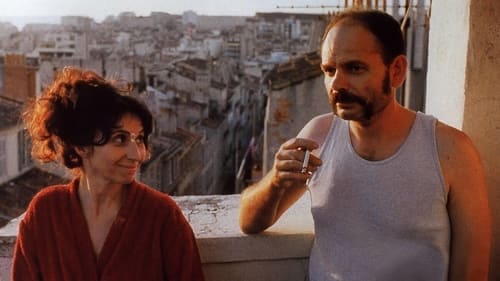
From the director of Marius et Jeannette, this story of two working-class families is a fable with an optimist streak. A young black man, Francois, is wrongly accused of rape by a racist policeman. The story is told in voiceover by his childhood friend, neighbor, and the mother of his future child, Clementine, who is white. The city is Marseilles as in the previous film, symbolic with its churches, prisons and ruins. Except in this film, director Robert Guediguian also ventures outside, taking the story to Sarajevo; two different cities, one devastated by war, the other by a bad economy and unemployment. A la Place du coeur won a Special Jury Prize at the 1998 San Sebastian Film Festival and was also shown at the 1998 Toronto Film Festival and the 1998 Montreal Film Festival.
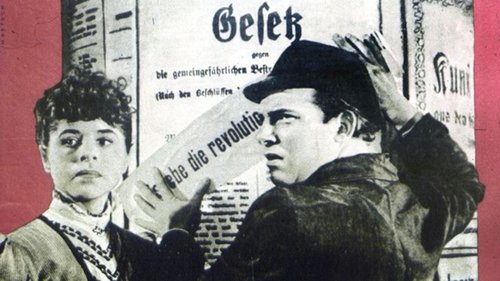
The film "Die Unbesiegbaren" covers an episode in German history, in which the Bismarck government tried to mitigate the rise of the social-democrat movement.
This color documentary tells the story of the "Mamais." In 1960, a group of workers at the Bitterfeld chemical plant set themselves the task of becoming the first "socialist brigade" in the German Democratic Republic (GDR) to act in accordance with the slogan "Work, learn, and live socialist."

A true story about a promising new love is quickly halted when two steadfast teenage girls are kept apart by suppressive parents. Evie, determined to prove herself, has one chance to fix it. She gathers her friends and races to save her first love, Frankie.
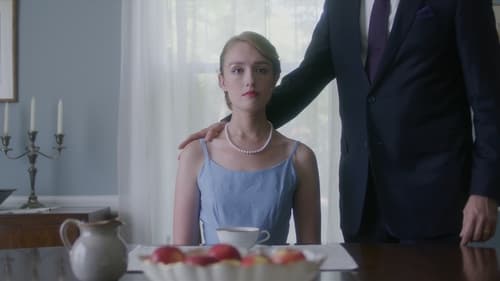
Dreams and reality collide as Shelly, a lonely 50s housewife trapped in a loveless marriage, struggles to reconcile her identity with her conflicting fears and desires.
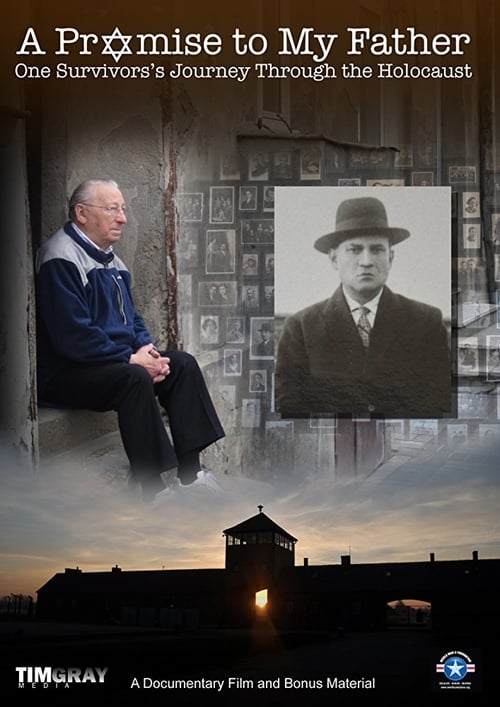
We re-trace the steps of Holocaust survivor Israel Arbeiter as he returns to Poland and Germany for the final time to look for items buried in 1939 in the basement of his old home in Plock, Poland as the German army advanced. We also travel with "Izzy" to Treblinka death camp where his parents and younger brother were murdered and to other camps, most notably Auschwitz-Birkenau, where "Izzy" used the motivation of his father's final words to him to stay alive.

Esther Newton was drawn to the drag scene as a student in the 1950s. Identifying as both butch lesbian and between genders, she felt a kinship with the queens; what the feminine clothing society expected her to wear felt like a form of drag. Her 1972 book ‘Mother Camp: Female Impersonators in America’ is noted as the first rigorous study of its kind. Now entering her sixth decade writing about queer communities, Newton exudes wisdom and a healthy dose of New York no-nonsense. The film’s amazing archive footage encompasses gay liberation, the feminist sex wars, AIDS activism and life on the safe haven of Fire Island. Her other main passion is dog training, so this illuminating history lesson is peppered with poodles!

No description available for this movie.

In this stand-up special, comedian Hazel Brugger offers her breezy takes on unruly geese, chatty gynecologists, German bank loans and more.
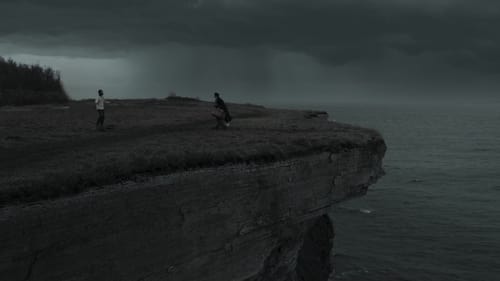
When a nun in a remote convent claims immaculate conception, the Vatican sends a team of priests to investigate, concerned about an ancient prophecy that a woman will give birth to twin boys: one the Messiah, the other the Antichrist.
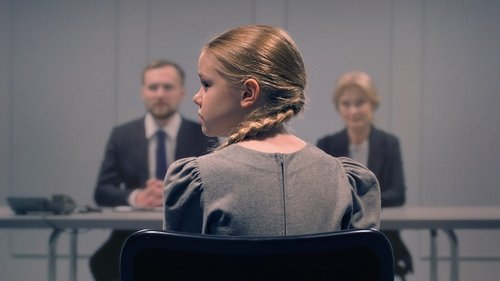
A refugee family in Sweden faces trauma after their youngest daughter falls into an unexplained coma when denied asylum. Parents struggle to find a cure, resilience tested amid difficult circumstances.

Gwen and her boyfriend Adam stumble into an open relationship. However, the light-hearted experiment gradually turns into a flurry of jealousy and unforeseen feelings. As their relationship is put under more and more pressure, Gwen has to face a familiar fear: of being alone.

No description available for this movie.

A newly minted pool owner finds himself in a moral dilemma between fulfilling the promise of a pool to his young daughter and his new partner‘s charity event for a clean-water project in Africa.
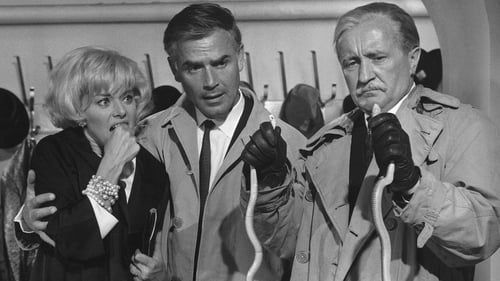
The sister of a famous, but as yet uncaught, criminal named "The Hexer" is murdered. Inspector Higgins of Scotland Yard believes that "The Hexer" will surface to take his revenge on his sister's killers, and plans to set a trap to finally capture him. However, soon bodies start piling up, and it looks as if "The Hexer" may get away yet again.
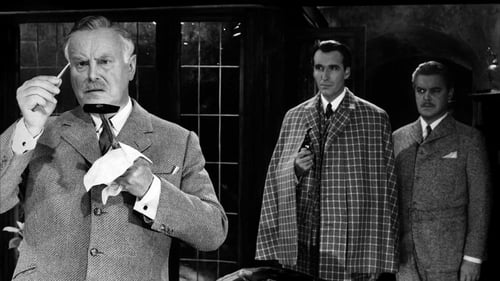
Sherlock Holmes and Dr. Watson embark on a search for Cleopatra's ancient necklace, which has been stolen.
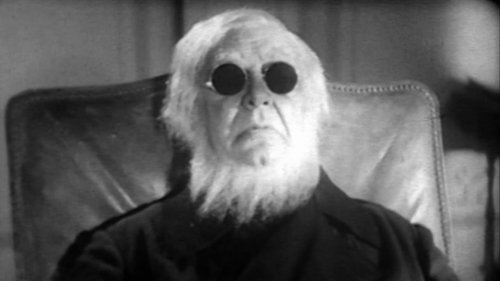
An anti-British propaganda film from Nazi Germany which depicts the life of the South African politician Paul Kruger and his eventual defeat by the British during the Boer War.

A young biracial boy seeks to reconnect with his estranged grandmother.

In 2019, Union Berlin was promoted to the Bundesliga. Four years later, the traditional East German club qualifies for the Champions League and achieves something that few would have thought possible. Despite all the euphoria over the triumph, the pressure to remain strong in sporting and economic terms also increased, as did the fear of falling into a conflict of identity between tradition and change. The fact that the soccer underdog from Köpenick still manages to retain its magic is primarily down to the people who work behind the scenes to keep things running smoothly and enthusiastically. Always at their side: a loyal fan base that is prepared to follow their club's path unconditionally. Hendel follows the team behind Union for almost two years, right up to their entry into the top flight, and takes a unique, particularly personal and authentic look behind the scenes of the club.

Funerals are of enormous cultural significance in the Kingdom of Tonga. In contrast with the taboos regarding death in Western society, death in the Kingdom of Tonga follows a highly ritualized grieving process. The last journey is accompanied by joyous song, hair cutting, gift giving, changing of the garb, lovingly made mats and tapa and social protocol. This documentary video provides an ethnographic window into the Tongan funeral ceremonies and explains the process through which the people elevate their deceased to the role of ancestor.
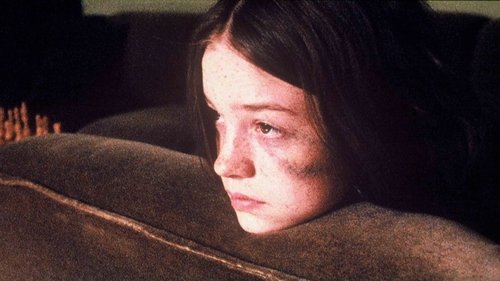
Stevie, a precocious 14-year-old girl must cope with the instabilities of her immoderate parents. When they decide to move to a small provincial town in Germany, Stevie attempts to slip into a normal life. Whilst her parents playfully escape their responsibilities, Stevie tries to make a good impression in town, spreading stories of grandeur and claiming to be the daughter of a diplomat. She makes progress. Yet the good weather doesn’t last and before long, she discovers that her parents have once more resorted to illegal means, as a way of supporting their leisurely lifestyle. As friends and hangers-on of her parents fill their new home, the chaos continually mounts. It is in this atmosphere of physical and emotional destruction, that Stevie must now start to define herself and perhaps even break free.

Gisela is a young wife and mother, living in a working class German Housing Scheme. She is a supermarket cashier, her husband a delivery driver. The marriage is stale but together they are working their way up into the middle class. George and Gisela evidently knew each other as teenagers. They live on the same scheme and George introduces her to his friend Paul. There is instant mutual attraction. Gisela spontaneously goes to a party that they invite her to that evening, where she and Paul begin a sexual relationship.

In this musical, four young hopefuls from different parts of the country head to New York for a shot at Broadway stardom.

Die Haut filmed live at Tempodrom, Berlin, August 1992. Featuring guest vocalists Alexander Hacke, Anita Lane, Blixa Bargeld, Kid Congo Powers, Lydia Lunch and Nick Cave.

Little Kati spends her summer at her grandma's. Her playmates are the village boys and the whole countryside - animals, flowers, the wind and stones. Kati conjures up the sun and floats above the fields of flowers and the whole universe. There is no borderline between reality and the magic world. Is it possible to play the same game also at her home in the city?

The story of Balthasar Russow, an Estonian pastor from the 16th century, his life and life's work - writing The Chronicle of Livonia.

No description available for this movie.
No description available for this movie.
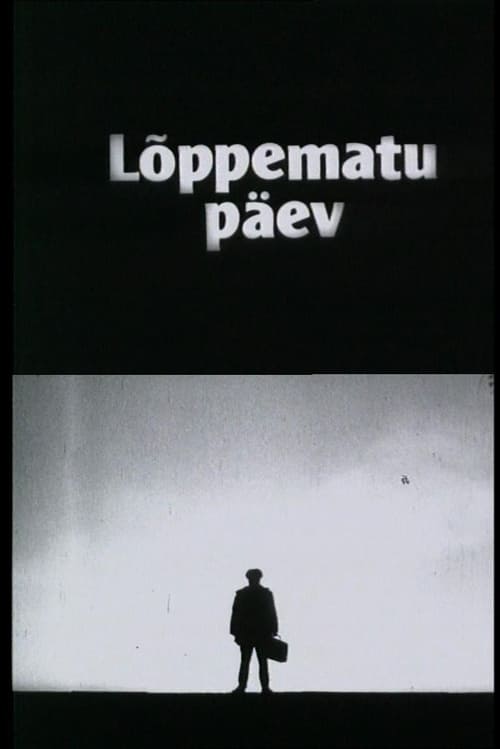
Among Tooming's filmic works, Endless Day provides perhaps the most eloquent material for investigating the radical renewal of visual and narrative form, as well as the shifting registers of spatio-social portrayals and critiques in Estonian cinema. It was banned in 1971 and ordered to be destroyed. However, the film was retained and restored in the 1990s.
A film about Soviet Estonia.