
Action
Adventure
Animation
Comedy
Crime
Documentary
Drama
Family
Fantasy
History
Horror
Music
Mystery
Romance
Science Fiction
Thriller
War
Western
Found 28 movies, 12 TV shows, and 0 people
Can't find what you're looking for?

An educational film about the traditional way of climbing up and down a mountain covered in snow and ice.
No description available for this movie.

Breathtaking climbing sequences. As a guide, none other than "The Rock Queen" Catherine Destivelle. Climbing companions of the caliber of Chris Bonington or Tom Livingstone, one of the greatest Himalayan climbers today... for the production of "Great Britain, Journey to the Sources of Mountaineering," Vincent Perazio and Bertrand Delapierre have proven themselves equal to a complex but fascinating subject: the British origins of mountaineering. A journey through time. Since the second half of the 19th century and the beginnings of the British writer Albert F. Mummery, who would become the first sport mountaineer, notably in the Alps and the Caucasus.
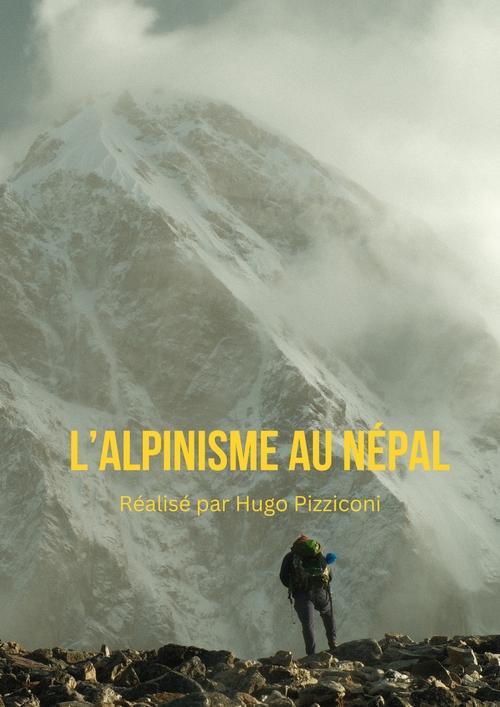
No description available for this movie.
The documentary traces the development of the phenomenon of alpinism and questions the motives of the early pioneers, who set themselves a monument with their mountaineering achievements.
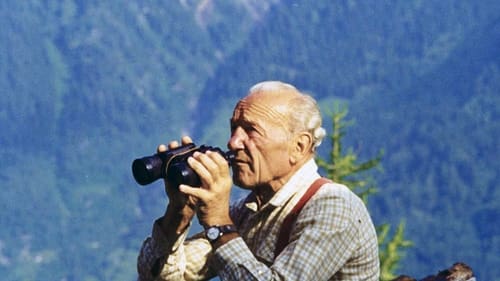
No description available for this movie.
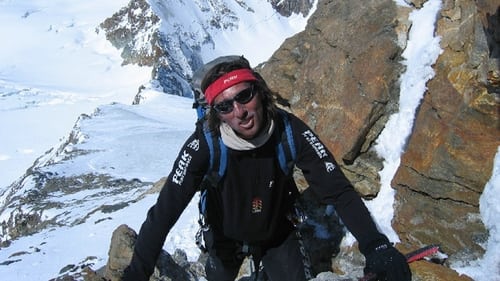
Sur le fil des 4000 is a documentary film by Gilles Chapaz, which traces the last rope of the mountaineering duo Patrick Berhault and Philippe Magnin. The objective of the roped party was to climb the 82 peaks over 4000 meters in the Alps, by carrying out the connecting routes on foot, on skis or by bike. All at the end of winter and the beginning of spring. They left on March 1, 2004, from Saint Christophe en Oisans. The film shows us in images this alpine adventure, from which the spirit of competition is excluded, to make way for the simple pleasure of being in the mountains. This posthumous film was edited after the disappearance of Patrick Berhault, which occurred during the expedition on April 28, 2004.
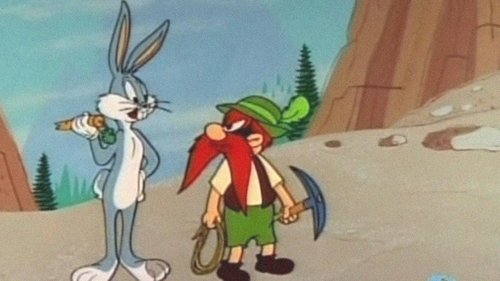
In the Alps Bugs and Yosemite Sam vie for 50,000 Cronkites, the prize for the who "climbs the Schmatterhorn."
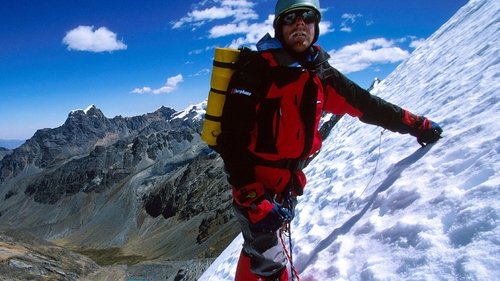
The true story of Joe Simpson and Simon Yates' disastrous and nearly-fatal mountain climb of 6,344m Siula Grande in the Cordillera Huayhuash in the Peruvian Andes in 1985.
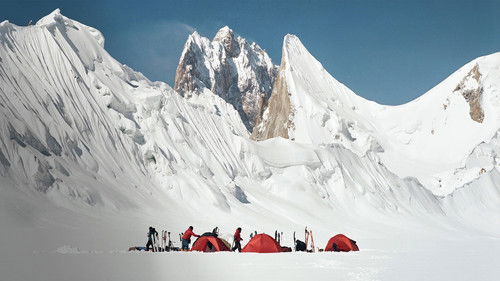
An expedition film in the form of a multi-voice travel diary, where all emotions pass through the spectators who are immersed for three weeks with these riders and guides in the Karakoram massif in Pakistan.
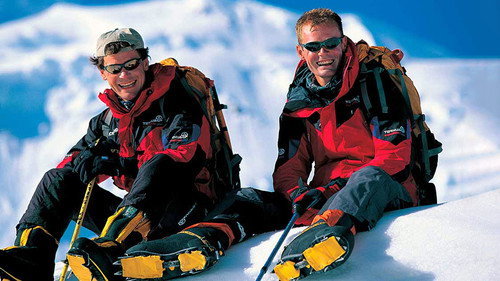
Gure Himalaya is a documentary about the mountaineering exploits of the Iñurrategi brothers between 1990 and 1998 — from climbing Pumori and Gyala Peri to tracking down the yeti. It was directed by Alberto Iñurrategi in 2005 and produced by BBK, starring Alberto Iñurrategi, Félix Iñurrategi, José Luís Zuloaga, Juanjo San Sebastián, Jon Lazkano, Iñaki Ochoa de Olza and others.
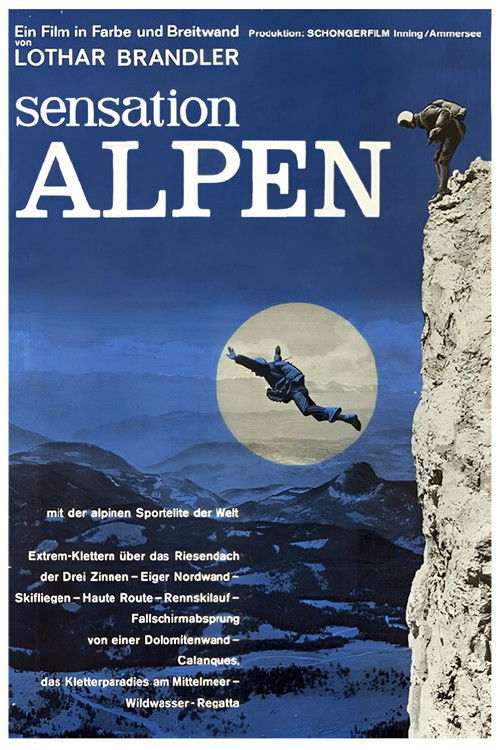
From Trento to Chamonix, via Zermatt; from the Morgiou cove to the Eiger's north face; from Planica to the Lavaredo peaks, the Alps are depicted, illustrated, and magnified in all their unique and sublime beauty, through the sports practiced there and the most typical customs and traditions of their inhabitants. A helicopter rescue and a parachute jump from the Red Wall by Wolfgang Weizenbocks are experiences not to be missed.
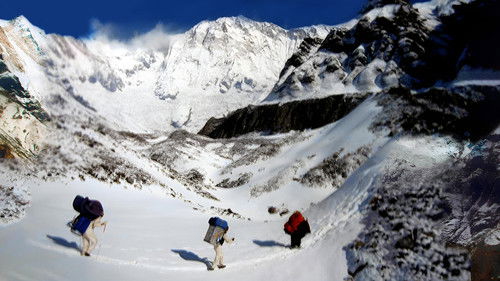
An international expedition led by French mountaineer Benoit Chamoux reached the summit of Annapurna (8091 m) on Tuesday, May 10, 1988, via its south face, one of the most difficult routes in the Himalayas. The expedition, named "L'Esprit d'Equipe" (The Spirit of Team), financed by the computer company Bull (Chamoux thus secured one of the largest contracts in the history of mountaineering: twenty million francs to carry out his project), aimed to reach six peaks over 8,000 meters, as a full team, within three years: Annapurna, Everest, Manaslu, Cho Oyu, Makalu, and Kangchenjunga. The challenge results: in 1988: Annapurna (8091 m) - 5 out of 6 men reached the summit, 1988: failed on Everest, 200 m below the summit, 1989: Manaslu (8183 m) - 8 out of 8 men reached the summit in 4 teams of 2, 1990: Cho Oyu (8201 m) - 7 out of 7 men reached the summit, 1990: Shisha Pangma (8013 m) - 7 out of 7 men reached the summit.

The first ascent of the Matterhorn was made on July 14, 1865 by Edward Whymper, Francis Douglas, Charles Hudson, Douglas Hadow, Michel Croz and two guides from Zermatt, Peter Taugwalder father and son. Douglas, Hudson, Hadow and Croz are killed on the descent after Hadow slips and drags the other three men down the north face. Whymper and the two Taugwalders, who survive, are later accused of having cut the rope that connected them to the rest of the group so as not to be dragged into the fall, but the ensuing investigation finds no evidence of their guilt and they are acquitted. The Matterhorn is the last great peak in the Alps to be conquered and its ascent marks the end of the golden age of mountaineering. One hundred and fifty years later, a team undertakes the same expedition in order to unravel the mystery.
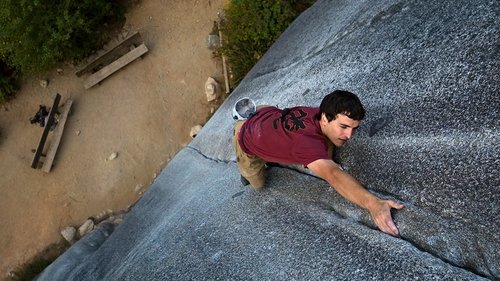
“There’s a fine line between being bold and being a dumbass. And I think Brad did some time on both sides of the line.” Such are the words filmmaker and climber Cedar Wright uses to describe the subject of his new film. Meet Brad Gobright, 27 years old, busboy at a fine dining establishment, dirtbag, college dropout. Gobright’s diet consists of sprinkled donuts, scraps from work, glazed croissants, apple pie, and any and all junk food. And one other thing: Gobright is one of the best and boldest free solo climbers in the sport — who nobody has ever heard of. Safety Third shines the spotlight on Gobright, probably for a shorter moment than he deserves. But it doesn’t matter. His mind is elsewhere, focused on his next free solo.

This documentary is a reconstruction, based on archive footage, testimonies, and filmed reconstructions, of the Vincendon / Henry tragedy. December 1956: Jean Vincendon and François Henry, two young mountaineers, aspire to join the High Mountain Group. Lacking experience, they set out to climb Mont Blanc via the Brenva spur in the middle of winter. The weather conditions deteriorated, and they decided to give up before meeting Walter Bonatti and Sylvano Gheser. They then decided to continue the climb and set off in two different roped parties. Bonatti decided to take refuge at the Vallot refuge higher up, rather than descend. The two young mountaineers, overcome by the poor weather conditions and fatigue, remained stuck for several days at 4,000 meters. What followed was a completely disorganized rescue operation that became, for more than ten days, a spectacle for all of France and a national tragedy.
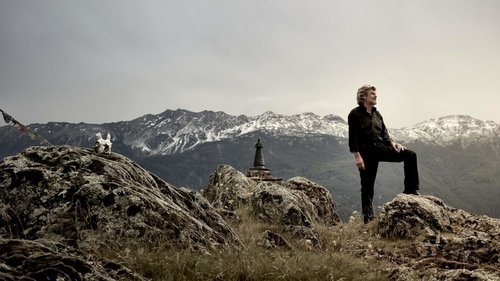
Born in 1944 in South Tyrol, Reinhold Messner was introduced to climbing peaks by his father as a child. He has since climbed the fourteen mountains of the world culminating at more than 8,000 meters, and notably has to his credit the first ascent of Everest alone and without oxygen in 1980. This portrait is made up of the story given by mountaineer of his journey as well as testimonies from his loved ones and traveling companions. The interviews are interspersed with reconstructed scenes and extracts from archive films recounting his exploits. But there is no question here of becoming hagiographic, because Messner also draws his strength from his failures. When he's not climbing or roaming the desert, this troublemaker devotes his energy to various causes. In his Juval castle, located in his native South Tyrol, he exhibits the equipment of his expeditions as well as various objects, notably Tibetan. He has also written around fifty works to date.

This documentary follows the life and climbs of legendary alpinist Jeff Lowe, through his visionary ascents around the world up to his final dance with a terminal disease. Centered around Jeff’s most daring climb, Metanoia – solo, in winter, up the North Face of the Eiger in Switzerland — which changed his life and prepared him for the greatest adventure of all: facing his own mortality. It is a mind-bending adventure through time and space that gives physical form to Jeff's unique philosophies and inspiring creative genius.
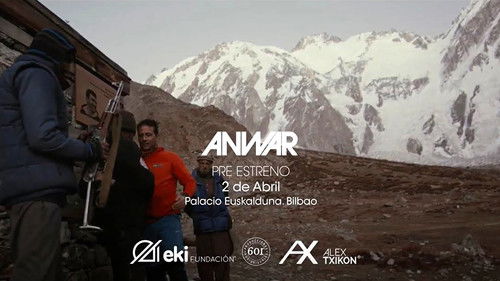
Alex Txikon, internationally renowned mountaineer, is launching a new winter expedition in 2021 to Manaslu (Nepal). It is the first non-polluting ascent, powered by solar panels. With this sustainable system, which reduces the energy footprint in accordance with the Paris Agreements, the EKI Foundation is beginning its work of solidarity. Alex is going to learn about the work developed by the Foundation in Sierra Leone, where they provide solar energy systems that enable energy autonomy in schools and hospitals. Txikon proposes to replicate this idea in a very special school in the Diamer Valley in Pakistan, the Günter Mountain School, uniting two different but at the same time equal cultures.

March 12, 1987. The young French mountaineer Eric Escoffier prepares his equipment, very reduced in material and food. He leaves the next day and intends to chain three north faces in the Alps: Eiger, Matterhorn and Grandes Jorasses. The ascent of the first summit, the Eiger is slow, difficult and full of pitfalls. It takes 17 hours to reach it. Without recognizing the terrain -he prefers to improvise- the mountaineer continues through the Matterhorn. When night falls, anxiety is felt on Zermatt's side. Help is organized to pick him up. Despite his refusal to return, Escoffier is finally hoisted. Christophe Profit, a few hours earlier, managed the chain of three summits.
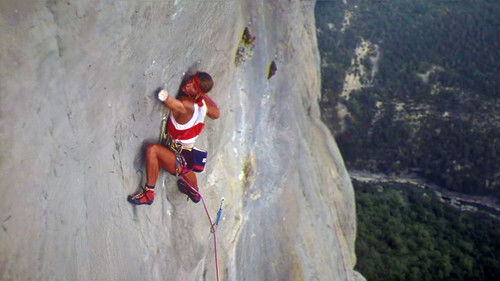
Vertical Opera is a documentary film directed by Jean-Paul Janssen, with climbers Patrick Edlinger and Jean-Paul Lemercier in the Gorges du Verdon. The film opens with a training sequence of Patrick Edlinger then he links the routes with Jean-Paul Lemercier "L'Ange en décongelation" (7a), in which he falls voluntarily to demonstrate the usefulness of the rope, then "Le Septième Saut" (7b+). Finally, the final scene, an anthology, consists of a close-up of Edlinger who climbs free solo and barefoot the route "Débiloff", still in the Verdon, above hundreds of meters of void, all to lyrical music. It is "Wie Furchtsam Wankten Meine Schritte", the aria for alto voice from Johann Sebastian Bach's cantata BWV 33, music not unrelated to the subject of the documentary: "How faltering and fearful my steps were".

Catherine Destivelle has deservedly become the most famous female climber in the world. She rose to prominence with historic climbs, such as the free ascent of the Nameless Tower in Pakistan, and solo winter ascents of the classic north faces of the Matterhorn and the Eiger, climbs that have never been repeated by any woman. She also made history in sport climbing by winning the world championship title. In 1997, this time in Scotland, on the iconic Old Man of Hoy route, opened by Bonington, Patey & Baillie, Martin Belderson crowned Destivelle Queen of the Rock. She was four months pregnant when she made this 137-meter ascent, which was not difficult but on tricky rock.
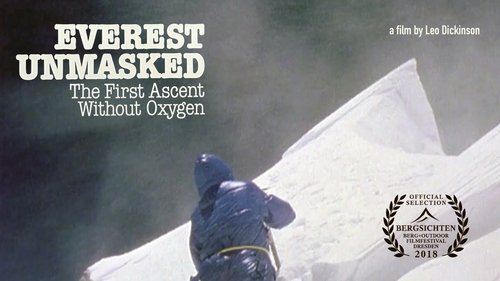
Record of the first ascent of Everest made without the use of oxygen equipment, made in May 1978 by Reinhold Messner and Peter Habeler. Could it be done? Would their blood vessels burst? Would they suffer brain damage leading to madness? Nobody was sure. Messner: 'I would never come here for trying Everest with oxygen. That is not a challenge for me.' A fascinating piece of history, well filmed by Leo Dickinson and Eric Jones (above the South Col Messner used a cine camera to continue the filming), featuring Messner and Habeler's thoughts. The film follows the usual sequence from Namche to Base Camp, through the Icefall, to Camps I, II and III. It also shows historical footage of the pioneering Mallory and Shipton expeditions.
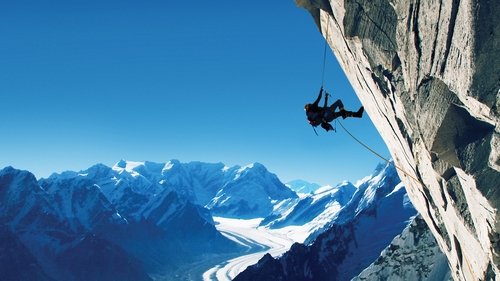
Meru is the electrifying story of three elite American climbers—Conrad Anker, Jimmy Chin, and Renan Ozturk—bent on achieving the impossible.
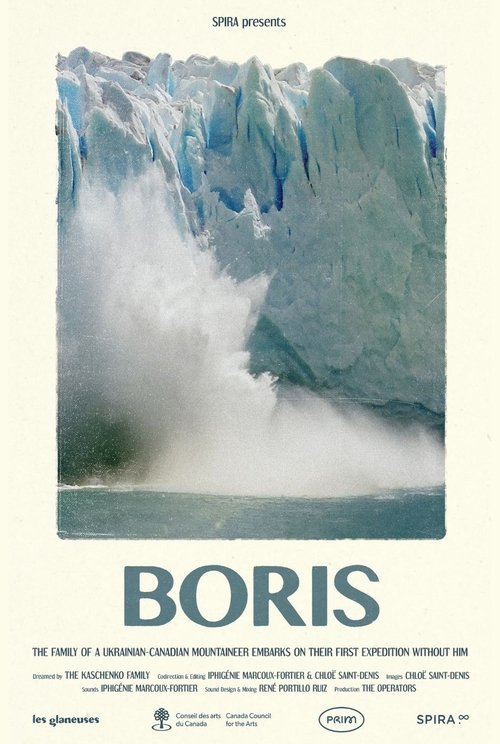
Boris was a Ukrainian-Canadian mountaineer whose love for mountains was deeply spiritual. Now, his family must face their first expedition without him as they take his ashes to Patagonia – a place he considered Heaven on Earth. A contrast of laughter and tears, BORIS is a story about finding meaning after loss, and the power of nature to heal and unite us.

In 1975, Raymond Renaud, Yves Pollet-Villard, Maurice Gicquel, Maurice Cretton, Jean Coudray, Yvon Masino, Walter Cecchinel, all teacher guides at ENSA in Chamonix, with the help of the Indian Mountaineering Foundation, set out to cross the 2 peaks of the highest mountain in India. After 43 hours in a truck, 10 days of slow and difficult approach walking, helped by goats for the portage due to lack of sherpas, the base camp is set up on the Nanda Devi glacier. Two groups share the two eastern and western slopes, 3 kilometers separate them: the goal being to meet between the two summits by the ridge. But on the big day, with the monsoon, bad weather arrives with wind and snow, we will have to give up. Like the French expedition of 1951 which lost two mountaineers, Roger Duplat and Gilbert Vigne, to whom Paul Gendre and Louis Dubosc pay tribute.
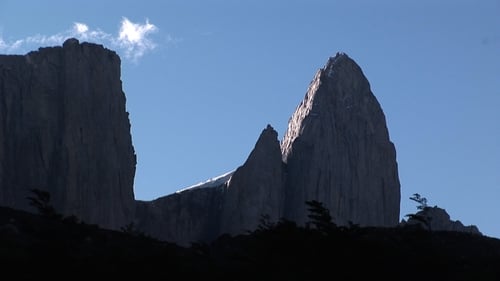
Twelve talented young mountaineers, five geologists from the University of Lausanne and four mountain guides take an unprecedented risk in Patagonia. Trained by the great climbers Ralf Weber, Ueli Steck, Denis Burdet and David Fasel, the young people are collecting rock samples from the granite walls of the Paine Towers, which are up to 1000 meters high, on behalf of science. The challenges are enormous: Climbing a big wall at the highest level of difficulty, cloudy weather, relentless wind that tears at material and nerves - and an urgency that also pushes the group to their emotional limits. "Flying High" not only documents an extraordinary undertaking, but also shows up close what happens when something happens that can happen after every meter of altitude climbed: a fall.
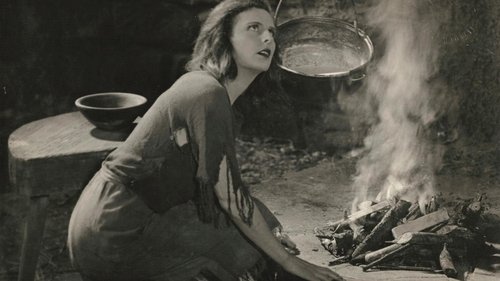
Junta is hated by the people in the village where she lives, especially by the women, who suspect her of being a witch. Only she can climb the nearby mountains to a cave high up, whence a mysterious blue light glows when the moon is full. Many young men of the village have died trying to follow her. She is driven out of town, and takes to living in the mountains. Eventually she shares the secret of the blue light with one man, and he betrays it.