
Action
Adventure
Animation
Comedy
Crime
Documentary
Drama
Family
Fantasy
History
Horror
Music
Mystery
Romance
Science Fiction
Thriller
War
Western
Found 21 movies, 1 TV show, and 0 people
Can't find what you're looking for?
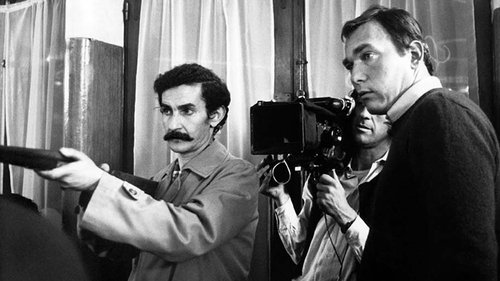
Who remembers Mohamed Zinet? In the eyes of French spectators who reserve his face and his frail silhouette, he is simply the “Arab actor” of French films of the 1970s, from Yves Boisset to Claude Lelouch. In Algeria, he's a completely different character... A child of the Casbah, he is the brilliant author of a film shot in the streets of Algiers in 1970, Tahya Ya Didou. Through this unique work, Zinet invents a new cinema, tells another story, shows the Algerians like never before. In the footsteps of his elder, in the alleys of the Casbah or on the port of Algiers, Mohammed Latrèche will retrace the story of Tahya Ya Didou and its director.
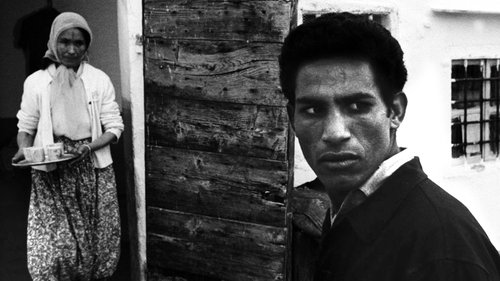
Paratrooper commander Colonel Mathieu, a former French Resistance fighter during World War II, is sent to Algeria to reinforce efforts to squelch the uprisings of the Algerian War. There he faces Ali la Pointe, a former petty criminal who, as the leader of the Algerian Front de Liberation Nationale, directs terror strategies against the colonial French government occupation. As each side resorts to ever-increasing brutality, no violent act is too unthinkable.
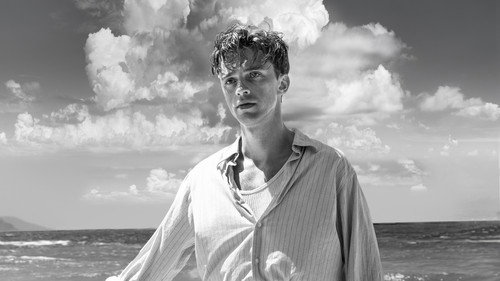
Algiers, 1938. Meursault, a quiet and unassuming employee in his early thirties, attends his mother's funeral without shedding a tear. The next day, he begins a casual affair with Marie, a work colleague. He quickly slips back into his usual routine.
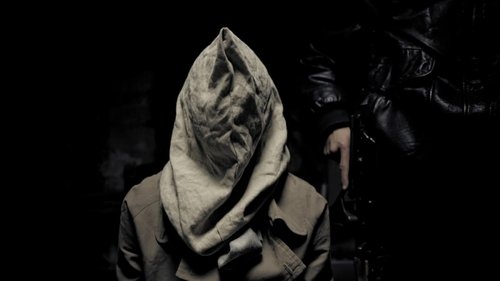
December 1994. On Saturday 24th, four GIA terrorists hijack an Air France A300 Airbus, bound for Paris, with 227 passengers on board, at the Algiers airport.
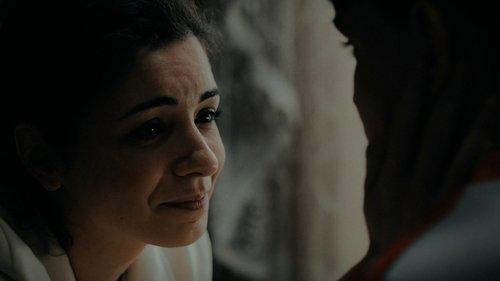
The kidnapping of a little girl creates tension and suspicion in Algiers. Only Dounia, a brilliant psychiatrist, and Sami, a police inspector, can unearth the demons of the past.
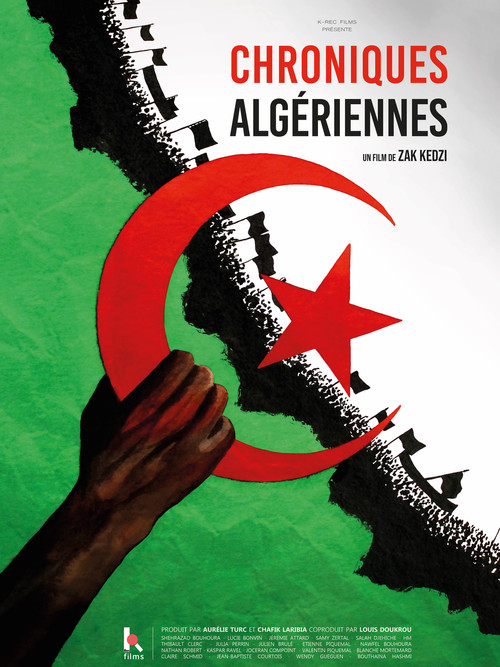
Summer 2019, Zak wanders the streets of Algiers and dives into the Hirak, a series of protests taking place in Algeria since February of that year. His chronicles are nourished by encounters with men and women who take an enlightened look at their country and its struggles: through their words, the strength and complexity of such a movement emerge.
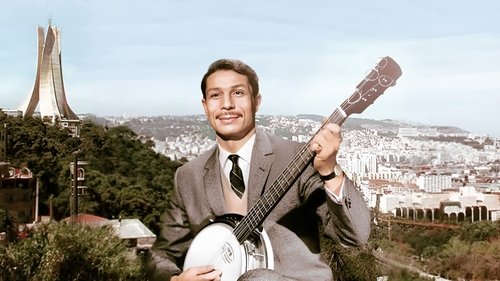
Film about Dahmane El Harrachi, musician, singer and composer of the famous song "Ya Rayah", a cult song covered by Rachid Taha, which will enjoy international success. Virtuoso of the banjo, the work of Dahmane El Harrachi did not initially respond to the canons of the purists of Algiers Chaâbi song. However, he will end up establishing himself alongside great masters of the genre, El Hadj M'hamed El Anka, Boudjemaâ El Ankis, El Hachemi Guerouabi, Amar Ezzahi... He plays his own role in this film shot with his musician friends, just before his tragic death in 1980 in a car accident on the Corniche of Algiers.
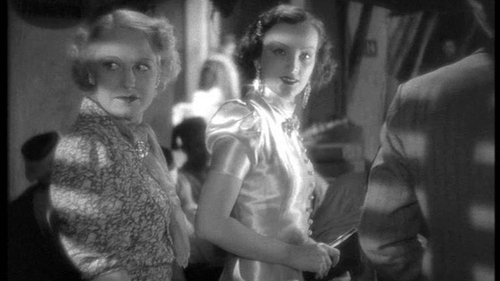
Pépé le Moko, one of France's most wanted criminals, hides out in the Casbah section of Algiers. He knows police will be waiting for him if he tries to leave the city. When Pépé meets Gaby, a gorgeous woman from Paris who is lost in the Casbah, he falls for her.

Nedjma, an 18-year-old student passionate about fashion design refuses to let the tragic events of the Algerian Civil War keep her from experiencing a normal life. As the social climate becomes more conservative, she rejects the new bans set by the radicals and decides to put on a fashion show.
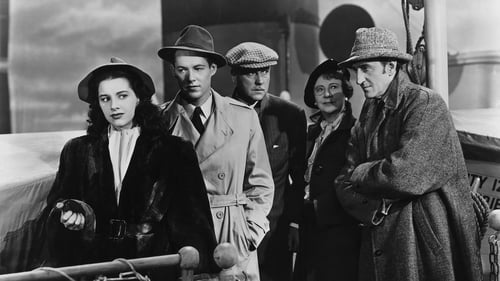
After the King of Rovenia has been assassinated, Holmes and Watson are engaged to escort his son to Europe via Algiers, aboard a transatlantic ocean liner which also carries a number of suspicious persons, any of whom may be involved in a plot to also assassinate him.

Pepe Le Moko is a notorious thief, who escaped from France. Since his escape, Moko has become a resident and leader of the immense Casbah of Algiers. French officials arrive insisting on Pepe's capture are met with unfazed local detectives, led by Inspector Slimane, who are biding their time. Meanwhile, Pepe meets the beautiful Gaby, which arouses the jealousy of Ines.

Farid, a teenager of Algerian descent, spends his free time hanging out with the wrong crowds in the suburbs south of Paris while maintaining a secret relationship with illustrator Jean. Both Jean and Farid are unsure about the future of their relationship - Farid wants Jean to move to Algiers with him, but Jean doesn't want to continue being Farid's secret. But when Farid becomes embroiled in a police matter, both his passionate private life and conservative family life hurtle towards one another, with explosive results.

In 1982, Hadj Rahim directed "Serkadji", a fiction film about the men's quarters of the Barberousse military prison in Algiers, where hundreds of FLN fighters were incarcerated and executed during the war of independence. Algeria between 1954 and 1962.
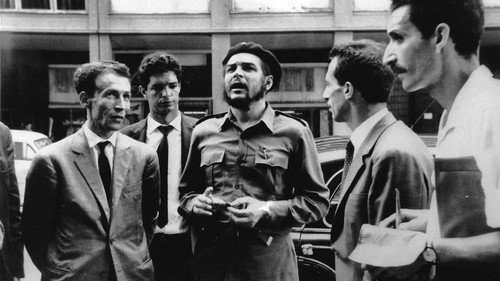
From the early 1960s to the mid-1970s, independent Algeria provided significant support to anti-colonial movements and revolutionaries worldwide. Successive presidents, Ahmed Ben Bella and then Houari Boumédiène, made Algiers a haven for activists fighting against colonial and racial oppression. Algiers the White became Algiers the Red. The internationalist Che Guevara established his base of operations there for his guerrilla activities in Africa. The African-American leader Eldridge Cleaver made it the international headquarters of the Black Panther Party. During this period, Algiers was known as "The Mecca of Revolutionaries."
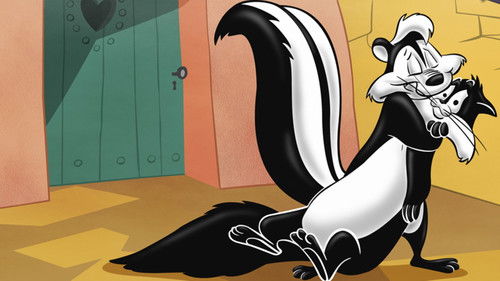
Penelope, an American tourist cat who's gotten a white stripe of paint down her back, is pursued through the Casbah by the amorous skunk Pepe Le Pew, who woos her with his rendition of "As Time Goes By".

Originally commissioned by the city of Algiers to promote tourism, Mohamed Zinet’s Tahia ya Didou blends documentary with fiction to create a poetic, acerbic and rapturous portrait of the director’s native city. The camera travels freely, through the port, market, streets and cafés, capturing everyday people, some of whom recur frequently enough to seem like protagonists. The nominal plotline follows a French tourist couple’s leisurely visit to the city, the man having previously served in the army during the Algerian war. As they walk around, his comments betray his mindset’s racist colonial prejudices, while his wife reiterates asinine clichés. Their unhurried wandering is interrupted when he comes across a blind man and realises that he tortured him during his army service. The film is punctuated with punchy sequences that show a poet named Momo delivering verse as an elegy for Algiers.
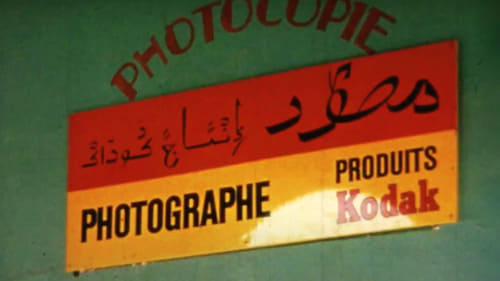
"Film shot on the 'bench' from hundreds of photos, buildings, streets, towns unusually colorful for a North Mediterranean eye. The editing was composed on a score because the shots are generally very short, up to two images, and they do not follow each other "cut" or crossed but in "racket". The progression of shots varies from faintly colored recognizable to strongly colored unrecognizable. The soundtrack is composed of Arabic music that gradually turns into free-jazz. » Mannheim Festival, 1973
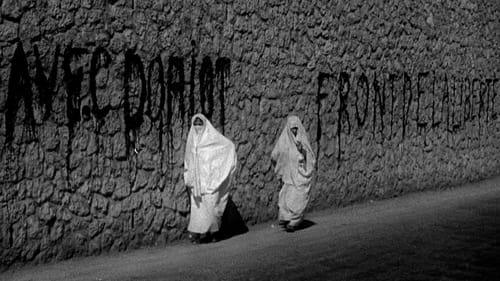
World War II, June 1940. France has fallen and suffers the relentless boot of Nazi Germany. But Algeria, the prized French colony in North Africa, remains part of the territory controlled by the Vichy regime of Marshal Pétain. A strict colonial order is maintained: the French of European origin rule, while local Jews are stripped of French citizenship and discrimination against the mainly Muslim population increases.
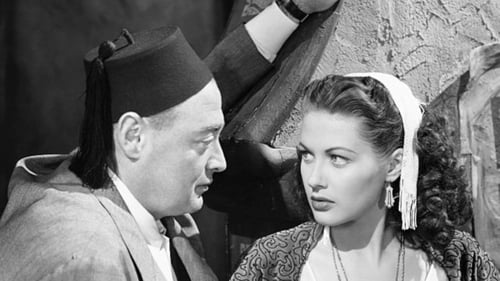
Pepe Le Moko leads a gang of jewel thieves in the Casbah of Algiers, where he has exiled himself to escape imprisonment in his native France.

A young Arab boy, a teenager "Yaouled", who lives on the streets and scrapes by doing odd jobs: shoe shining, street vending, etc. The film tells the story of a group of yaouleds from the Bab-el-Oued neighborhood, caught in the crossfire between the French settlers on one side and the Algerians on the other during the events of July 1962 in Algeria.
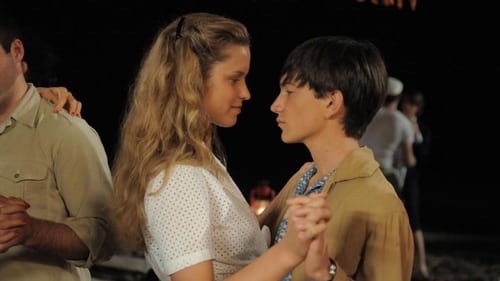
The writer Louis Gardel remembers his youth in Algeria. In 1955, Louis is 15 years old and lives with his grandmother Zoé. Zoé is friend with president Steiger, leader of the French settlers but also with the old Arab Bouarab. One night looking at the Bay of Algiers, Louis is convinced that the world in which he has grown will disappear. The first events of the War of Independence have begun. The young boys and young girls have a good time at the seaside: swimming, dancing, flirting. But, little by little, the war becomes part of their daily life.