
Action
Adventure
Animation
Comedy
Crime
Documentary
Drama
Family
Fantasy
History
Horror
Music
Mystery
Romance
Science Fiction
Thriller
War
Western
Found 20 movies, 6 TV shows, and 0 people
Can't find what you're looking for?
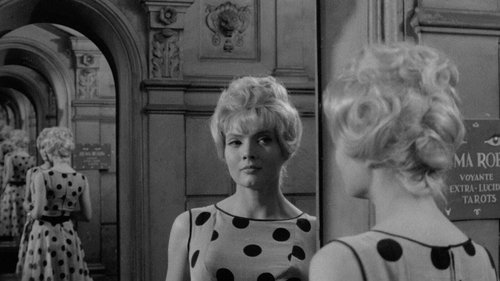
Agnès Varda eloquently captures Paris in the sixties with this real-time portrait of a singer set adrift in the city as she awaits test results of a biopsy. A chronicle of the minutes of one woman’s life, Cléo from 5 to 7 is a spirited mix of vivid vérité and melodrama, featuring a score by Michel Legrand and cameos by Jean-Luc Godard and Anna Karina.
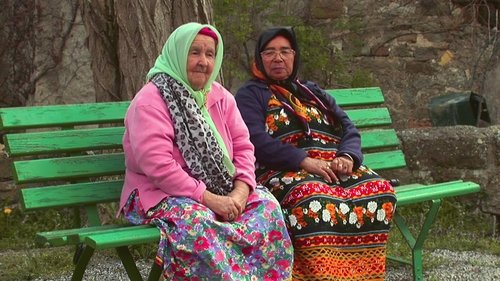
In 1963, Rosans, a village in the Hautes-Alpes region depopulated by the rural exodus, welcomed Harkis (military soldiers) forced to leave Algeria for supporting France during the Algerian War. Around thirty families settled in a camp below Rosans. Nearly half a century after their arrival, first- and second-generation Harkis and native Rosanais recount their experiences of this culture clash, often painful, sometimes happy. Language barriers, religious differences, living in barracks for 14 years, and unemployment were all obstacles to overcome in order to be accepted and then achieve mutual enrichment. Enriched with archive footage to explain the historical context of the time, the film seeks above all to express feelings and unspoken words.
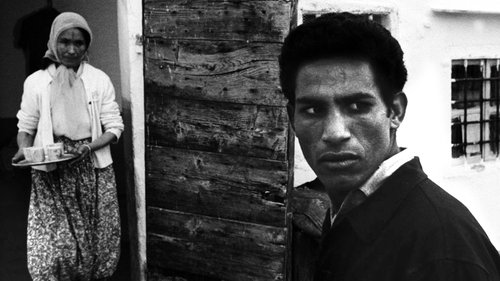
Paratrooper commander Colonel Mathieu, a former French Resistance fighter during World War II, is sent to Algeria to reinforce efforts to squelch the uprisings of the Algerian War. There he faces Ali la Pointe, a former petty criminal who, as the leader of the Algerian Front de Liberation Nationale, directs terror strategies against the colonial French government occupation. As each side resorts to ever-increasing brutality, no violent act is too unthinkable.
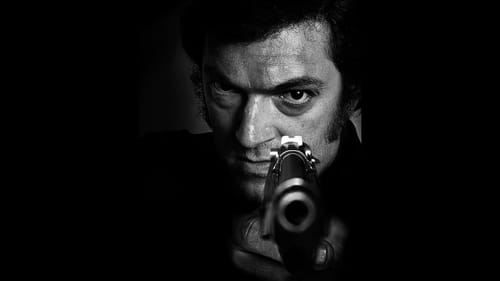
Jacques Mesrine, a loyal son and dedicated soldier, is back home and living with his parents after serving in the Algerian War. Soon he is seduced by the neon glamour of sixties Paris and the easy money it presents. Mentored by Guido, Mesrine turns his back on middle class law-abiding and soon moves swiftly up the criminal ladder.
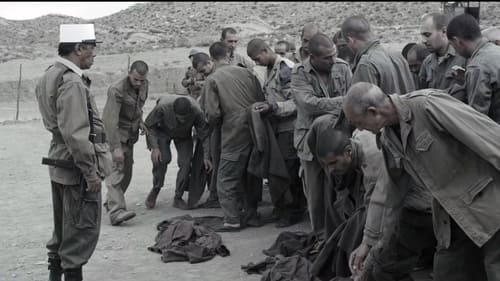
The city of Lambèse is the scene of torture, both physical and moral, for the resistance fighters of the Algerian War. In the form of a fictional account adapted from the novel "Le camp" by Abdelhamid Benzine, the conditions in the special camps of the colonial army, where we accompany a group of detainees, in their daily life animated by violence are depicted. are former Nazi officers, whose mission is to abandon all resistance, and all ideological faith, through humiliation and drudgery.
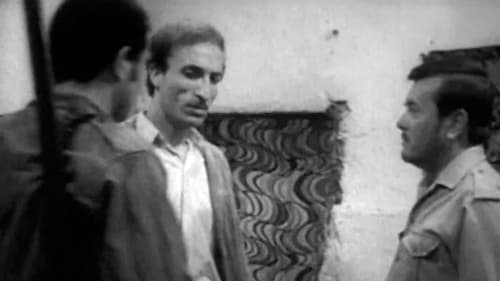
During French colonization, a young Algerian boy is expelled from the French high school where he is able to study thanks to his father's position in the village. For his father, whose dream is to see his son climb the social ladder, this is a disaster, and the young man decides to go to work in the mines. A general strike that is severely repressed makes him aware of the class struggle, and he joins the resistance against discrimination and colonial oppression.

In this film, four key witnesses, who live in Algeria today, as full-fledged Agerians, show us what this colonization was really like, so "beneficial" that they themselves perceived it as the oppression of one people by another. Three of them, who today would be called "pieds noirs," in other words, those Europeans to whom France, the occupying power, gave the best land, taken from the indigenous populations, work, and exclusive rights, not shared by the entire population, lived rather well compared to the majority of the "natives." The fourth was far from all that and lived in Argentina. Annie Steiner, Felix Colozzi, Pierre Chaulet, and Roberto Muniz explain to us what led them to show solidarity with the struggle of the weak, the humiliated, and to risk their freedom and their lives by committing to liberate Algeria.
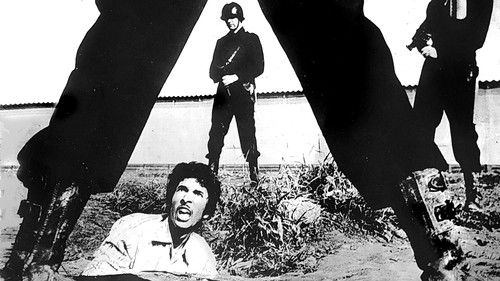
The Algerian War is seen through the eyes of a group of Algerian freedom-fighters who have been captured and incarcerated in French-run military prisons both in France and Algeria. In addition to attempts at escape, this prison drama also includes propaganda and brainwashing attempts by the French and scenes of torture. In what is possibly the most horrible torture of all, the inmates are forced to listen to broadcast speeches by General Charles de Gaulle -- speeches which illustrate the changing relations between the French and the Algerians.
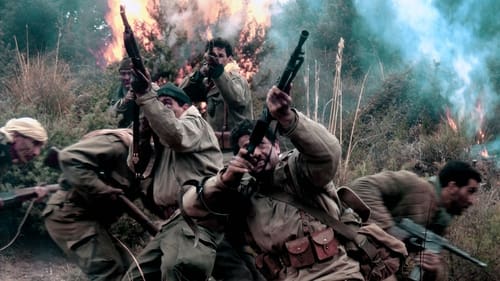
The film revolves around the life of the martyr Mustapha Ben Bouleid (1917-1956), who was a member of the Algerian National Movement, who worked with his comrades to explain the idea of the armed revolution in which he led in Aures region in 1954. The film depicts how Ben Bouleid traveled to a number of Arab countries Disguised to bring arms to Algeria for the revolution and how the French colonial forces arrested him in the Tunisian-Libyan border, and from there to Algeria to be sentenced to death.

In 1880, in colonized Algeria, it was decided that the Algerian peasants of the Ouarsenis mountains would see their lands dispossessed in favor of the French colonists. Two methods were used to achieve this, either by sheer force or by a ploy forcing the fellahs to pay fines too high to be paid. The uprooted must then leave for the cities, swelling the mass of proletarians in the slums ...
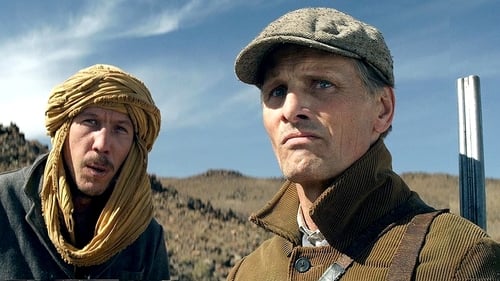
A French teacher in a small Algerian village during the Algerian War forms an unexpected bond with a dissident who is ordered to be turned in to the authorities.
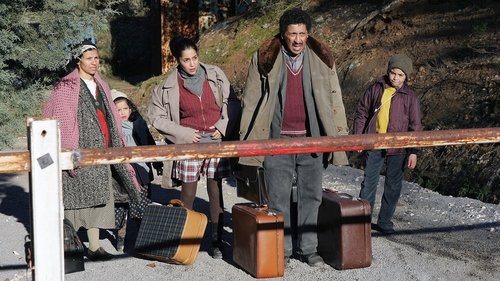
1972, in the south of France, deep in the forest, a family with meager luggage discovers the new camp where they will live. Despite the camp leader's overt paternalism, the Harkis lead a difficult life without real freedom. A life of poverty and guardianship that Leila, the Benamars' eldest daughter, rejects. She is at the age of rebellion, and also of her first love. For her, her father, Saïd, scarred by war and exile, accustomed to giving in, owes nothing to the French who enlisted him in the French army, then failed to protect them in Algeria. Thanks to her, with the help of a peasant couple, he will raise his head and the Benamars will leave the camp for a nearby farm.
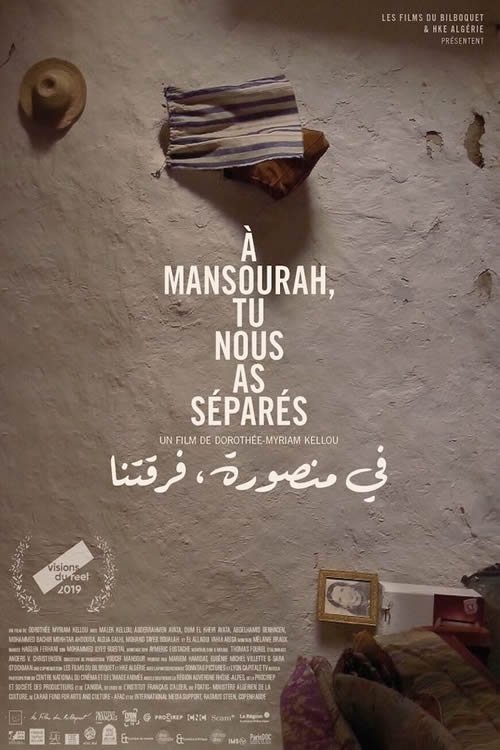
Originally there was a silence. That of Malek, the filmmaker’s father, who for years said nothing of his childhood in Algeria. And then, the need to break the silence, with a script that he gives to his children, to start telling his story. Several years later, the father and daughter finally make the journey to Mansourah, his native village: seeing his house, meeting other men who experienced the same heartbreak. Little by little, the film reveals what Malek, like many others, has long kept quiet about.
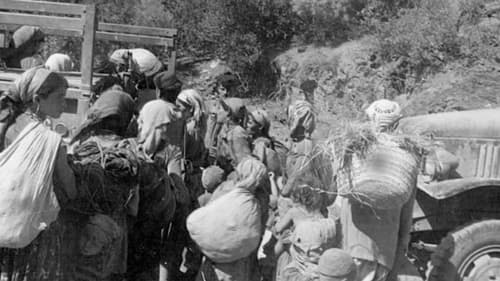
Directed by Pierre Clément and Djamel-Eddine Chanderli, produced by the FLN Information Service in 1958, this film is a rare document. Pierre Clément is considered one of the founders of Algerian cinema. In this film he shows images of Algerian refugee camps in Tunisia and their living conditions. A restored DVD version released in 2016, from the 35 mm original donated by Pierre Clément to the Contemporary International Documentation Library (BDIC).
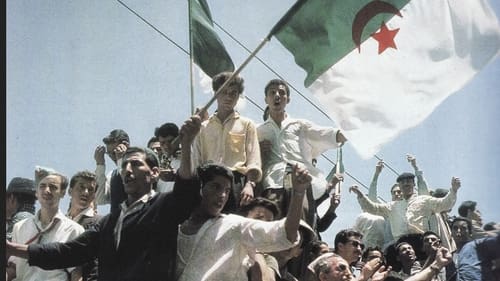
By meeting his former comrades in combat, the film follows the journey of Yves Mathieu, anti-colonialist in Black Africa then lawyer for the FLN. When Algeria became independent, he drafted the Decrees of March on vacant property and self-management, promulgated in 1963 by Ahmed Ben Bella. Yves Mathieu's life is punctuated by his commitments in an Algeria that was then called "The Lighthouse of the Third World". The director, who is his daughter, returns to the conditions of his death in 1966.

"Rupture is a look at a complex and little-known period in the recent history of Algeria, that of the thirties, a time when a political conscience was beginning to assert itself. I wanted to understand how and by what miracle, despite the small individual and collective revolts that had failed in the past, the unity of the Algerian people had been forged around the reconquest of independence. The main figures who worked, each in their own way, for this idea, are men who have always lived in the shadows and forgotten. And that's how I tried through this film to pay tribute to all those who gave up everything to dedicate themselves to a cause they considered just". Mohamed Chouikh

"Yasmina" filmed in 1961 in the middle of the Algerian war tells the story of a little Algerian girl with her hen and her family whose father was killed in a bombing by the French colonial army of occupation. The family, after a long journey, heads towards the refugee camps on the Tunisian border. Produced by the Cinema Service of the Provisional Government of the Algerian Republic (GPRA) in the midst of the war of independence, these films were intended to re-inform the population and international public opinion on the abuses committed by the French colonial army: torture, arrests and arbitrary executions, napalm bombings, fires in douars, entire villages wiped off the map, etc. which the French media described as a "pacification" campaign. The latter censoring or reorienting any images that could harm the colonial narrative.
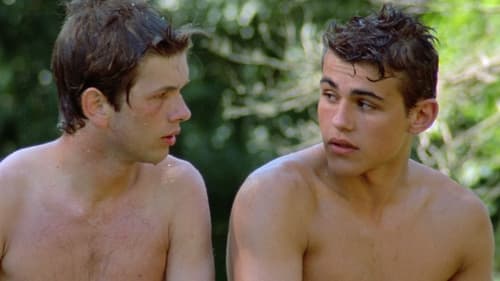
As the Algerian War draws to a close, a teenager with a girlfriend starts feeling homosexual urges for two of his classmates: a country boy, and a French-Algerian intellectual.
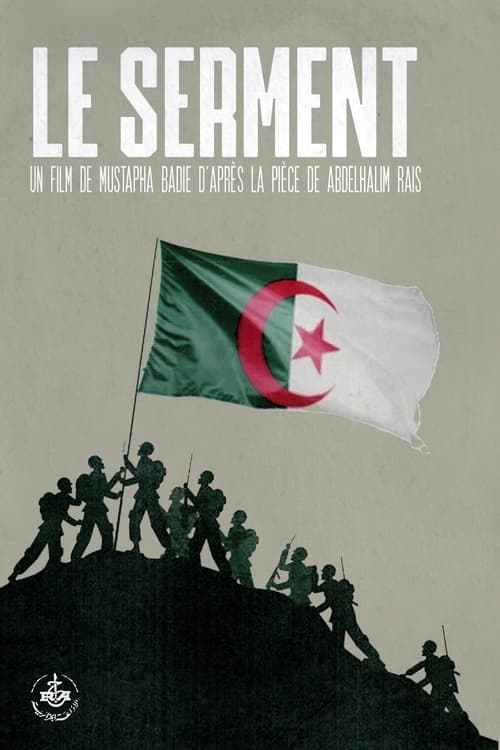
The Oath, a TV film produced by Algerian television in 1963 following the end of the war of independence, tells the story of young Algerians who joined the resistance after the bloody repressions of May 1945 in Constantinois by the French colonial army .

After a bad breakup, a college-aged Parisian moves into her father's flat only to discover that he is living with his new girlfriend - a young woman her age.