Action
Adventure
Animation
Comedy
Crime
Documentary
Drama
Family
Fantasy
History
Horror
Music
Mystery
Romance
Science Fiction
Thriller
War
Western
Explore all movies appearances
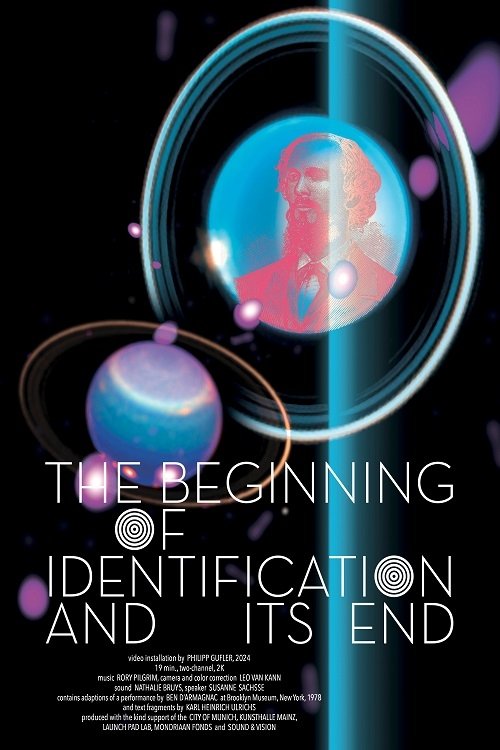
A video installation composed of a performance by the artist alongside archival film scenes centered on queer and transgender content. Presented across two projections, the film juxtaposes explicit and everyday expressions of non-normative sexuality: from people dancing freely at a lesbian party to Charlotte Charlaque's reverent smile, and the provocative speeches of far-right homosexual politicians. This collage is underscored by a rich soundtrack featuring recitations from Karl Heinrich Ulrichs’s seminal 19th-century texts advocating for decriminalizing homosexual love, interwoven with atmospheric and pulsating soundscapes by English artist Rory Pilgrim. These elements immerse viewers in a poetic and political reflection on the histories and expressions of excluded sexualities and genders.

A bar full of people talking about Volker Spengler. HIGHFALUTIN is an attempt to create such a utopia, a simple "what if."

An archaeologist and a weapons designer, who knew each other in a previous life as a filmmaker and a psychoanalyst, meet at an excavation site in the Negev desert and begin a conversation about love and war, which they continue in the Israeli city of Be’er Sheva. A series of encounters with alternating actors in different roles ensues, which leads the viewer through the cities of Athens, Berlin, Hong Kong and São Paulo. Among those appearing are: an old artist who meets his younger self; a mother who lives with her two grown-up sons, a priest and a policeman; a Chinese and a Japanese woman; a curator and a cosmologist.

Inspired by Derek Jarman’s 1978 queer punk film Jubilee, Contra-Internet: Jubilee 2033 follows Ayn Rand and members of her Collective, including Alan Greenspan, on an acid trip in 1955.

In Ger(wo)many, when an army of radical females is preparing for a final revolution and a utopian world without men, a young male soldier arrives seeking refuge at the convent.
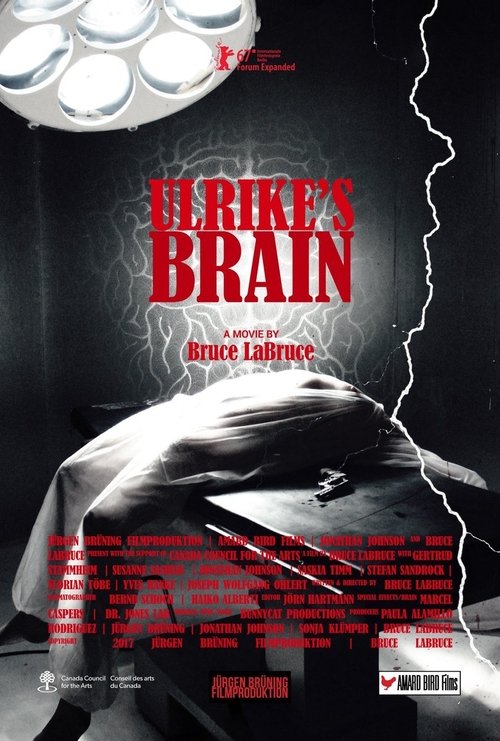
Referencing sixties B-movies like "They Saved Hitler’s Brain" and "The Brain That Would Not Die", Ulrike’s Brain finds Doctor Julia Feifer (Susanne Sachsse) arriving at an academic conference with an organ box. Inside the box: the brain of Ulrike Meinhof, which was saved by the authorities along with the brains of the three other leaders of the RAF after their deaths in Stammheim prison. Doctor Feifer can communicate telepathically with Ulrike’s brain, which is directing her to lead a new feminist revolution. To that end, she is searching for the ideal female body to transplant Ulrike’s brain into. At the same time, her arch-rival, Detlev Schlesinger, an extreme right-wing ideologue, arrives at the conference with the ashes of Michael Kühnen, the former German neo-Nazi leader and infamous homosexual who died of AIDS in 1989. When the two Frankenstein’s monsters of the extreme left and the extreme right meet, chaos ensues.
Invited by the conductor Premil Petrovic to stage Arnold Schoenberg’s Pierrot Lunaire, a musical theater work from 1912 based on the poems of Albert Giraud, LaBruce transposed a strange and tragic episode of true crime onto the composition. Complementing the original atonal score is a narrative about a trans man who is outed by his girlfriend’s father and forbidden from seeing the young woman again. Crestfallen, the protagonist decides to prove the fact of his manhood by castrating a taxi driver and then revealing his newly transplanted member to the two of them. This story, which for LaBruce “serves as a kind of allegory for all gender radicals and outcasts driven to extremes by the disapproval and hostility of the dominant order,” is rendered in a visual style that nods to the era of Schoenberg’s melodrama. LaBruce cheekily appropriates the formal vocabulary of silent cinema with black-and-white photography, irises, and intertitles like “A cock, a cock, my kingdom for a cock!”

A modern story of an actress that is in a theatre. In a place designed for representation, for daily reenactments of human passions, the film is focusing on the cruel awakening of the actress to her true self. More precisely to an “ancient self”. The one most people edit out of their lives: the garbage self.
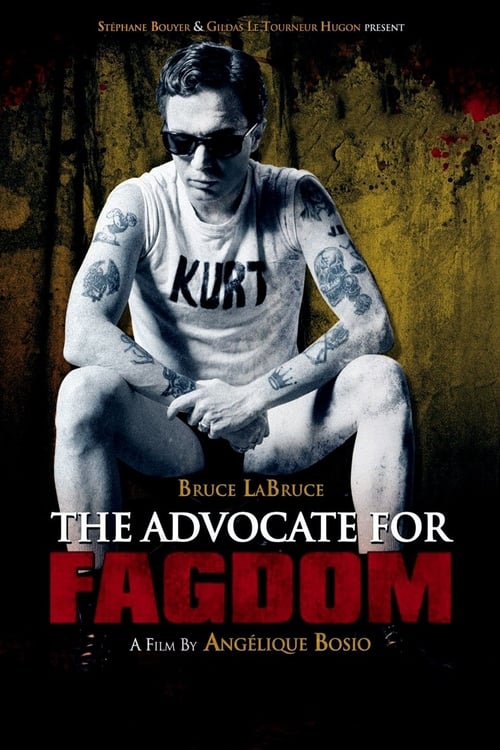
The Advocate for Fagdom unites the puzzle pieces one by one. Testimonies are combined with rare archive images. Art galeries present movie extracts that are succeeded by images shot on location. And the other way round. Writers, film makers, art galeries owners, actors and actresses, photographers, producers, friends and loved ones all join in a game of interpretation, analysis or simple anecdotes. John Waters, Bruce Benderson, Harmony Korine, Gus Van Sant, Richard Kern, Rick Castro and others deliver their impressions, theories and confessions. Everything blends into the fascinating portrait of a singular person blessed with singular talents. A complex personality at war not with a system but all systems. The portrait of a man constantly moving between his punk attitude and extreme sensibility.

This mockumentary shows the mourning events after the assassination of Slawomir Sierakowski, leader of fictitious Jewish Renaissance Movement in Poland.
Subscribe for exclusive insights on movies, TV shows, and games! Get top picks, fascinating facts, in-depth analysis, and more delivered straight to your inbox.