
Action
Adventure
Animation
Comedy
Crime
Documentary
Drama
Family
Fantasy
History
Horror
Music
Mystery
Romance
Science Fiction
Thriller
War
Western
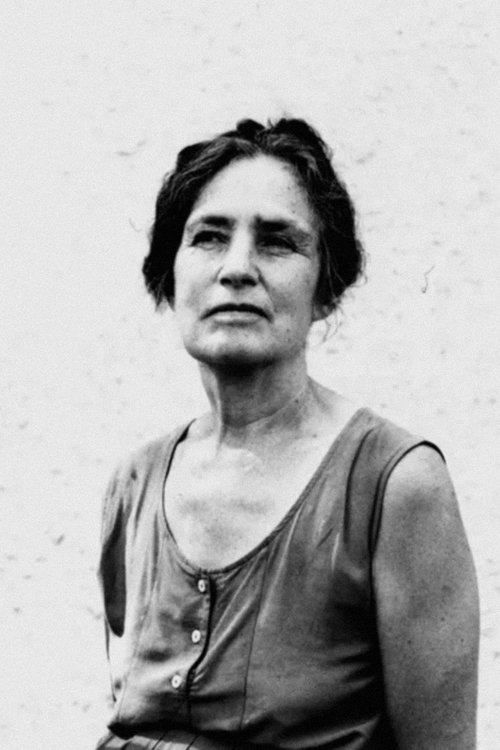
Danièle Huillet was born on May 1, 1936 in Paris, France. She was a director and editor, known for Sicily! (1999), Class Relations (1984) and The Chronicle of Anna Magdalena Bach (1968). She was married to Jean-Marie Straub. She died on October 9, 2006 in Cholet, Maine-et-Loire, France.
Explore all movies appearances
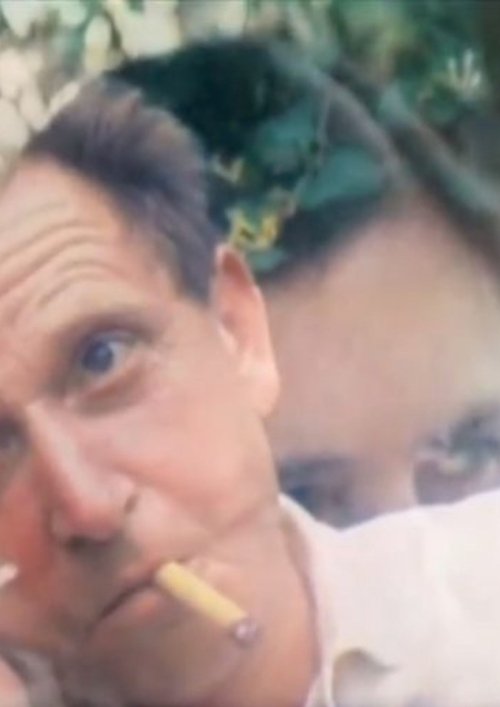
Discuss, discuss, but we must not forget the laundry! Snatches of dialogue, of thoughts that mingle happily with the faces that also mingle with each other. From films number 342 and 343 by Gérard Courant: “Jean Marie Straub”, 1984 and “Danièle Huillet”, 1984.

Short film commissioned by the Cinemathèque Suisse to celebrate Jean-Marie Straub's 85th birthday.
Short film commissioned by the Cinemathèque Suisse to celebrate Jean-Marie Straub’s 85th birthday.
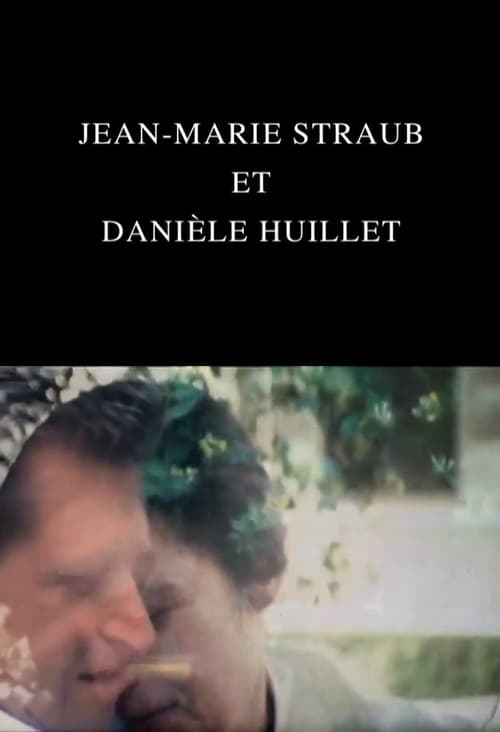
"Jean-Marie Straub and Danièle Huillet" is the overlay of two Cinematons by Gérard Courant with Jean-Marie Straub and Danièle Huillet: "Jean-Marie Straub, Cinématon number 342" and "Danièle Huillet, Cinematon number 343," filmed on May 27, 1984.
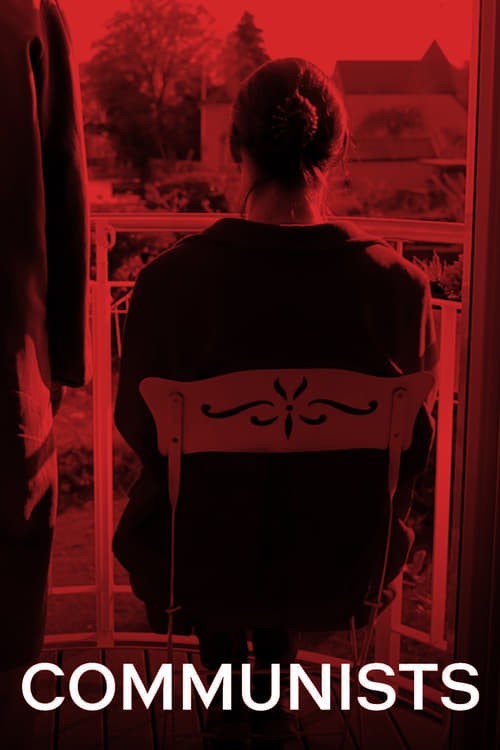
Jean-Marie Straub pushes this musicality of blocks to a paroxysmal extreme, mixing blocks of time (40 years separate the various extracts that are going to be used, and what is to be filmed), blocks of text (Malraux, Fortini, Vittorini, Hölderlin) and blocks of language (French, Italian, German), and from this ruckus emerges the history of the world, yes, History with a capital H, and from the same movement, the political hope of its being overtaken. So this is an adventure film, about the Human adventure, still one that is always, in the end, overtaken by Nature.
In the summer of 1986, Danièle Huillet and Jean-Marie Straub were working in the park of an old Sicilian mansion and in a clearing at the foot of Mount Etna shooting Der Tod des Empedokles. Assistant cameraman Jean-Paul Toraille toyed around, so to speak, with his first video camera, filming the daily work on the set. Now, 24 years later, he was joined by Jean-Marie Straub in editing the material into a film. Anyone who expected the shooting of Les Avatars de la mort d’Empédocle to be an austere affair, an exercise entirely devoid of humour or a Straubian tour de force is proven wrong: so much lightness, joy, concentration, spells of waiting for the sun to come out – and even proper slapstick in between – is hard to find.
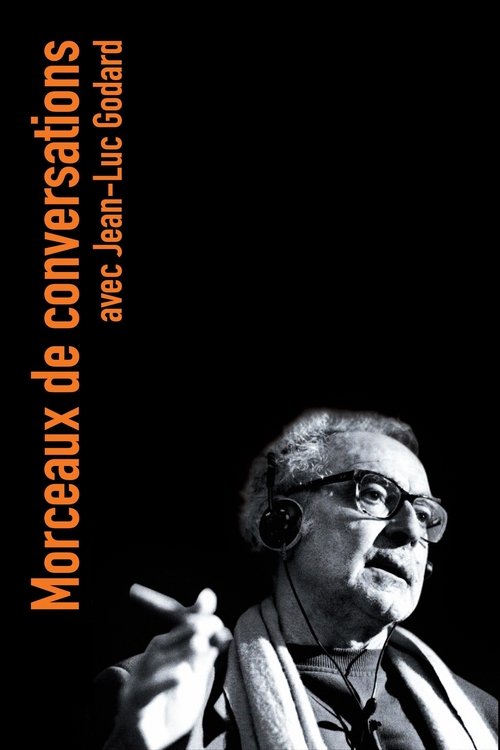
In his meetings with various different people, Jean-Luc Godard develops his thinking about history, politics, the cinema, images and time, and this will lead to his exhibition as an artist at the Pompidou Centre. Jean-Luc Godard’s conversations with Dominique Païni, Jean Narboni, André S. Labarthe, Jean-Marie Straub, Danielle Huillet and Christophe Kantcheff were filmed at his home in Rolle, in his study, at the Fresnoy National Studio for the Contemporary Arts (in front of students) and in the exhibition rooms of the Pompidou Centre.
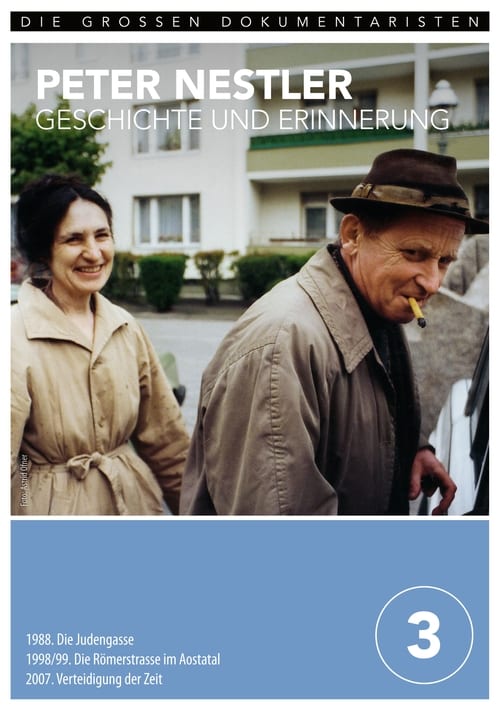
A hommage to Jean-Marie Straub's and Danièle Huillet's film Quei loro incontri (2005), and to their access to cinema itself. In various encounters and conversations Nestler offers an insight into their life and work, including passages from Italian poet Cesare Pavese.
A film by Laura Vitali about the last work of the couple Jean-Marie Straub and Danièle Huillet in Buti (Italy) in May 2005, namely the staging of the last five "Dialogues with Leucò" by Cesare Pavese. In this sense, it is a moving testimony. Vitali alternates rehearsal sessions and interviews - by Jean-Marie Straub, Danièle Huillet and actors such as Giovanna Daddi, Angela Nugara and Andrea Bacci - who illuminate from the inside the methods of the two filmmakers and their relation to the work of Cesare Pavese, while situating the very special place that makes this work possible - the small town of Buti which warmly welcomed Straub and Huillet for a decade - and by bringing out the political dimension of their thought.

Undaunted by a commission to make a film about his mentors and aesthetic exemplars, the filmmaking team of Jean-Marie Straub and Danièle Huillet, Costa records with great sensitivity and insight the exacting process by which the two re-edit their film Sicilia!, discussing and arguing over each cut and its effect. Incorporating comments about the influence of figures as diverse as Chaplin and Eisenstein, about the ethical and aesthetic implications of film technique and such matters as rhythm, sound mixing, and acting. The film becomes a tour de force, immersing us in the mysteries of cinema as practiced by some of its greatest creators. Costa calls the film both his first comedy and his first love story.
Subscribe for exclusive insights on movies, TV shows, and games! Get top picks, fascinating facts, in-depth analysis, and more delivered straight to your inbox.