
Action
Adventure
Animation
Comedy
Crime
Documentary
Drama
Family
Fantasy
History
Horror
Music
Mystery
Romance
Science Fiction
Thriller
War
Western

From Wikipedia, the free encyclopedia Juraj Herz (4 September 1934 – 9 April 2018) was a Slovak film director, actor, and scenic designer who was born when Kežmarok was a part of Czechoslovakia. He has directed for both film and television; and in the latter capacity, he has directed episodes of a joint French-Czech television series based on the Maigret novels of Georges Simenon. His 1971 film P...
Explore all movies appearances
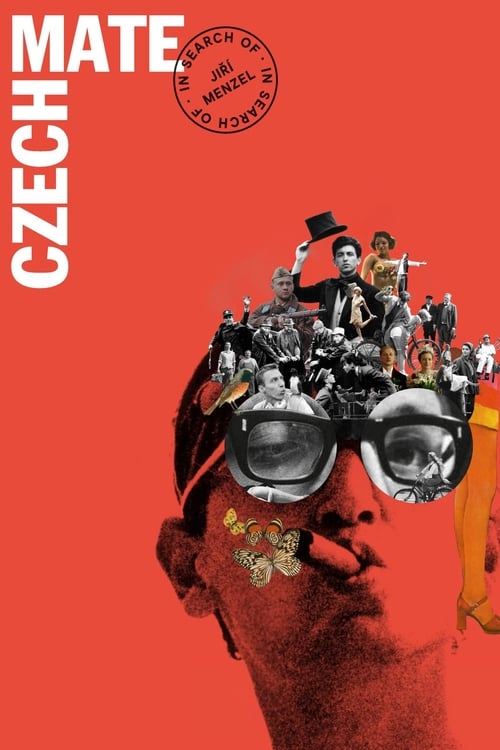
An epic exploration of the Czechoslovak New Wave cinema of the 1960s and 70s, structured around a series of conversations with one of its most acclaimed exponents - Closely Observed Trains director Jiří Menzel.

One of the best Czech composers of film soundtracks is often described as a genius of film scores. He was not afraid to experiment and the timelessness of his work is proven by the admiration of the world, including the generation who came to know his music only after his death.

The day’s work never ends for a guard worth his salt, even when the gallery closes at seven. And Vašek is a perfect example, at least until he meets Ginger – a femme fatale who has her own plans where he’s concerned. Love turns this nice lad into a thief: armed with a false moustache, sunglasses and a stolen painting, he gets on a train and it remains to be seen whether or not his journey to Rome is paved with good intentions. The train compartment is full of passengers keen to impart their life stories – to him or to anyone who’ll listen. The withdrawn young man pays close attention to it all, even though he has plenty to worry about as it is. The police and a bunch of crooks are hot on his heels and it’s difficult trying to give them the slip with a hefty painting in tow.
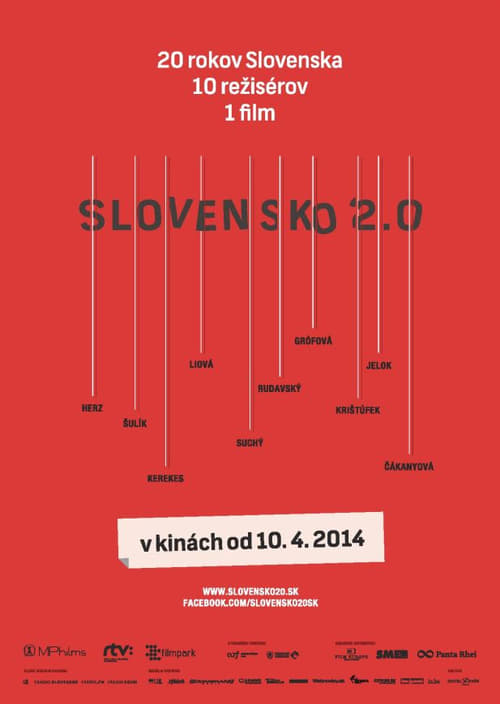
What is “Slovakia”? How to explain the notion of “Slovakia” of the past 20 years to an unknown stranger, a visitor from another planet? What is the genetic makeup or the software for “Slovakia”? How to use it? How does it change? Slovakia 2.0 is a film about twenty years of independent Slovakia as seen from the perspective of ten film directors. It is composed of ten 10-minute films of different genres ranging from drama, through animation and documentaries, to experimental film. The ten recognised film directors who offer an answer to what is Slovakia include a wide range of generations, views and genres, namely Juraj Herz, Martin Šulík, Peter Kerekes, Zuzana Liová, Mišo Suchý, Ondrej Rudavský, Iveta Grófová, Peter Krištúfek, Viera Čákanyová, and Miro Jelok.
The family of a film screenwriter, who needs fresh air and, above all, peace and quiet for his creative work, moves to a small country farm for a while. However, his wife, a former, somewhat hysterical actress, still does not give him any peace, and so his small family, which also includes a six-year-old son, is in danger of falling apart. Unexpected, mysterious events, however, show them the way back. This is because there is a former coffee roastery on the farm, and the wife, together with her neighbor Dědek, starts a business against her husband's will.

The filmmakers revisit some of the shooting locations of THE CREMATOR with director Juraj Herz and chronicles the making of the 1969 film.
In this 1999 documentary, which took three years to shoot, director Jan Mudra reveals Hapka's obsession with creativity, his incredible energy, and his abundance of ideas. He recalls his family background, his studies at the acting conservatory, and his first roles in Czech films. Petr Hapka began his career as a composer in the 1960s. Even then, he began writing for Hana Hegerová, with whom, as he says, he entered into a musical marriage that continues to this day. In the film, his three main lyricists—Petr Rada, Zdeněk Rytíř, and Michal Horáček—recall their work with Hapka. Many viewers may be surprised to learn that Petr Hapka also composed the music for three famous plays by the Divadlo Za branou theater: Provaz o jednom konci (A Rope with One End), Zelený papoušek (The Green Parrot), and Hodina lásky (The Hour of Love), as recalled in the film by director Otomar Krejča. He also composed the music for several films.
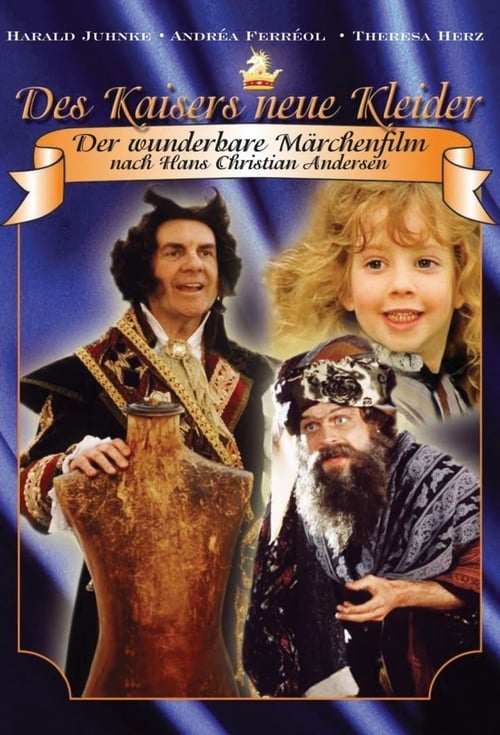
The Emperor of a European country demands new clothes to wear every day, in fact sometimes several times a day. He imposes a heavy tax on the poor citizens to pay for his vanity. An itinerant man and boy come to the capital city and see the injustice, and make friends, but they soon have to flee. They return disguised as Arab tailors, and offer to make the Emperor a new suit of clothes. But only the wise will be able to see it; fools, or those unfit for their public office, will not see anything. The Emperor orders the suit made, and much money is needed to purchase the raw materials. Eventually the suit is ready, and the Emperor and his officials pretend that they can see a wonderful outfit; will anyone prick the bubble of the illusion?
Silly Augustine, wife of silly August, who performs in the circus, and mother of Guggo, Gugga and Guggilein, dreams of one day being able to perform as a clown in the circus. Instead, she has to run the exhausting household. Her suggestion to share the job, the housework and the children is met with incomprehension and scorn from her husband. When silly August suffers from a toothache and misses his performance, Augustine seizes her chance, steps in and promptly masters the task with flying colors. From then on, father and mother share the housework and circus duties, as silly August immediately realizes that he has underestimated his wife.
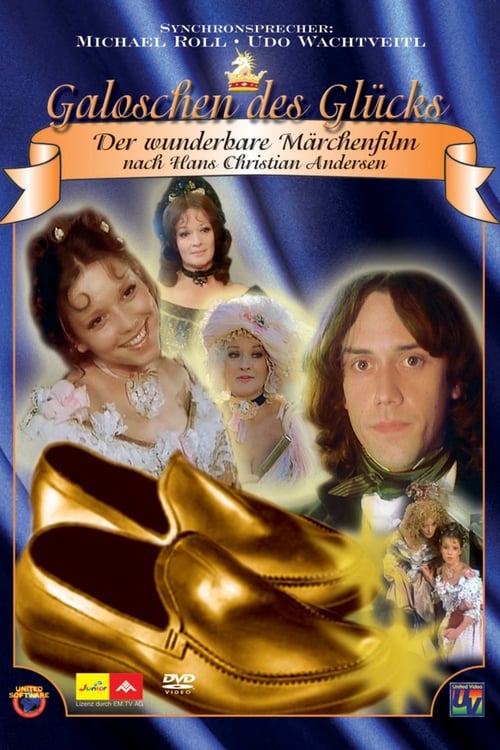
The Slippers of Happiness is another film made by the Slovak Film Production in co-production with West German companies based on classic world fairy tales. After Slovak folk tales [The Greatest Peck in the World, Salt Over Gold] and the works of German fairy tale writers Wilhelm Hauff [The False Prince] and the Brothers Grimm [The Land of the Thrush's Beard, Perinbaba], screenwriter Alex Koenigsmark and director Juraj Herz were inspired by the famous fairy tale by Hans Christian Andersen. It tells the story of slippers that the Fairy of Fortune enchanted so that they would fulfill every human wish and thus bring people happiness. The filmmakers humorously transferred the plot from Copenhagen to old Prague.
Subscribe for exclusive insights on movies, TV shows, and games! Get top picks, fascinating facts, in-depth analysis, and more delivered straight to your inbox.